
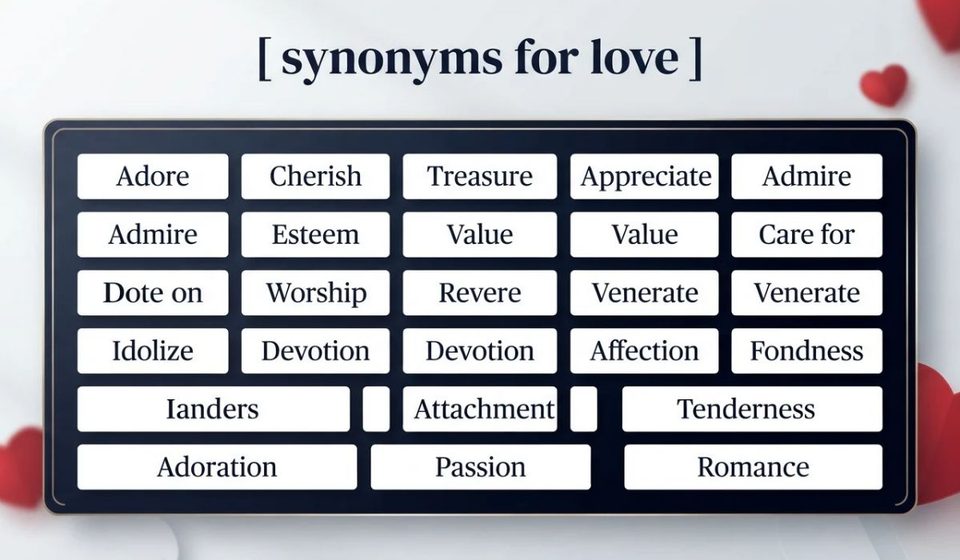

Love is one word doing dozens of jobs. You love a partner, a parent, a song, a slice of pizza, and none of those feelings are the same size. Writers reach for “love” so often that the word loses its punch. This guide sorts 40 real alternatives by meaning, so you can match the word to the feeling instead of flattening every emotion into one term.
What Does “Love” Actually Mean?
People use “love” to describe several distinct experiences:
- Romantic attachment between partners
- Deep care for family or close friends
- Admiration or respect for a person’s qualities
- Enjoyment of an activity, food, or hobby
- A strong preference for something specific
- Early attraction that hasn’t matured into commitment
- Compassion for people in general
Once you identify which feeling you’re actually describing, the right word becomes obvious.
Quick Answer: Best Synonyms for Love
For a fast, reliable replacement, these words cover most situations:
- Adore – intense affection for a person
- Cherish – deep care for someone or something meaningful
- Devoted – sustained loyalty and commitment
- Fond of – warm, easy affection
- Enjoy – pleasure in an activity or experience
Synonyms for Romantic Love
These words describe deep, committed attraction between partners.
Adore
Meaning: To feel intense love, delight, or devotion toward someone.
Adore raises the emotional volume above plain “love.” Couples and family members use it to signal that the feeling runs deep and shows on the outside, not just in private thought. It works because it sounds warm without sounding formal, so readers feel the sincerity immediately.
Examples:
- He adores his wife and never misses a chance to tell her.
- She adores her newborn daughter more than she thought possible.
When It Fits: Describing a partner, child, or close family member with visible affection.
Pronunciation: uh-DOR
Cherish
Meaning: To hold something or someone dear and protect it with care.
Cherish carries a protective quality that plain love doesn’t always convey. The word suggests the speaker actively guards the relationship or memory, not just enjoys it passively. This makes it a strong choice for milestones, memories, and long relationships.
Examples:
- I cherish every memory we made during that trip.
- She cherishes the letters her grandfather wrote before he passed.
When It Fits: Talking about memories, milestones, or people you actively protect and value.
Pronunciation: CHEHR-ish
Treasure
Meaning: To value someone or something as precious and irreplaceable.
Treasure treats a relationship or memory like something rare, worth safeguarding above ordinary things. It works especially well for moments you know won’t come again. This word adds a sense of scarcity that makes the sentiment feel earned rather than automatic.
Examples:
- We treasure the time we get with our grandchildren.
- He treasures the ring his father gave him before he shipped out.
When It Fits: Describing rare, irreplaceable relationships or keepsakes.
Pronunciation: TREZH-er
Devoted
Meaning: Loyal and committed, with consistent care shown over time.
Devoted focuses on behavior, not just feeling. It tells the reader that someone shows up, again and again, through effort rather than words alone. This makes it a credible word choice for long-term partners, caregivers, and lifelong friends.
Examples:
- He remained devoted to her through every difficult year of treatment.
- She’s devoted to her students, staying late to help whenever needed.
When It Fits: Praising someone’s consistent loyalty over a long period.
Pronunciation: dih-VOH-tid
Enamored
Meaning: Filled with a deep, absorbing feeling of love or fascination.
Enamored sounds slightly literary and works well for describing the early, consuming stage of romantic attraction. It signals that someone’s attention has fully shifted toward a person. This word suits narrative or reflective writing more than casual conversation.
Examples:
- She was enamored with him from the moment they met.
- He grew enamored of the small coastal town within a week.
When It Fits: Describing the early, all-consuming stage of romantic interest.
Pronunciation: en-AM-erd
Infatuated
Meaning: Filled with intense but often short-lived or unrealistic attraction.
Infatuated signals passion without claiming maturity or permanence. Use it carefully, since it can suggest the feeling might fade or was based on limited information. This word adds honesty to writing about early crushes or unproven relationships.
Examples:
- She was infatuated with him after just two dates.
- He admitted he’d been infatuated, not truly in love.
When It Fits: Describing early attraction that hasn’t been tested by time.
Pronunciation: in-FAT-choo-ay-tid
Passionate
Meaning: Showing strong, intense emotion, often romantic or physical.
Passionate carries heat and intensity, making it a strong fit for romance, art, and causes people feel strongly about. It signals energy and commitment rather than quiet, steady affection. Use it when the emotion is loud, not subtle.
Examples:
- Their passionate relationship survived three years of long distance.
- She’s passionate about her husband and equally passionate about her career.
When It Fits: Romance, creative work, or causes someone feels strongly about.
Pronunciation: PASH-uh-nit
Smitten
Meaning: Suddenly and strongly attracted to someone.
Smitten sounds lighter and more playful than adore or enamored. It works well for describing new attraction with a hint of humor or charm. This word fits casual storytelling better than formal writing.
Examples:
- He was smitten the second she walked into the room.
- She’s completely smitten with her new boyfriend.
When It Fits: Casual, lighthearted stories about a new romantic interest.
Pronunciation: SMIT-un
Synonyms for Family and Close Personal Love
These words describe warm, protective care between family members and close friends.
Care For
Meaning: To feel affection for someone and look after their wellbeing.
Care for combines emotion with action, showing that someone thinks about a person’s needs, not just their own feelings. It’s gentle and doesn’t demand romantic interpretation, which makes it useful across many relationships. Readers trust this phrase because it implies ongoing effort.
Examples:
- She cares for her younger brother like a second mother.
- He still cares for his old college roommate, even after years apart.
When It Fits: Describing steady affection paired with practical support.
Pronunciation: KAIR for
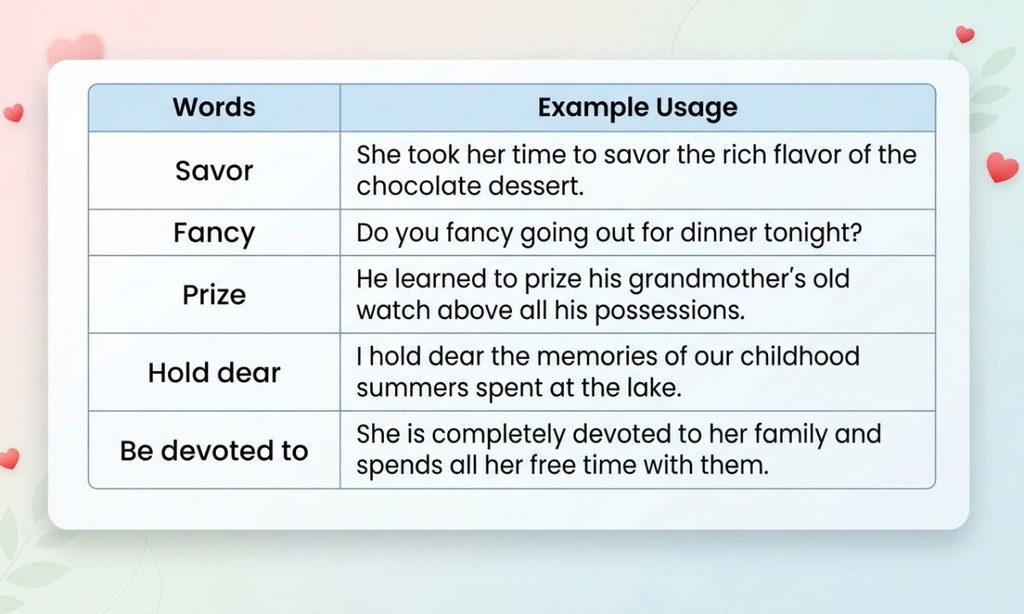
Hold Dear
Meaning: To value someone or something with deep, lasting affection.
Hold dear has a quiet, sincere tone that suits reflective or sentimental writing. It implies the person or memory occupies a protected place in someone’s mind. This phrase works well in speeches, tributes, and personal essays.
Examples:
- She holds her mentor’s advice dear, even years later.
- He holds his hometown dear, no matter where life takes him.
When It Fits: Tributes, speeches, or reflective writing about lasting values.
Pronunciation: hohld DEER
Dote On
Meaning: To show excessive fondness and attention toward someone.
Dote on suggests warmth expressed through constant, sometimes overly generous attention. It’s commonly used for grandparents, pet owners, and doting parents. This phrase adds a touch of gentle humor while still conveying real affection.
Examples:
- Her grandparents dote on her every time she visits.
- He dotes on his new puppy like it’s a newborn.
When It Fits: Describing affectionate, attentive behavior toward children, pets, or grandchildren.
Pronunciation: doht ON
Fond Of
Meaning: Having a gentle, warm liking for someone or something.
Fond of is lighter than love and doesn’t claim intensity it can’t back up. It fits casual relationships, acquaintances, or mild preferences without sounding forced. This phrase works well when you want honesty over exaggeration.
Examples:
- She’s grown quite fond of her new coworkers.
- He’s always been fond of his aunt’s cooking.
When It Fits: Everyday affection that doesn’t need dramatic emphasis.
Pronunciation: FOND uv
Attached
Meaning: Emotionally connected to someone through shared time or experience.
Attached describes a bond that grew gradually rather than one that started with intensity. It’s often used when someone didn’t expect to develop feelings but did. This word suits stories about slow-building relationships.
Examples:
- She grew attached to the foster kitten within a week.
- He became attached to his mentor after months of guidance.
When It Fits: Describing bonds that formed gradually through shared experience.
Pronunciation: uh-TACHT
Synonyms for Admiration and Respect
These words describe love expressed as high regard for someone’s qualities or achievements.
Admire
Meaning: To hold someone in high regard for their qualities or actions.
Admire keeps emotional distance while still expressing genuine respect. It works well for mentors, public figures, and colleagues you respect without personal closeness. This word signals sincerity without implying intimacy.
Examples:
- I admire how calmly she handled the crisis.
- He admires his coach’s discipline and work ethic.
When It Fits: Praising someone’s character or skill without implying closeness.
Pronunciation: ad-MYRE
Esteem
Meaning: To regard someone with great respect and high opinion.
Esteem sounds formal and works well in professional or written tributes. It emphasizes reputation and standing rather than personal warmth. Use it when respect, not affection, is the point you want to make.
Examples:
- The committee holds her in high esteem for her research.
- He is esteemed by colleagues across the entire industry.
When It Fits: Formal writing, professional recognition, or public tributes.
Pronunciation: eh-STEEM
Revere
Meaning: To regard with deep and often reverential respect.
Revere carries weight beyond ordinary admiration, often bordering on awe. It suits historical figures, mentors, and people whose influence shaped entire fields. This word should be reserved for genuinely significant respect, not casual praise.
Examples:
- Students revere the professor for decades of groundbreaking work.
- The team reveres its founder as a visionary leader.
When It Fits: Describing deep respect for influential or historically significant figures.
Pronunciation: rih-VEER
Venerate
Meaning: To regard with deep respect, often bordering on religious reverence.
Venerate leans formal and traditional, often appearing in religious, cultural, or ceremonial writing. It suggests reverence passed down through generations rather than personal opinion. Use it sparingly, since it carries significant weight.
Examples:
- The village venerates its founding elders every year.
- She venerates the traditions her grandmother passed down.
When It Fits: Cultural, religious, or ceremonial writing about deep-rooted respect.
Pronunciation: VEN-uh-rayt
Idolize
Meaning: To admire someone so much that they seem almost perfect.
Idolize signals intense admiration, sometimes to the point of overlooking flaws. It’s common in fandom, sports, and childhood hero-worship contexts. Use it carefully in serious writing, since it can suggest an unbalanced view.
Examples:
- She idolized her older sister growing up.
- Fans idolize the singer for her honesty in interviews.
When It Fits: Describing hero-worship, fandom, or childhood admiration.
Pronunciation: EYE-duh-lyze
Explore More Synonyms Guide
Better Synonym Guide: 35 Precise Alternatives by Meaning
30 Perspective Synonyms to Add Depth to Your Writing
25 Other Ways to Say “Nuance”: Examples and Usage
Synonyms for Enjoying Something
These words describe love for an activity, object, or experience rather than a person.
Enjoy
Meaning: To take pleasure or satisfaction in something.
Enjoy is the simplest, most flexible replacement for love when talking about activities. It avoids overstatement while still conveying genuine pleasure. This word works in nearly any tone, from casual to professional.
Examples:
- She enjoys long walks along the river every morning.
- He enjoys cooking elaborate meals on weekends.
When It Fits: Everyday descriptions of hobbies, food, or leisure activities.
Pronunciation: en-JOY
Relish
Meaning: To enjoy something greatly, often savoring each moment of it.
Relish adds intensity and intentionality to ordinary enjoyment. It suggests the person actively pays attention and extracts full pleasure from the experience. This word fits food, competition, and challenges people actively embrace.
Examples:
- He relishes every bite of his grandmother’s cooking.
- She relishes the challenge of a difficult puzzle.
When It Fits: Describing focused, deliberate enjoyment of food or challenges.
Pronunciation: REL-ish
Savor
Meaning: To enjoy something slowly and fully, without rushing.
Savor emphasizes patience and mindfulness rather than raw intensity. It fits moments people deliberately slow down to appreciate, like a meal, a view, or a quiet evening. This word adds a sense of gratitude to the sentence.
Examples:
- She savors her morning coffee before the house wakes up.
- He savored the final moments of the vacation.
When It Fits: Describing slow, mindful enjoyment of a fleeting experience.
Pronunciation: SAY-ver
Delight In
Meaning: To take great pleasure or joy in something.
Delight in has a light, joyful tone that suits playful or heartfelt writing. It works well for small daily pleasures as much as big life moments. This phrase adds warmth without sounding heavy or formal.
Examples:
- She delights in surprising her kids with pancakes on Saturdays.
- He delights in the first snowfall every winter.
When It Fits: Describing small, joyful pleasures in everyday life.
Pronunciation: dih-LYTE in
Appreciate
Meaning: To recognize the value or worth of something.
Appreciate shifts the tone toward gratitude rather than pure enjoyment. It works especially well in professional or thoughtful writing, where recognition matters more than excitement. This word signals thoughtfulness over impulse.
Examples:
- I appreciate the effort you put into this project.
- She appreciates good design in everything she buys.
When It Fits: Professional writing or thoughtful recognition of value.
Pronunciation: uh-PREE-shee-ayt
Revel In
Meaning: To enjoy something with enthusiastic, unrestrained pleasure.
Revel in suggests full-bodied enjoyment, often social or celebratory. It fits moments of triumph, celebration, or carefree fun better than quiet enjoyment. This phrase brings energy to a sentence that plain “enjoy” can’t match.
Examples:
- The team reveled in their unexpected championship win.
- She revels in the chaos of a full house during holidays.
When It Fits: Celebrations, victories, or lively social moments.
Pronunciation: REV-ul in
Synonyms for Preference
These words describe a love that leans toward a specific taste rather than a strong emotion.
Fondness
Meaning: A gentle, warm liking for someone or something.
Fondness is soft and understated, perfect for describing mild but genuine preference. It avoids overstatement while still sounding sincere. This word works well when the feeling is real but not intense.
Examples:
- She has a fondness for old black-and-white films.
- He developed a fondness for the small café near his office.
When It Fits: Describing mild, ongoing preferences without exaggeration.
Pronunciation: FOND-nuss
Penchant
Meaning: A strong, often recurring liking for a particular thing.
Penchant sounds slightly sophisticated and works well in writing about habits or tendencies. It implies the preference shows up repeatedly, almost like a pattern. This word adds personality to descriptions of taste.
Examples:
- He has a penchant for spicy food that surprises most people.
- She’s always had a penchant for collecting vintage postcards.
When It Fits: Describing recurring habits, tastes, or quirks.
Pronunciation: PEN-chunt
Partiality
Meaning: A liking or preference for something over other options.
Partiality suggests a slight bias, often admitted with a bit of self-awareness. It works well when someone knows their preference isn’t entirely objective. This word adds honesty and a touch of humility to the sentence.
Examples:
- I’ll admit a partiality toward dark chocolate over milk chocolate.
- She has a partiality for jazz that dates back to college.
When It Fits: Admitting a personal bias or leaning in a lighthearted way.
Pronunciation: par-shee-AL-i-tee
Weakness For
Meaning: A strong, hard-to-resist attraction to something specific.
Weakness for adds a playful confession of temptation, often used for indulgent pleasures. It suggests the person knows the preference is a little excessive but doesn’t fight it. This phrase brings humor and relatability to writing.
Examples:
- She has a weakness for street tacos no matter the hour.
- He’s always had a weakness for classic rock ballads.
When It Fits: Confessing a playful, slightly indulgent preference.
Pronunciation: WEEK-nes for
Taste For
Meaning: A developed liking or preference for a particular style or experience.
Taste for suggests a refined or acquired preference, often shaped by exposure or experience. It works well when describing evolving interests rather than instinctive reactions. This phrase adds a sense of personal growth to the sentence.
Examples:
- He developed a taste for foreign films during his year abroad.
- She has a taste for minimalist design in every room of her house.
When It Fits: Describing preferences shaped by experience or exposure over time.
Pronunciation: TAYST for
Synonyms for Early Attraction
These words describe the early, unproven stage of romantic interest.
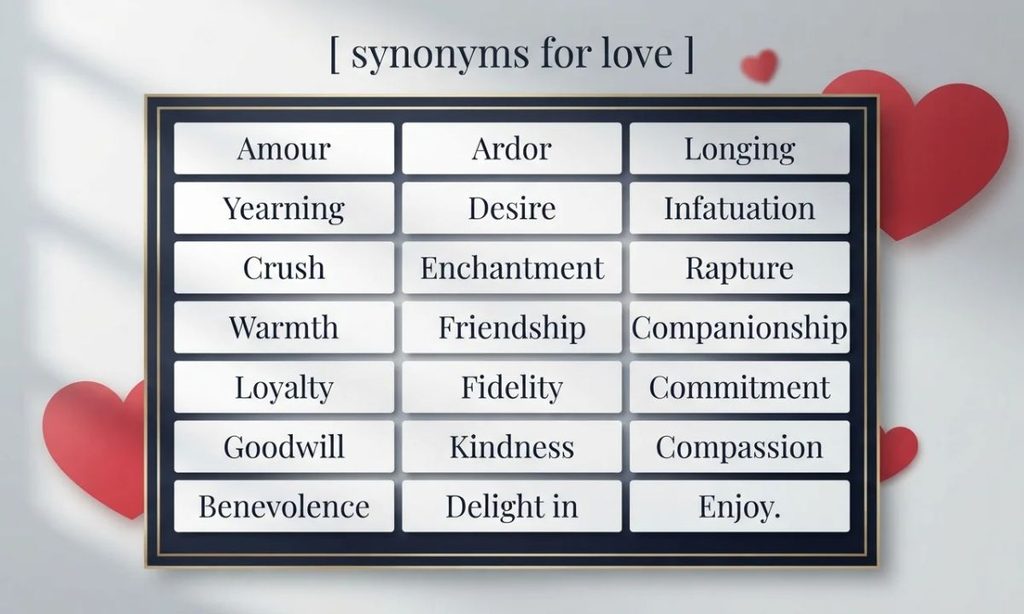
Crush
Meaning: A strong but often brief romantic attraction, especially early on.
Crush sounds casual and slightly youthful, making it perfect for early or unspoken attraction. It doesn’t claim depth or permanence, which keeps the tone light. This word fits both teenage stories and adult workplace attractions with equal ease.
Examples:
- She’s had a crush on her coworker for weeks now.
- He never told anyone about his childhood crush.
When It Fits: Describing early, often unspoken romantic interest.
Pronunciation: KRUSH
Longing
Meaning: A deep, often painful desire for someone or something absent.
Longing carries emotional heaviness, often tied to distance, loss, or unresolved feelings. It suits reflective or poetic writing more than casual conversation. This word signals that the desire isn’t easily satisfied.
Examples:
- She felt a quiet longing for the home she left behind.
- His letters were filled with longing for his wife overseas.
When It Fits: Describing distance, separation, or unresolved emotional desire.
Pronunciation: LAWNG-ing
Yearning
Meaning: A strong, persistent desire or craving for someone or something.
Yearning sounds slightly more urgent than longing, often paired with restlessness. It fits stories about unmet goals or unreachable people as much as romance. This word adds intensity without sounding exaggerated.
Examples:
- He felt a yearning to reconnect with his estranged brother.
- She spent years yearning for a life beyond her small town.
When It Fits: Describing persistent desire tied to distance or unmet goals.
Pronunciation: YERN-ing
Desire
Meaning: A strong feeling of wanting someone or something.
Desire is direct and versatile, working for romantic, physical, or ambitious contexts alike. It doesn’t soften the feeling the way “like” or “fondness” might. Use it when you want the sentence to sound confident and clear.
Examples:
- Their desire to build a life together grew stronger each year.
- She desires nothing more than a quiet weekend at home.
When It Fits: Direct, confident statements about wanting someone or something.
Pronunciation: dih-ZYRE
Ardor
Meaning: Intense enthusiasm or passion, especially in romantic contexts.
Ardor sounds literary and formal, well suited to poetry, letters, and dramatic writing. It signals heat and intensity without needing extra adjectives. This word works best in reflective or historical-feeling prose.
Examples:
- His letters revealed an ardor she hadn’t expected.
- Their courtship was marked by genuine ardor on both sides.
When It Fits: Literary, poetic, or historical writing about intense passion.
Pronunciation: AR-der
Synonyms for Compassion and Universal Love
These words describe love expressed as kindness toward people in general.
Compassion
Meaning: A deep awareness of others’ suffering paired with a desire to help.
Compassion shifts love away from personal attachment toward shared humanity. It works well in writing about kindness, service, and empathy for strangers. This word signals action-oriented care, not just feeling.
Examples:
- The nurse showed compassion to every patient, regardless of the hour.
- She approaches conflict with compassion rather than judgment.
When It Fits: Describing empathy and care toward people in difficult situations.
Pronunciation: kum-PASH-un
Kindness
Meaning: Gentle, considerate, and generous behavior toward others.
Kindness is simple and universally understood, requiring no special context to land. It emphasizes action over emotion, which makes it useful in everyday writing. This word fits nearly any audience without feeling forced.
Examples:
- Her kindness toward strangers never went unnoticed.
- He treats every customer with the same quiet kindness.
When It Fits: Everyday writing about generous, considerate behavior.
Pronunciation: KYND-nuss
Goodwill
Meaning: A friendly, helpful attitude toward others.
Goodwill sounds professional and community-focused, often appearing in business or civic writing. It suggests intention rather than deep emotional attachment. This word fits situations where cooperation matters more than personal feeling.
Examples:
- The company built goodwill by supporting local schools.
- Neighbors showed goodwill by helping rebuild after the storm.
When It Fits: Business, community, or civic writing about cooperative intent.
Pronunciation: GOOD-wil
Benevolence
Meaning: A disposition to do good and show kindness toward others.
Benevolence sounds formal and dignified, often used to describe generous leaders, donors, or institutions. It carries a sense of moral character rather than momentary action. This word suits tributes and formal recognition well.
Examples:
- The foundation is known for its benevolence toward struggling families.
- His benevolence shaped the town long after he was gone.
When It Fits: Formal writing about generosity as a lasting character trait.
Pronunciation: buh-NEV-uh-lens
Charity
Meaning: Generosity and helpfulness toward those in need.
Charity often carries both a practical and moral dimension, tied to giving time, money, or resources. It works well in writing about organized giving or acts of generosity. This word signals concrete help, not just warm feeling.
Examples:
- She dedicates her weekends to charity work at the shelter.
- His charity toward former employees surprised everyone.
When It Fits: Describing organized giving or generous acts toward those in need.
Pronunciation: CHAIR-i-tee
Synonyms for a Loved Person
These words name someone you love, rather than describing the feeling itself.
Beloved
Meaning: A person who is dearly loved.
Beloved works as both a noun and an adjective, and it sounds warm without being overly casual. It suits weddings, eulogies, and formal tributes especially well. This word signals deep affection recognized by others, not just the speaker.
Examples:
- Her beloved husband stood beside her through every hardship.
- The teacher was beloved by three generations of students.
When It Fits: Formal or ceremonial writing about someone widely cherished.
Pronunciation: bih-LUV-id
Important Distinctions Worth Knowing
Not every synonym works as a clean substitute for love. A few common mix-ups deserve attention.
| Word | Why It Differs From “Love” |
|---|---|
| Infatuation | Suggests intense but possibly temporary or unproven attraction |
| Worship | Usually implies religious reverence or extreme, almost blind admiration |
| Lust | Refers to physical desire, not emotional commitment |
| Admiration | Shows respect for qualities, not necessarily personal closeness |
| Lover | Often implies a romantic or sexual relationship, more specific than “loved one” |
A Simple Way to Choose the Right Word
- Is it romantic and committed? Use adore, devoted, or passionate.
- Is it family or close friendship? Use cherish, care for, or fond of.
- Is it respect for a quality or achievement? Use admire, esteem, or revere.
- Is it enjoyment of an activity? Use enjoy, relish, or savor.
- Is it a specific taste or habit? Use fondness, penchant, or partiality.
- Is it early or unproven attraction? Use crush, infatuated, or smitten.
- Is it kindness toward people generally? Use compassion, kindness, or goodwill.
Frequently Asked Questions
What is another word for love?
Adore, cherish, and devotion all work well depending on the relationship and intensity.
What is a stronger word for love?
Adore, ardor, and passionate all carry more intensity than a plain “love.”
What is another word for a loved one?
Beloved, darling, and cherished person all describe someone you love without extra context.
What is the difference between love and infatuation?
Love reflects a tested, lasting bond, while infatuation describes intense but often short-lived attraction.
What is a formal word for love?
Devotion, esteem, and benevolence all suit formal or professional writing better than casual love.
Conclusion
“Love” carries too much weight to describe every warm feeling the same way, and once you separate romance from admiration, enjoyment from compassion, and early attraction from lasting devotion, your writing gains the precision and honesty that a single overused word never could.

[…] Synonyms for Love: 40 Words for Romance, Care, and Devotion […]
[…] Synonyms for Love: 40 Words for Romance, Care, and Devotion […]
[…] Synonyms for Love: 40 Words for Romance, Care, and Devotion […]