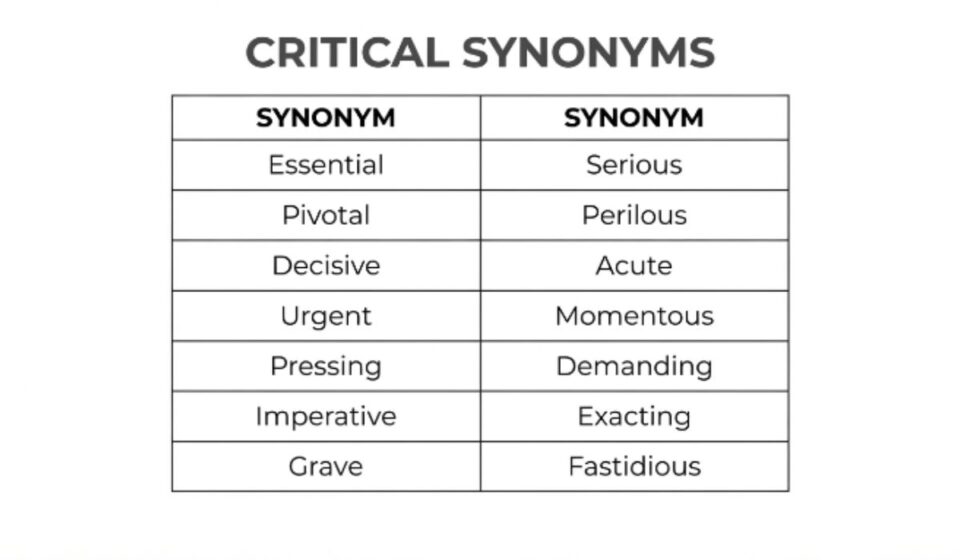

The word “critical” gets thrown around a lot. It comes up in emails, reviews, meetings, and casual conversations. But repeating the same word over and over flattens your writing and can even muddle your meaning. The right synonym sharpens your point and tells your reader exactly what you mean—urgency, harsh judgment, or careful analysis.
What Does “Critical” Really Mean?
“Critical” is not a word with a single meaning. Indeed, it actually covers three different ideas, depending on the context. Something can be critical in the sense of being urgently important, of being harshly judged, or of being carefully analyzed.
Imagine a doctor telling a family, “His condition is critical.” That sentence has weight and urgency. Now imagine a manager saying, “Your report was too critical of the team. That is a whole different tone. More harsh, more fault-finding. Same word, very different messages.
Why Look for Alternatives?
Repeating “critical” in every paragraph makes writing sound stiff and mechanical. Readers notice repetition, even when they can’t name why a piece feels dull. A fresh word keeps their attention and adds rhythm to your sentences.
There’s also a precision problem. “Critical” is vague enough to confuse readers when the sense isn’t obvious. Swapping in a clearer word, like “urgent” or “harsh,” removes that guesswork instantly.
Finally, tone matters. “Critical” can sound cold or overly clinical in a warm email or friendly conversation. A softer or more specific synonym often fits the moment better.
25 Synonyms for “Critical” and How to Use Them
Crucial
Meaning: “Crucial” describes something that is extremely important and has a direct impact on the outcome. If this one thing goes wrong, the entire situation may be affected. It is one of the most natural alternatives to “critical” because it sounds professional without feeling overly formal. Whether you’re talking about work, education, business, or daily life, this word clearly shows that something deserves immediate attention.
Example: Getting this deadline right is crucial for maintaining the client’s trust.
When It Fits: Use crucial in project planning, workplace discussions, business meetings, presentations, and situations where success depends on one important task or decision.
Vital
Meaning: “Vital” refers to something necessary for proper function, health, or success. People often use it when discussing health, safety, or anything that cannot be ignored. While it carries a strong sense of importance, it still feels simple and easy to understand. It helps readers recognize that removing or overlooking something could create serious problems.
Example: Regular sleep is vital for both physical and mental well-being.
When It Fits: Use “vital” when writing about health, wellness, education, business foundations, or any topic involving essential needs.
Pivotal
Meaning: “Pivotal” describes an event, decision, or moment that changes the direction of something important. Instead of focusing on urgency, this word highlights a turning point that influences everything that follows. It works especially well in storytelling because it helps readers understand that one moment made a lasting difference.
Example: The interview became a pivotal moment in her professional career.
When It Fits: Use “pivotal” in biographies, history articles, business case studies, personal stories, and discussions about major decisions.
Essential
Meaning: “Essential” means necessary or required. It communicates importance calmly and straightforwardly without adding unnecessary emotion. If something is essential, it simply cannot be left out. Because of its simplicity, it fits almost every type of writing, from professional documents to everyday conversations.
Example: Clear instructions are essential for completing the task successfully.
When It Fits: Use “essential” in guides, tutorials, policies, workplace documents, educational content, and instructional writing.
Decisive
Meaning: “Decisive” refers to an action, event, or choice that settles a matter completely. It often suggests confidence, leadership, and finality. Rather than showing ongoing importance, it highlights the moment when uncertainty ends and a clear direction is chosen. This makes it an excellent replacement for “critical” when discussing outcomes or leadership.
Example: Her decisive decision prevented the project from falling behind schedule.
When It Fits: Use “decisive” in leadership articles, business reports, conflict resolution, sports analysis, and stories involving important decisions.
Urgent
Meaning: “Urgent” emphasizes immediate action rather than overall importance. It tells readers that something cannot wait because time is limited. Although urgent situations are often critical, the focus here is speed instead of significance. This word creates a strong sense of priority and encourages quick responses.
Example: The support team sent an urgent message asking everyone to update the software immediately.
When It Fits: Use “urgent” in emails, emergency notices, customer support messages, deadlines, reminders, and time-sensitive announcements.
Momentous
Meaning: “Momentous” describes an event or decision with lasting importance. It is usually reserved for major milestones that people are likely to remember for years. Compared with “critical,” this word feels more formal and often carries a positive emotional tone. It highlights occasions that mark a significant step forward.
Example: Graduating from college was a momentous occasion for the entire family.
When It Fits: Use “momentous” in speeches, milestone celebrations, historical writing, company announcements, and major life events.
Significant
Meaning: “Significant” simply means important enough to deserve attention. It does not sound dramatic, making it one of the safest alternatives to “critical.” Because it is neutral and widely understood, this word works well in both formal and informal writing. It is especially useful when discussing statistics, research findings, or noticeable changes.
Example: The company reported a significant increase in customer satisfaction this quarter.
When It Fits: Use “significant” in reports, research papers, business updates, news articles, financial summaries, and analytical writing.
Key
Meaning: “Key” is one of the simplest and most commonly used alternatives to “critical.” It points to the main factor, person, or idea that has the greatest influence on success. Because it is short and conversational, it improves readability without reducing meaning. Many professional writers prefer this word because it feels natural while still communicating importance.
Example: Good communication is the key to building strong professional relationships.
When It Fits: Use “key” in blog posts, presentations, business communication, educational content, marketing materials, and everyday writing.
Indispensable
Meaning: “Indispensable” describes something or someone that simply cannot be replaced. It goes beyond being important by showing that a person, tool, or resource is essential to achieving success.
If something is indispensable, removing it would make the task much more difficult or even impossible. This word is especially useful when recognizing someone’s value or highlighting a resource that plays a major role.
Example: The customer support team has become indispensable to the company’s daily operations.
When It Fits: Use “indispensable” in employee recognition, business writing, recommendation letters, product reviews, and discussions about valuable skills or resources.
Scathing
Meaning: “Scathing” describes criticism that is extremely harsh, direct, and damaging. It is stronger than simply saying someone disagreed. Instead, it suggests that the criticism was severe and left little room for praise. Because of its intensity, this word should be reserved for situations where the comments are genuinely cutting.
Example: The restaurant received a scathing review after customers complained about poor service and food quality.
When It Fits: Use “scathing” in reviews, opinion articles, entertainment journalism, political commentary, and reports about strong public criticism.
Harsh
Meaning: “Harsh” is a simple, everyday word that describes criticism or behavior that feels blunt, strict, or unpleasant. Unlike “scathing,” it doesn’t always suggest extreme hostility, but it does indicate that the words or actions may hurt someone’s feelings. It is widely used because readers immediately understand its meaning.
Example: His feedback sounded harsh, even though he wanted to help improve the project.
When It Fits: Use harsh in workplace discussions, personal stories, relationship advice, parenting topics, and conversations about communication.
Judgmental
Meaning: “Judgmental” describes a person who quickly forms negative opinions about others without fully understanding the situation. Instead of offering constructive feedback, a judgmental attitude often focuses on criticizing people’s choices or behavior. The word usually refers to someone’s overall approach rather than a single comment.
Example: She tries to give honest advice without sounding judgmental.
When It Fits: Use “judgmental” in articles about relationships, mental health, communication skills, self-improvement, and social behavior.
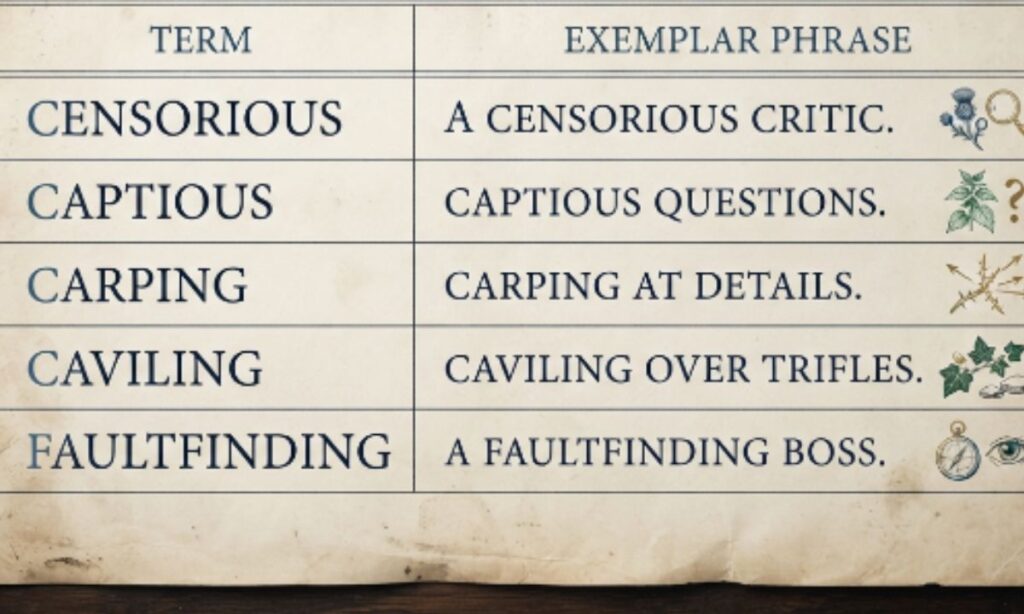
Faultfinding
Meaning: “Faultfinding” refers to the habit of constantly pointing out mistakes or weaknesses. Someone with a faultfinding attitude tends to notice problems before recognizing achievements. Over time, this behavior can lower confidence and discourage teamwork. The word suggests a repeated pattern instead of an isolated incident.
Example: His faultfinding approach made employees nervous about sharing new ideas.
When It Fits: Use faultfinding in workplace culture articles, leadership discussions, management training, and team-building content.
Nitpicking
Meaning: “Nitpicking” means paying too much attention to tiny details that have little effect on the overall result. It often suggests that someone is focusing on small imperfections while ignoring the bigger picture. The word is informal, easy to understand, and commonly used in everyday conversation.
Example: Let’s stop nitpicking minor formatting issues and finish the report.
When It Fits: Use nitpicking in casual conversations, workplace communication, editing discussions, friendly debates, and productivity articles.
Disapproving
Meaning: “Disapproving” describes a quiet expression of disagreement or disappointment rather than open criticism. A disapproving person may not say anything directly, but their facial expression, tone, or body language clearly shows they are unhappy with a situation. This word creates a softer impression than stronger alternatives like “harsh” or “scathing.”
Example: She gave him a disapproving look after he interrupted the meeting again.
When It Fits: Use “disapproving” in stories, novels, descriptive writing, relationship articles, and character descriptions.
Censorious
Meaning: “Censorious” is a formal word used to describe someone who is overly eager to criticize or condemn others. It suggests constant moral judgment and an unwillingness to overlook mistakes. Because it has a literary tone, it appears more often in essays and formal writing than in everyday conversations.
Example: The editor criticized the article in such a censorious tone that several writers felt discouraged.
When It Fits: Use “censorious” in academic writing, literary analysis, opinion essays, historical discussions, and formal editorials.
Disparaging
Meaning: “Disparaging” refers to comments that belittle or reduce someone’s value, reputation, or abilities. Unlike constructive criticism, disparaging remarks are intended to make another person appear less capable or less important. The word carries a clear negative meaning and is commonly used in professional and legal discussions.
Example: Making disparaging remarks about coworkers can damage trust within a team.
When It Fits: Use “disparaging” in workplace policies, HR documents, professional communication, conflict resolution, and discussions about respectful behavior.
Hypercritical
Meaning: “Hypercritical” describes someone who criticizes far more than necessary. Instead of offering balanced feedback, a hypercritical person tends to focus on every small mistake, even when those mistakes have little impact.
This word suggests that the level of criticism is excessive and often unfair. Over time, this kind of behavior can lower confidence and discourage people from sharing ideas or taking initiative.
Example: The manager became so hypercritical that employees hesitated to present new ideas during meetings.
When It Fits: Use “hypercritical” in discussions about leadership, workplace culture, parenting, education, performance reviews, and perfectionism.
Analytical
Meaning: “Analytical” describes a thoughtful approach that focuses on examining facts, patterns, and evidence before concluding. Unlike words that suggest criticism, this one has a positive and professional tone.
An analytical person carefully studies information instead of making quick judgments. It emphasizes logic, careful thinking, and problem-solving.
Example: Her analytical review of the sales data helped the company identify new growth opportunities.
When It Fits: Use “analytical” in business reports, research papers, technical writing, academic discussions, and data-driven articles.
Discerning
Meaning: “Discerning” refers to someone with good judgment and the ability to notice details that others might miss. Rather than criticizing for the sake of criticism, a discerning person carefully evaluates quality and makes thoughtful decisions. The word carries a respectful tone and is often used as a compliment.
Example: A discerning reader will quickly recognize the difference between reliable information and unsupported claims.
When It Fits: Use “discerning” in product reviews, editorials, book reviews, lifestyle articles, and discussions about expertise or refined taste.
Evaluative
Meaning: “Evaluative” describes the process of examining or assessing something in a structured and objective way. It focuses on measuring quality, performance, or effectiveness without adding personal emotion. This word is common in education, research, and professional environments where careful assessment is required.
Example: The evaluative report measured every stage of the project before making recommendations.
When It Fits: Use “evaluative” in academic writing, research reports, business assessments, performance reviews, and professional documentation.
Perceptive
Meaning: “Perceptive” describes someone who notices important details and understands situations quickly. A perceptive person often recognizes patterns, emotions, or problems before others do. Unlike many words related to “critical,” this one has a positive meaning because it highlights insight rather than judgment.
Example: Her perceptive question encouraged the team to think about the long-term impact of the decision.
When It Fits: Use “perceptive” in interviews, meetings, leadership articles, educational content, compliments, and discussions about observation skills.
Discriminating
Meaning: “Discriminating” refers to having refined judgment and the ability to recognize quality. In this context, the word is unrelated to unfair treatment of people.
Instead, it describes someone who carefully chooses the best option based on knowledge, experience, or high standards. Because the word has multiple meanings, it should be used where the context clearly relates to careful selection.
Example: A discriminating buyer will notice the superior craftsmanship and attention to detail.
When It Fits: Use “discriminating” in product reviews, luxury brands, food and wine writing, design articles, and discussions about quality or craftsmanship.
Keen-eyed
Meaning: “Keen-eyed” is a descriptive phrase for someone with sharp observation skills and excellent attention to detail. It creates a more vivid image than many formal alternatives and adds personality to your writing.
A keen-eyed person often notices mistakes, patterns, or small changes that others overlook, making this phrase especially useful in creative and descriptive writing.
Example: The keen-eyed editor spotted a spelling mistake just moments before the article was published.
When It Fits: Use “keen-eyed” in creative writing, storytelling, descriptive profiles, editing discussions, journalism, and articles that highlight observation or attention to detail.
Which Alternative Fits Your Situation?
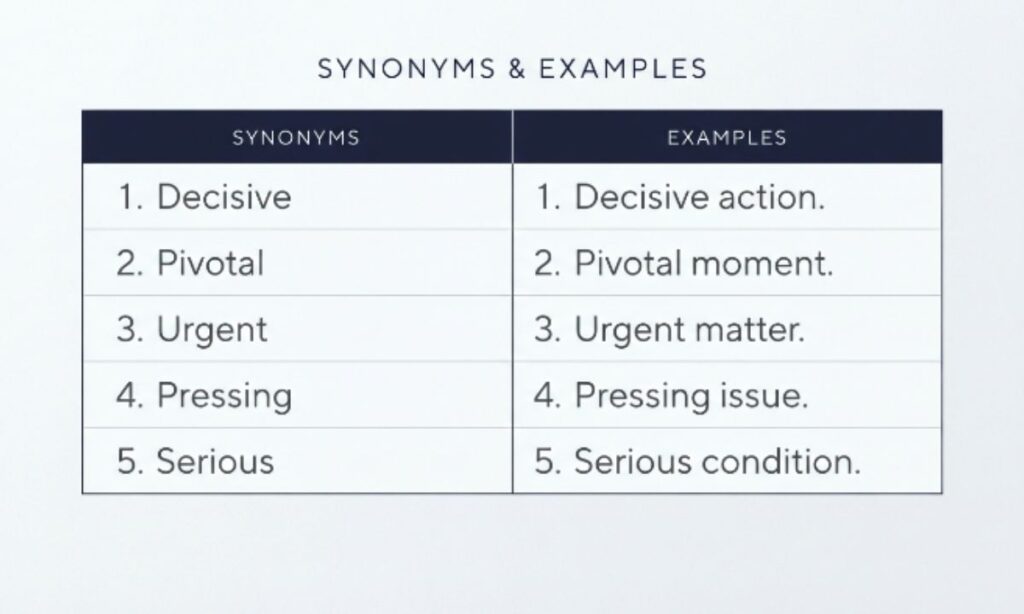
For work reports, choose “significant,” “essential,” or “analytical.” They sound professional without any emotional edge.
For emails, “urgent” and “crucial” communicate priority fast, without extra explanation needed.
For friends, casual words like “nitpicking” or “harsh” feel natural and relaxed.
For school assignments, “analytical,” “evaluative,” and “discerning” match academic expectations well.
For everyday conversation, simple words like “key,” “important,” and “harsh” flow naturally without sounding forced.
Common Mistakes
Many writers swap “critical” for a synonym without checking the sense first, mixing “urgent” into a sentence that actually needed “harsh.”
Some people overuse strong words like “scathing” or “censorious” for minor complaints, which makes writing feel exaggerated.
Others pick overly formal words, like “censorious,” in casual texts or chats, creating an awkward mismatch in tone.
A common slip is repeating the same synonym too often, which recreates the exact problem you were trying to fix.
Finally, some writers ignore emotional weight entirely, using “hypercritical” when they simply meant “thorough.”
Quick Comparison Table
| Phrase | Formal | Casual | Conversation | |
| Crucial | Yes | Yes | Yes | Yes |
| Urgent | Yes | Yes | Yes | Yes |
| Scathing | Yes | No | Rarely | Yes |
| Nitpicking | No | Yes | No | Yes |
| Analytical | Yes | No | Yes | Rarely |
| Discerning | Yes | No | Yes | Rarely |
| Harsh | No | Yes | Rarely | Yes |
| Essential | Yes | Yes | Yes | Yes |
| Judgmental | No | Yes | No | Yes |
| Momentous | Yes | No | Yes | No |
Frequently Asked Questions
Is “crucial” stronger than “critical”?
They’re close in strength, but “crucial” often feels slightly warmer and less clinical.
Can “harsh” and “scathing” be used interchangeably?
Not quite. “Scathing” is much stronger and usually reserved for public or written criticism.
What’s the most professional synonym for a business report?
“Significant” or “essential” work best because they stay neutral and clear.
Is “nitpicking” ever appropriate in formal writing?
Rarely. It’s better suited for a casual or conversational tone.
Which synonym works best for describing a doctor’s diagnosis?
“Urgent” or “vital” fit best, since they reflect seriousness without sounding judgmental.
Conclusion
Choosing the right synonym for “critical” makes your writing sharper and more precise. Each word here carries its own tone, from urgent and vital to harsh and analytical. Pick the one that matches your message, and your writing will instantly feel more natural and clear.