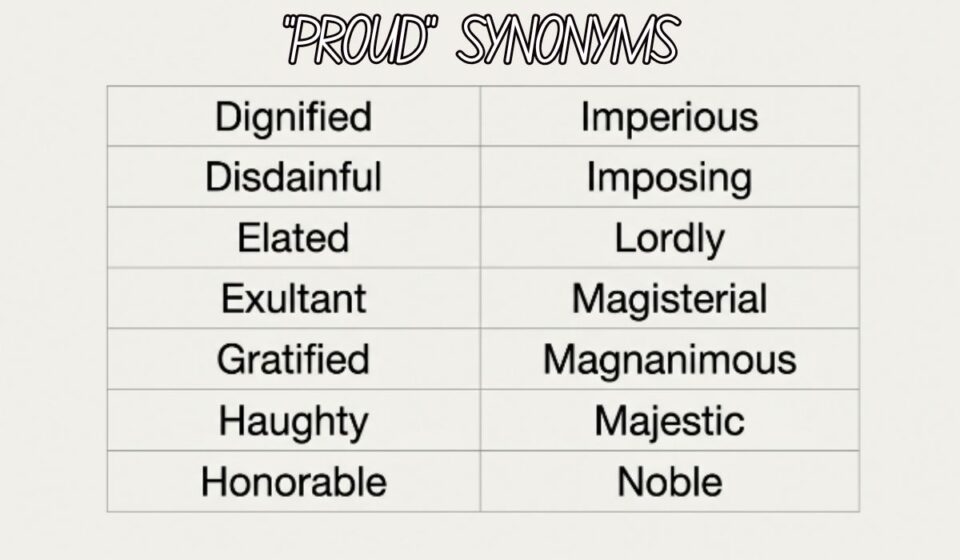

Repeating the same word over and over again makes your writing sound flat. We grab for the word “proud” all the time, in emails and essays and everyday conversation, but it can’t carry every shade of meaning on its own.
Knowing lots of alternatives helps you say exactly what you mean, whether that’s quiet satisfaction, genuine honor, or that someone is a little too pleased with themselves.
This guide lists 25 real alternatives to “proud,” with their own tone, intensity, and best use case, so you can select the right one without second-guessing yourself.
What Does “Proud” Really Mean?
At its heart, “proud” is a word that describes a feeling of pleasure or satisfaction at your own actions or the actions of someone close to you. It may also be a feeling of great self-respect.
Here is a simple example: A father watching his daughter graduate might say, “I am so proud of you.” He is not simply announcing a fact; he is expressing delight and satisfaction in her achievement.
The problem is that “proud” can also be negative. Being “too proud to ask for help” is shown as being stubborn or too self-important. Context tells you what side of the word you’re on.
Why Look for Alternatives?
Saying “proud” in every sentence feels repetitive and a little lazy. If you are speaking of five different moments of pride in one article or speech, the effect is dull if you use the same word each time.
There’s also a problem with precision. Wide is “proud.” It doesn’t tell your reader whether you mean gentle satisfaction, overwhelming joy, or arrogance. A more specific word does that work for you, so your reader doesn’t have to guess from the context alone.
Finally, tone is important. “Proud” can come off as casual in a formal e-mail or awkwardly stiff in a text to a friend. Having options allows you to match the word to the moment.
There’s a practical side to this too. Writing that gets noticed by both search engines and readers.
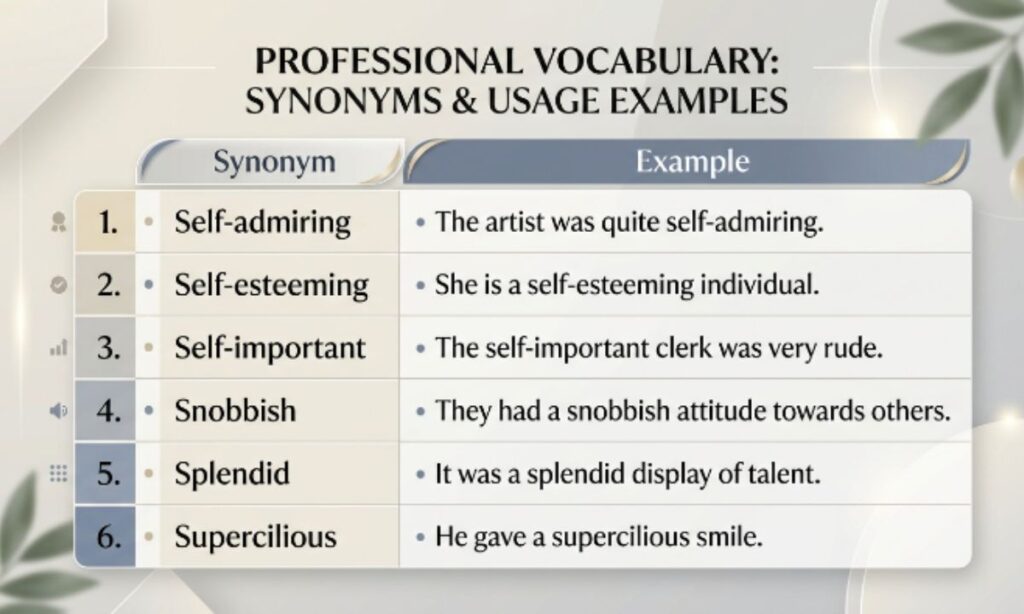
25 Synonyms for “Proud” and How to Use Them
Pleased
Meaning: This is a mild, everyday way to express satisfaction. It works for small wins and doesn’t carry much emotional weight.
Example: “I’m pleased with how the presentation turned out.”
When It Fits: Casual updates, feedback, and short check-ins at work.
Delighted
Meaning: This shows a stronger, brighter kind of happiness than “pleased.” It suggests genuine enthusiasm, not just approval.
Example: “We’re delighted to welcome you to the team.”
When It Fits: Warm announcements, welcome messages, and celebratory emails.
Gratified
Meaning: This word points to satisfaction that comes from seeing effort pay off. It has a slightly formal, reflective tone.
Example: “She felt gratified after years of research finally led to a breakthrough.”
When It Fits: Reflecting on long-term goals or hard-won achievements.
Satisfied
Meaning: This is a calm, settled kind of pride, focused on meeting expectations rather than exceeding them.
Example: “He was satisfied with his performance, even though the team lost.”
When It Fits: Performance reviews and personal reflections.
Honored
Meaning: This suggests pride mixed with respect, often tied to recognition from others rather than personal achievement alone.
Example: “I’m honored to accept this award on behalf of my team.”
When It Fits: Acceptance speeches and formal thank-you notes.
Glowing
Meaning: Used to describe visible pride, often through someone’s expression or energy. It’s vivid and works well in storytelling.
Example: “Her grandmother sat glowing in the front row during the ceremony.”
When It Fits: Descriptive writing, stories, and personal narratives.
Beaming
Meaning: Similar to glowing, but focused specifically on a smile or facial expression that reveals happiness.
Example: “He walked off the stage beaming after his speech.”
When It Fits: Describing someone’s reaction in the moment.
Fulfilled
Meaning: This points to a deep, personal sense of purpose rather than a quick emotional high.
Example: “Teaching makes her feel fulfilled in a way her old job never did.”
When It Fits: Career discussions and personal growth conversations.
Elated
Meaning: A stronger, more energetic form of happiness than most words on this list. It suggests excitement bordering on euphoria.
Example: “The team was elated after winning the championship.”
When It Fits: Big wins, celebrations, and high-energy moments.
Triumphant
Meaning: This word carries a sense of victory, often after overcoming a real struggle or challenge.
Example: “She gave a triumphant smile as she crossed the finish line.”
When It Fits: Sports, competitions, and stories about overcoming odds.
Dignified
Meaning: This describes calm self-respect, without any hint of showing off. It’s pride expressed through composure.
Example: “He handled the criticism in a dignified way, without raising his voice.”
When It Fits: Describing someone’s behavior under pressure.
Self-respecting
Meaning: This focuses on someone’s inner standards rather than outside praise. It suggests pride rooted in personal values.
Example: “A self-respecting employee won’t tolerate being talked down to.”
When It Fits: Discussing boundaries and personal standards.
Honorable
Meaning: This word connects pride to good character and ethical behavior, rather than achievement alone.
Example: “It was honorable of him to admit the mistake publicly.”
When It Fits: Describing integrity-driven decisions.
Distinguished
Meaning: This suggests pride tied to a strong reputation, often built over time through skill or achievement.
Example: “She’s had a distinguished career in medicine spanning three decades.”
When It Fits: Bios, introductions, and professional profiles.
Confident
Meaning: This shifts the focus slightly, from feeling proud of something already done to trusting your own ability going forward.
Example: “He walked into the interview confident and well-prepared.”
When It Fits: Talking about mindset before a challenge.
Accomplished
Meaning: This word describes pride that comes directly from measurable achievement or skill.
Example: “She’s an accomplished pianist who started playing at age five.”
When It Fits: Describing someone’s talents or track record.
Arrogant
Meaning: This is the first clearly negative synonym on the list. It describes someone who thinks too highly of themselves and shows it.
Example: “His arrogant tone made it hard for the team to trust his advice.”
When It Fits: Criticizing overconfident behavior.
Conceited
Meaning: This focuses specifically on excessive self-admiration, often about appearance or ability.
Example: “She’s talented, but her conceited attitude turns people off.”
When It Fits: Describing someone overly focused on their own image.
Haughty
Meaning: This word adds a layer of coldness or superiority to pride, often paired with looking down on others.
Example: “The manager’s haughty response embarrassed the whole room.”
When It Fits: Describing dismissive or condescending behavior.
Smug
Meaning: This describes quiet, self-satisfied pride, usually shown through expression rather than words.
Example: “He gave a smug grin after proving his point.”
When It Fits: Describing subtle, mildly annoying satisfaction.
Boastful
Meaning: This word points to pride expressed loudly and repeatedly, usually through bragging.
Example: “His boastful stories about the deal got old fast.”
When It Fits: Describing someone who talks too much about their wins.
Pompous
Meaning: This suggests exaggerated self-importance, often shown through overly formal or inflated language.
Example: “The pompous speech went on for twenty minutes longer than it needed to.”
When It Fits: Describing someone who takes themselves too seriously.
Vain
Meaning: This word centers on excessive concern with one’s own appearance or accomplishments.
Example: “He’s too vain to wear glasses, even though he needs them.”
When It Fits: Describing appearance-focused self-importance.
Egotistical
Meaning: This describes someone who consistently puts their own interests and opinions above everyone else’s.
Example: “Her egotistical approach to meetings left no room for other ideas.”
When It Fits: Workplace conflicts and leadership critiques.
Self-important
Meaning: This word describes someone who overestimates their own significance, often without much to back it up.
Example: “He acted self-important for a role he’d only had for a week.”
When It Fits: Describing someone who oversteps their actual position.
Which Alternative Works Best For Different Situations?
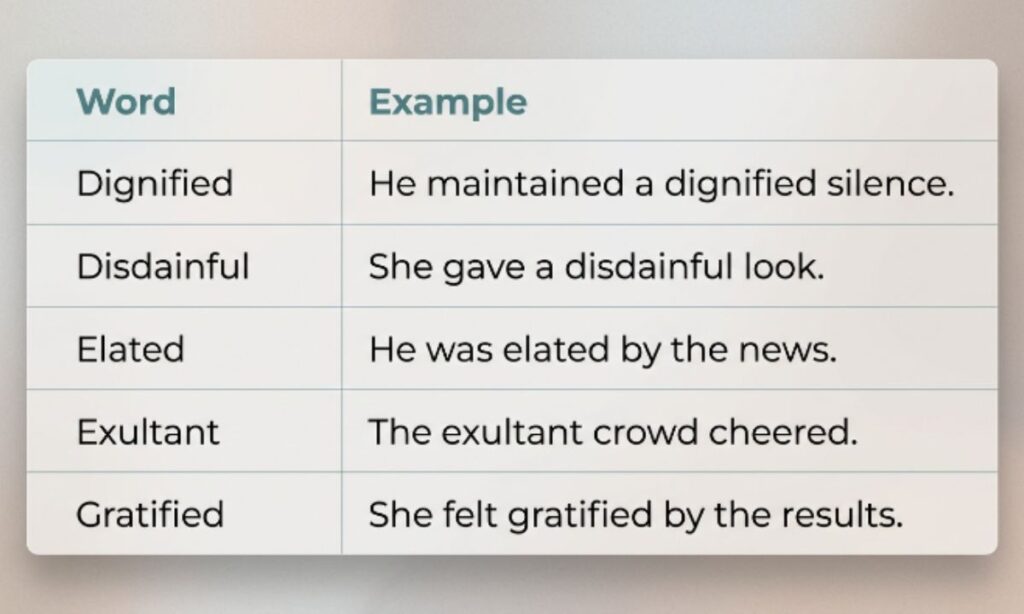
For work: Use “gratified,” “accomplished,” or “distinguished.” These sound professional without being stiff.
For emails: “Pleased,” “delighted,” and “honored” strike the right formal-but-warm tone.
For friends: “Beaming,” “elated,” and “glowing” feel natural in casual conversation.
For school: “Fulfilled” and “confident” work well in essays and personal statements.
For everyday conversation: “Pleased” and “satisfied” are simple, low-key, and always appropriate.
Common Mistakes
People often substitute a synonym for “proud” without checking the tone. “Smug” instead of “pleased” turns a compliment into an insult.
Another common mistake is to neglect intensity. They’re not the same thing, ‘elated’ (five syllables) and ‘satisfied’; one is a quiet nod, the other is a burst of joy.
Writers also accidentally mix positive and negative synonyms. When you say someone is ‘accomplished’ and you mean they are ‘boastful,’ you completely turn the sentence around.
What happens is that people sometimes get carried away with formal words like “distinguished” in casual writing, and it makes a simple message seem stiff or awkward.
And finally, many forget that synonyms for pride are not always interchangeable as adjectives for people and achievements. For instance, “triumphant” is much better suited for a moment or a victory than for a personality trait.
There is also the tendency to grab a thesaurus and pick whatever word looks most impressive, not the word that actually fits. A five-syllable synonym doesn’t automatically sound smarter; it can just sound out of place. Almost always the best choice is the word a real person would use in that moment.
Quick Comparison Table
| Phrase | Formal | Casual | Conversation | |
| Pleased | Yes | Yes | Yes | Yes |
| Delighted | Yes | No | Yes | Somewhat |
| Gratified | Yes | No | Yes | No |
| Honored | Yes | No | Yes | Somewhat |
| Beaming | No | Yes | No | Yes |
| Fulfilled | Somewhat | Yes | Somewhat | Yes |
| Elated | Somewhat | Yes | No | Yes |
| Dignified | Yes | No | Somewhat | No |
| Accomplished | Yes | Somewhat | Yes | Somewhat |
| Arrogant | Yes | Yes | No | Yes |
| Smug | No | Yes | No | Yes |
| Boastful | Somewhat | Yes | No | Yes |
Frequently Asked Questions
What’s the most natural everyday alternative to “proud”?
“Pleased” works in almost any casual or professional setting without sounding forced.
Is “confident” the same as “proud”?
Not quite. “Confident” looks forward to what you can do, while “proud” looks back at what you’ve already done.
Which synonym fits a formal thank-you speech?
“Honored” or “gratified” both carry the right weight for formal recognition.
Can “arrogant” and “confident” mean the same thing?
No, confidence is seen as healthy self-belief, while arrogance suggests looking down on others.
Why does word choice matter so much for a simple feeling like pride?
Because pride ranges from quiet satisfaction to open bragging, and the wrong word can send the wrong message entirely.
Conclusion
Pride isn’t one feeling; it’s a whole spectrum, from quiet satisfaction to loud arrogance. Choosing the right synonym lets you say exactly what you mean instead of settling for a word that almost fits. Keep this list handy, and your writing will sound sharper, warmer, and a lot more human.