
You use “this” all the time. It points to a thing, an idea, or a moment. But it can get vague when you repeat it.
A better choice makes your meaning clear. This guide gives you 40 alternatives for another word for this. Each one comes with a plain explanation and real examples.
Another Word for This: Quick Facts
| Detail | Information |
| Word | This |
| Type | Demonstrative pronoun, demonstrative determiner, and adverb |
| Pronunciation | THIS |
| Plural form | These |
| Opposite form | That (far), those (far, plural) |
| Core job | Points to something near in space, time, or thought |
| Standalone use | “This is great.” |
| Before a noun | “This plan works.” |
| Common alternatives | It, that, the issue, the latter, such |
| Tone | Neutral, fits casual and formal writing |
What Is Another Word for This?
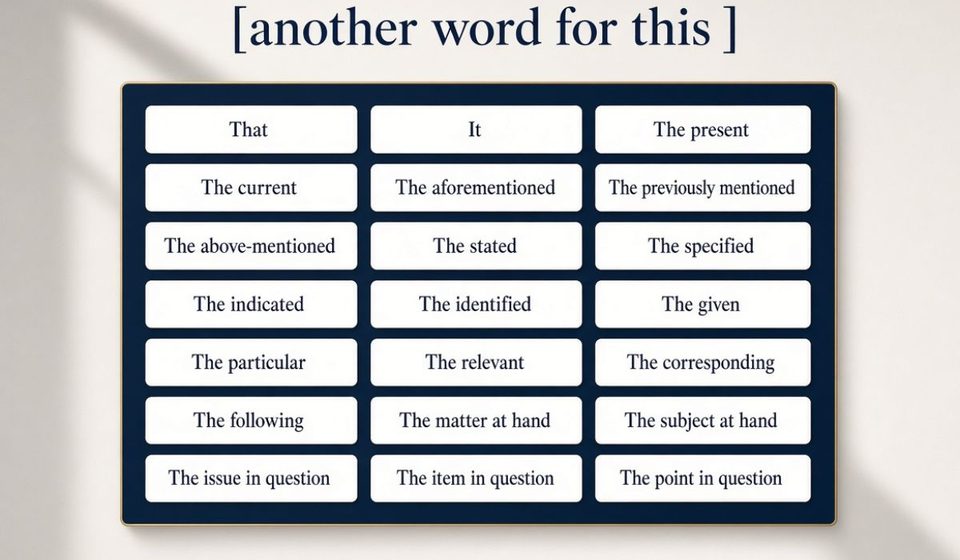
The best alternative depends on how you use it. Use it or that when “this” stands alone. Use the issue, the plan, or the result when you can name the thing. Use the latter or the aforementioned in formal writing.
The key is the job “this” is doing. It either replaces a noun or points to one. Pick your replacement based on that job.
Why Replacing This Is Not Always Simple
“This” works in two ways. As a pronoun, it stands alone: “This is my favorite.” As a determiner, it sits before a noun: “This song is my favorite.”
Adjectives like useful, quick, or reliable do not replace “this.” They describe a noun and add new information. “This plan” and “a reliable plan” say different things.
A true replacement keeps the same thing in view. It points to the same item, idea, or moment. Test every swap by asking, “Does my reader still know what I mean?”
When to Keep This
Repeating “this” is not always a mistake. It is short and clear when the reference is obvious.
Keep it when:
- The noun sits right beside it, as in “this chair.”
- It points to something your reader can see or just read.
- A swap would make the sentence stiff or long.
Change it when the reader could ask, “This is what?” That question signals a vague reference. Fix it by adding a noun or choosing a sharper word.
Quick Guide: Which Replacement Fits?
| Original use | Better option | Example |
| Standalone, casual | It, that | “It works well.” |
| Standalone, unclear | The issue, the result | “The result surprised us.” |
| Before a noun | The, the same, such | “Such errors are rare.” |
| Pointing backward, formal | The latter, aforementioned | “The latter option costs less.” |
| Pointing to time | Now, at the moment | “Now we can begin.” |
| Pointing to a place | Here | “Here is the file.” |
Use the table for a fast choice. Then read the full entries below for tone and context.
The list below starts with simple swaps and moves toward formal ones.
It
Meaning: A neutral pronoun that points to something already named.
It keeps your sentence smooth and light. It avoids the weight of a repeated pointer. Readers feel the flow instead of noticing the word.
Examples:
- I read the report, and it was clear.
- We fixed the leak, and it stayed fixed.
When It Fits: Talking about an object you just mentioned.
Pronunciation: IT
That
Meaning: A pointer for something farther away in space, time, or thought.
That adds a little distance. It can sound calm when a topic feels heavy. It also feels natural in speech.
Examples:
- That was the best meal I have had all year.
- I did not expect that.
When It Fits: Reacting to something that just happened.
Pronunciation: THAT
The Issue
Meaning: A named topic or concern that needs attention.
The issue gives your reader a clear target. It shows you know what you are discussing. That builds trust fast.
Examples:
- The issue came up again during the meeting.
- We need to solve the issue before Friday.
When It Fits: Discussing a work concern with a team.
Pronunciation: ISH-oo
The Problem
Meaning: A named difficulty that needs a fix.
The problem is direct and honest. It names the trouble without drama. People feel ready to act when they hear it.
Examples:
- The problem is that the file is too large.
- She found the problem in ten minutes.
When It Fits: Explaining why a tool stopped working.
Pronunciation: PROB-lum
The Matter
Meaning: A subject being discussed or decided.
The matter sounds calm and serious. It gives weight without alarm. It works well when emotions run high.
Examples:
- The matter is now closed.
- We will look into the matter tomorrow.
When It Fits: Wrapping up a formal discussion.
Pronunciation: MAT-er
The Situation
Meaning: The set of facts and conditions around an event.
The situation widens the view. It tells people you see the full picture. That helps others feel understood.
Examples:
- The situation changed overnight.
- I understand the situation, and I want to help.
When It Fits: Replying to a friend who is under stress.
Pronunciation: sit-yoo-AY-shun
The Idea
Meaning: A thought or suggestion that was just shared.
The idea gives credit to the person who spoke. It shows you listened. That makes people feel valued.
Examples:
- The idea needs a little more work.
- I like the idea of a shorter meeting.
When It Fits: Responding to a suggestion in a brainstorm.
Pronunciation: eye-DEE-uh
The Plan
Meaning: A set of steps made to reach a goal.
The plan points to something organized. It signals that effort went into it. Readers feel more confident as a result.
Examples:
- The plan starts with a short test.
- Everyone agreed the plan was fair.
When It Fits: Reviewing a schedule for a trip.
Pronunciation: PLAN
The Result
Meaning: The outcome of an action or test.
The result moves attention to what happened. It feels factual and fair. It helps readers focus on evidence.
Examples:
- The result surprised the whole class.
- We checked the result twice.
When It Fits: Sharing news after an experiment or exam.
Pronunciation: rih-ZULT
The Fact
Meaning: Something known to be true.
The fact adds firmness to a sentence. It tells readers they can rely on the point. It lowers the chance of a debate.
Examples:
- The fact is that we ran out of time.
- She could not ignore the fact.
When It Fits: Making a clear point in a discussion.
Pronunciation: FAKT
The Point
Meaning: The main idea in what was said.
The point pulls focus to what matters most. It shows respect for the reader’s time. People like it when you get to the core.
Examples:
- The point is to save money, not spend it.
- I see the point you are making.
When It Fits: Summing up a long conversation.
Pronunciation: POYNT
The Step
Meaning: One stage in a process.
The step makes a task feel small. It breaks big work into pieces. That lowers stress.
Examples:
- The step takes about two minutes.
- Skip the step if the file is already saved.
When It Fits: Giving instructions for a simple setup.
Pronunciation: STEP
The Approach
Meaning: A way of handling a task or problem.
The approach points to a method, not just a result. It invites others to compare options. That keeps a conversation open.
Examples:
- The approach worked well for small teams.
- I would change the approach if the budget shrinks.
When It Fits: Comparing ways to study for a test.
Pronunciation: uh-PROHCH
The Reason
Meaning: The cause behind an action or event.
The reason answers a “why” before it is asked. It shows you have thought things through. Readers feel respected.
Examples:
- The reason is simple: we lacked time.
- I never learned the reason.
When It Fits: Explaining a late reply.
Pronunciation: REE-zun
The Above
Meaning: Something stated earlier on the page.
The above sends readers back with one short word. It keeps long documents tidy. It also saves space.
Examples:
- The above applies to all new staff.
- Please review the above before signing.
When It Fits: Ending a short written notice.
Pronunciation: thuh uh-BUV
The Following
Meaning: Something about to be named.
The following prepares readers for what comes next. It sets up a list or step. That makes reading easier.
Examples:
- Please bring the following to the interview.
- The following rules apply to everyone.
When It Fits: Introducing a list in an email.
Pronunciation: thuh FOL-oh-ing
Explore More Synonyms Guide
However Synonym: 22 Smart Alternatives and How to Use Them
Experience Synonym: 30 Better Words for Every Context
Smart Synonym: 30 Better Words and When to Use Them
Popular Synonym: 25 Better Words and When to Use Them
The Latter
Meaning: The second of two things just named.
The latter gives clean precision. It shows you kept two items straight. That adds a polished feel.
Examples:
- We can drive or fly, and the latter is faster.
- Of the two designs, I prefer the latter.
When It Fits: Comparing two choices in a report.
Pronunciation: LAT-er
The Former
Meaning: The first of two things just named.
The former pairs with the latter. It helps readers track a choice. It sounds careful and organized.
Examples:
- Between rent and buying, the former costs less now.
- She chose the former option.
When It Fits: Weighing two choices in writing.
Pronunciation: FOR-mer
Aforementioned
Meaning: Named earlier in the same text.
Aforementioned sounds official and exact. It leaves little room for doubt. Use it sparingly, since it can feel stiff.
Examples:
- The aforementioned policy takes effect in May.
- Please contact the aforementioned office.
When It Fits: Writing a formal letter or contract.
Pronunciation: uh-FOR-men-shund
Said
Meaning: A legal or formal way to point back to a named item.
Said is short and sharp. It removes confusion in technical writing. Outside legal text, it can sound odd.
Examples:
- The tenant must repair said equipment.
- Said document must be signed in ink.
When It Fits: Reading or drafting a legal notice.
Pronunciation: SED
Such
Meaning: Of the kind just named.
Such a widening of a single case into a type. It helps you speak about patterns. That gives your point more reach.
Examples:
- Such mistakes are easy to fix.
- I have never seen such a view.
When It Fits: Talking about a type of problem.
Pronunciation: SUCH
The Same
Meaning: Identical to what was just named.
The same stresses sameness. It reminds readers nothing has changed. That brings comfort and clarity.
Examples:
- The same rule applies to everyone.
- I had the same thought.
When It Fits: Agreeing with a friend.
Pronunciation: THUH SAYM
The One
Meaning: A single item picked from a group.
The one narrows attention. It helps readers focus on a clear choice. It sounds friendly and direct.
Examples:
- The one on the left is mine.
- I want the one with the blue cover.
When It Fits: Choosing between items in a shop.
Pronunciation: Thuh WUN
The Current
Meaning: Happening or existing now.
The current ties a noun to the present moment. It separates today’s version from older ones. That keeps readers up to date.
Examples:
- The current plan ends in June.
- Please use the current version of the form.
When It Fits: Updating a team on a changing document.
Pronunciation: thuh KUR-unt
The Present
Meaning: Existing at this moment in time.
The present sounds a bit more formal than current. It gives a calm, measured tone. It works well in reports.
Examples:
- The present budget leaves no room for extras.
- In the present case, we will wait.
When It Fits: Writing a short business update.
Pronunciation: thuh PREZ-unt
Here
Meaning: In the place being pointed to.
Here brings the listener into the space. It feels warm and personal. It makes answers feel close.
Examples:
- Here is the answer you wanted.
- Here, the rules are simple.
When It Fits: Handing someone a document in person.
Pronunciation: HEER
Now
Meaning: At the present moment.
Now creates a sense of timing. It signals that something is ready. That helps people move forward.
Examples:
- Now we can start the lesson.
- I am free now, if you want to talk.
When It Fits: Opening a meeting or a task.
Pronunciation: NOW
At the Moment
Meaning: During the current time.
At the moment sounds soft and open. It hints that things might change. That leaves room for flexibility.
Examples:
- At the moment, the store has no stock.
- I have no plans at the moment.
When It Fits: Replying to a customer question.
Pronunciation: at thuh MOH-ment
These
Meaning: Plural form for things that are near or just named.
These widens your focus to a group. It keeps the noun count accurate. That avoids mistakes in number.
Examples:
- These results look better than last year.
- Which of these do you prefer?
When It Fits: Pointing to several items on a table.
Pronunciation: THEEZ
Those
Meaning: Plural form for things that are farther away.
Those adds distance to a group. It can feel gentle when a topic feels touchy. It also marks a clear separation.
Examples:
- Those were great years.
- I will take those, please.
When It Fits: Remembering past events with friends.
Pronunciation: THOHZ
The Preceding
Meaning: Coming just before in order or position.
The preceding is exact about order. It points readers to the right spot. That cuts confusion in long text.
Examples:
- The preceding chapter explains the basics.
- Refer to the preceding step if the screen goes blank.
When It Fits: Guiding a reader through a manual.
Pronunciation: pree-SEE-ding
The Given
Meaning: Already stated or known.
The given treats information as settled. It saves time and avoids repeats. It also shows confidence.
Examples:
- Use the given formula to find the answer.
- Within the given time, we finished early.
When It Fits: Solving a problem in class.
Pronunciation: thuh GIV-un
The Stated
Meaning: Clearly declared earlier.
The stated brings back a claim in plain terms. It shows you remember the details. Others feel heard.
Examples:
- The stated goal is to cut costs by ten percent.
- We met the stated deadline.
When It Fits: Reviewing the aims of a project.
Pronunciation: thuh STAY-tid
The Mentioned
Meaning: Talked about earlier.
The mentioned is simple and easy to read. It links two parts of a conversation. It feels light compared to aforementioned.
Examples:
- The mentioned deadline has not changed.
- I checked the mentioned site and found the answer.
When It Fits: Following up on an email.
Pronunciation: thuh MEN-shund
The Particular
Meaning: One chosen item, not any other.
The particular zooms in on a single case. It shows care for detail. That helps people feel their needs matter.
Examples:
- The particular model I want is sold out.
- She loves that particular song.
When It Fits: Asking for one exact item in a store.
Pronunciation: thuh per-TIK-yuh-ler
The Specific
Meaning: Exact and clearly defined.
The specific draws a firm line. It avoids vague talk. That makes your message sharper.
Examples:
- The specific error appears on page four.
- Tell me the specific time you need.
When It Fits: Asking for exact details on a project.
Pronunciation: thuh spuh-SIF-ik
The Item
Meaning: A single thing in a group or list.
The item treats a thing as one piece among many. It is neutral and tidy. It works well in lists and orders.
Examples:
- The item arrived on Monday.
- Please check the item before you pay.
When It Fits: Talking about a package or an order.
Pronunciation: thuh EYE-tum
The Thing
Meaning: A loose word for any object or idea.
The thing is easy and relaxed. It feels natural in speech. Use it when the noun is clear from context.
Examples:
- The thing is, I forgot my keys.
- The thing on the shelf is mine.
When It Fits: Chatting with a friend.
Pronunciation: thuh THING
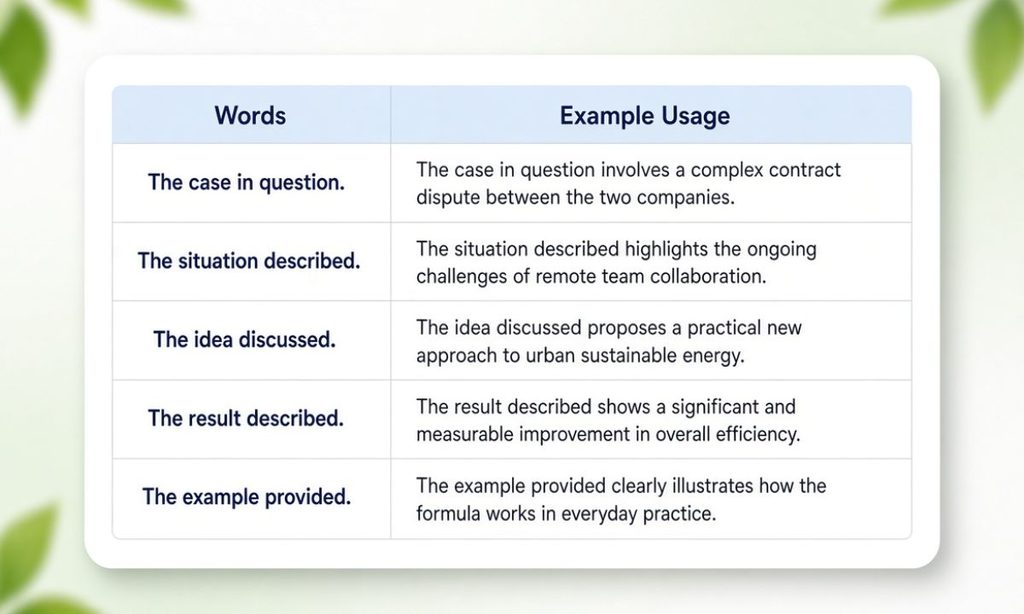
The Case
Meaning: A specific example or instance.
The case frames a matter as one example. It sounds careful and fair. It works in work and study.
Examples:
- In that case, we should wait.
- The case needs more review.
When It Fits: Talking over one customer situation.
Pronunciation: thuh KAYSS
The Topic
Meaning: The subject of a talk or text.
The topic keeps people on track. It tells them what the discussion is about. That keeps meetings calm and focused.
Examples:
- The topic came up at lunch.
- Let’s move on to the next topic.
When It Fits: Guiding a group conversation.
Pronunciation: thuh TOP-ik
Alternatives for Common Phrases With This
Some phrases come up again and again. Here are easy swaps.
- Because of this: for that reason, as a result, so
- This means that, in other words, it follows that
- This shows: the data shows, the result proves, and it points to
- At this point: by now, right now, at the moment
- This is why: that is why, which is why
- After this: next, afterward, once that is done
Pick the version that matches your tone. Casual writing likes “so” and “that is why.” Formal writing likes “as a result” and “it follows that.”
Common Mistakes When Replacing This
Using an adjective as a stand-in. Words like “useful,” “quick,” or “strong” describe. They do not point. Keep the noun in view.
Making the reference vague. “It” can confuse readers if two nouns sit nearby. Name the noun instead.
Overusing formal words. Aforementioned and said can sound stiff. Save them for legal or official text.
Changing the distance. “That” feels farther than “this.” The shift can change the mood of a sentence.
Dropping a clear “this.” If the pointer is already precise, leave it alone.
Frequently Asked Questions
What is another word for this?
It, that, and the issue are common replacements, depending on context.
Can I replace this with it?
Yes, when the thing is clear, but “this” adds emphasis that “it” can lose.
Is it wrong to start a sentence with this?
No, as long as the thing it points to is clear to the reader.
Is there a formal alternative to this?
Aforementioned, the latter, and the preceding all work in formal writing.
When should I keep this instead of replacing it?
Keep it when the reference is clear and a swap would sound stiff.
Conclusion
Choosing another word for this starts with one question: what is “this” pointing to? If it stands alone, try it, that, or a clear noun like the issue or the result. If it points backward in formal writing, use the latter, the preceding, or aforementioned. If it points to time or place, try now, at the moment, or here. Keep “this” when your reader already knows what you mean, since it is short, clear, and natural. Test each swap by checking that your meaning stays the same, and your writing will read cleaner and sound more like you.