
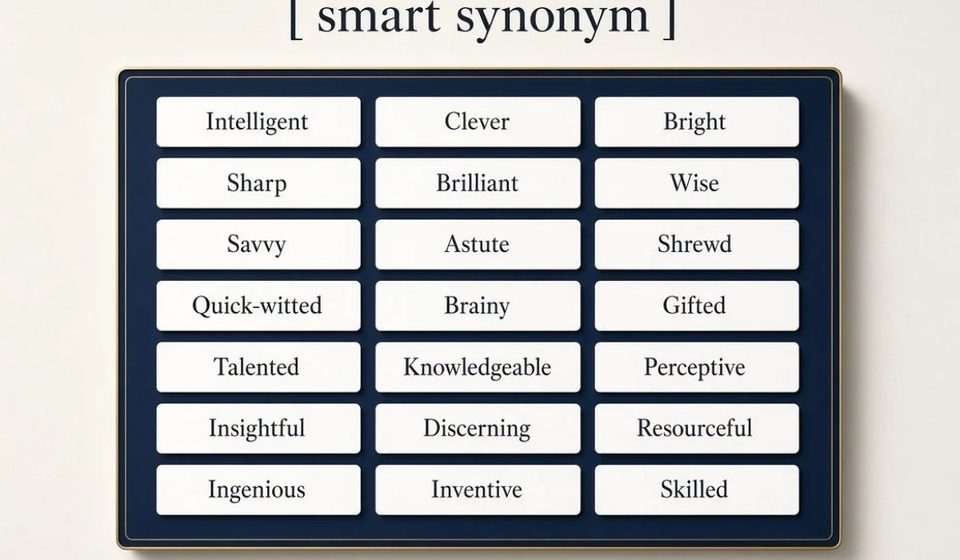

Smart is a small word with many meanings. It can mean clever, wise, stylish, or even rude. This guide gives you another word for smart in each case.
You will see short meanings, examples, and easy sounds. Pick the word that fits your sentence and your tone. Your writing will sound clearer and more natural.
Smart at a Glance
| Word | Smart |
| Parts of speech | Adjective, verb, noun, and adverb |
| Sound | SMART |
| Core meaning | Intelligent, quick-thinking, or showing good judgment |
| Other meanings | Neatly dressed, cheeky, computer-controlled, brisk, or painfully stinging |
| Word forms | Smarter, smartest, smartly, smartness, smarts, smarting |
| Regional note | Many Americans hear “clever” first. Many British readers also hear “neat and stylish.” |
| Common opposites | Dull, foolish, naive, slow, sloppy, unfashionable |
| Best formal swaps | Intelligent, astute, perceptive, insightful |
| Best casual swaps | Clever, sharp, brainy, on the ball |
What Does Smart Mean?
Smart most often means intelligent or quick to understand. A smart student learns fast. A smart investor sees risk early.
The word also describes choices. A smart move, a smart decision, and a smart idea all show sound thinking. Here the word means practical, not bookish.
Smart has other lives too. In British English, a smart jacket is neat and polished. As a verb, eyes can smart from smoke. In technology, a smart device uses a computer to make its own choices.
Because of this range, a flat list of synonyms often fails. The right word depends on the meaning you want.
How to Choose the Right Word for “Smart”
| If You Mean… | Try These Words |
| General mental ability | Intelligent, bright, gifted |
| Quick thinking | Sharp, quick-witted, on the ball |
| A practical choice | Wise, savvy, astute, sound |
| Humor with brains | Witty, clever |
| Neat or fashionable looks | Stylish, dapper, elegant, chic |
| Computer-driven tools | Intelligent, connected, automated |
| A fast, firm pace | Brisk, rapid, energetic |
| A stinging feeling | Sting, ache, burn, throb |
Test your swap inside the sentence. “A smart decision” can become “a wise decision” or “a shrewd decision.” But “a bright decision” feels odd, because bright suits learners more than choices.
Best Synonyms for Smart Intelligence
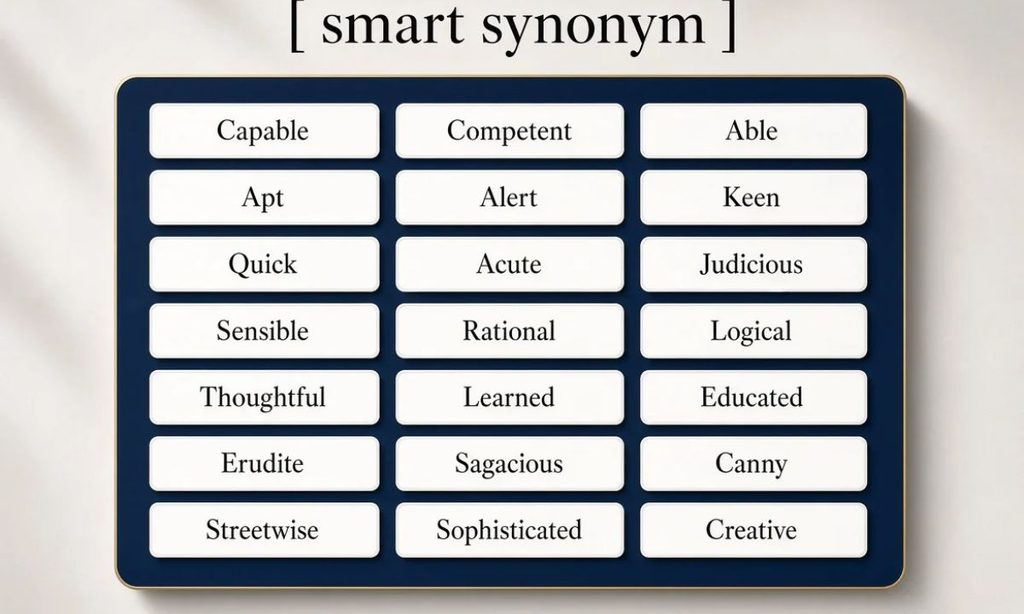
These nine words work when you praise a person’s mind. They range from formal to casual.
Intelligent
Meaning: Able to learn, reason, and understand well. It is the safest swap for smart in almost any setting.
This word sounds calm and respectful. It praises the mind without any teasing. The listener feels taken seriously, and that builds trust quickly.
Examples:
She is an intelligent analyst who explains hard topics in plain words.
An intelligent question can change the direction of a whole meeting.
When It Fits: Job references, school reports, and any formal praise.
Pronunciation: in-TEL-uh-jent
Clever
Meaning: Quick at finding ideas or solutions, often with a playful twist.
Clever feels warm and a little amused. It celebrates creativity more than test scores. The person feels noticed for how they think, not just what they know.
Examples:
That was a clever way to fix a leaking tap with a spare washer.
He gave a clever answer, and the whole room laughed.
When It Fits: Praising a neat trick, a puzzle solution, or a sharp reply at home.
Pronunciation: KLEV-er
Bright
Meaning: Quick to learn. People use it mostly for children, students, and new hires.
Bright feels hopeful and kind. It points to potential, not only results. Young learners hear it as encouragement and want to try harder.
Examples:
My bright nephew reads two books every week.
We hired a bright intern who learned the system in days.
When It Fits: Parent-teacher chats and talking about a promising learner.
Pronunciation: BRITE
Sharp
Meaning: Mentally alert and fast to notice details.
Sharp signals respect for focus and speed. It tells someone you trust their attention. It is also a kind compliment for older people, because it says their mind is still strong.
Examples:
My grandfather is still sharp at ninety.
She has a sharp eye for errors in a contract.
When It Fits: Praising someone who spots a mistake in a bill or a report.
Pronunciation: SHARP
Brilliant
Meaning: Extremely intelligent or impressive.
Brilliant is strong, bright praise. It makes a person feel exceptional. Use it sparingly, because overuse weakens its power.
Examples:
The lead engineer is a brilliant problem solver.
That was a brilliant plan, and it worked on the first try.
When It Fits: Celebrating a standout result after a big project.
Pronunciation: BRIL-yunt
Quick-witted
Meaning: Fast at thinking and replying, especially under pressure.
This word admires speed and calm together. It suggests someone who stays steady when things go wrong. People around them feel safer and more entertained.
Examples:
A quick-witted host saved the awkward moment with a joke.
The quick-witted driver stopped just in time.
When It Fits: Describing someone who handles surprises well.
Pronunciation: kwik-WIT-id
Brainy
Meaning: An informal word for studious and clever.
Brainy is friendly and a little teasing. It feels affectionate between friends and family. It can sound childish in formal writing, so keep it casual.
Examples:
Our brainy cousin won the science fair again.
He was the brainy kid who loved chess.
When It Fits: Chatting with friends about a bookish person.
Pronunciation: BRAY-nee
Gifted
Meaning: Born with unusual talent or ability.
Gifted suggests natural talent and makes people feel special. It can also add pressure. Pair it with a nod to hard work to keep the praise balanced.
Examples:
She is a gifted mathematician at only twelve.
A gifted teacher makes every student feel capable.
When It Fits: Describing a young talent, an artist, or an inspiring teacher.
Pronunciation: GIF-tid
On the ball
Meaning: Alert, prepared, and quick to act.
This phrase is friendly workplace praise. It values readiness over brilliance. Colleagues feel appreciated as dependable, which lifts team spirit.
Examples:
Our receptionist is really on the ball today.
You were on the ball when you booked the venue early.
When It Fits: A team chat after someone handles a task fast.
Pronunciation: on the BAWL
Synonyms for Practical Judgment and Street Sense
Use these when smart means making good real-world choices. They fit business, money, and daily life.
Wise
Meaning: Showing good judgment built on experience.
Wise feels calm and trustworthy. It honors patience and care. People hearing it feel safe and understood.
Examples:
It was wise to save money before buying a car.
My aunt always gives wise advice.
When It Fits: Praising a careful choice or an elder’s advice.
Pronunciation: WYZE
Savvy
Meaning: Practical know-how, especially with money, tech, or people.
Savvy sounds modern and confident. It tells someone they can handle real life. It is a compliment about skill, not about school.
Examples:
She is a savvy shopper who never pays full price.
A tech-savvy teen set up the new router in minutes.
When It Fits: Talking about money, marketing, or technology skills.
Pronunciation: SAV-ee
Astute
Meaning: Sharp at reading a situation and seeing the advantage in it.
Astute carries polished, professional respect. It makes the person feel thoughtful and observant. It works well when you want praise that sounds measured.
Examples:
An astute investor spotted the risk early.
Her astute comment changed the whole plan.
When It Fits: Reports, performance reviews, and meetings.
Pronunciation: uh-STOOT
Shrewd
Meaning: Practical and hard to fool, sometimes a little calculating.
Shrewd mixes admiration with caution. It praises skill in a deal, yet it can hint at cold calculation. Pick it when you want to praise strategy, not warmth.
Examples:
He made a shrewd offer and won the deal.
A shrewd negotiator never shows her hand.
When It Fits: Negotiations and competitive business talk.
Pronunciation: SHROOD
Canny
Meaning: Careful and clever, especially about money and risk.
Canny feels cosy and a little old-fashioned. It praises thrift and caution. The person feels seen as dependable and sensible.
Examples:
A canny shopper waits for the sale.
She made a canny move by asking for the terms in writing.
When It Fits: Everyday money choices.
Pronunciation: KAN-ee
Resourceful
Meaning: Good at finding ways forward with limited tools.
Resourceful builds confidence. It tells people they stay calm in a crisis. It also honors effort, not only talent.
Examples:
A resourceful student found free study guides online.
He was resourceful enough to fix the bike with a spare cable.
When It Fits: Resumes, cover letters, and recommendations.
Pronunciation: ri-ZORS-ful
Streetwise
Meaning: Smart from real-life experience rather than classroom study.
Streetwise respects lived experience. It pushes back on the idea that only school makes a person smart. People feel proud when they hear it.
Examples:
The streetwise courier knows every shortcut in town.
She is streetwise about online scams.
When It Fits: Casual talk about someone who learned by doing.
Pronunciation: STREET-wyze
Judicious
Meaning: Showing careful, sensible judgment.
Judicious carries calm authority. It suggests maturity and balance. Readers feel they are in steady hands.
Examples:
A judicious use of the budget saved the project.
She made judicious cuts to the draft.
When It Fits: Formal reports and professional writing.
Pronunciation: joo-DISH-us
Formal Synonyms for Smart in Academic and Professional Writing
These five words suit essays, reviews, and reports. They sound more polished than everyday praise.
Perceptive
Meaning: Quick to notice small or hidden things.
Perceptive makes people feel seen. It carries empathy as well as intelligence. It is a warm way to praise attention.
Examples:
A perceptive friend noticed I was upset.
The perceptive review caught a hidden flaw.
When It Fits: Feedback, reviews, and thank-you notes.
Pronunciation: per-SEP-tiv
Explore More Synonyms Guide
However Synonym: 22 Smart Alternatives and How to Use Them
Experience Synonym: 30 Better Words for Every Context
25 Other Ways to Say “Nuance”: Examples and Usage
25 Synonyms for “Proud” With Examples
Insightful
Meaning: Offering deep and useful understanding.
Insightful shows gratitude for new ideas. It tells the speaker their thinking helped. That encourages them to share more.
Examples:
Her insightful talk changed how I plan my week.
That was an insightful question about pricing.
When It Fits: Thanking a speaker, writer, or mentor.
Pronunciation: IN-site-ful
Discerning
Meaning: Good at judging quality and spotting what matters.
Discerning flatters someone’s taste and standards. It makes them feel trusted to choose well. It carries a quiet, refined tone.
Examples:
A discerning reader spots weak arguments quickly.
The discerning buyer checked every seam.
When It Fits: Describing taste in food, books, or products.
Pronunciation: dih-SUR-ning
Sagacious
Meaning: Wise and farsighted. It is formal and literary.
Sagacious adds weight and ceremony. It gives praise a timeless feel. Overuse makes writing stiff, so save it for special moments.
Examples:
The sagacious mentor saw the problem coming.
A sagacious leader listens before she speaks.
When It Fits: Essays, speeches, and formal tributes.
Pronunciation: suh-GAY-shus
Erudite
Meaning: Deeply learned through long study.
Erudite shows respect for scholarship. It makes a reader feel awe. It can also sound distant, so match it to serious topics.
Examples:
The erudite professor quoted ancient poets from memory.
An erudite essay takes years of reading.
When It Fits: Academic writing and book reviews.
Pronunciation: ER-yoo-dyte
Synonyms for Smart Style and Appearance
When smart means well dressed or smart casual, switch to these words. They separate timeless polish from current fashion.
Stylish
Meaning: Fashionable and attractive in presentation.
Stylish compliments a person’s choices. It boosts confidence without being too personal. It works for people, rooms, and products.
Examples:
She wore a stylish coat to the interview.
The cafe has a stylish new look.
When It Fits: Complimenting an outfit or a room.
Pronunciation: STY-lish
Dapper
Meaning: Neat and well dressed, often said of men.
Dapper is charming and a little old-school. It flatters the effort someone made. The person feels noticed and proud.
Examples:
Grandpa looked dapper in his new suit.
You look dapper for a Monday morning.
When It Fits: Weddings, parties, and special events.
Pronunciation: DAP-er
Chic
Meaning: Effortlessly fashionable.
Chic is light and confident. It praises taste that seems easy. The person feels admired without any pressure.
Examples:
The chic little shop sells silk scarves.
Her chic bag matched her shoes perfectly.
When It Fits: Boutiques and fashion talk.
Pronunciation: SHEEK
Elegant
Meaning: Graceful, refined, and simple.
Elegant has a timeless, calm feel. It shows deep respect for someone’s polish. It also fits design, not only clothes.
Examples:
The elegant dining room felt peaceful.
She wore an elegant black dress to the dinner.
When It Fits: Formal dinners, interiors, and design.
Pronunciation: EL-ih-gunt
Natty
Meaning: Neat and sharply dressed, in a slightly old-fashioned way.
Natty adds playful warmth. It smiles at someone’s care for detail. It is kind and never harsh.
Examples:
The natty waiter wore a bow tie.
He is a natty dresser who irons his shirts daily.
When It Fits: Teasing a friend who loves tidy outfits.
Pronunciation: NAT-ee
Synonyms for Witty, Cheeky, and Painful Smart
The last three words cover less common meanings. Each one matches a different sense of the word.
Witty
Meaning: Clever and amusing in speech or writing.
Witty creates shared joy. It makes people feel included in the humor. It praises the mind and the charm together.
Examples:
Her witty speech made everyone smile.
The show has witty writing and sharp timing.
When It Fits: Reviews, toasts, and describing a funny friend.
Pronunciation: WIT-ee
Cheeky
Meaning: Bold and a little rude, but playful. It matches the “smart mouth” sense of smart.
Cheeky sounds light and affectionate. It softens a bold remark. Tone matters, so avoid it in serious work settings.
Examples:
The cheeky kid winked at the teacher.
That was a cheeky reply, and I loved it.
When It Fits: Banter among friends and family.
Pronunciation: CHEE-kee
Smarting
Meaning: Feeling a sharp sting, in the body or in the heart.
Smarting expresses hurt without drama. It brings vivid empathy to a story. Readers instantly understand the sting.
Examples:
My eyes were smarting from the smoke.
He is still smarting after the loss.
When It Fits: Describing the sting after criticism or a mistake.
Pronunciation: SMAR-ting
Smart vs Similar Words
These words overlap, but they are not twins. This table shows the small differences.
Smart vs. Similar Words
| Pair | Key Difference |
| Smart vs. Intelligent | Intelligent describes broad mental ability. Smart often adds quick or practical thinking. |
| Smart vs. Clever | Clever emphasizes inventive ideas or solutions. Smart is broader and more straightforward. |
| Smart vs. Bright | Bright often describes someone who learns quickly, especially a young person or student. |
| Smart vs. Wise | Wise comes from experience and good judgment. A young person can be smart without being wise. |
| Smart vs. Sharp | Sharp emphasizes alertness, quick perception, and attention to detail. |
| Smart vs. Savvy | Savvy means having practical knowledge or skill in a particular area, such as business, money, or technology. |
| Smart vs. Shrewd | Shrewd emphasizes strategic thinking and can sometimes suggest a calculating or self-interested approach. |
Smart Synonyms With a Negative Tone
Some words sit near smart but carry a warning. They suggest tricks or rudeness.
Cunning, crafty, sly: These imply clever deceit.
Devious and scheming: These suggest hidden plans.
Cocky: This suggests too much pride.
Smart-aleck: This describes someone who makes annoying, know-it-all remarks.
Avoid these in praise. Use them only when you want to criticize or describe a villain.
Antonyms of Smart
Opposites change with the meaning too. Be gentle with labels about people. Words like “dumb” can hurt, so describe actions instead.
Intelligence: dull, slow, unwise, naive, foolish.
Style: sloppy, unkempt, shabby, dowdy, unfashionable.
Humor: humorless, solemn, serious, corny.
Behavior: polite, respectful, courteous.
Pain: soothe, ease, comfort.
Other Meanings of Smart: Technology, Pace, and Goals
A smart phone, smart home, or smart road uses computers to act on its own. In these cases, “intelligent,” “connected,” or “automated” often works better than a human word like “clever.”
Smart can also mean quick and forceful. A smart pace is brisk. A smart smack is sharp. Try brisk, rapid, or energetic.
As an adverb, smart means acting in an effective way. “Work smart” means work efficiently, not just hard.
Finally, SMART is also a goal-setting acronym for specific, measurable, achievable, realistic, and time-bound targets. That is a separate topic from word choice.
Tips for Using Smart Synonyms in Your Writing
Match the audience. Use bright for a child, savvy for a manager, and erudite for a scholar.
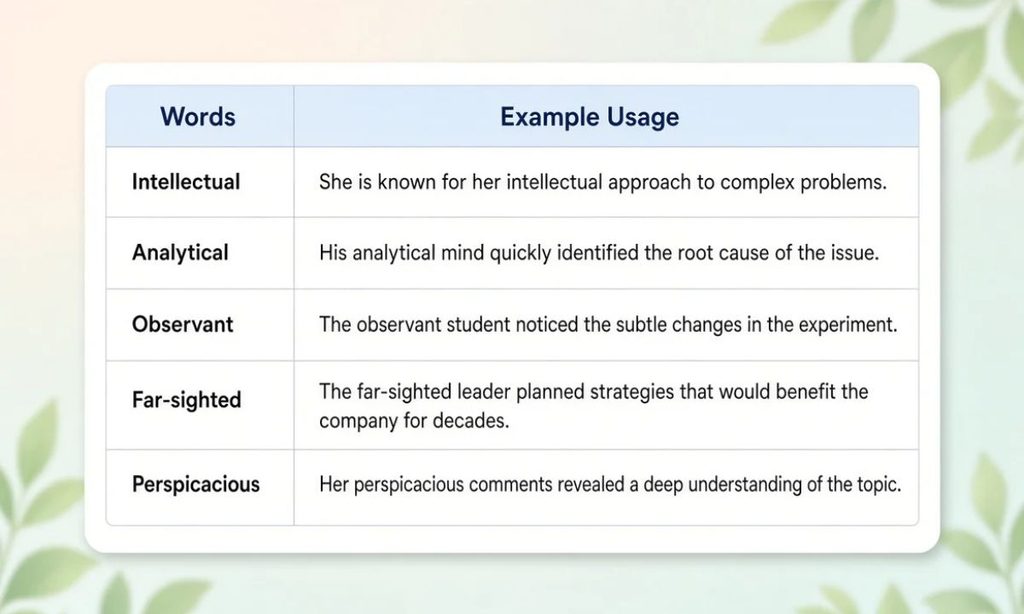
Match the register. Brainy and on the ball are casual. Sagacious and perspicacious are formal.
Pick specific words on a resume, such as resourceful, astute, or analytical.
Show proof. “She spotted the error in minutes” beats any adjective.
Vary your words. Repeating one praise word tires the reader.
Frequently Asked Questions
What is a better word for smart?
Intelligent is the best all-purpose choice, and clever, sharp, or astute fit more specific cases.
What is a formal synonym for smart?
Perceptive, insightful, astute, and erudite all sound formal and professional.
Is clever the same as smart?
Not quite, because clever stresses inventive ideas while smart stresses sound, quick thinking.
Is smart a British word for stylish?
Yes, in British English smart often means neat, polished, and well dressed.
What is the opposite of smart?
It depends on the meaning: dull or foolish for intelligence, and sloppy or unkempt for appearance.
Conclusion
The best smart synonym is the one that matches your exact meaning, so decide first whether you are praising a mind, a decision, a joke, an outfit, or a feeling.
Reach for intelligent, clever, or sharp when you describe thinking, wise, savvy, or astute when you describe judgment, stylish or dapper when you describe looks, and smarting when you describe a sting. Keep your audience and tone in mind, avoid words with a hidden edge unless you mean them, and your writing will feel precise, warm, and natural.

[…] Smart Synonym: 30 Better Words and When to Use Them […]