
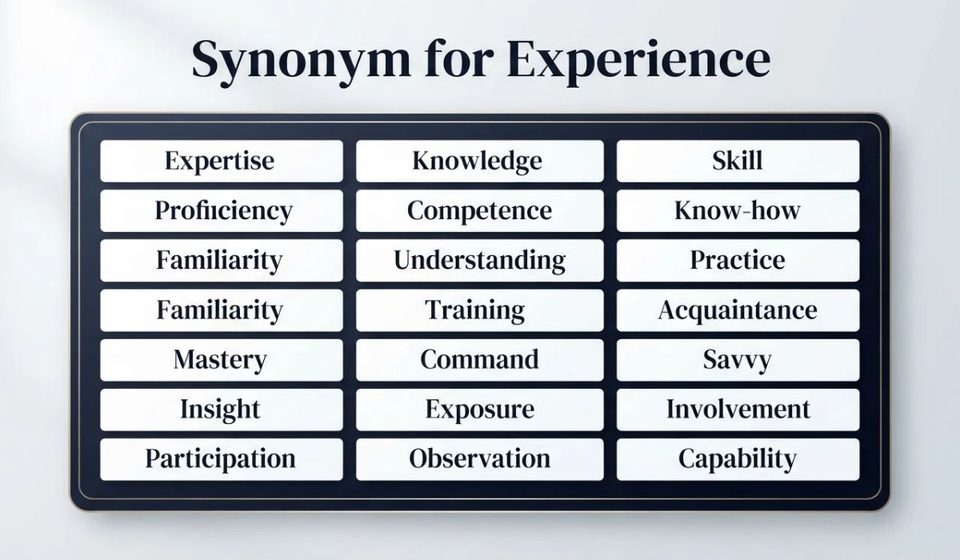

Experience is a word we all overuse. It shows up in resumes, essays, emails, and stories. But it can mean skill, history, or something that happened to you.
Each meaning needs a different replacement. This guide gives you 30 synonyms, sorted by meaning. Each one comes with examples, tone notes, and pronunciation.
What Does “Experience” Mean?
“Experience” has three main jobs. Pick your synonym based on the job, not the word list.
Practical knowledge or skill: “She has ten years of experience in sales.”
A particular event: “The trip was a memorable experience.”
A verb meaning to go through something: “Many users experience delays at checkout.”
Most bad substitutions happen when someone swaps a word from one group into a sentence that needs another. “Ordeal” cannot replace “experience” on a resume. “Expertise” cannot describe a bad flight.
What Is Another Word for Experience?
The best another word for experience depends on meaning. For skill, use expertise or proficiency. For an event, use “episode” or “encounter.” For the verb, use “undergo” or “go through.”
Here is a quick reference table.
| If you mean… | Try these | Tone |
| Practical ability | expertise, proficiency, skill, know-how | Confident |
| Professional history | background, work history, tenure, track record | Formal |
| Contact with something | exposure, familiarity, involvement, observation | Light to neutral |
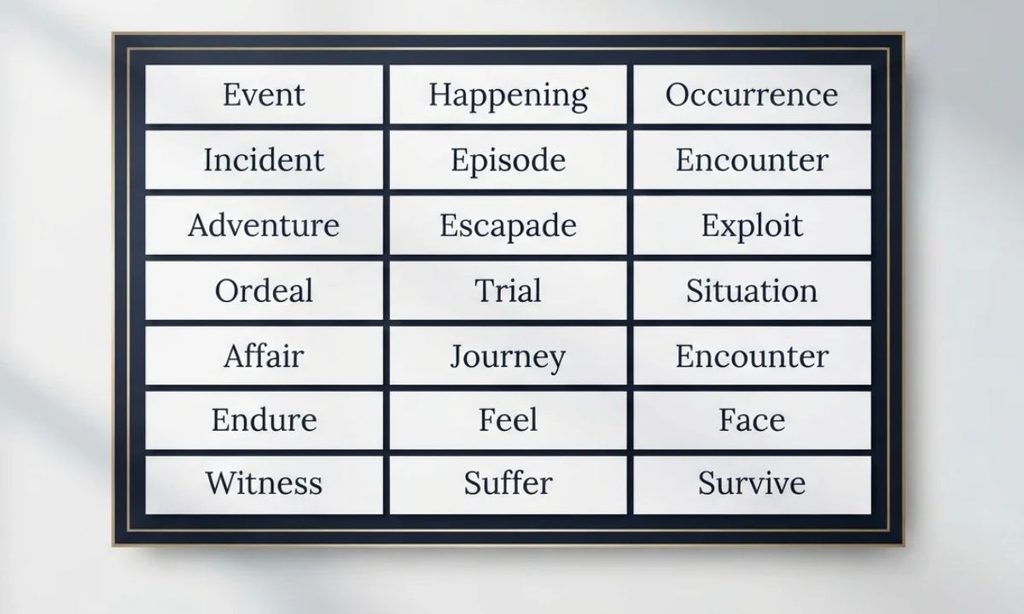
| A happening | event, episode, encounter, adventure, ordeal | Ranges from neutral to intense |
| The verb | undergo, go through, face, endure, witness | Neutral to heavy |
How to Choose the Right Synonym
Good word choice takes three quick checks. Run them before you swap anything.
Check the meaning and the strength
Words carry different levels of claim. Mastery is a much bigger claim than familiarity. If you overstate, a reader or interviewer will notice.
Check the grammar and prepositions
Synonyms often need different small words after them. Getting this wrong makes a sentence sound off.
- Experience in managing teams
- Proficiency in a tool
- Familiarity with a system
- Exposure to a method
- Expertise in or on a topic
Know when to keep “experience”
Sometimes the original word is clearer. “Years of experience” is a standard phrase that recruiters expect. Do not swap it just to sound fresh. Precision beats variety.
Also note that some phrases have fixed meanings. “Customer experience,” “user experience,” and “lived experience” are established terms. Replacing the word can change what they mean.
Synonyms for Experience as Knowledge and Skill
These eight words describe what you can do. Use them when someone asks about your ability.
Expertise
Meaning: Deep, proven knowledge in one area.
It tells the reader you are the person others ask for help. That builds trust fast because it signals depth, not just time served. Use it only when you can back it up.
Examples:
- She built her expertise in tax law over fifteen years of client work.
- We hired him for his expertise in supply chain planning.
When It Fits: Introducing a specialist in a meeting or a short bio.
Pronunciation: ek-spur-TEEZ
Proficiency
Meaning: A solid, tested ability to use a skill or tool.
It sounds calm and measured. You are saying you can do the work well without claiming to be the top authority. Hiring managers like this because it feels honest.
Examples:
- Her proficiency in Excel saves the team hours every week.
- He listed proficiency in Spanish and French on his application.
When It Fits: Describing a language, software, or technical skill.
Pronunciation: pruh-FISH-un-see
Competence
Meaning: The ability to do a job properly.
It is a quieter word than expertise. It says the person is reliable and gets things right. That steadiness reassures people who just need the task done.
Examples:
- The new manager showed real competence during the first audit.
- Basic competence with spreadsheets is required for this role.
When It Fits: A performance review or a reference letter.
Pronunciation: KOM-puh-tunss
Skill
Meaning: A specific ability you have learned and can repeat.
It is short, plain, and easy to trust. Readers do not need to decode it. Plain words often land better than fancy ones.
Examples:
- Public speaking is a skill you can practice.
- His writing skill set him apart from the other applicants.
When It Fits: Talking about what someone can do in everyday conversation.
Pronunciation: SKIL
Know-how
Meaning: Practical knowledge of how to get something done.
It feels warm and hands-on. It suggests someone who has actually solved the problem, not just read about it. It works well when you want to sound approachable.
Examples:
- Our mechanic has the know-how to fix almost any old engine.
- She brought real know-how to the kitchen remodel.
When It Fits: Praising a friend or coworker in casual speech.
Pronunciation: NOH-how
Mastery
Meaning: Complete command of a subject or craft.
This is a strong claim and it carries respect. It tells the reader the person has moved past competence into something rare. Use it sparingly so it keeps its weight.
Examples:
- The violinist’s mastery of tone left the audience silent.
- He showed mastery of the material during his defense.
When It Fits: Describing an artist, athlete, or craftsperson at the top of their field.
Pronunciation: MAS-tuh-ree
Practice
Meaning: Skill built through repeated work over time.
It shifts the focus from talent to effort. That makes it humble and relatable. People tend to respect a claim built on repetition.
Examples:
- Years of practice made her a calm negotiator.
- With enough practice, the process becomes automatic.
When It Fits: Explaining how someone got good at something.
Pronunciation: PRAK-tiss
Understanding
Meaning: A working grasp of how something functions.
It is gentle and sincere. It says you get the idea without claiming to have done it a thousand times. That makes it useful when you are early in your learning.
Examples:
- He has a strong understanding of how the billing system works.
- Her understanding of local law helped the family settle the dispute.
When It Fits: Describing knowledge in a job interview when you lack long hands-on time.
Pronunciation: un-der-STAN-ding
Synonyms for Experience as Background and Contact
These five words describe how close you have been to something. They carry lighter claims, so use them honestly.
Background
Meaning: The training, work, and history that shaped what you know.
It gives the reader context without bragging. It reads as a fair, complete picture. That openness helps people feel they are getting the whole story.
Examples:
- She has a background in nursing and public health.
- His background in retail helps him understand customer complaints.
When It Fits: Introducing yourself at a networking event.
Pronunciation: BAK-ground
Exposure
Meaning: Contact with something without deep involvement.
It is an honest, modest word. It tells the reader you have seen the work up close but may not have run it. That candor can build trust when used correctly.
Examples:
- The internship gave me exposure to real client projects.
- He had limited exposure to cloud tools before this job.
When It Fits: Describing an early-career role or a short project.
Pronunciation: ek-SPOH-zhur
Familiarity
Meaning: Basic knowledge from some contact or use.
It sounds friendly and low-pressure. You are saying you know your way around without overselling. It works best paired with the word “with.”
Examples:
- I have a working familiarity with the team’s reporting tools.
- Her familiarity with the neighborhood made her a great guide.
When It Fits: Answering a question about a tool you have used a few times.
Pronunciation: fuh-mil-ee-AIR-uh-tee
Involvement
Meaning: Taking an active part in something.
It highlights that you did more than watch. That signals effort and commitment. It also shows you cared enough to show up.
Examples:
- Her involvement in the fundraiser raised the club’s profile.
- His involvement in the launch started in the planning stage.
When It Fits: Talking about volunteer work, committees, or group projects.
Pronunciation: in-VOLV-ment
Observation
Meaning: Learning by watching rather than doing.
It is honest about the difference between seeing and acting. In academic writing, that precision matters. Readers appreciate a writer who does not blur the line.
Examples:
- Her observation of classroom teaching shaped her thesis.
- Most of what I know came from observation, not formal training.
When It Fits: Research writing or a shadowing program.
Pronunciation: ob-zer-VAY-shun
Also Read: Synonym for Savvy: 35 Smart Words With Meanings and Examples
Synonyms for Experience on a Resume
Here you have two jobs: name the section and describe your bullets. They need different words.
Section headings can be swapped for “Employment History” or “Work History.” Words like expertise cannot replace a list of jobs. Inside your bullets, you can use terms like proficiency or track record.
For “I have experience in,” try “I am skilled in,” “I have worked with,” or “I have a background in.” Then add proof, such as numbers or outcomes. A stronger word alone will not carry the claim.
Work History
Meaning: The list of jobs you have held.
It is plain and factual. Recruiters know exactly what to expect under it. That clarity saves them time and keeps the focus on you.
Examples:
- Her work history includes three roles in logistics.
- Please list your work history from most recent to oldest.
When It Fits: A resume section heading or a job application form.
Pronunciation: WURK HISS-tuh-ree
Employment History
Meaning: The formal record of your jobs and dates.
It is a step more formal than “work history.” That fits government forms, legal paperwork, and traditional industries. It sounds careful and complete.
Examples:
- The background check confirmed his employment history.
- Include your full employment history on page two.
When It Fits: Official applications or formal reference checks.
Pronunciation: em-PLOY-ment HISS-tuh-ree
Tenure
Meaning: The length of time you held a role.
It speaks to loyalty and stability. When someone stays a long time, it signals they were trusted. Note that tenure measures time, not quality.
Examples:
- During his tenure as director, the team doubled in size.
- Her tenure at the firm lasted twelve years.
When It Fits: Talking about a long-held position in a bio or speech.
Pronunciation: TEN-yer
Track Record
Meaning: A history of results you can point to.
It is one of the most persuasive choices because it implies proof. Readers hear confidence without a boast. It works best with specifics behind it.
Examples:
- The agency has a strong track record of on-time delivery.
- She has a proven track record in reducing customer churn.
When It Fits: A sales pitch or a cover letter.
Pronunciation: TRAK REK-erd
Synonyms for an Experience or Event
When “experience” means something that happened, tone matters most. The same event can feel small or huge depending on your word.
Event
Meaning: Something that happens, often planned or notable.
It is neutral and clean. It tells the reader what happened without adding feeling. That makes it a safe choice when you want to stay objective.
Examples:
- The festival was the biggest event of the summer.
- A single event changed how the company handled security.
When It Fits: Reporting on something without judging it.
Pronunciation: ih-VENT
Occurrence
Meaning: Something that takes place, often a repeated one.
It is a calm, slightly formal word. It suggests a pattern or a fact, not a story. That helps when you want a measured voice.
Examples:
- Power cuts are a regular occurrence in the old building.
- The occurrence was logged in the incident report.
When It Fits: Formal writing about things that happen from time to time.
Pronunciation: uh-KUR-unss
Episode
Meaning: One distinct part of a longer story or period.
It softens the moment by placing it inside a bigger picture. That gives people room to move on. It is useful for hard stretches that ended.
Examples:
- The illness was a brief episode in an otherwise healthy life.
- She rarely talks about that episode from her twenties.
When It Fits: Reflecting on a past chapter in a personal essay.
Pronunciation: EP-ih-sohd
Encounter
Meaning: A brief or unexpected meeting with someone or something.
It adds a sense of surprise and human contact. Readers lean in when they hear it. It can be friendly, tense, or mysterious depending on context.
Examples:
- My encounter with the author lasted only a minute, but I remember it well.
- A chance encounter led to her first job offer.
When It Fits: Telling a short story about meeting someone new.
Pronunciation: en-KOWN-ter
Incident
Meaning: A single event, usually minor or unwelcome.
It sounds official and a bit cautious. It puts distance between the speaker and the problem. That helps when you need a calm, factual tone.
Examples:
- The incident was reported to the manager right away.
- Nothing like that incident has happened since.
When It Fits: Work reports or safety notices.
Pronunciation: IN-sih-dent
Adventure
Meaning: An exciting or unusual experience.
It carries energy and delight. It invites readers to enjoy the story with you. It is a great pick when the memory feels bright.
Examples:
- Our road trip through the mountains was quite an adventure.
- Starting a new business felt like a big adventure.
When It Fits: Sharing a fun trip or a bold life change.
Pronunciation: ad-VEN-cher
Ordeal
Meaning: A long, painful, or very hard experience.
It shows deep difficulty and asks for sympathy. Use it carefully, since it is a heavy word. It tells the reader this was not a small thing.
Examples:
- The long wait at the border was an exhausting ordeal.
- She got through the ordeal with help from her family.
When It Fits: Describing a truly hard event, like a long illness or a tough journey.
Pronunciation: or-DEEL
Synonyms for “Experience” as a Verb
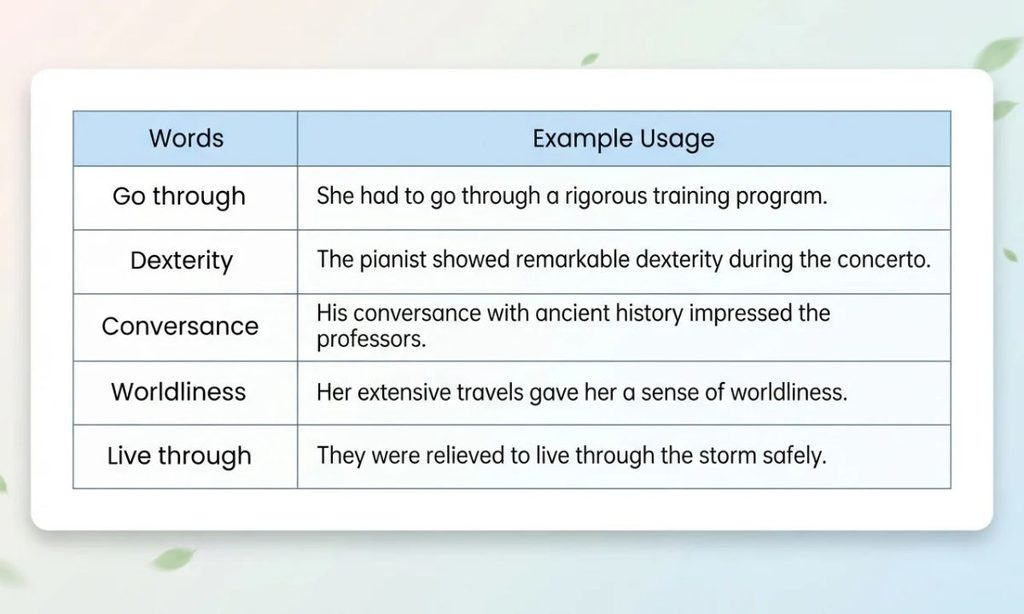
As a verb, “experience” means to go through something. These six words change the feeling of the sentence. Some only work with certain objects, so check the fit.
Undergo
Meaning: To go through something, often a process or a change.
It sounds formal and steady. It suits medical, technical, or official writing. It gives the sentence a professional weight.
Examples:
- The patient will undergo a short procedure on Monday.
- The software will undergo testing next week.
When It Fits: Formal or medical writing.
Pronunciation: un-der-GOH
Go Through
Meaning: To live through something, good or bad.
It is casual and human. It feels like something a friend would say. That warmth makes it easy to connect with people.
Examples:
- I know what you are going through right now.
- We went through a lot together in those early years.
When It Fits: Comforting a friend or telling a personal story.
Pronunciation: goh THROO
Live Through
Meaning: To survive a hard event and come out the other side.
It adds a sense of survival and strength. It gives the listener credit for getting to the end. That kind of respect can be deeply validating.
Examples:
- My grandmother lived through the war as a child.
- Few of us want to live through that winter again.
When It Fits: Talking about history or a tough personal chapter.
Pronunciation: LIV THROO
Face
Meaning: To deal with a challenge directly.
It sounds brave and active. It puts the person in charge of the moment. It works well for problems, risks, and hard choices.
Examples:
- Small businesses face rising costs every year.
- She had to face the truth about the project.
When It Fits: Writing about a challenge someone is meeting head on.
Pronunciation: FAYSS
Endure
Meaning: To keep going through something painful or long.
It carries patience and grit. It gives the person quiet dignity. Readers feel the length of the struggle.
Examples:
- The team had to endure months of delays.
- He endured the pain without complaint.
When It Fits: Describing a slow, hard stretch that someone pushed through.
Pronunciation: en-DOOR
Witness
Meaning: To see something happen firsthand.
It stresses that you were there. That adds credibility and weight. It works when you want to separate seeing from doing.
Examples:
- Residents witnessed the storm roll in from the coast.
- We witnessed a major shift in how people shop.
When It Fits: Reporting on something you saw with your own eyes.
Pronunciation: WIT-niss
Experience Synonyms for Common Phrases
Some phrases need extra care because the meaning is fixed.
- Personal experience: Try “firsthand knowledge,” “my own history,” or “what I have lived.”
- Lived experience: Keep it as is. It is an established term for direct life knowledge.
- Hands-on experience: Try “practical work,” “direct practice,” or “real-world use.”
- Learning experience: Try “lesson,” “takeaway,” or “growth moment.”
- Bad experience: Try “ordeal,” “rough patch,” or “setback.”
- Customer or user experience: Keep it. Swapping the word can change the meaning.
Common Mistakes When Swapping Words
Most errors come from a few habits.
- Treating time as skill. Ten years in a role does not always mean expertise.
- Using a heavy word for a small event. “Ordeal” for a slow coffee line sounds silly.
- Mixing up outcomes and experience. Lesson, growth, and accomplishment often describe what came out of an experience, not the experience itself.
- Adding related terms that are not substitutes. Portfolio and credential are different things.
- Ignoring grammar. Check prepositions and verb forms after every swap.
Antonyms of Experience
The common opposite is inexperience. It is neutral and honest. Other options include unfamiliarity, ignorance, and naivety, which carry sharper judgment. Choose the gentlest word that is still accurate.
Frequently Asked Questions
What is the best synonym for experience?
There is no single best one, but expertise works for skill and episode works for an event.
What is a formal synonym for experience?
Competence, proficiency, and undergo are strong formal choices depending on meaning.
What is another word for a bad experience?
Try ordeal, setback, or rough patch, depending on how serious it was.
Can expertise replace experience on a resume?
Yes for a skill claim, but not for a section heading, where “Work History” fits better.
What is the opposite of experience?
Inexperience is the standard opposite, with unfamiliarity as a softer option.
Conclusion
The right experience synonym depends on what you actually mean, so start by naming the meaning before you pick the word. Use expertise, proficiency, or know-how for skill, and reach for background, exposure, or familiarity when your contact was lighter.
Choose event, episode, encounter, or ordeal for something that happened, and turn to undergo, face, or endure for the verb. Keep the word “experience” when it is clearer, check your grammar after every swap, and back up any strong claim with proof. Honest, precise wording will always beat a fancy word that does not fit.

-
-
-
-
-
-
-
-
Show Comments[…] Experience Synonym: 30 Better Words for Every Context […]
[…] Experience Synonym: 30 Better Words for Every Context […]
[…] Experience Synonym: 30 Better Words for Every Context […]
[…] Experience Synonym: 30 Better Words for Every Context […]
[…] Experience Synonym: 30 Better Words for Every Context […]
[…] Experience Synonym: 30 Better Words for Every Context […]
[…] Experience Synonym: 30 Better Words for Every Context […]
[…] Experience Synonym: 30 Better Words for Every Context […]