
Clear communication is about more than simply putting words on a page. Whether you’re writing a blog post, managing a website, creating social media content, or preparing digital resources, the way information is presented can make a significant difference. The right words help readers understand your message, while well-prepared images make your content more appealing and easier to engage with.
For a website like SynonymsVibe, where language, vocabulary, and effective expression are central to the reader experience, paying attention to both written and visual content is particularly important. The same attention to detail applies when working with images. For instance, if you have downloaded a modern WebP image but need a more widely compatible format for a document, presentation, or editing application, a WebP to JPG tool can make the conversion process straightforward and convenient.
The Importance of Clear and Effective Communication
Words have the power to influence how people understand information. A well-chosen word can make a sentence more precise, improve its tone, and help communicate an idea without unnecessary explanation.
This is especially important when creating online content. Readers typically want information that is easy to understand, relevant to their needs, and presented in a natural way. Complicated language, repetitive expressions, and poorly structured sentences can make even useful content difficult to follow.
Consider a simple example. Instead of repeatedly using the word “good” in an article, a writer might choose alternatives such as:
- Excellent
- Effective
- Valuable
- Beneficial
- Impressive
- Reliable
Each alternative carries a slightly different meaning. Choosing the most appropriate one makes writing more interesting while helping communicate the intended message accurately.
The goal isn’t to use complicated vocabulary. It’s to choose words that express ideas clearly and naturally.
How Synonyms Make Writing More Engaging
One common challenge writers face is repetition. When the same words appear throughout an article, the writing can quickly become predictable.
Synonyms offer a practical solution. They allow writers to communicate similar ideas using different expressions while maintaining the original meaning.
For example, imagine writing an article about improving productivity. The word “important” might appear several times. Depending on the context, it could be replaced with “essential,” “significant,” “valuable,” or “crucial.”
However, synonyms aren’t always interchangeable.
“Essential” suggests something necessary, while “significant” often refers to something particularly meaningful or influential. Understanding these differences helps writers avoid awkward substitutions.
A useful writing habit is to check the context before choosing an alternative. Read the entire sentence aloud and consider whether the replacement sounds natural. If it changes the intended meaning, another word may be more appropriate.
Why Visual Content Matters for Modern Websites
Although written content remains central to most websites, visual presentation plays an equally important supporting role.
Readers often form their first impression of a webpage within seconds. Relevant photographs, illustrations, graphics, and screenshots can make an article more inviting and help explain information that might otherwise require several paragraphs.
For educational websites, visuals can be particularly useful.
A language-learning article, for example, might include an infographic comparing commonly confused words. A vocabulary guide could use simple illustrations to demonstrate different meanings. A grammar tutorial might include annotated screenshots showing how a particular writing technique works.
Good visuals don’t simply decorate a page. They help readers understand and remember information.
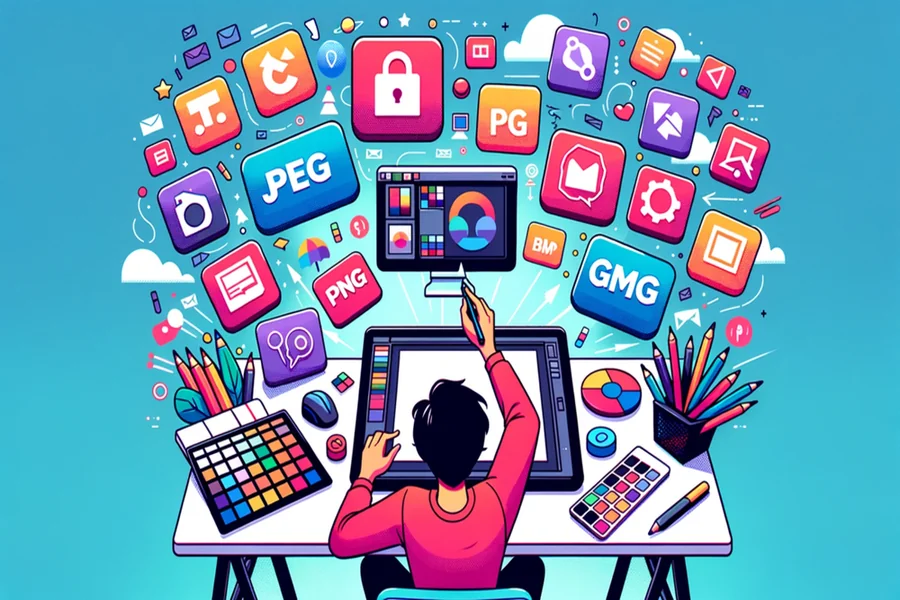
Understanding Common Image Formats
Different image formats serve different purposes, and knowing their basic characteristics can help website owners manage their content more effectively.
JPG: This format is widely supported and commonly used for photographs. It offers relatively small file sizes, making it practical for everyday digital content.
PNG: PNG is particularly useful for graphics, screenshots, logos, and images that require transparent backgrounds. It preserves sharp details without the same type of lossy compression used by JPG.
WebP: Developed with modern websites in mind, WebP offers efficient compression and supports both lossy and lossless image storage. It can help reduce image file sizes while maintaining good visual quality.
SVG: This format is commonly used for icons, logos, and illustrations. Because it is vector-based, graphics can be resized without losing sharpness.
Choosing the appropriate format depends on where the image will appear and how it will be used.
Making Images Easier to Share and Use
One challenge with modern digital content is that not every application handles every image format in exactly the same way.
WebP is particularly useful for websites because of its compression capabilities. However, someone downloading an image for an older application, a document, or a particular editing workflow may find that JPG is more convenient.
In these situations, converting an image can save time and prevent unnecessary compatibility issues.
For example, imagine a freelance writer preparing an educational presentation about vocabulary development. They download several illustrations from a website, but one of their preferred editing applications doesn’t support the downloaded image format.
Rather than searching for replacement images, they can convert the existing files into a format that better suits their workflow.
This approach is practical because it preserves the original visual resource while making it easier to use across different applications.
Practical Tips for Managing Website Images
If you regularly publish online content, developing a consistent image-management routine can make your work considerably easier.
Here are several useful practices:
1. Choose Formats Based on Purpose
Don’t automatically use the same image format for everything. Photographs, transparent graphics, illustrations, and screenshots have different requirements.
Select a format that balances compatibility, image quality, and file size.
2. Avoid Unnecessary File Compression
Smaller files can improve website performance, but excessive compression may introduce visible artifacts, blurred edges, and unwanted distortion.
Always check the finished image before publishing it.
3. Use Descriptive File Names
A file named “vocabulary-learning-tips.jpg” is much easier to identify than “IMG_4587.jpg.”
Descriptive filenames also help maintain an organized media library and provide useful context for search engines.
4. Write Meaningful Alt Text
Alternative text helps people using screen readers understand the purpose of an image. It also provides search engines with additional information about visual content.
Keep descriptions accurate and concise. Avoid filling them with unnecessary keywords.
5. Maintain Original Copies
Before editing or converting an image, keep an original copy whenever possible. This gives you the flexibility to make different versions later without repeatedly processing an already modified file.
6. Check Image Dimensions
Large images can unnecessarily increase webpage loading times. Resize images according to their intended display dimensions instead of uploading oversized files without a reason.
This is particularly useful for blog thumbnails, featured images, and small illustrations.
Combining Strong Writing with Better Visual Presentation
The most effective online content brings written and visual elements together.
Think about a reader visiting an article to learn the difference between two similar words. A clear explanation provides the necessary information, but a comparison table, example sentences, or a simple graphic can make the lesson much easier to understand.
The same principle applies to other educational topics.
Writers should focus on delivering accurate, useful information, while website owners should make sure supporting images are relevant, accessible, and optimized for their intended purpose.
Neither element needs to be complicated. A well-written paragraph accompanied by one meaningful illustration can often communicate more effectively than a crowded page filled with unnecessary graphics.
Consistency also matters. Use a recognizable visual style, maintain readable formatting, and organize content with descriptive headings. These small improvements contribute to a more professional and enjoyable reading experience.
Conclusion
Creating valuable online content involves more than finding the right words. Strong writing, thoughtful vocabulary choices, relevant visuals, and properly managed image files all contribute to a better digital experience.
By paying attention to language and visual presentation, website owners and content creators can make their pages clearer, more engaging, and easier to navigate. Ultimately, the best approach is simple: focus on the reader, communicate ideas naturally, and use the right digital tools to support the quality of your content.
