

Introduction
English grammar contains many words that sound similar but have completely different meanings. “Then” and “than” are two common examples. Although their pronunciation is almost identical in everyday speech, they serve different purposes in sentences. Choosing the wrong word can change the meaning of a sentence or make your writing grammatically incorrect.
One common question among English learners is whether to write “better then” or “better than.” The correct expression in most comparisons is “better than.” For example, “This book is better than that one” is grammatically correct. Writing “This book is better then that one” is incorrect because the sentence compares two things.
Understanding this difference is important for students and professionals as well as anyone who wants to improve their English communication skills. These words appear frequently in conversations and emails and academic writing. Learning how to use them properly can make your sentences clearer and more natural.
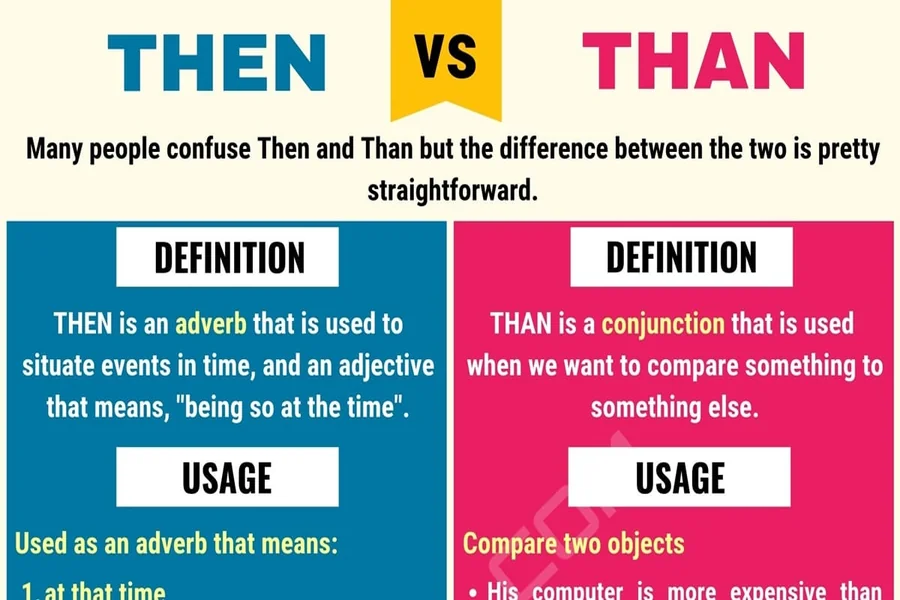
The good news is that the rule is relatively simple. “Than” is generally used when comparing people or things. “Then” usually refers to time or the order of events. Once you understand their individual meanings, choosing the right word becomes much easier.
This guide explains the difference between “better then” and “better than” with clear examples and practical exercises.
Better Then or Than: Which One Is Correct?
The correct expression for making a comparison is “better than.” The word “than” introduces the second person or thing in a comparison.
For example:
- My new phone is better than my old phone.
- This restaurant is better than the one we visited yesterday.
- Her English is better than mine.
- Reading books is better than wasting time.
- This solution is better than the previous one.
In each sentence, “than” connects two things being compared. It helps readers understand which person or object has a higher level of quality.
The word “then” does not serve this purpose. Instead, it is commonly used to explain what happens next or when something takes place.
For example:
- I finished my homework and then watched television.
- We went shopping and then returned home.
- First complete your work. Then take a break.
These examples show that “then” describes time or sequence rather than comparison.
Therefore, when you want to say that something is superior to another thing, use “better than.” It is the standard and grammatically correct expression.
What Does Than Mean?
“Than” is a conjunction or preposition commonly used to introduce the second part of a comparison. It helps show differences in quality, quantity, size, age, speed and other characteristics.
The word appears frequently after comparative adjectives and expressions.
For example:
- Better than
- Bigger than
- Smaller than
- Faster than
- More expensive than
- More interesting than
- Less difficult than
Consider the sentence “A train is faster than a bicycle.” Here the word “than” connects the two things being compared. It explains that the train has a higher speed.
Similarly, in the sentence “This house is bigger than ours” the word introduces the second item in the comparison.
“Than” can also appear in sentences involving numbers and quantities.
For example:
- More than 100 people attended the event.
- She is younger than her brother.
- The journey took less than two hours.
- This company earns more than its competitor.
Understanding the role of “than” can improve both written and spoken English. Whenever you compare two or more things using a comparative expression, “than” is usually the word you need.
What Does Then Mean?
“Then” is an adverb that generally refers to time or the order in which events happen. It helps explain what happened next or when something occurred.
Unlike “than” it does not introduce a comparison. Instead, it connects ideas involving sequence and timing.
For example:
- I woke up early and then prepared breakfast.
- She completed her assignment and then went outside.
- We visited the museum and then had lunch.
- First read the instructions. Then start the activity.
In these examples, “then” tells readers what happened after another action.
The word can also refer to a particular time in the past or future.
For example:
- I was living in London back then.
- Things were different then.
- We will discuss the problem then.
- The company was smaller back then.
“Then” can also appear in conditional sentences.
For example:
- If you study regularly then you may improve your results.
- If it rains then we will stay indoors.
In these examples the word helps connect a condition with its result.
Remembering that “then” relates to time or sequence is an easy way to avoid confusing it with “than.”
Why Do People Confuse Better Then and Better Than?
Many English learners confuse these words because they sound very similar. In some accents their pronunciation can be almost identical. This makes it difficult to identify which word is being used when listening to conversations.
Another reason is that both words are short and commonly used. People often type quickly without checking the meaning of their sentences. As a result they may accidentally choose the wrong spelling.
Social media and text messaging can also contribute to this problem. Informal online communication sometimes encourages people to focus on speed rather than grammar.
English learners may also struggle because their native languages follow different grammatical structures. The distinction between comparison and time-related expressions may not have a direct equivalent in their first language.
For example, someone might understand that “better” means something has higher quality but may not remember which word should follow it.
The easiest solution is to focus on meaning rather than pronunciation.
Ask yourself whether you are comparing two things or explaining when something happens.
- If you are comparing something use “than.”
- If you are describing time or sequence use “then.”
This simple technique can help you make the correct choice in most everyday situations.
Examples of Better Than in Everyday English
The phrase “better than” is used in many situations. It can describe personal preferences and professional performance as well as differences between products or experiences.
Here are some examples that demonstrate its everyday usage.
1. Comparing Products
- This laptop is better than my previous one.
- This camera takes better pictures than that model.
- The new headphones are better than the old pair.
2. Comparing People
- She is better at mathematics than her brother.
- My teacher is more experienced than yours.
- He is faster than most players on the team.
3. Comparing Experiences
- Traveling by train is better than taking a crowded bus.
- This holiday was better than last year’s trip.
- Watching the movie at home was better than going to the cinema.
4. Comparing Skills
- Practice is better than simply reading about a subject.
- Her writing is better than it was last year.
- Learning through examples is sometimes better than memorizing rules.
5. Comparing Choices
- Saving money is better than spending everything immediately.
- Walking is better than sitting all day.
- A clear explanation is better than a complicated answer.
These examples show that “better than” is useful in almost every area of daily communication. It allows people to express preferences and explain differences clearly.
Common Grammar Rules for Using Than
Understanding a few basic grammar rules can help you use “than” correctly in different types of sentences.
1. Use Than After Comparative Adjectives
Comparative adjectives describe how one person or thing differs from another.
Examples:
- My car is faster than yours.
- This room is cleaner than the other one.
- She is taller than her sister.
2. Use Than With More and Less
The words “more” and “less” often introduce comparisons.
Examples:
- This project is more difficult than the last one.
- He has more experience than I do.
- The second option is less expensive than the first.
3. Use Than for Quantity Comparisons
The word can also compare amounts or numbers.
Examples:
- More than 50 students attended the class.
- The journey takes less than an hour.
- She has more books than her brother.
4. Use Than After Better and Worse
Examples:
- This restaurant is better than the previous one.
- The weather today is worse than yesterday.
- Her performance was better than expected.
5. Check the Meaning of the Sentence
Always consider whether your sentence compares two things. If it does then “than” is generally the correct choice.
These rules provide a useful foundation for writing accurate comparisons. With regular practice you will begin using the word naturally.
Common Mistakes to Avoid When Writing
Even people who have studied English for many years sometimes confuse “then” and “than.” Most mistakes happen because writers focus on pronunciation rather than sentence meaning.
Here are some common errors and their correct versions.
| Incorrect sentence | Correct sentence |
|---|---|
| This is better then that. | This is better than that. |
| She is taller then me. | She is taller than me. |
| My car is faster then yours. | My car is faster than yours. |
| I ate dinner than went home. | I ate dinner then went home. |
| First study and than sleep. | First study and then sleep. |
| He is more intelligent then his friend. | He is more intelligent than his friend. |
One important mistake is using “than” when describing a sequence of events. For example, “I finished work than went home” is incorrect because the sentence describes what happened next.
The correct version is “I finished work then went home.”
Another mistake is using “then” after a comparative adjective. For example, “This option is better then the other one” should be written as “This option is better than the other one.”
To avoid these errors always read the complete sentence before choosing a word. Understanding the intended meaning is more useful than simply remembering how the words sound.
How to Remember the Difference Between Then and Than
Remembering the difference between these words becomes easier when you connect each word with its main purpose.
A simple memory trick is to associate “than” with comparison and “then” with time.
Think about the letter A in “than” as standing for “alternative.” When you compare two alternatives you often use “than.”
For example:
- Tea is better than coffee.
- A bicycle is cheaper than a car.
- Summer is warmer than winter.
For “then” remember the phrase “what happens next?” This word helps explain the next action or event.
For example:
- First wash your hands and then prepare the food.
- She finished her work and then went shopping.
- We had dinner and then watched a movie.
You can also practice by replacing the word with a similar expression.
If “after that” makes sense in your sentence then “then” is probably correct.
For example:
“I finished my homework and after that I watched television.”
This sentence uses the same idea as “I finished my homework and then watched television.”
However you cannot replace “than” with “after that” in a comparison.
For example:
“This book is better after that this book” does not make sense.
Regular reading and writing practice will help you recognize the correct word without needing to think about every grammar rule.
Practice Exercises: Better Then or Than
The best way to improve your grammar is to apply what you have learned. Try the following exercises to check your understanding of “then” and “than.”
Choose the correct word to complete each sentence.
- This mobile phone is better ___ my old one.
- I finished my lunch and ___ went to work.
- She is taller ___ her sister.
- First complete your homework and ___ play outside.
- This movie is more interesting ___ the previous one.
- We visited the market and ___ returned home.
- My new laptop is faster ___ the old model.
- Things were different back ___.
- He is younger ___ his brother.
- I will call you ___ after the meeting.
Correct Answers:
- Than
- Then
- Than
- Then
- Than
- Then
- Than
- Then
- Than
- Then
If you answered all ten questions correctly then you have a good understanding of the basic difference.
If you made a few mistakes do not worry. Review the examples and try again. You can also create your own sentences using both words to strengthen your understanding.
Final Thought
The difference between “better then” and “better than” is simple once you understand the meaning of each word. When comparing two people or things the correct expression is “better than.” The word “than” introduces the second part of a comparison and is commonly used after comparative adjectives.
On the other hand “then” refers to time or the order of events. It helps explain what happens next or describes a particular moment.
The most effective way to remember the difference is to connect “than” with comparison and “then” with time. Practice using these words in everyday sentences and pay attention when reading English content.
With consistent effort you can avoid this common grammar mistake and communicate more clearly and confidently.
