

Introduction
English grammar can sometimes be confusing, especially when two words look similar but follow different rules. One common example is the difference between “She Has” and “She Have.” Both expressions use the verb “have” but they are not interchangeable in standard English grammar. Choosing the correct form depends on the subject of the sentence and the grammatical structure.
Many English learners struggle with this rule because “have” appears in different situations. It can describe possession, relationships, experiences and actions. It also works as an auxiliary verb in present perfect sentences. Understanding when to use “has” and when to use “have” can make everyday communication much easier.
For example, the sentence “She has a beautiful house” is grammatically correct. However, “She have a beautiful house” is incorrect in standard English. The reason is simple: the subject “she” is a third-person singular pronoun and requires “has” in the simple present tense.
Learning this difference does not require advanced grammar knowledge. A few basic rules and regular practice can help you understand the correct usage. This guide explains the meaning of both expressions and provides examples to help you use them confidently in speaking and writing.
What Does She Has Mean?
“She has” is the correct expression when talking about a female person in the third-person singular. It uses the subject pronoun “she” with the verb “has.” This form is commonly used in the simple present tense.
The word “has” is a form of the verb “have.” It can describe something a person owns or possesses. It can also explain relationships, personal experiences, responsibilities and conditions.
Consider the following examples:
- She has a new phone.
- She has two brothers.
- She has a beautiful garden.
- She has an important meeting today.
- She has enough money for the trip.
In each example, “has” describes something connected to the subject “she.”
The expression is also used in present perfect sentences. In this structure, “has” works as an auxiliary verb and is followed by the past participle of another verb.
For example:
- She has completed her homework.
- She has visited London.
- She has finished her lunch.
- She has learned a new language.
These examples show that “she has” is useful in different grammatical situations. It is one of the most common structures in everyday English.
What Does She Have Mean?
“She have” is generally incorrect in standard English when used as a simple present statement. However, “have” can correctly appear after “she” in certain sentence structures.
The important point is that the verb form depends on the words that come before it and the grammatical construction being used.
For example, consider this question:
“Does she have a car?”
This sentence is correct because the auxiliary verb “does” carries the third-person singular marking. Therefore, the main verb remains in its base form, which is “have.”
The same rule applies to negative sentences.
“She does not have a car.”
Here are more examples:
- Does she have any questions?
- Does she have a job?
- She does not have enough time.
- She does not have a ticket.
- Why does she have so many books?
In these sentences, “have” is correct because it follows the auxiliary verb “does.”
Another important structure uses modal verbs such as can, should, will and might.
- She can have another opportunity.
- She should have more patience.
- She will have a meeting tomorrow.
- She might have some good news.
Therefore, the expression “she have” is not always wrong in every possible sentence. It is incorrect as a standard simple present statement but correct in particular grammatical structures.
She Has or She Have: The Main Grammar Rule
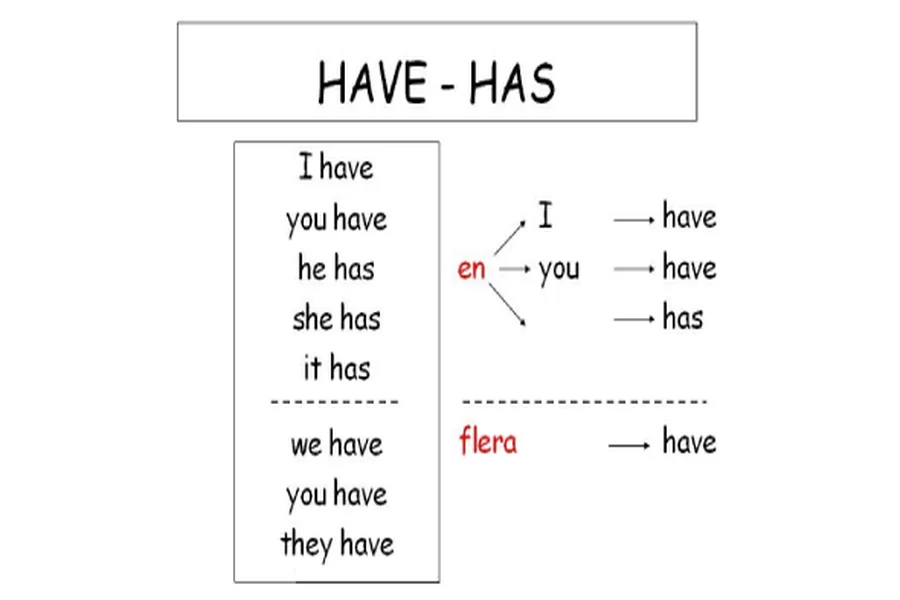
The main rule is straightforward: use “has” with third-person singular subjects in positive simple present sentences. Use “have” with I, you, we and they.
The subject of a sentence determines which form of the verb is appropriate.
For example:
- I have a laptop.
- You have a question.
- We have a new project.
- They have two children.
- He has a bicycle.
- She has a beautiful voice.
- It has a long tail.
This rule applies whether the sentence describes possession or a general fact.
One common mistake among English learners is using “have” with “she” because they remember the base form of the verb. However, English changes certain verbs according to the subject.
The verb “have” is irregular in the present tense. Unlike many regular verbs that simply add an “s,” it changes to “has” when used with he, she or it.
For example, we say “she works” and “she plays.” However, we say “she has” rather than “she haves.”
Remembering this difference can prevent many common grammar mistakes.
A useful way to understand the rule is to identify the subject first. Once you know whether the subject is singular or plural, choosing the correct verb becomes easier.
When Should You Use She Has?
You should use “she has” when making positive statements about a female person in the simple present tense. It is suitable for describing ownership, relationships, experiences, responsibilities and personal characteristics.
1. Talking About Possession
Use “she has” when explaining what someone owns.
Examples:
- She has a new dress.
- She has a large house.
- She has an expensive watch.
- She has a beautiful car.
2. Describing Family Relationships
The expression can also explain family connections.
Examples:
- She has two sisters.
- She has a younger brother.
- She has a large family.
- She has three children.
3. Explaining Personal Experiences
You can use “she has” when describing someone’s experiences or opportunities.
Examples:
- She has a lot of experience.
- She has many interesting stories.
- She has a good understanding of English.
- She has several opportunities.
4. Discussing Responsibilities
The expression is also common when talking about duties and obligations.
Examples:
- She has an important responsibility.
- She has a meeting this afternoon.
- She has a lot of work to complete.
- She has an appointment tomorrow.
These examples demonstrate how naturally “she has” fits into everyday conversations. It is a useful expression for both formal and informal communication.
When Is Have Correct After She?
Although “she have” is not correct as a simple positive statement, the word “have” is necessary in several grammatical structures.
Understanding these structures will help you avoid confusion.
1. After Does
Use “have” after “does” in questions and negative statements.
Examples:
- Does she have a passport?
- Does she have a smartphone?
- She does not have a passport.
- She doesn’t have enough money.
2. After Modal Verbs
Modal verbs are followed by the base form of the main verb.
Examples:
- She can have another chance.
- She should have a break.
- She may have some information.
- She will have more time tomorrow.
3. After To
The infinitive form uses “to have.”
Examples:
- She wants to have a successful career.
- She needs to have more confidence.
- She hopes to have a better future.
4. In Conditional Sentences
“Have” can also appear in conditional constructions.
Examples:
- If she has time, she will call you.
- If she were to have another opportunity, she might accept it.
Notice that the first example uses “has” because it is a simple present conditional clause. The second uses “were to have” as a different conditional structure.
The key is to understand the grammatical pattern rather than memorizing isolated expressions.
Difference Between Has and Have With Examples
The easiest way to understand “has” and “have” is to compare their use in different sentences.
Both words express similar meanings but their grammatical roles depend on the subject and sentence structure.
| Sentence | Correct form |
|---|---|
| She ___ a new bag. | Has |
| They ___ a new house. | Have |
| He ___ a brother. | Has |
| I ___ a question. | Have |
| Does she ___ a phone? | Have |
| She does not ___ a car. | Have |
| She ___ completed the task. | Has |
| We ___ completed the task. | Have |
| She can ___ another chance. | Have |
| It ___ four legs. | Has |
Here are additional comparisons:
Incorrect: She have a beautiful dress.
Correct: She has a beautiful dress.
Incorrect: She have completed her work.
Correct: She has completed her work.
Incorrect: Does she has a laptop?
Correct: Does she have a laptop?
Incorrect: She doesn’t has a brother.
Correct: She doesn’t have a brother.
These comparisons highlight an important grammar principle. When “does” is already present, the main verb must return to its base form.
Practicing these examples can help you recognize the correct sentence structure more quickly.
Common Mistakes English Learners Should Avoid
Many people learning English make similar mistakes when using “has” and “have.” These errors usually happen because they do not understand how auxiliary verbs work.
One common mistake is using “have” in positive sentences with “she.”
For example, saying “She have a new job” is incorrect in standard English. The correct version is “She has a new job.”
Another mistake is using “has” after “does.”
For example, “Does she has a sister?” is incorrect. The correct question is “Does she have a sister?”
Some learners also use “has” after “doesn’t.” This is another common error.
The correct sentence is “She doesn’t have a car” rather than “She doesn’t has a car.”
A further mistake involves the present perfect tense. Some people write “She have finished her homework” when they should write “She has finished her homework.”
Here are a few tips to avoid these errors:
- Identify the subject before choosing the verb.
- Use “has” with she in positive simple present statements.
- Use “have” after does and doesn’t.
- Use “have” after modal verbs.
- Use “has” in present perfect sentences with she.
- Read your sentences aloud to recognize unusual structures.
Making mistakes is a normal part of learning a language. The most important thing is to understand why a sentence is incorrect and practice the correct version.
How to Remember the Correct Usage Easily
Remembering the difference between “she has” and “she have” becomes easier when you use simple learning techniques.
Start by remembering that “she” belongs to the third-person singular category. In positive simple present sentences, this subject takes “has.”
A simple memory rule is:
She = Has
You can also remember the following pattern:
- I have
- You have
- He has
- She has
- It has
- We have
- They have
Repeat these sentences regularly until they become natural.
Another helpful technique is to practice changing statements into questions.
For example:
- She has a book.
- Does she have a book?
Notice that “has” changes to “have” because the question uses “does.”
You can also practice negative sentences:
- She has a car.
- She does not have a car.
This method helps you understand how auxiliary verbs affect the main verb.
Reading English books and watching English videos can also improve your understanding. Pay attention to how native speakers use these expressions in everyday conversations.
Finally, try writing five sentences with “she has” and five sentences with “does she have” every day. Regular practice will help you remember the rule without thinking too much about it.
Practice Exercises: She Has or She Have
Practice is one of the best ways to improve your grammar skills. The following exercises will help you understand when to use “has” and “have.”
Choose the correct word to complete each sentence.
- She ___ a beautiful garden.
- Does she ___ a new phone?
- She ___ finished her assignment.
- She doesn’t ___ enough money.
- He ___ a younger sister.
- They ___ many responsibilities.
- She can ___ another opportunity.
- Does she ___ any questions?
- She ___ a meeting every Monday.
- We ___ enough time to complete the work.
Answers:
- Has
- Have
- Has
- Have
- Has
- Have
- Have
- Have
- Has
- Have
You can make the exercise more challenging by creating your own sentences. Try writing about your family members and friends using different subjects.
For example:
- My mother has a beautiful garden.
- My friends have new smartphones.
- My sister has a part-time job.
- Does my sister have a driving license?
These examples connect grammar practice with everyday situations. As a result, you can learn the rule and improve your ability to communicate naturally.
Final Thought
Understanding the difference between “She Has” and “She Have” is an important part of learning English grammar. The main rule is simple: use “she has” in positive simple present statements because “she” is a third-person singular subject.
However, “have” is correct after auxiliary verbs such as “does” and “doesn’t” as well as after modal verbs like can, should and will. It is also used in infinitive structures such as “to have.”
The best way to remember these rules is through regular practice. Read examples, complete grammar exercises and use both forms in everyday sentences. Over time, choosing between “has” and “have” will become much easier.
English grammar does not need to feel complicated. Understanding a few basic rules and applying them consistently can help you become a more confident English speaker and writer.
