
Pick up any pan in a kitchen store this November and the box reads like a vocabulary quiz. Non-porous, non-stick, non-reactive, PFOA-free and toxin-free all compete for the same few square inches of packaging, and most shoppers reasonably assume the words add up to one general promise of safety.
Spelling aside (the correct spelling is label, not lable, however often the second version turns up online), the real trouble is meaning. These terms sound interchangeable, yet they describe three unrelated properties: whether the surface absorbs anything, whether food grips it, and whether the metal reacts when it meets acid. One pan can earn one label and miss the other two, and some pans only keep a label until their coating wears thin.
The sections that follow take each label in turn and explain the property it actually measures, then cover the fine print worth reading twice and how common materials score against all three, which matters most in the months when tomato sauces, wine braises and cranberry sauce take over the stovetop.
What Does Non-Porous Cookware Mean?
Porosity describes whether a surface has openings, however microscopic, that let liquids, oils and odors soak in. Stainless steel, glass, glazed enamel and titanium are non-porous, so whatever lands on them stays on top, where soap and water can reach it. Unglazed stoneware and clay are porous by nature, and raw cast iron depends on a layer of polymerized oil, known as seasoning, to seal its naturally rough surface.
The label matters for more than tidiness, because porous surfaces hold onto flavors, so the garlic from last night’s stir fry can turn up in the morning’s pancakes, and the same openings that trap oils give stains and bacteria somewhere to settle. Non-porous cookware breaks that cycle, which is why the term appears so often on pans, boards and containers marketed for raw meat and strong spices.
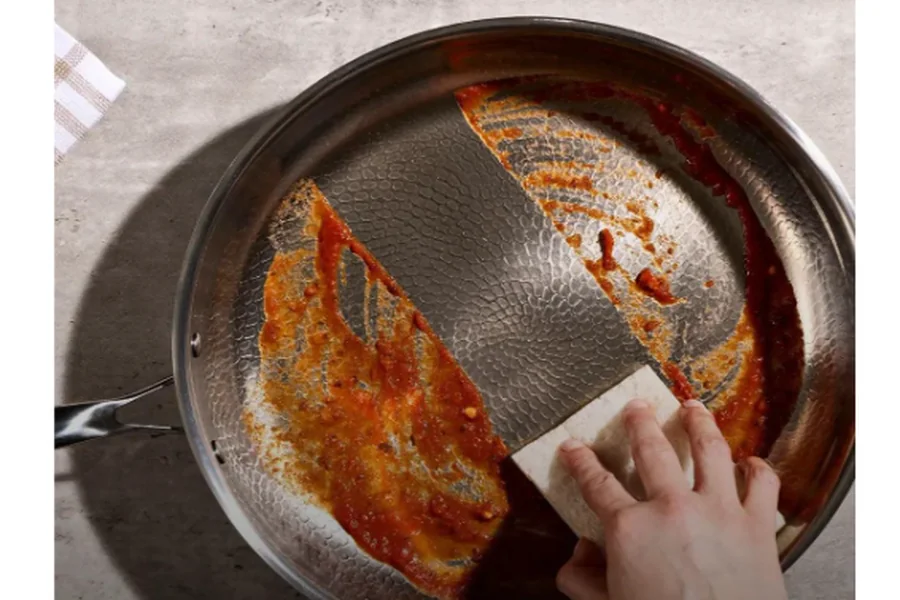
One detail on the box deserves a second look, since the claim applies only to the surface food touches, and a coating stays non-porous only for as long as it stays intact. Once a coated pan chips or flakes, the layer underneath decides what happens next, while a solid uncoated surface remains non-porous for its entire working life. The quickest check at home is reassuringly simple: a non-porous pan rinses clean with no lingering smell after garlic, fish or curry.
Non-Stick Cookware Labels and the Coatings Behind Them
On most boxes, non-stick means a coating, and the most common is PTFE, the slick fluoropolymer best known under the Teflon name. Sol-gel coatings sold as ceramic non-stick come next; they are made largely from silica and contain no fluorine, though they tend to lose their release faster than PTFE as heat and scrubbing take their toll.
The PFOA-free sticker causes the most confusion, because PFOA was a processing aid once used to make PTFE, and US manufacturers phased it out by 2015 under an EPA stewardship program. Nearly every PTFE pan on sale today is therefore PFOA-free by default, while the coating itself is still PTFE, which falls within the wider PFAS family of fluorinated chemicals under the OECD definition. PFOA-free and PFAS-free are simply not the same claim.
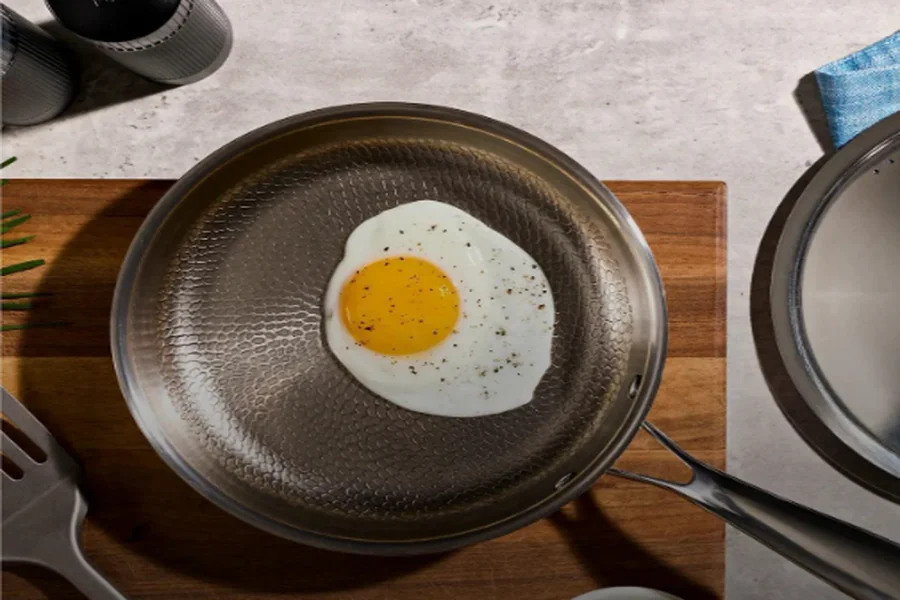
Titanium adds another layer of ambiguity, since pans described as titanium-reinforced or titanium-infused usually carry a PTFE or ceramic coating with titanium particles mixed in for hardness, which is a very different thing from a cooking surface made of titanium itself. Uncoated pans that call themselves naturally non-stick work another way entirely, relying on a textured or hammered surface, proper preheating and a teaspoon of oil rather than a chemical layer, so their release has nothing to wear away.
Non-Reactive Cookware and the Acid Test of Holiday Cooking
Reactivity is about the chemistry between metal and food, and bare aluminum, unlined copper, cast iron and carbon steel all react with acidic ingredients such as tomatoes, wine, vinegar, citrus and cranberries. The results show up as a metallic taste, a dull gray tint in pale sauces or seasoning stripped from the pan. Non-reactive surfaces, including stainless steel, enamel, glass, hard-anodized aluminum and titanium, leave the food tasting exactly as it should.
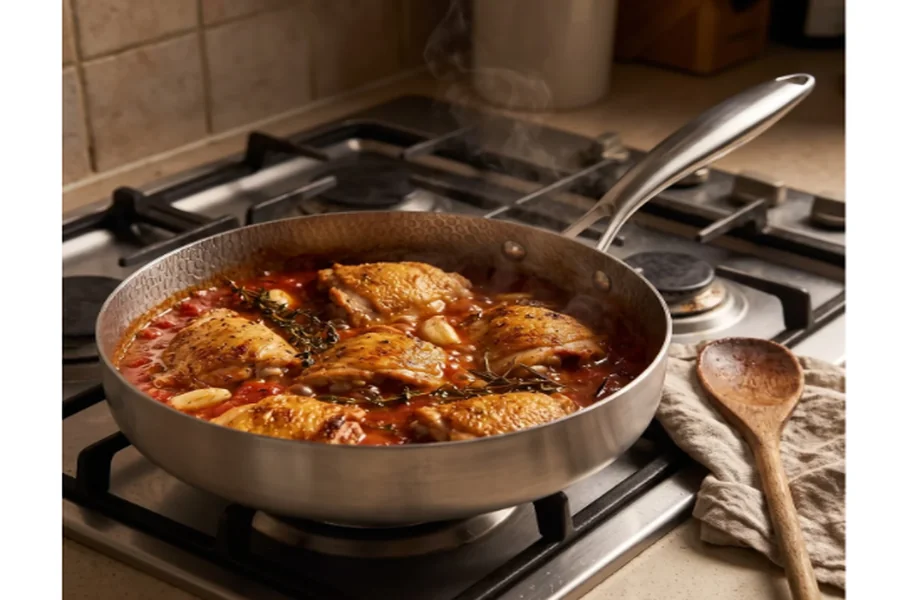
Late fall is when the label earns its keep, as cranberry sauce simmers on the back burner, short ribs braise in red wine for hours and tomato-based stews sit on low heat all afternoon. Longer contact with acid gives a reactive pan more time to affect flavor and color, while titanium sits at the stable end of the scale because it forms a thin, tough oxide layer on contact with air, the same passive film that makes the metal suitable for medical implants.
Construction matters here too, because the non-reactive label only needs to describe the surface food touches. Plenty of well-made pans hide an aluminum core for fast heating inside a non-reactive shell, and that design is perfectly sound as long as the cooking layer stays whole, which is why clad pans with a solid stainless or titanium cooking surface handle acidic holiday dishes without a second thought.
Fine Print on Cookware Labels Worth Reading Twice
Beyond the big three, a handful of smaller phrases shape how safe and long-lasting a pan really is, and they are easy to misread when packaging is designed to be skimmed in a few seconds. These are the terms most worth slowing down for before checkout.
- PFOA-free confirms that one retired processing chemical was left out, not that the coating is free of PTFE or other PFAS.
- Titanium-reinforced and titanium-infused usually describe particles inside a coating rather than a titanium cooking surface.
- Ceramic often refers to a thin sol-gel coating over aluminum rather than a pan made of solid ceramic.
- Non-toxic has no single regulated definition on US cookware packaging, so named lab results for PFAS, PTFE, lead and cadmium say far more.
- Oven-safe ratings vary widely, and plastic handles or coatings often set the limit well below what the metal could take.
- Dishwasher safe on a coated pan means the pan survives the cycle, not that the coating will last as long as it would with hand washing.
Read this way, a crowded box turns into a short checklist, since the most reliable cookware labels name a material, a temperature or a tested substance while the vaguest ones lean on adjectives. That difference usually tells a shopper which claims will still be true after a few hundred meals.
Common Cookware Materials Measured Against All Three Labels
Few materials carry all three labels on their own merits, and the ones that come close get there in different ways. Here is how the most common options measure up, from long-standing kitchen workhorses to the newest uncoated surface.
Stainless Steel
Stainless steel is non-porous and non-reactive, which is why it has anchored professional kitchens for generations and handles tomato sauces, wine reductions and citrus pan sauces without complaint. It is not sold as non-stick, so that is the one label of the three it never claims, and most stainless pans pair the steel with an aluminum or copper core for better heat spread.
Enameled Cast Iron
Glass enamel fused over cast iron gives a non-porous, non-reactive surface that suits long braises and acidic stews, along with the heat retention cast iron is known for. Enamel is not marketed as non-stick either, the pots are heavy to lift when full, and a chip in the enamel exposes the reactive iron underneath, so careful handling decides how long both labels hold.
Coated Non-Stick
PTFE and ceramic-coated pans carry all three labels on the day they are bought, since an intact coating is slick, sealed and non-reactive. Every one of those claims depends on the coating, though, so as it scratches, thins or loses its release, the pan gradually stops living up to the box, which is why coated pans are usually treated as replaceable.
Pure Titanium
Pure titanium is the one uncoated material that earns all three labels through the metal itself. The Siraat Titanium Hammered Pan Pro from Siraats Kitchen shows how that works in practice: its cooking surface is 0.5 mm of pure titanium with no coating, so it is non-porous by nature, and the stable oxide layer makes it a genuinely non-reactive titanium pan for tomato braises, wine pan sauces and cranberry glazes.
The hammered pattern creates small valleys that reduce contact between food and metal, so after a few minutes of preheating and a teaspoon of high-smoke-point oil, eggs and fish release without any coating to wear away. Underneath, a 1 mm aluminum core spreads heat evenly and a 430 stainless steel base makes the pan induction compatible, and the whole pan is oven safe to 1,000°F, dishwasher safe and safe with metal utensils. Third-party testing by Light Labs found no detectable PFAS, PTFE, lead or cadmium, and the pan is backed by a 75-year warranty, so every label on its box is one it can keep.
Which Cookware Is Non-Stick and Non-Reactive?
The honest answer depends on whether the label needs to last. Coated pans are non-stick and non-reactive until the coating wears, stainless steel and enameled cast iron are reliably non-porous and non-reactive but make no non-stick promise, and reactive metals such as cast iron, carbon steel and bare aluminum call for care around acidic dishes. Pure titanium holds all three labels without a coating, which is why it has become the answer for cooks who want one pan to handle eggs, sears and tomato sauces alike.
| Material | Non-Porous | Non-Stick | Non-Reactive |
| Pure titanium, hammered and uncoated | Yes | Yes, with preheating and a little oil | Yes |
| Stainless steel | Yes | Not claimed | Yes |
| Enameled cast iron | Yes, while the enamel is intact | Not claimed | Yes, while the enamel is intact |
| PTFE or ceramic coated | Yes, while the coating is intact | Yes, while the coating is intact | Yes, while the coating is intact |
| Cast iron or carbon steel | Sealed by seasoning | Once well seasoned | No |
| Bare aluminum or unlined copper | Yes | Not claimed | No |
Cookware is only one small part of maintaining good health and overall wellness, but it is used every day for years, so it pays to read the box the way an editor reads a draft. Look for labels that name a material, a temperature or a tested substance, check whether each promise depends on a coating, and the words on the packaging start to mean exactly what they say.

1 Comment
Pingback: 4G, Wi-Fi or PoE: What Security Camera Labels Mean