

Security camera packaging crams a lot into a few words, and terms such as wireless, wire-free, Wi-Fi, PoE and 4G sound interchangeable until the camera is on the wall and refusing to connect. Each label answers a different question, and mixing them up is the quickest route to a camera that cannot reach a router, a power point or a mobile tower.
Reading labels in the right order, power first and connection second, makes the shelf far less confusing. The sections below take each common label in turn and explain what it promises and what it leaves out.
What Do Security Camera Labels Actually Describe?
Almost every label sits in one of two camps: how the camera gets power or how it sends video. Power labels include mains, PoE, battery, solar and wire-free, while connection labels include Wi-Fi, Ethernet, 4G and 5G. Trouble starts when one word is read as covering both, and the same confusion appears in other aisles, as this explainer on what cookware labels mean shows for non-stick and non-reactive pans.
Wi-Fi Security Camera Labels and Signal Range
A Wi-Fi label only says the camera sends video over a router’s wireless network, so it is only as good as the signal where it hangs. Many models connect on the 2.4GHz band, which travels farther and passes through walls better, while 5GHz is faster but weaker over distance. Dual-band means the camera can use either. Brick walls, outbuildings and long driveways are where Wi-Fi cameras tend to drop out, so test the signal at the mounting spot with a phone before drilling.
Does a Wireless Security Camera Mean No Cables?
Wireless describes how data travels, not how the camera is powered, so a wireless camera may still need a cable to a power point. Wire-free is the label that promises no permanent cables at all, because the camera runs on a rechargeable battery or a solar panel. That freedom has trade-offs, since wire-free cameras usually record on motion to save charge and the battery needs topping up unless a panel does it. Plug-in wireless models power on continuously but need an outlet within Wi-Fi range, which makes them closer to wired cameras than to wire-free ones.
PoE Security Camera Labels and Cable Limits
PoE stands for Power over Ethernet, and a PoE camera receives both power and data through a single network cable. That cable plugs into a PoE switch or injector, and footage usually goes to a network video recorder or a cloud service. The IEEE 802.3af standard delivers up to 15.4W per port and 802.3at, often called PoE+, up to 30W, with both rated to 100 metres of cable, and Cat5e or Cat6 is the usual choice. Voltage drops over long runs, so PoE suits houses and workshops where cable can be run once and left alone, but not distant gates or paddocks.
4G Security Camera Labels and Mobile Coverage
A 4G label means the camera carries a SIM card and connects over the mobile network instead of a router, which lets it work in a paddock, on a job site or at a holiday house with no internet. Coverage then replaces Wi-Fi range as the limit, so check the signal at the exact spot with a phone on the same carrier and allow for a data plan on top of the camera price. Some 4G models accept a 5G SIM but still connect over 4G only, so a 5G SIM does not turn them into 5G cameras.
Weather and Power Labels on Outdoor Security Cameras
Outdoor cameras add two more labels that sound technical but follow simple rules. They also face the same weather as the roof, and a winter roof prep checklist is a useful reminder of how much rain, wind and cold exterior fittings absorb.
IP Ratings
The first digit of an IP rating covers dust and the second covers water. IP65 protects against low-pressure water jets, IP66 against powerful jets and IP67 against temporary immersion up to one metre, so IP66 suits an exposed wall or open yard.
Solar and Battery Claims
Figures such as up to three months of battery are best-case numbers, because battery life varies with settings, usage and temperature. For solar models, compare panel wattage and any stated backup without sun, since those two numbers decide how long a camera survives a run of grey days.
Which Wire-Free Outdoor Camera Suits Remote Spots?
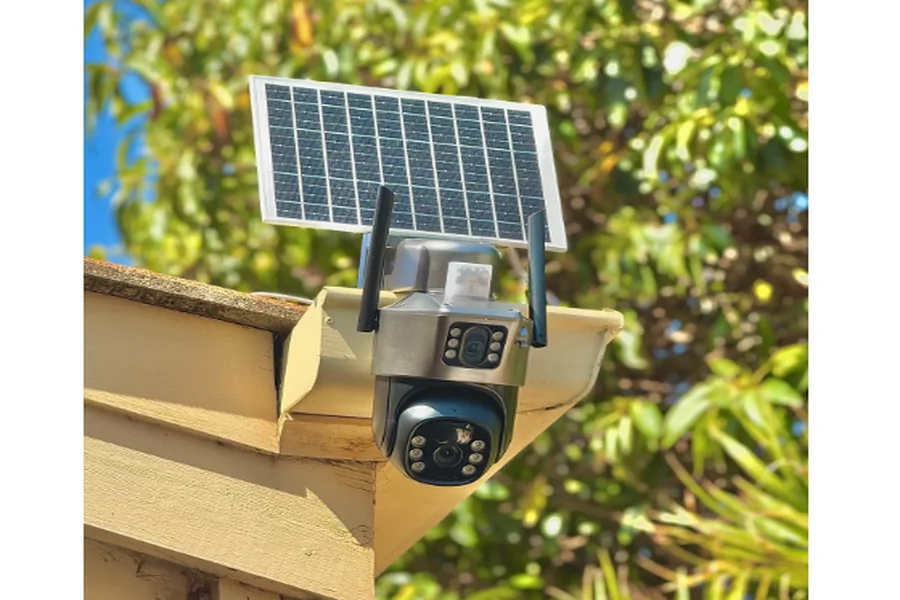
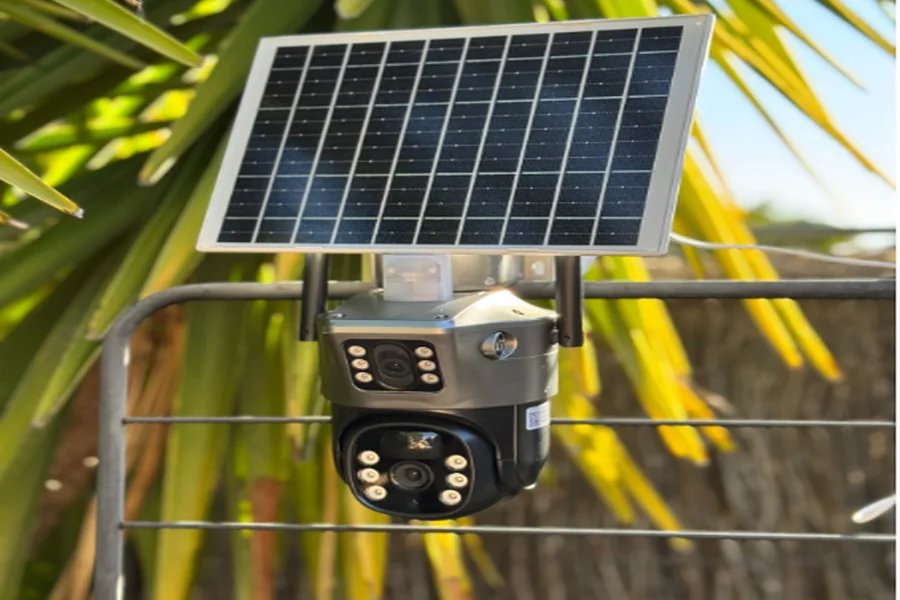
Remote gates, sheds and paddocks need labels from the wire-free and 4G camps together. A wire-free outdoor camera such as the Sentinel Guardian combines both, running from a 7.5W solar panel that the brand says keeps charging under overcast skies, with more than four days of battery backup without sun. It connects over Wi-Fi or a 4G/5G SIM and is Starlink compatible.
Video is 4K, with dual PTZ lenses giving 360° coverage, 16× optical zoom and colour night vision to 20 metres. An included 64GB SD card stores recordings without a subscription, AI detection tracks people and triggers a flashing light, an alarm and two-way audio, and the IP66 housing handles exposed positions.
How to Read a Security Camera Label Before You Buy
Check these in order before comparing prices:
- Power: mains, PoE, battery or solar, and whether wireless still needs a cable
- Connection: the Wi-Fi band, Ethernet or a 4G SIM, and signal at the mounting spot
- Weather: an IP rating that matches how exposed the wall or post is
- Storage: SD card size, the recorder needed or a cloud plan
- Running costs: data plans and any subscription for recordings
Labels describe features rather than suitability, so match each one to the exact spot where the camera will hang. Settle power and connection first, and the rest of the label usually falls into place.
