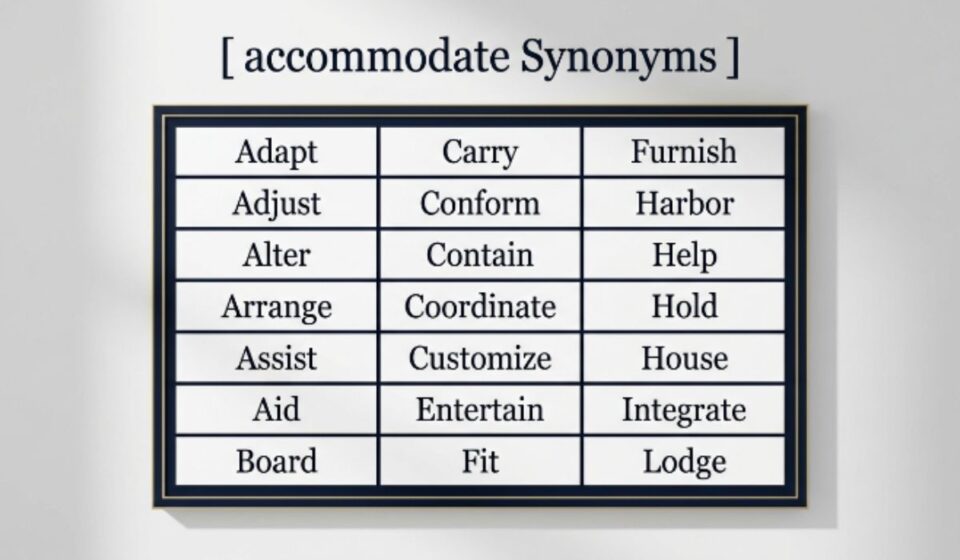

“Accommodate” is a workhorse word. It shows up in emails, policy documents, and everyday requests, often doing a lot of heavy lifting without much personality. Swapping it out for the right alternative makes your writing feel sharper and more precise. This guide covers 25 natural replacements, how each one shifts the meaning slightly, and when to reach for it.
What Does “Accommodate” Really Mean?
At its core, “accommodate” means to make room for something or someone, whether that’s physical space, a schedule, or a need. It can describe fitting people into a venue, adjusting a plan, or simply helping someone out.
For example, a restaurant might accommodate a last-minute request for a wheelchair-accessible table. The word covers everything from capacity to kindness, which is exactly why it gets used so broadly.
Why Look for Alternatives to “Accommodate”?
“Accommodate” is flexible, but that flexibility can make writing feel vague. If a document uses it five times to mean five different things, readers have to work harder to follow along.
A more specific word tells the reader exactly what’s happening. “House” signals lodging. “Adapt” signals change. “Oblige” signals a favor. Picking the right synonym removes guesswork and makes your writing easier to trust.
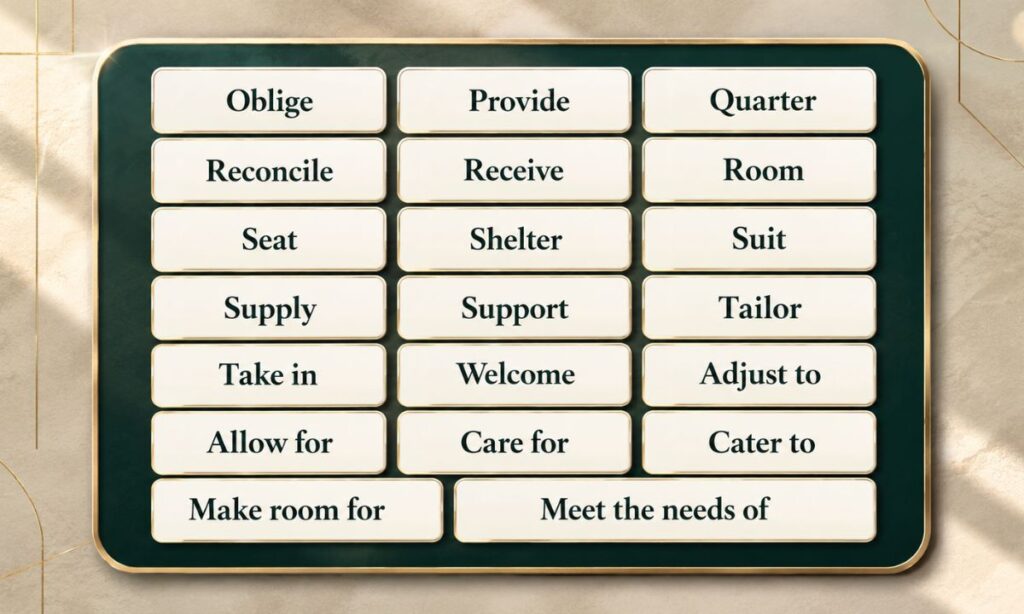
25 Synonyms for “Accommodate” and How to Use Them
1. Hold
Meaning: Hold describes the physical capacity of a space to contain people or things. It’s a simple, direct word with no extra emotional weight. People use it when talking about rooms, containers, or vehicles.
Example: The new stadium can hold up to 60,000 fans.
When It Fits: Use it for describing venue or container capacity.
2. House
Meaning: House means to provide shelter or a physical location for people, animals, or objects. It carries a sense of permanence or responsibility. The word works well in both literal housing contexts and storage contexts.
Example: The old warehouse now houses a community art studio.
When It Fits: Use it for lodging, storage, or long-term placement.
3. Fit
Meaning: Fit describes something matching the available space or requirements exactly. It’s casual and practical, often used in everyday planning. The word suggests a snug, workable match rather than extra room.
Example: The table can fit six people if we add one more chair.
When It Fits: Use it for casual conversations about space or seating.
4. Adapt
Meaning: Adapt means to change something so it works in a new situation or for a different person. It suggests flexibility and problem-solving. The word fits well when describing adjustments made over time.
Example: The teacher adapted the lesson plan for students with different learning styles.
When It Fits: Use it when describing thoughtful, ongoing adjustments.
5. Adjust
Meaning: Adjust describes a smaller, often quick change made to fit a specific need. It’s more immediate than “adapt” and less permanent. The word suits fine-tuning rather than major overhauls.
Example: She adjusted the thermostat to accommodate her guest’s preference.
When It Fits: Use it for quick, practical tweaks in daily life.
6. Oblige
Meaning: Oblige means to do something as a favor or out of a sense of duty. It carries warmth and a slight formality. The word works well when someone goes out of their way to help.
Example: The chef gladly obliged and prepared a dairy-free dessert.
When It Fits: Use it when highlighting a considerate favor.
7. Shelter
Meaning: Shelter means to provide protection or a safe place to stay, often during difficult conditions. It carries emotional weight tied to safety and care. The word fits both literal and figurative protection.
Example: The community center sheltered dozens of families during the storm.
When It Fits: Use it for emergency housing or protective situations.
8. Lodge
Meaning: Lodge means to provide temporary living space, often for travelers or guests. It has a slightly old-fashioned, hospitality-focused tone. The word suits short-term stays rather than permanent housing.
Example: The inn can lodge up to twelve guests during peak season.
When It Fits: Use it for travel, hospitality, or short-term stays.
9. Welcome
Meaning: Welcome means to receive someone warmly, often into a space, group, or event. It emphasizes friendliness over logistics. The word adds an emotional, inviting tone to any description of hosting.
Example: The club welcomes new members every first Friday of the month.
When It Fits: Use it when emphasizing warmth in hosting or inclusion.
10. Suit
Meaning: Suit means to match well with someone’s needs, preferences, or schedule. It’s casual and conversational. The word works especially well when talking about timing or personal fit.
Example: Let’s find a meeting time that suits everyone’s schedule.
When It Fits: Use it for scheduling or matching preferences casually.
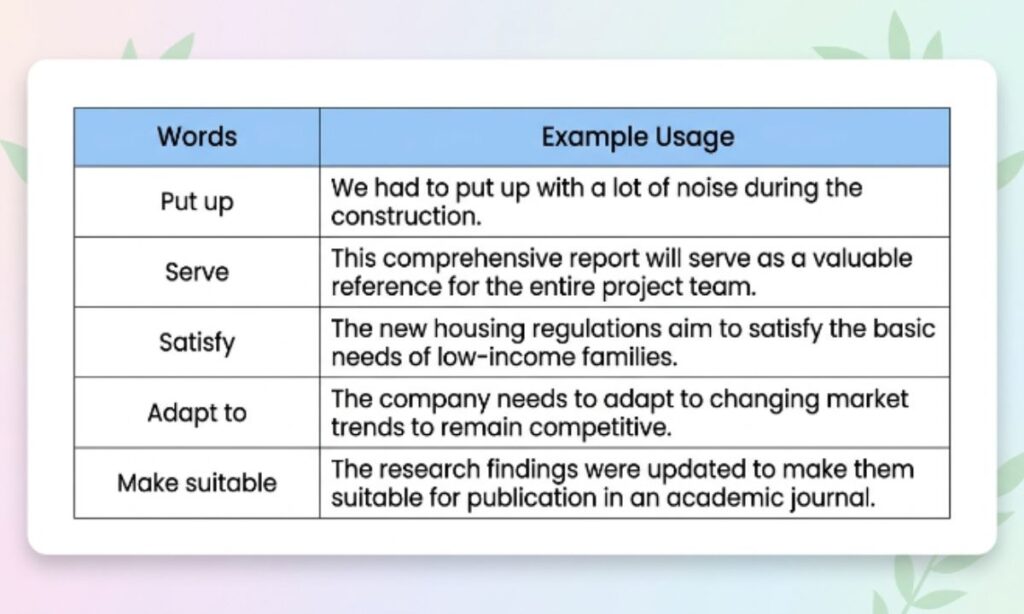
11. Satisfy
Meaning: Satisfy means to meet a requirement, expectation, or need fully. It carries a sense of completion and resolution. The word fits formal contexts like contracts, policies, and requests.
Example: The revised proposal satisfies all the client’s requirements.
When It Fits: Use it for formal writing about meeting requirements.
12. Provide For
Meaning: Provide for means to supply what someone needs, often ongoing rather than one-time. It suggests responsibility and care. The word fits family, financial, or long-term support contexts.
Example: The trust was set up to provide for the children’s education.
When It Fits: Use it for long-term support or responsibility.
13. Cater To
Meaning: Cater to means to specifically design something around a group’s needs or tastes. It suggests attentiveness and customization. The word fits business, events, and service industries especially well.
Example: The menu caters to vegetarian and gluten-free diets.
When It Fits: Use it for business or service-focused customization.
14. Harmonize
Meaning: Harmonize means to bring different elements into agreement so they work smoothly together. It’s more abstract, often used for systems, policies, or sounds. The word suits situations involving multiple moving parts.
Example: The new software update harmonizes data across all departments.
When It Fits: Use it for aligning systems, teams, or processes.
15. Reconcile
Meaning: Reconcile means to resolve differences between two things so they align. It often applies to numbers, opinions, or conflicting requirements. The word carries a slightly formal, problem-solving tone.
Example: The accountant reconciled the two conflicting budget reports.
When It Fits: Use it for resolving conflicts or discrepancies.
16. Support
Meaning: Support means to back someone or something, often through help, encouragement, or resources. It’s warm and broadly applicable. The word works in personal, professional, and technical contexts alike.
Example: The app now supports multiple languages for international users.
When It Fits: Use it for backing people, projects, or systems.
17. Assist
Meaning: Assist means to help someone complete a task or reach a goal. It’s slightly more formal than “help.” The word fits workplace, customer service, and instructional writing.
Example: Our team is happy to assist with any technical issues.
When It Fits: Use it in professional or customer-facing writing.
18. Integrate
Meaning: Integrate means to combine something smoothly into an existing system or group. It suggests a deliberate, structured process. The word fits technology, teams, and organizational contexts.
Example: The new hire integrated quickly into the marketing team.
When It Fits: Use it for blending people, tools, or processes.
19. Modify
Meaning: Modify means to make a specific change to something without altering its core purpose. It’s neutral and precise. The word suits technical, legal, or instructional contexts.
Example: The contractor modified the blueprint to meet updated safety codes.
When It Fits: Use it for precise, targeted changes.
20. Customize
Meaning: Customize means to design or adjust something specifically for one person’s preferences. It carries a personal, tailored feel. The word fits products, services, and experiences built around individual choice.
Example: The store lets shoppers customize their sneakers online.
When It Fits: Use it for personalized products or experiences.
21. Contain
Meaning: “Contain” means to hold something within defined limits or boundaries. It’s practical and neutral, often used for physical or numerical capacity. The word fits measurements, packaging, and structural descriptions.
Example: The tank can contain up to 500 gallons of water.
When It Fits: Use it for describing measured or physical capacity.
22. Take In
Meaning: “Take in” means to welcome someone into your home or care, often during a difficult time. It carries warmth and generosity. The word fits personal stories involving kindness and shelter.
Example: Her grandparents took in three foster children over the years.
When It Fits: Use it for personal, caring acts of hospitality.
23. Serve
Meaning: “Serve” means to meet the needs of a person or group through action or provision. It suggests dedication and purpose. The word fits business missions, community work, and customer relationships.
Example: The clinic serves families across the entire county.
When It Fits: Use it for describing purpose-driven service.
24. Comply With
Meaning: Comply with means to follow rules, requests, or requirements exactly. It’s formal and precise, often used in legal or regulatory writing. The word signals obligation rather than choice.
Example: The building was renovated to comply with new fire codes.
When It Fits: Use it for legal, regulatory, or policy-related writing.
25. Include
Meaning: Include means to make sure someone or something is part of a group, plan, or space. It emphasizes belonging over logistics. The word fits conversations about diversity, access, and fairness.
Example: The event organizers made sure to include accessible seating options.
When It Fits: Use it when emphasizing fairness and belonging.
Which Alternative Fits Your Situation?
The right word depends on tone, formality, and what exactly you’re describing.
- Work emails: assist, support, satisfy, comply with
- School writing: adapt, modify, integrate, reconcile
- Friends and casual chats: fit, suit, take in, welcome
- Formal writing or reports: provide for, comply with, satisfy, harmonize
- Everyday conversation: help, suit, adjust, welcome
Common Mistakes
A wrong synonym can quietly change the meaning of a sentence.
- Using “house” for a short visit, when the word implies longer-term shelter
- Confusing “adapt” with “adjust,” even though adapt suggests a bigger, ongoing change
- Applying “comply with” in casual writing, where it sounds overly formal and stiff
- Using “contain” for people instead of objects or measurements, which can sound impersonal
- Repeating one favorite synonym throughout a document, recreating the same overuse problem
Quick Guide Table
Here are 20 more alternatives worth knowing, along with where each one fits best.
| Phrase | Formal | Casual | Conversation | |
| Board | Somewhat | Yes | Somewhat | Yes |
| Quarter | Yes | No | Somewhat | No |
| Room | No | Yes | No | Yes |
| Domicile | Yes | No | No | No |
| Harbor | Yes | Somewhat | Somewhat | Somewhat |
| Entertain | Yes | Somewhat | Yes | Somewhat |
| Furnish | Yes | No | Yes | No |
| Receive | Yes | Somewhat | Yes | Somewhat |
| Tailor | Somewhat | Yes | Yes | Yes |
| Conform | Yes | No | Yes | No |
| Attune | Somewhat | No | Somewhat | No |
| Coordinate | Yes | Somewhat | Yes | Somewhat |
| Align | Yes | Somewhat | Yes | Somewhat |
| Indulge | Somewhat | Yes | Somewhat | Yes |
| Please | No | Yes | Somewhat | Yes |
| Aid | Somewhat | Yes | Yes | Yes |
| Favor | No | Yes | Somewhat | Yes |
| Humor | No | Yes | No | Yes |
| Yield | Yes | No | Somewhat | No |
| Admit | Yes | Somewhat | Yes | Somewhat |
Conclusion
“Accommodate” gets the job done, but a more specific word almost always says more with less effort. Match the synonym to your tone, whether that’s a formal report or a quick text to a friend. Small word choices like these are often what make writing feel clear instead of generic.