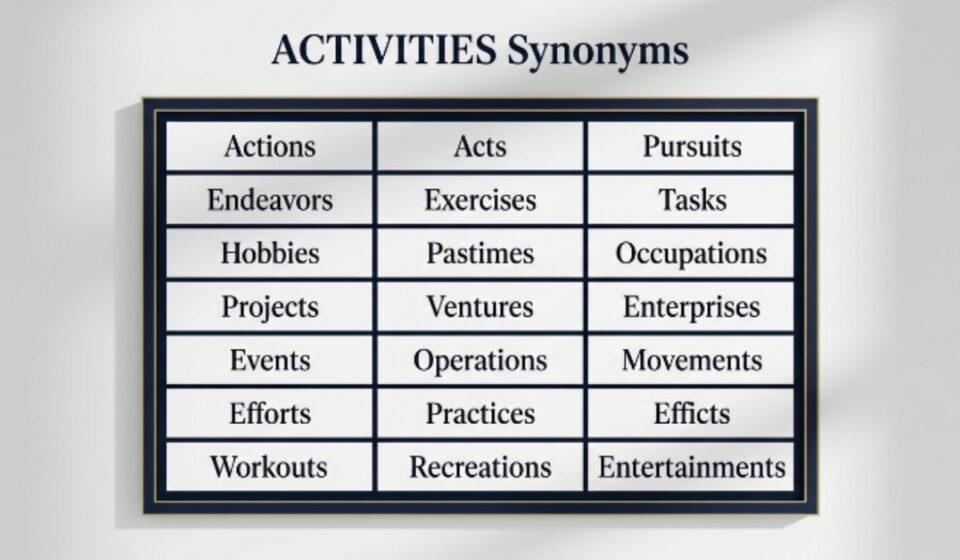

The word “activities” shows up everywhere, from school newsletters to work emails. Say it too often, though, and your writing starts to sound flat. Swapping in the right alternative keeps your message clear, specific, and easy to read. This guide walks through 25 natural replacements, when to use each one, and how to avoid picking the wrong word for the moment.
What Does “Activities” Really Mean?
At its core, “activities” describes things people do, whether that’s work, play, or anything in between. It covers a task at the office, a hobby on the weekend, or an event a community organizes together.
For example, a summer camp brochure might list swimming, hiking, and arts and crafts as its daily activities. The word works as a catch-all, which is exactly why it gets overused.
Why Look for Alternatives to “Activities”?
“Activities” is a safe, general word, and that’s both its strength and its weakness. Repeat it three times in one paragraph, and your writing starts to feel like a checklist instead of a conversation.
A more specific word also tells the reader more. “Chores” suggests obligation. “Pastimes” suggests relaxation. “Projects” suggests structure and a goal. Choosing the right synonym adds meaning that “activities” alone can’t carry.
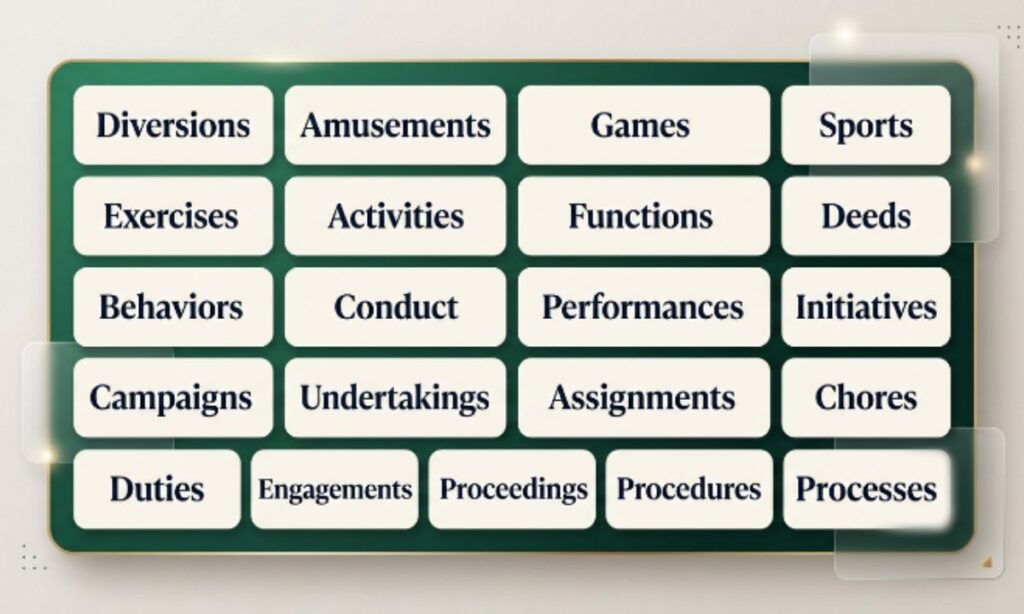
25 Synonyms for “Activities” and How to Use Them
1. Tasks
Meaning: Tasks refer to specific jobs or duties someone needs to complete, often with a clear start and end point. The word carries a sense of responsibility rather than leisure. It works well when you want to sound organized and direct.
Example: She finished her morning tasks before the team meeting started.
When It Fits: Use it for work checklists or daily to-do lists.
2. Pursuits
Meaning: Pursuits describe things a person chases with interest or ambition, often over time. The word has a slightly formal, thoughtful tone. It suggests dedication rather than a quick, casual action.
Example: His creative pursuits included painting, writing, and photography.
When It Fits: Use it when describing long-term interests or passions.
3. Pastimes
Meaning: Pastimes are things people do purely for enjoyment, usually in free time. The word feels warm and relaxed, almost nostalgic. It works well for hobbies that have no deadline or pressure attached.
Example: Gardening became her favorite pastime after retirement.
When It Fits: Use it for casual hobbies mentioned in personal writing.
4. Hobbies
Meaning: Hobbies are activities people choose to do regularly for fun or personal interest. The word is simple, friendly, and instantly understood. It signals something enjoyable rather than obligatory.
Example: Reading and cooking are two hobbies he picked up during the pandemic.
When It Fits: Use it in casual conversation or a personal bio.
5. Events
Meaning: Events describe organized happenings, usually with a set time, place, and purpose. The word implies structure and often involves multiple people. It fits situations planned in advance rather than spontaneous ones.
Example: The school calendar listed three fundraising events for the fall term.
When It Fits: Use it for scheduled gatherings, fundraisers, or ceremonies.
6. Exercises
Meaning: Exercises usually point to physical movement or structured practice meant to build a skill or improve fitness. The word carries a sense of repetition and effort. It works especially well in fitness or training contexts.
Example: The physical therapist recommended daily exercises to strengthen her knee.
When It Fits: Use it for fitness routines or skill-building drills.
7. Projects
Meaning: Projects refer to planned pieces of work with a clear goal, timeline, and outcome. The word feels productive and results-oriented. It suits anything with defined steps and a finish line.
Example: The marketing team is juggling three projects this quarter.
When It Fits: Use it for work assignments or school coursework.
8. Undertakings
Meaning: Undertakings describe tasks or ventures that require commitment, often because they’re large or challenging. The word sounds serious and slightly formal. It suggests effort and responsibility more than everyday tasks do.
Example: Renovating the old theater was a massive undertaking for the small town.
When It Fits: Use it for ambitious or demanding projects.
9. Programs
Meaning: Programs describe structured sets of activities designed around a specific purpose, like education or wellness. The word signals organization and planning behind the scenes. It fits situations with multiple parts working toward one goal.
Example: The community center launched a new after-school program for teens.
When It Fits: Use it for structured, ongoing initiatives.
10. Engagements
Meaning: Engagements refer to commitments or appointments a person has agreed to attend or complete. The word feels professional and slightly formal. It works well when describing a packed schedule.
Example: Her calendar was full of speaking engagements throughout the spring.
When It Fits: Use it for professional commitments or scheduled appearances.
11. Ventures
Meaning: Ventures describe efforts that involve some risk or uncertainty, often tied to business or bold ideas. The word carries energy and a sense of ambition. It suits situations where the outcome isn’t guaranteed.
Example: Their new coffee shop was the couple’s first business venture.
When It Fits: Use it for business ideas or bold new efforts.
12. Endeavors
Meaning: Endeavors describe serious attempts or efforts toward a goal, often requiring persistence. The word has a formal, respectful tone. It fits well when praising someone’s dedication to a difficult task.
Example: The scientist dedicated her career to research endeavors in renewable energy.
When It Fits: Use it in formal writing about goals or achievements.
13. Occupations
Meaning: Occupations refer to what a person does regularly, often as work, though the word can also describe how someone spends their time. It sounds formal and structured. It fits contexts describing a person’s role or profession.
Example: Farming and teaching were the two main occupations in the village.
When It Fits: Use it when describing someone’s job or main daily focus.
14. Recreations
Meaning: Recreations describe activities people do to relax and refresh themselves after work or responsibilities. The word feels light and restorative. It suits leisure time and stress relief.
Example: Hiking and fishing were his favorite forms of recreation on weekends.
When It Fits: Use it for leisure time spent unwinding outdoors or at home.
15. Diversions
Meaning: Diversions describe things that pull attention away from routine or stress, often for entertainment. The word suggests a break from something else, like work or worry. It fits situations where the goal is simply to relax.
Example: Puzzles became a welcome diversion during the long winter months.
When It Fits: Use it for small breaks or entertainment during downtime.
16. Assignments
Meaning: Assignments refer to tasks given to someone, often by a teacher, manager, or organization. The word implies the task came from someone else, not from personal choice. It fits school and workplace contexts well.
Example: The professor handed out three reading assignments for the week.
When It Fits: Use it for schoolwork or delegated work tasks.
17. Chores
Meaning: Chores describe small, routine tasks, often around the house, that need to be done regularly. The word carries a sense of mild obligation rather than enjoyment. It fits everyday, repetitive responsibilities.
Example: Washing dishes and taking out the trash are his weekly chores.
When It Fits: Use it for household duties or repetitive small tasks.
18. Functions
Meaning: Functions describe formal gatherings or events, often with a specific purpose like celebration or business. The word sounds polished and structured. It fits professional or ceremonial settings.
Example: The hotel hosts corporate functions throughout the year.
When It Fits: Use it for formal events, ceremonies, or business gatherings.
19. Initiatives
Meaning: Initiatives describe new efforts or plans introduced to solve a problem or reach a goal. The word signals forward movement and purpose. It suits organizational or community-driven efforts.
Example: The company introduced a recycling initiative to reduce office waste.
When It Fits: Use it for new programs meant to create change.
20. Campaigns
Meaning: Campaigns describe organized efforts, often over time, aimed at achieving a specific goal like awareness or sales. The word carries energy and a sense of strategy. It fits marketing, political, or advocacy contexts.
Example: The nonprofit launched a campaign to raise awareness about clean water access.
When It Fits: Use it for marketing pushes or organized advocacy efforts.
21. Workshops
Meaning: Workshops describe hands-on sessions where people learn or practice a specific skill together. The word suggests interaction and guided learning. It fits educational or training settings well.
Example: The design team ran a workshop on new prototyping tools.
When It Fits: Use it for training sessions or skill-building groups.
22. Sessions
Meaning: Sessions describe blocks of time set aside for a specific purpose, like practice, discussion, or therapy. The word feels structured but flexible. It fits situations with a clear beginning and end.
Example: Her therapist scheduled weekly sessions to work through anxiety.
When It Fits: Use it for scheduled meetings, practices, or appointments.
23. Outings
Meaning: Outings describe short trips or excursions taken for enjoyment, often outside the home. The word feels light and social. It suits group trips or family plans.
Example: The class took a fall outing to the local apple orchard.
When It Fits: Use it for short group trips or family excursions.
24. Games
Meaning: Games describe activities with rules, played for fun or competition, either alone or with others. The word feels playful and energetic. It fits recreational settings, especially with children or friends.
Example: The kids invented new games during the long car ride.
When It Fits: Use it for playful, rule-based fun among friends or family.
25. Exploits
Meaning: Exploits describe bold or notable actions, often adventurous or impressive. The word carries excitement and a sense of storytelling. It fits situations worth talking about later.
Example: His climbing exploits became legendary among his hiking friends.
When It Fits: Use it for adventurous or attention-worthy actions.
Which Alternative Fits Your Situation?
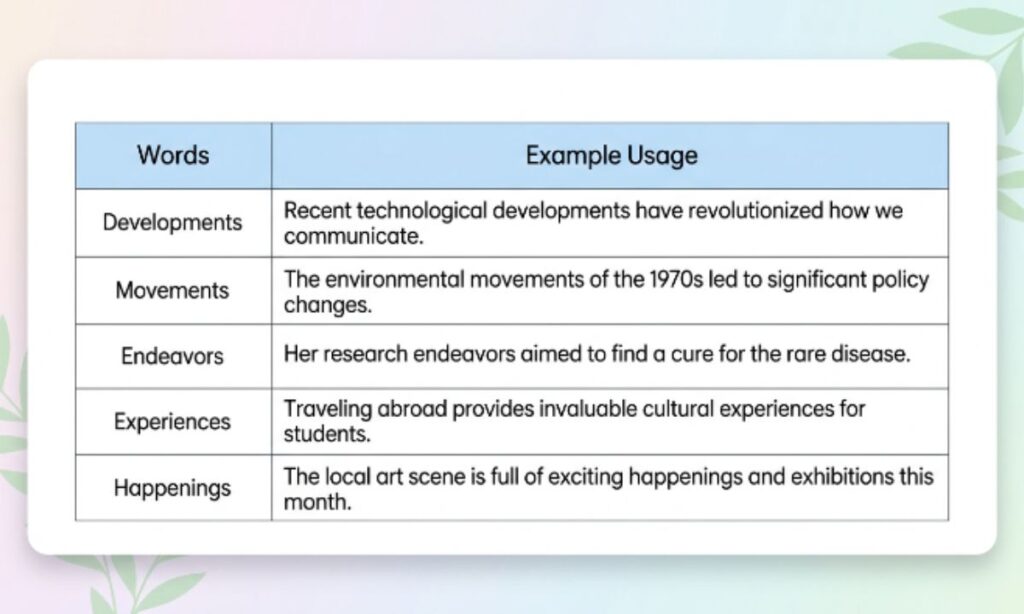
Not every synonym works everywhere. Match the word to the setting for the clearest message.
- Work emails: tasks, projects, initiatives, engagements
- School writing: assignments, projects, workshops, exercises
- Friends and casual chats: hobbies, outings, games, pastimes
- Formal reports: undertakings, endeavors, functions, campaigns
- Everyday conversation: things to do, chores, pastimes, hobbies
Common Mistakes
Swapping words sounds simple, but a few habits trip people up.
- Using “tasks” for fun activities, which makes leisure sound like a job
- Using “hobbies” for one-time events, when the word implies a repeated habit
- Overusing formal words like “undertakings” in casual writing, which sounds stiff
- Ignoring context and picking a synonym that changes the meaning, not just the tone
- Repeating the same replacement word too often, creating a new version of the same problem
Quick Guide Table
Here are ten more alternatives worth knowing, along with where each one fits best.
| Phrase | Formal | Casual | Conversation | |
| Doings | No | Yes | No | Yes |
| Deeds | Yes | No | Somewhat | No |
| Practices | Yes | Somewhat | Yes | Somewhat |
| Drills | Somewhat | Yes | Somewhat | Yes |
| Missions | Yes | Somewhat | Yes | Somewhat |
| Errands | No | Yes | No | Yes |
| Rituals | Somewhat | Yes | Somewhat | Yes |
| Routines | Somewhat | Yes | Yes | Yes |
| Escapades | No | Yes | No | Yes |
| Adventures | No | Yes | Somewhat | Yes |
Conclusion
The word “activities” works fine on its own, but the right synonym makes your writing sharper and more specific. Pick words that match your tone, whether that’s a formal report or a text to a friend. A small change in vocabulary often makes the biggest difference in how clear your message feels.

[…] A helpful deed done for someone, often without being asked. This phrase has an old-fashioned, folksy warmth to it. It works well in storytelling or when describing an […]