

Smell Past Tense and Past Participle: Introduction
The English language contains many verbs that change their forms when describing actions in the past. Understanding these changes is important for speaking and writing correctly. One common verb that learners often ask about is “smell.” Knowing the smell past tense and past participle can help you use this word naturally in everyday conversations.
The verb “smell” refers to the ability to notice an odor through the nose. It can also describe the odor that something produces. People use this verb when talking about food and flowers as well as perfumes and other things they encounter in daily life.
For example you might say that you smell fresh coffee in the morning. If you noticed the coffee yesterday you would need a past tense form of the verb.
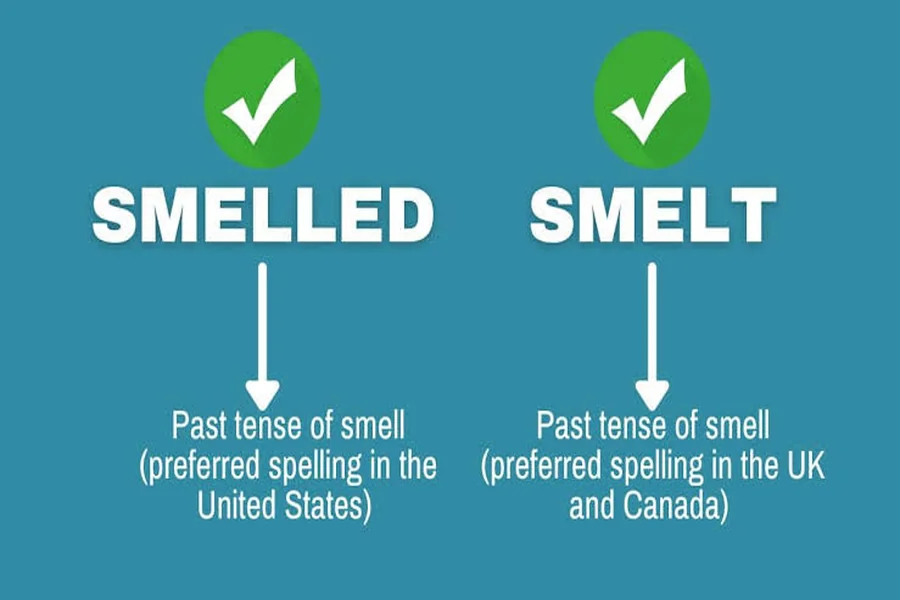
The simple past tense of smell is “smelled” or “smelt.” Both forms are correct in English. The past participle is also “smelled” or “smelt.”
This makes smell a little different from some irregular verbs because it has two accepted past forms. One follows the regular pattern of adding “-ed.” The other is an irregular form that changes the spelling.
The difference between these forms is not usually a difference in meaning. Both can describe the same action. However the choice may depend on the variety of English you use.
American English commonly prefers “smelled.” British English often uses “smelt” although “smelled” is also accepted.
Learning these forms is useful for students and English learners. It helps you understand past tense sentences and use perfect tenses correctly.
This guide explains the past tense and past participle of smell. It also provides grammar rules and practical examples that make the topic easier to understand.
What Is the Past Tense of Smell?
The past tense of “smell” is “smelled” or “smelt.”
Both forms describe an action that happened in the past.
The verb “smell” is commonly used in the simple past when someone noticed an odor or experienced a particular smell at an earlier time.
For example:
“I smelled fresh bread yesterday.”
This sentence means that I noticed the smell of fresh bread yesterday.
Another example is:
“She smelt flowers in the garden.”
This sentence describes an action that happened in the past.
Both sentences are grammatically correct.
The difference between “smelled” and “smelt” is mainly related to regional language preferences.
In American English the regular form “smelled” is more common.
In British English both forms are used. However “smelt” is often preferred in everyday conversation.
The important point is that both forms communicate the same basic meaning.
You can use either form when describing a past action. However it is helpful to remain consistent throughout your writing.
For example:
“I smelled the perfume yesterday.”
“I smelled the perfume again this morning.”
Using the same form throughout the passage creates a consistent writing style.
The simple past tense is especially useful when the sentence includes a specific time.
Words such as yesterday and last night often appear with the past tense.
Examples include:
“I smelled smoke last night.”
“We smelt something strange yesterday.”
“He smelled the flowers during the trip.”
Each sentence describes an action that took place before the present moment.
What Is the Past Participle of Smell?
The past participle of “smell” is “smelled” or “smelt.”
A past participle is a verb form that is used with helping verbs or in certain grammatical structures.
Unlike the simple past tense the past participle often appears in perfect tenses.
For example:
“I have smelled this perfume before.”
The word “have” is the helping verb. The word “smelled” is the past participle.
Another example is:
“She has smelt the flowers.”
This sentence uses the past participle “smelt” with the helping verb “has.”
Both forms are correct.
The past participle can also appear in passive constructions.
For example:
“The smoke was smelled by everyone in the room.”
This sentence uses “was” as the helping verb and “smelled” as the past participle.
However the passive voice is less common when describing the act of smelling.
A more natural sentence might be:
“Everyone in the room smelled the smoke.”
The past participle is also used in perfect continuous structures with other verb forms.
For example:
“I have been smelling smoke all morning.”
In this sentence “smelling” is the present participle while “been” is the past participle of the verb “be.”
Understanding the difference between these forms is important because English uses several verb patterns to express time and action.
The simple past describes an action that happened in the past.
The past participle works with helping verbs or appears in passive constructions.
Smell Verb Forms in English Grammar
The verb “smell” has several forms that are useful in different situations.
Learning these forms together can help you understand how the verb changes.
| Verb Form | Word | Example |
|---|---|---|
| Base form | Smell | I smell flowers |
| Third-person singular | Smells | She smells flowers |
| Present participle | Smelling | He is smelling flowers |
| Simple past | Smelled / Smelt | I smelled flowers |
| Past participle | Smelled / Smelt | I have smelled flowers |
The base form is used in the present tense with subjects such as I and you.
For example:
“I smell fresh coffee.”
The third-person singular form is used with he and she or a singular noun.
For example:
“She smells fresh coffee.”
The present participle appears in continuous tenses.
For example:
“She is smelling fresh coffee.”
The simple past describes a completed action.
For example:
“She smelled fresh coffee yesterday.”
The past participle appears with helping verbs.
For example:
“She has smelled fresh coffee before.”
These forms are important because they help you communicate when an action happens.
They also make it easier to understand sentences that use different tense structures.
Once you learn the forms of smell you can apply similar grammar rules to other verbs.
Smelled vs Smelt: Which Form Is Correct?
Both “smelled” and “smelt” are correct past forms of the verb smell.
The choice depends mainly on regional preferences.
“Smelled” is the regular form.
It follows the common English rule of adding “-ed” to a verb to form the simple past and past participle.
For example:
“She smelled the perfume.”
“I have smelled this fragrance before.”
“Smelt” is an irregular form.
It does not use the standard “-ed” ending.
For example:
“She smelt the perfume.”
“I have smelt this fragrance before.”
Both versions are grammatically correct.
American English generally uses “smelled” more frequently.
British English commonly accepts both forms and often uses “smelt” in everyday speech.
Australian English also uses both forms.
However usage can vary depending on the writer and the context.
If you are writing for an American audience then “smelled” is usually the safest choice.
If you are writing for a British audience then either form can work.
The most important rule is consistency.
Avoid switching between the two forms without a reason.
For example:
“Yesterday I smelled smoke. Later I smelt coffee.”
This sentence is understandable but it may sound inconsistent.
A smoother version would be:
“Yesterday I smelled smoke. Later I smelled coffee.”
Or:
“Yesterday I smelt smoke. Later I smelt coffee.”
Both versions are correct.
How to Use Smell in the Simple Past Tense
The simple past tense is used to describe an action that happened at a particular time in the past.
When using smell in the simple past you can choose “smelled” or “smelt.”
For example:
“I smelled something burning.”
This sentence describes an action that happened in the past.
The sentence does not necessarily explain how long the smell lasted.
It simply tells the reader that the speaker noticed an odor.
Another example is:
“She smelt fresh flowers at the market.”
This sentence describes a past experience.
The simple past is often used with time expressions.
Examples include:
- Yesterday
- Last night
- Last week
- Two days ago
- In the morning
Here are some additional examples:
“I smelled fresh bread yesterday.”
“He smelt smoke during the evening.”
“They smelled something unusual last night.”
“We smelt flowers during our visit.”
Each sentence describes a completed action.
The simple past is also used when telling stories.
For example:
“Yesterday I walked into the kitchen and smelled fresh coffee. My mother was preparing breakfast.”
The verb “smelled” helps describe the events in the story.
The simple past is one of the most common ways to use smell.
It is especially useful when discussing memories and experiences.
How to Use Smell in Present Perfect Tense
The present perfect tense is formed with “have” or “has” followed by the past participle.
For smell the structure is:
Have or has + smelled or smelt
This tense connects a past experience with the present.
For example:
“I have smelled this perfume before.”
The sentence means that the speaker experienced the smell at some point before now.
The exact time is not important.
Another example is:
“She has smelt fresh roses.”
This sentence describes an experience that happened before the present moment.
The present perfect is often used with words such as:
- Already
- Just
- Never
- Ever
- Before
- Recently
For example:
“I have already smelled the flowers.”
“Have you ever smelled fresh lavender?”
“She has never smelled this fragrance before.”
These sentences describe experiences rather than focusing on a specific past time.
The present perfect can also describe something that began in the past and continues to be relevant.
For example:
“I have smelled smoke several times today.”
This sentence indicates that the speaker noticed smoke on more than one occasion during the day.
The present perfect is useful when the past experience matters to the current situation.
Smell in Past Perfect and Past Continuous
The past perfect tense is used to describe an action that happened before another past event.
It is formed with “had” followed by the past participle.
For smell the structure is:
Had + smelled or smelt
For example:
“I had smelled the perfume before she arrived.”
This sentence means that the speaker noticed the perfume before another event happened.
Another example is:
“She had smelt smoke before the alarm sounded.”
The past perfect helps establish the order of events.
It shows which action happened first.
The past continuous tense is different.
It describes an action that was happening at a particular time in the past.
The structure is:
Was or were + smelling
For example:
“I was smelling the flowers when the phone rang.”
This sentence describes an ongoing action that was interrupted.
Another example is:
“They were smelling the food while the chef prepared dinner.”
The past continuous focuses on the action in progress.
The past perfect focuses on an action completed before another past event.
These tenses help make stories and explanations clearer.
Common Mistakes When Using Smell
English learners sometimes make mistakes when using the past tense and past participle of smell.
One common mistake is using “smell” instead of its past form.
Incorrect: “Yesterday I smell fresh bread.”
Correct: “Yesterday I smelled fresh bread.”
The word “yesterday” indicates that the action happened in the past.
Another common mistake is using “smelted.”
Incorrect: “I smelted the flowers.”
Correct: “I smelt the flowers.”
The word “smelted” belongs to a different verb.
It is the past tense and past participle of “smelt” when it means to melt or process metal.
For example:
“The metal was smelted in a furnace.”
This meaning is different from noticing an odor.
Another mistake is using the base form after a helping verb.
Incorrect: “I have smell the flowers.”
Correct: “I have smelled the flowers.”
The present perfect requires a past participle.
A similar mistake occurs with the past perfect.
Incorrect: “She had smell smoke.”
Correct: “She had smelled smoke.”
Learners may also confuse the past participle with the present participle.
Incorrect: “I have smelling the flowers.”
Correct: “I have smelled the flowers.”
The present participle is used in continuous structures.
For example:
“I am smelling the flowers.”
The present perfect uses the past participle.
For example:
“I have smelled the flowers.”
Understanding these differences can help you avoid common grammar errors.
Smell Past Tense and Past Participle: Examples
The following examples show how smell can be used in different sentences.
Simple Past Examples
- I smelled fresh coffee this morning.
- She smelt flowers in the garden.
- We smelled smoke near the house.
- He smelt something unusual.
- They smelled the food before eating.
Present Perfect Examples
- I have smelled this perfume before.
- She has smelt fresh roses.
- We have smelled smoke recently.
- He has smelled the flowers already.
- They have smelt this fragrance before.
Past Perfect Examples
- I had smelled the coffee before breakfast.
- She had smelt smoke before the alarm rang.
- We had smelled the flowers before leaving.
- He had smelled the perfume earlier.
- They had smelt something unusual.
Past Continuous Examples
- I was smelling the flowers when it started raining.
- She was smelling the perfume.
- We were smelling fresh bread.
- He was smelling the food in the kitchen.
- They were smelling the roses in the garden.
These examples demonstrate how the verb changes depending on the sentence structure.
They also show that “smelled” and “smelt” can both be used in the past tense and past participle.
Frequently Asked Questions About Smell Past Tense and Past Participle
What is the past tense of smell?
The past tense of smell is “smelled” or “smelt.”
Both forms are correct.
For example:
“I smelled smoke yesterday.”
“I smelt smoke yesterday.”
What is the past participle of smell?
The past participle is “smelled” or “smelt.”
For example:
“I have smelled this perfume before.”
“She has smelt fresh flowers.”
Is smelled correct English?
Yes.
“Smelled” is the regular past tense and past participle of smell.
It is especially common in American English.
Is smelt correct English?
Yes.
“Smelt” is an accepted irregular past tense and past participle of smell.
It is commonly used in British English.
Is smell a regular or irregular verb?
Smell can be considered both regular and irregular because it has two accepted past forms.
“Smelled” follows the regular “-ed” pattern.
“Smelt” is an irregular form.
What is the difference between smelled and smelt?
Both words have the same meaning when used as past tense or past participle forms of smell.
The main difference is regional preference.
“Smelled” is more common in American English.
“Smelt” is often preferred in British English.
What is the present participle of smell?
The present participle is “smelling.”
For example:
“I am smelling the flowers.”
The word “smelling” is used in continuous tenses.
What is the third-person singular form of smell?
The third-person singular form is “smells.”
For example:
“She smells fresh coffee.”
This form is used with he and she or a singular noun in the simple present tense.
Can I use smelt in American English?
Yes.
“Smelt” is grammatically correct in American English.
However “smelled” is more common in American writing.
If you want to follow common American usage then “smelled” is generally the preferred option.
Final Thought
The past tense and past participle of smell are “smelled” and “smelt.”
Both forms are correct and have the same basic meaning.
“Smelled” is the regular form and is especially common in American English.
“Smelt” is the irregular form and is often used in British English.
The simple past describes an action that happened in the past.
For example:
“I smelled fresh coffee yesterday.”
The past participle is used with helping verbs.
For example:
“I have smelled fresh coffee before.”
Understanding these forms will help you use smell correctly in different grammatical situations.
Remember that the correct verb form depends on the tense and structure of your sentence.
With regular practice you can improve your English grammar and use the verb smell naturally in everyday conversations and writing.
