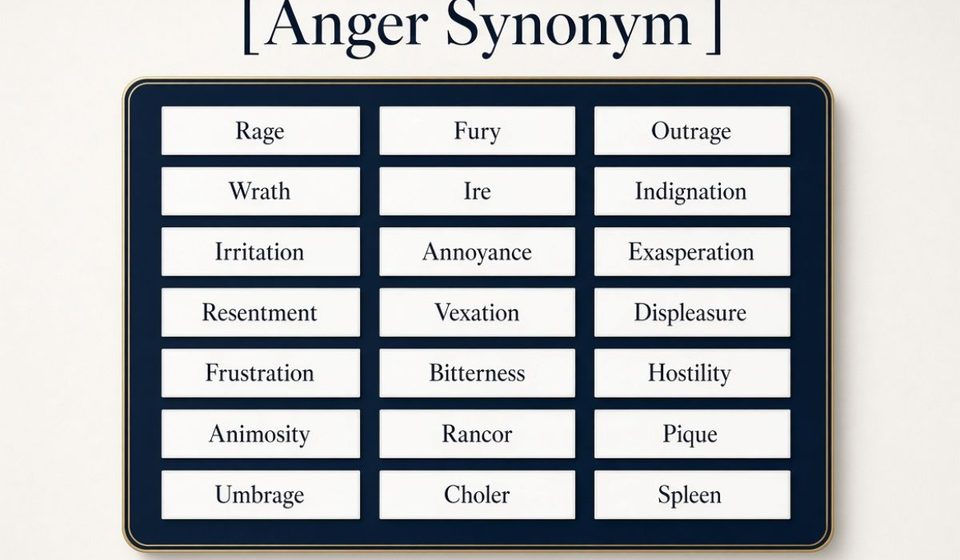

Anger is a strong feeling, but “angry” does not always fit. Sometimes you are mildly annoyed. Other times you are boiling over. The right word helps people understand how you really feel.
It also helps you write and speak with more control. This guide gives you 40 synonyms for anger, with meanings, examples, and pronunciation. You will also learn which word works best in each situation.
Anger Synonyms Quick Facts
| Detail | Information |
|---|---|
| Topic | Synonyms and alternative words for anger |
| Word type | Mostly adjectives, with a few verbs and phrases |
| Total words covered | 40 |
| Mildest options | Annoyed, irked, peeved, miffed, cross |
| Middle-strength options | Frustrated, upset, agitated, resentful, indignant |
| Strongest options | Furious, livid, enraged, apoplectic, incensed |
| Formal choices | Indignant, wrathful, choleric, incensed |
| Casual choices | Ticked off, fed up, steaming, cranky |
| Best use | Writing, speeches, emails, stories, and daily talk |
| Skill level | Beginner to advanced |
Why Word Choice Matters When You Describe Anger
One word can change how a message lands. Tell your manager you are “furious” about a late report, and the tone turns heavy. Say you are “frustrated,” and the same issue sounds fair and solvable.
Choosing a precise word also helps you understand yourself. When you can name a feeling clearly, it feels smaller and easier to manage.
Writers get a bonus. Specific emotion words make characters feel real. A character who is “seething” acts very differently from one who is “peeved.”
How to Choose the Right Synonym for Anger
Ask three quick questions before you pick a word.
- How strong is the feeling? Small irritation and full rage need different words.
- Who is listening? A boss, a friend, and a reader each expect a different tone.
- Is the anger loud or quiet? “Raging” is loud. “Seething” is quiet and tense.
A simple rule helps. When in doubt, go one step milder than you feel. It keeps the conversation open.
1. Mad
Meaning: Angry in a plain, everyday way.
This is the most common casual word for anger. It sounds honest and direct. People hear it and understand you right away without any extra explanation.
Examples:
- She was mad that he forgot her birthday.
- Don’t be mad at me, I tried my best.
When It Fits: Talking with family or friends after a small argument.
Pronunciation: mad
2. Furious
Meaning: Extremely angry, close to losing control.
This word signals that a line has been crossed. It tells the listener that the issue is serious and needs attention. Use it sparingly so it keeps its weight.
Examples:
- He was furious when the contractor walked off the job.
- I’m furious about how they handled my refund.
When It Fits: Reacting to a clear injustice or a major broken promise.
Pronunciation: FYOOR-ee-us
3. Irritated
Meaning: Mildly angry or bothered by something small.
It shows you are annoyed without starting a fight. That makes it a safe choice at work. It says you noticed the problem and you want it fixed.
Examples:
- I got irritated when the printer jammed again.
- She sounded irritated on the phone.
When It Fits: Dealing with repeated small problems like noise or delays.
Pronunciation: IR-ih-tay-tid
4. Annoyed
Meaning: Slightly angry because of a minor problem.
This is one of the softest anger words. It keeps the mood light and shows self-control. People rarely feel attacked when you say you are annoyed.
Examples:
- I was annoyed that the meeting ran over.
- He looked annoyed by the constant questions.
When It Fits: Mentioning a small frustration to a coworker or roommate.
Pronunciation: uh-NOYD
5. Enraged
Meaning: Filled with intense anger.
This word paints a strong picture of a person overwhelmed by emotion. It works well in stories and news writing. It also warns the reader that something big is happening.
Examples:
- The crowd was enraged by the sudden price hike.
- She felt enraged when she read the unfair review.
When It Fits: Describing a heated reaction to something shocking.
Pronunciation: in-RAYJD
6. Livid
Meaning: Furiously angry, often with a tense face or voice.
This word captures anger that you can see. It suggests a person who is barely holding it together. It adds drama without sounding overdone.
Examples:
- My boss was livid about the missed deadline.
- He was livid when he found the dent in his car.
When It Fits: Telling a story about someone who really lost their temper.
Pronunciation: LIV-id
7. Irate
Meaning: Very angry, often in a vocal way.
Irate suits situations where someone is complaining loudly. It feels slightly formal, so it works in reports and customer service writing. It sounds serious without being cruel.
Examples:
- An irate customer demanded to speak to the manager.
- She wrote an irate letter to the landlord.
When It Fits: Describing a public complaint or an angry email.
Pronunciation: eye-RAYT
8. Fuming
Meaning: Very angry but holding it in.
Fuming shows heat building under the surface. It tells people you are upset even if you stay quiet. That quiet pressure is why writers like it.
Examples:
- He sat in the car, fuming after the argument.
- I was fuming when I saw the bill.
When It Fits: Describing silent anger after an unfair moment.
Pronunciation: FYOO-ming
9. Outraged
Meaning: Shocked and angry about something unfair or wrong.
This word adds a moral layer. You are not just upset. You believe a rule or value was broken. That makes your reaction sound principled.
Examples:
- Parents were outraged by the sudden school closure.
- I was outraged at how the staff treated him.
When It Fits: Reacting to unfair treatment or a public scandal.
Pronunciation: OWT-rayjd
10. Resentful
Meaning: Angry for a long time because of unfair treatment.
This is slow, lingering anger. It helps explain why a person acts cold or distant. It adds depth to personal stories and honest conversations.
Examples:
- She felt resentful about doing all the housework.
- He grew resentful after being passed over twice.
When It Fits: Talking about built-up feelings in a relationship or job.
Pronunciation: rih-ZENT-ful
11. Frustrated
Meaning: Upset because something blocks what you want to do.
Frustrated puts the focus on the problem, not the person. That makes it one of the best words for work and teamwork. It invites help instead of defense.
Examples:
- I’m frustrated that the app keeps crashing.
- He felt frustrated after hours of trying to fix it.
When It Fits: Explaining a stuck task to a teammate or support agent.
Pronunciation: FRUS-tray-tid
12. Infuriated
Meaning: Made extremely angry by something or someone.
This word points to a cause. Someone or something pushed you over the edge. It works well when you want to show clear cause and effect.
Examples:
- The delay infuriated the passengers.
- She was infuriated by his careless reply.
When It Fits: Describing how a specific action sparked anger.
Pronunciation: in-FYOOR-ee-ay-tid
13. Seething
Meaning: Boiling with anger that is not shown outwardly.
Seething is tense and quiet. It tells the reader that the person is angry but chooses silence. It builds suspense in stories and shows strong self-control.
Examples:
- He smiled at the meeting but was seething inside.
- She stood there seething while they laughed.
When It Fits: Writing about hidden anger at a social event or workplace.
Pronunciation: SEE-thing
14. Incensed
Meaning: Very angry, usually because of something unfair.
Incensed sounds formal and sharp. It works in articles, speeches, and serious emails. It shows strong feeling without sounding wild.
Examples:
- Residents were incensed by the new parking rules.
- She was incensed at the suggestion that she cheated.
When It Fits: Writing news-style or formal text about public anger.
Pronunciation: in-SENST
15. Cross
Meaning: Mildly angry or in a bad mood.
Cross is a gentle, slightly old-fashioned word, common in British English. It is a friendly way to say someone is grumpy. It rarely hurts feelings.
Examples:
- Mum was cross when we tracked mud inside.
- Don’t be cross with me.
When It Fits: Talking about a small scolding or a grumpy morning.
Pronunciation: kross
16. Agitated
Meaning: Nervous, restless, and upset.
Agitated mixes anger with anxiety. It describes someone who cannot settle down. It is useful when anger shows up as pacing, fast talking, or shaking hands.
Examples:
- He grew agitated as the wait dragged on.
- The agitated driver kept honking his horn.
When It Fits: Describing someone who is tense and cannot sit still.
Pronunciation: AJ-ih-tay-tid
17. Aggravated
Meaning: Made angry or more upset by repeated trouble.
This word fits when a problem keeps getting worse. It shows that patience is wearing thin. It also sounds calm enough for polite conversation.
Examples:
- I was aggravated by the endless phone menus.
- She felt aggravated after the third delay.
When It Fits: Talking about a problem that keeps coming back.
Pronunciation: AG-ruh-vay-tid
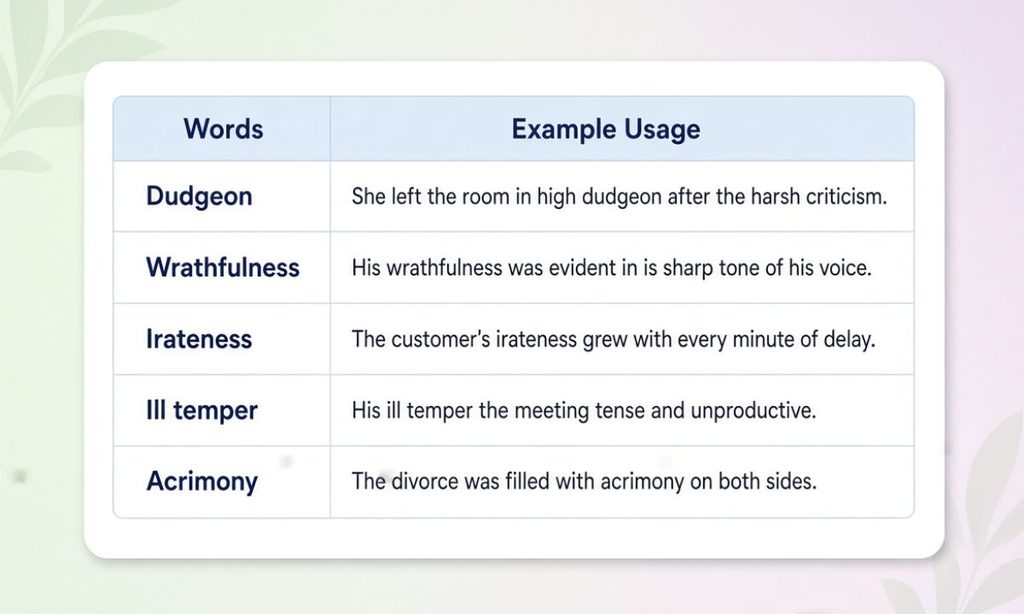
18. Wrathful
Meaning: Full of deep, powerful anger.
Wrathful has a grand, almost storybook feel. It suits fantasy, history, and dramatic writing. It makes anger sound mighty and unforgettable.
Examples:
- The wrathful king ordered the gates closed.
- Her wrathful stare silenced the room.
When It Fits: Creative writing, speeches, or stories with epic tone.
Pronunciation: RATH-ful
Explore More Synonyms Guide
Synonyms for With: 40 Alternative Words and Phrases by Context
Experience Synonym: 30 Better Words for Every Context
Smart Synonym: 30 Better Words and When to Use Them
Popular Synonym: 25 Better Words and When to Use Them
Support Synonym: 30 Better Words and When to Use Them
Another Word for This: 40 Smart Alternatives and How to Use Them
19. Indignant
Meaning: Angry because you feel treated unfairly.
Indignant carries a sense of pride and fairness. You feel you deserved better. It makes your reaction sound reasonable, not wild.
Examples:
- He was indignant when they questioned his honesty.
- She gave an indignant reply.
When It Fits: Reacting to a false accusation or an insult.
Pronunciation: in-DIG-nunt
20. Hostile
Meaning: Showing anger through unfriendly or aggressive behavior.
Hostile describes how anger acts, not just how it feels. It warns others to be careful. Use it when tone and body language make the anger clear.
Examples:
- The crowd turned hostile after the announcement.
- He gave me a hostile look and walked away.
When It Fits: Describing tense meetings or aggressive behavior.
Pronunciation: HOS-tul
21. Bitter
Meaning: Angry and hurt over something that happened in the past.
Bitter describes anger that has soured over time. It gives a human reason for a sharp tone. Readers feel sympathy because the pain is clear behind the anger.
Examples:
- He stayed bitter about the way he was fired.
- Her bitter words surprised everyone.
When It Fits: Talking about old wounds after a breakup or job loss.
Pronunciation: BIT-er
22. Exasperated
Meaning: Deeply annoyed and out of patience.
This word shows that you tried and tried and are now worn out. It makes your frustration sound fair. It also hints that you need a real fix, not another excuse.
Examples:
- She gave an exasperated sigh and shut the laptop.
- I’m exasperated with how slow this process is.
When It Fits: Reacting to repeated mistakes or constant interruptions.
Pronunciation: ig-ZAS-puh-ray-tid
23. Heated
Meaning: Full of strong, angry feeling.
Heated usually describes a conversation, not a person. That keeps blame softer. It lets you say things got intense without pointing a finger.
Examples:
- The debate turned heated fast.
- They had a heated exchange in the hallway.
When It Fits: Describing an argument that got louder than planned.
Pronunciation: HEE-tid
24. Vexed
Meaning: Annoyed and a little puzzled or troubled.
Vexed has a polite, thoughtful tone. It suggests a problem that is both irritating and confusing. It works well in writing that needs a calm, literate voice.
Examples:
- He looked vexed by the strange instructions.
- I was vexed that nobody called me back.
When It Fits: Writing about a small but stubborn problem.
Pronunciation: vekst
25. Riled
Meaning: Stirred up and angry.
Riled says someone poked at you and got a reaction. It is casual and a bit playful. It shows you care without sounding dangerous.
Examples:
- The rude comment really riled him up.
- She gets riled whenever people talk over her.
When It Fits: Chatting about a topic that always gets someone worked up.
Pronunciation: RYE-uld
26. Peeved
Meaning: Mildly annoyed, often over something petty.
Peeved is light and a little funny. It lets you admit you are grumpy without making it a big deal. People usually smile when they hear it.
Examples:
- I was peeved that someone ate my lunch.
- He seemed a bit peeved about the seating plan.
When It Fits: Joking about small office or household annoyances.
Pronunciation: peevd
27. Ticked Off
Meaning: Angry or upset, in a casual way.
This phrase feels relaxed and real. It sounds like something you say to a friend over coffee. It makes honest feelings easy to share.
Examples:
- I’m really ticked off about the parking ticket.
- She was ticked off that nobody told her.
When It Fits: Venting to a friend about a rough day.
Pronunciation: tikt OFF
28. Steaming
Meaning: Very angry, with feelings building up.
Steaming creates a clear picture of pressure rising. It is casual and vivid. It helps listeners picture your mood without a long explanation.
Examples:
- He came home steaming after the meeting.
- I was steaming when they cancelled again.
When It Fits: Telling a quick story about a bad moment.
Pronunciation: STEE-ming
29. Raging
Meaning: Angry in a loud, wild, uncontrolled way.
Raging describes anger at full volume. It is strong and visual. Save it for moments that truly feel out of control.
Examples:
- The raging driver shouted out his window.
- She was raging after reading the message.
When It Fits: Describing an explosive reaction.
Pronunciation: RAY-jing
30. Offended
Meaning: Hurt and angry because of something rude or insulting.
Offended shifts the focus from anger to respect. It tells people your feelings were hurt. That can open a more honest talk than shouting would.
Examples:
- He was offended by the joke.
- I felt offended when she ignored my idea.
When It Fits: Responding to a rude remark or careless comment.
Pronunciation: uh-FEN-did
31. Irked
Meaning: Slightly annoyed.
Irked is short, neat, and polite. It fits business writing well. It signals a small issue without causing tension.
Examples:
- She was irked by the last-minute change.
- It irks me when people don’t reply.
When It Fits: Mentioning a small complaint in an email.
Pronunciation: urkt
32. Provoked
Meaning: Made angry on purpose or by a clear trigger.
Provoked points to the cause of the anger. It suggests the person did not start the fight. That can make a reaction sound more understandable.
Examples:
- He was provoked by constant teasing.
- She snapped only after being provoked.
When It Fits: Explaining how an argument began.
Pronunciation: pruh-VOHKT
33. Disgruntled
Meaning: Unhappy and annoyed, often about work or service.
Disgruntled describes steady, low-level anger. It suits workplaces and customer stories. It tells the reader that trust has slipped.
Examples:
- A disgruntled employee left a harsh review.
- The team grew disgruntled after the pay freeze.
When It Fits: Writing about unhappy staff or customers.
Pronunciation: dis-GRUN-tuld
34. Cranky
Meaning: Grumpy and easily annoyed.
Cranky is warm and a little funny. It often comes from tiredness or hunger, not true anger. It lets people forgive a bad mood quickly.
Examples:
- I get cranky when I skip breakfast.
- The baby was cranky all afternoon.
When It Fits: Talking about a short bad mood at home.
Pronunciation: KRANG-kee
35. Testy
Meaning: Short-tempered and quick to get annoyed.
Testy shows someone is on edge. It explains snappy replies without calling the person angry. It adds realism to office and family scenes.
Examples:
- He was testy during the long drive.
- She gave a testy answer to the reporter.
When It Fits: Describing a stressful day when tempers run short.
Pronunciation: TES-tee
36. Fed Up
Meaning: Tired of something and angry about it.
Fed up says you have had enough. It marks a turning point. People often use it before they ask for real change.
Examples:
- I’m fed up with the constant delays.
- She was fed up and ready to quit.
When It Fits: Announcing that a long-running problem must end.
Pronunciation: fed UP
37. Choleric
Meaning: Quick-tempered and easily angered.
This is a formal, old-style word. It describes a personality, not just a moment. Use it in literature or when you want a rich, classic tone.
Examples:
- The choleric captain barked orders at the crew.
- He was known as a choleric old man.
When It Fits: Creative writing or formal descriptions of character.
Pronunciation: KOL-er-ik
38. Rankled
Meaning: Annoyed in a way that lingers.
Rankled describes a small hurt that keeps nagging. It shows that something stuck with you. It adds depth because the feeling does not fade right away.
Examples:
- His careless comment still rankled her.
- It rankled that nobody thanked the team.
When It Fits: Talking about a small insult you cannot forget.
Pronunciation: RANG-kuld
39. Miffed
Meaning: Slightly annoyed or offended.
Miffed is light and friendly. It admits a small hurt without drama. It keeps the tone easy and often brings a smile.
Examples:
- She was a little miffed that she wasn’t invited.
- He sounded miffed over the mix-up.
When It Fits: Teasing a friend about a harmless slight.
Pronunciation: mift
40. Apoplectic
Meaning: So angry that you are almost speechless.
Apoplectic is the top of the scale. It paints someone red-faced and shaking. Use it for big, dramatic moments, ideally with a touch of humor.
Examples:
- Dad was apoplectic when he saw the broken window.
- She went apoplectic at the sight of the bill.
When It Fits: Telling an over-the-top story about extreme anger.
Pronunciation: ap-uh-PLEK-tik
Anger Words by Intensity
Use this quick guide when you need to match the word to the moment.
| Level | Words | Best use |
|---|---|---|
| Mild | Annoyed, irked, peeved, miffed, cross, cranky, testy | Small problems, polite emails, light talk |
| Medium | Frustrated, irritated, agitated, aggravated, offended, resentful, fed up | Work issues, repeated problems, honest talks |
| Strong | Furious, livid, enraged, outraged, infuriated, incensed, apoplectic | Serious events, stories, public reactions |
| Quiet anger | Seething, fuming, bitter, rankled | Hidden or lingering feelings |
| Loud anger | Raging, steaming, irate, hostile | Visible, explosive reactions |
Common Mistakes When Describing Anger
A few habits make anger words lose their power.
- Going too strong too fast. If everything is “furious,” nothing is.
- Repeating one word. Mix your vocabulary so your writing stays fresh.
- Ignoring the audience. A word that works with friends can sound rude in a work email.
- Using formal words in casual talk. Saying you feel “choleric” at a barbecue will get odd looks.
- Blaming the person, not the problem. “Frustrated” often works better than “mad at you.”
Tips for Expressing Anger Clearly and Calmly
The word is only half the job. How you say it matters too.
- Name the feeling first. “I’m frustrated” is a clear start.
- Describe the cause. Say what happened, not what the other person is like.
- Keep sentences short when you are upset.
- Take a pause before you reply to a message that stirred you up.
- Ask for what you need. “Can we fix this by Friday?” beats a vague complaint.
Frequently Asked Questions
What is another word for anger?
Common choices are rage, fury, wrath, irritation, and indignation, depending on how strong the feeling is.
What is a stronger word than angry?
Furious, livid, enraged, and apoplectic all sit above “angry” on the intensity scale.
What is a polite word for angry in a work email?
Frustrated, concerned, or disappointed keep the tone professional and open to a solution.
What is the difference between annoyed and irritated?
Annoyed is lighter and passing, while irritated suggests the problem has built up or keeps repeating.
What word describes anger that someone hides?
Seething and fuming both describe strong anger that stays under the surface.
Conclusion
Anger comes in many shades, and the right word helps people understand where you stand. Start by judging how strong the feeling is, think about who is listening, and then pick the word that fits. Mild words like annoyed or peeved keep things friendly, while strong ones like furious or livid should be saved for serious moments. With these 40 synonyms for anger, you can speak and write with more care, build better characters, and handle tense conversations with a clear head.