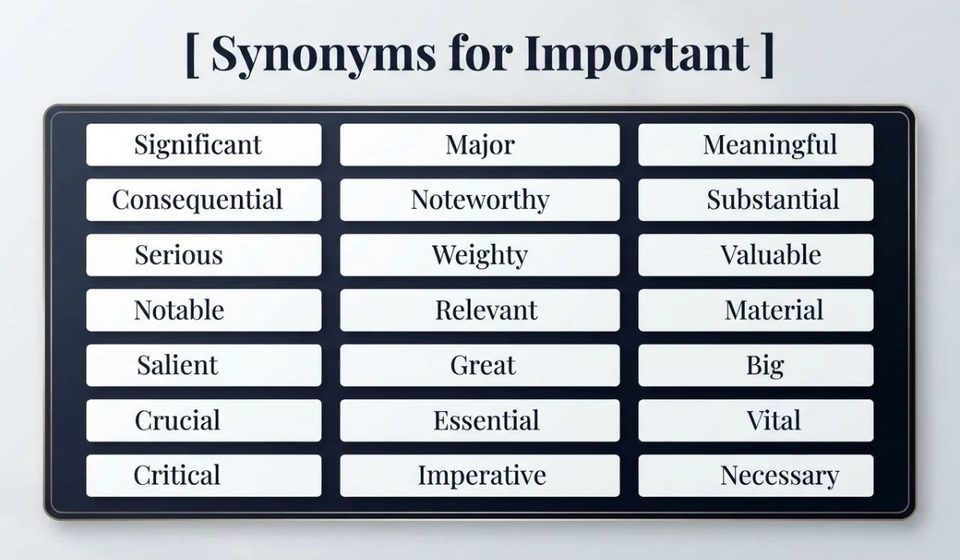

The word “important” gets used for almost everything.
A deadline is important.
A friendship is important.
A decision is important.
But these three things do not carry the same weight. Using one broad word for all of them can make your writing feel generic.
This guide sorts 30 real alternatives by what they actually mean. Each word carries a different level of meaning or emphasis.
That makes it easier to choose a word that fits your sentence. Instead of guessing, you can use the word that expresses exactly what you mean.
What Does “Important” Actually Mean?
“Important” can point to several different ideas at once:
Something has a big effect or consequence (a significant discovery)
Something is required for a result to happen (an essential ingredient)
Someone or something holds influence or status (a prominent leader)
Something carries personal or emotional weight (a cherished memory)
Something ranks above everything else (the paramount concern)
Once you know which of these five ideas you’re describing, choosing the right synonym gets a lot easier.
Quick Answer: Best Synonyms for Important
If you need a fast, safe replacement, these words work in most contexts:
Significant – general-purpose, works almost everywhere
Crucial – something is required for success
Vital – necessary for survival or function
Influential – describes people or ideas that shape outcomes
Paramount – ranks above all other concerns
Words for Great Impact or Significance
These words describe something that carries real weight, consequence, or lasting effect.
Significant
Meaning: Having a notable effect, value, or consequence.
Significant is the safest all-purpose replacement for important. It works in research, business, and everyday writing without sounding forced or overly dramatic. People trust this word because it sounds measured rather than exaggerated, which makes your point land with more credibility.
Examples:
- The trial produced a significant improvement in recovery time.
- Losing that client was a significant setback for the team.
When It Fits: Reporting results, findings, or changes in a professional or academic setting.
Pronunciation: sig-NIF-i-kant
Major
Meaning: Large in scale, scope, or seriousness.
Major signals that something is bigger than usual, whether that’s a decision, a change, or a problem. It carries a sense of scale rather than emotional depth, so it works well when you want to flag size without adding drama. People reach for this word when precision about “how big” matters more than nuance.
Examples:
- We’re making a major decision about the company’s future direction.
- The update includes a major fix for the login issue.
When It Fits: Describing decisions, updates, or events that are clearly larger than routine ones.
Pronunciation: MAY-jer
Consequential
Meaning: Having important or significant results.
Consequential leans formal and emphasizes the outcome that follows an action. It’s a good fit when you want the reader to think about downstream effects, not just the event itself. Writers use it to add a slightly academic or journalistic tone.
Examples:
- Her testimony proved consequential to the outcome of the case.
- This is the most consequential vote the board has taken in years.
When It Fits: Legal, political, or analytical writing where cause and effect matter.
Pronunciation: kon-si-KWEN-shul
Momentous
Meaning: Of great significance, often marking a turning point.
Momentous is reserved for genuinely big moments, the kind people remember for years. It carries emotional and historical weight at once, so overusing it weakens its impact. Save it for the events that truly deserve extra emphasis.
Examples:
- Signing the peace agreement was a momentous occasion for both nations.
- Graduating college felt like a momentous step in her life.
When It Fits: Life milestones, historic turning points, or rare achievements.
Pronunciation: moh-MEN-tus
Historic
Meaning: Important enough to be remembered in history.
Historic points specifically to lasting historical significance, not just present-day importance. It’s a common word choice mistake to use this for anything big; it should describe events that will matter to future generations. Getting this one right adds credibility to your writing.
Examples:
- The city signed a historic agreement to reduce emissions by 2030.
- It was a historic win for the underdog team.
When It Fits: News writing, achievements, or events tied to lasting change.
Pronunciation: hi-STOR-ik
Substantial
Meaning: Large in amount, degree, or importance.
Substantial works well when you’re describing size or extent rather than emotional or historical weight. It’s common in business and finance writing because it conveys “enough to matter” without sounding inflated. Use it when precision about scale is the point.
Examples:
- The company reported substantial growth in the third quarter.
- There’s a substantial difference between the two proposals.
When It Fits: Financial reports, comparisons, or measurable improvements.
Pronunciation: sub-STAN-shul
Noteworthy
Meaning: Deserving attention or notice.
Noteworthy is a gentler, more neutral word than significant. It signals that something stands out without claiming it changes everything. This makes it useful when you want to flag relevance without overstating the case.
Examples:
- Her progress this semester has been noteworthy.
- There’s one noteworthy exception to this rule.
When It Fits: Reviews, reports, or observations where mild emphasis is enough.
Pronunciation: NOHT-wur-thee
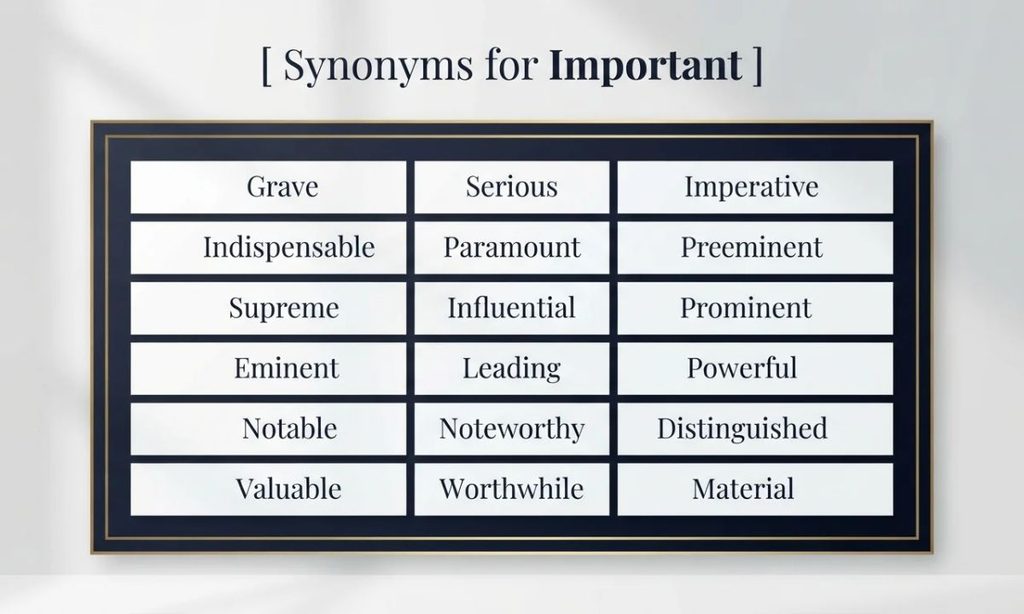
Words for Necessity and Urgency
These describe something required for success, function, or survival, not just something notable.
Crucial
Meaning: Necessary for the success or outcome of something.
Crucial tells the reader that without this element, the whole plan could fail. It carries urgency and stakes, which makes it a strong choice when you want to emphasize dependency. It sits comfortably in both casual and professional writing.
Examples:
- Getting this contract signed is crucial to the project’s survival.
- Sleep is crucial for the body to repair itself.
When It Fits: Explaining why one step or factor determines success.
Pronunciation: KROO-shul
Essential
Meaning: Necessary; cannot be left out.
Essential implies that removing this thing breaks the whole system. It’s stronger and more absolute than important, so it reads as confident and direct. Use it when there’s genuinely no substitute.
Examples:
- Clean water is essential for public health.
- Practice is essential if you want to improve your writing.
When It Fits: Instructions, requirements, or non-negotiable conditions.
Pronunciation: ih-SEN-shul
Vital
Meaning: Necessary for life, function, or continued success.
Vital often carries a physical or survival-based connotation, even when used metaphorically. It adds intensity to a sentence without sounding exaggerated, which makes it effective in health, safety, and leadership contexts. People respond to it because it implies real stakes.
Examples:
- Regular exercise is vital for long-term health.
- Clear communication is vital during a crisis.
When It Fits: Health, safety, or high-stakes professional advice.
Pronunciation: VYE-tul
Critical
Meaning: Extremely important, often at a decisive or high-risk stage.
Critical works best when timing or risk is part of the message. It signals urgency more strongly than significant, so readers understand that delay or failure carries real consequences. Be careful, though: critical can also mean “judgmental,” so context matters.
Examples:
- We’re at a critical stage in the negotiations.
- Backup power is critical during a hospital’s emergency operations.
When It Fits: High-risk decisions, deadlines, or safety-related situations.
Pronunciation: KRIT-i-kul
Imperative
Meaning: Urgently necessary or required.
Imperative sounds more formal and authoritative than crucial. It’s often used to issue a directive or emphasize that no delay is acceptable. This word carries weight in leadership or instructional writing.
Examples:
- It is imperative that all staff complete the training by Friday.
- Quick action is imperative if we want to contain the damage.
When It Fits: Formal instructions, policies, or urgent recommendations.
Pronunciation: im-PER-uh-tiv
Indispensable
Meaning: So necessary that it cannot be done without.
Indispensable goes a step further than essential by emphasizing irreplaceability. It works especially well for people or tools that a team relies on heavily. Use it sparingly, since it’s one of the strongest words in this category.
Examples:
- She has become an indispensable member of the research team.
- A reliable internet connection is indispensable for remote work.
When It Fits: Praising a person’s contribution or describing a must-have resource.
Pronunciation: in-dis-PEN-suh-bul
Urgent
Meaning: Requiring immediate attention or action.
Urgent focuses purely on timing rather than long-term significance. Something can be urgent without being historically important, and vice versa. This word is useful when speed, not scale, is the point you’re making.
Examples:
- We received an urgent request from the client this morning.
- The situation calls for urgent action from local authorities.
When It Fits: Time-sensitive requests, emails, or emergency communication.
Pronunciation: UR-junt
Words for Priority and Rank
These describe something that comes first, matters most, or outranks everything else.
Paramount
Meaning: More important than anything else; supreme.
Paramount is a strong word reserved for the single top priority in a given situation. It shouldn’t replace “important” casually; it works best when you genuinely mean “above all else.” Overusing it dilutes its punch.
Examples:
- Customer safety is paramount to our operations.
- Finding a cure remained the paramount goal of the research team.
When It Fits: Naming the single highest priority in a plan or mission statement.
Pronunciation: PAIR-uh-mownt
Foremost
Meaning: Leading or most important, often used as a superlative.
Foremost typically replaces “most important” rather than a plain “important.” It often pairs with “the” and describes rank among a group. This word adds authority when naming a top expert or top concern.
Examples:
- She is the foremost expert on marine biology in the region.
- Safety comes foremost in every decision we make.
When It Fits: Naming a top-ranked person, concern, or priority.
Pronunciation: FOR-most
Key
Meaning: Central or essential to a plan, outcome, or system.
Key is short, informal, and extremely common in everyday and business writing. It suggests something is one of a small number of deciding factors. This makes it a natural pick when listing a handful of driving elements.
Examples:
- Trust is a key factor in any successful partnership.
- The marketing team played a key role in the product launch.
When It Fits: Everyday writing, presentations, or casual business communication.
Pronunciation: KEE
Main
Meaning: The most important or primary part of something.
Main is plain, direct, and easy to understand. It’s often used to point to the single leading item in a list or argument. It works well in simple, clear writing where formality isn’t needed.
Examples:
- Cost was the main reason we switched suppliers.
- The main goal of the meeting is to finalize the budget.
When It Fits: Everyday explanations, summaries, or informal writing.
Pronunciation: MAYN
Chief
Meaning: Highest in rank or importance.
Chief works for both people (a chief executive) and abstract ideas (a chief concern). It carries a slightly formal, authoritative tone compared to “main.” This word suits leadership contexts especially well.
Examples:
- Her chief concern was the safety of the passengers.
- He serves as chief advisor to the committee.
When It Fits: Leadership roles or naming a top concern in formal writing.
Pronunciation: CHEEF
Principal
Meaning: First in rank, authority, or importance.
Principal often appears in academic, legal, and financial writing. It signals that something holds the leading position among several options or factors. Don’t confuse it with “principle,” a common spelling mix-up.
Examples:
- The principal cause of the delay was a supply shortage.
- Interest rates and inflation are the principal drivers of the market shift.
When It Fits: Academic, legal, or financial explanations of cause and effect.
Pronunciation: PRIN-si-pul
Central
Meaning: Forming the main or most important part of something.
Central works well when something sits at the heart of a plan, argument, or identity. It’s a flexible word, though it can also mean physical location, so context should make the meaning clear. Writers use it to tie ideas together around one core point.
Examples:
- Honesty is central to how we run this business.
- The debate was central to the entire campaign.
When It Fits: Describing a core value, theme, or unifying idea.
Pronunciation: SEN-trul
Prime
Meaning: Of first rank, quality, or importance.
Prime often pairs with words like “concern,” “objective,” or “example.” It signals top standing without sounding overly formal. This makes it useful in both business and casual speech.
Examples:
- Reducing costs is our prime objective this quarter.
- He’s a prime example of what dedication can achieve.
When It Fits: Naming a leading objective, example, or candidate.
Pronunciation: PRYME
Words for Influence and Status
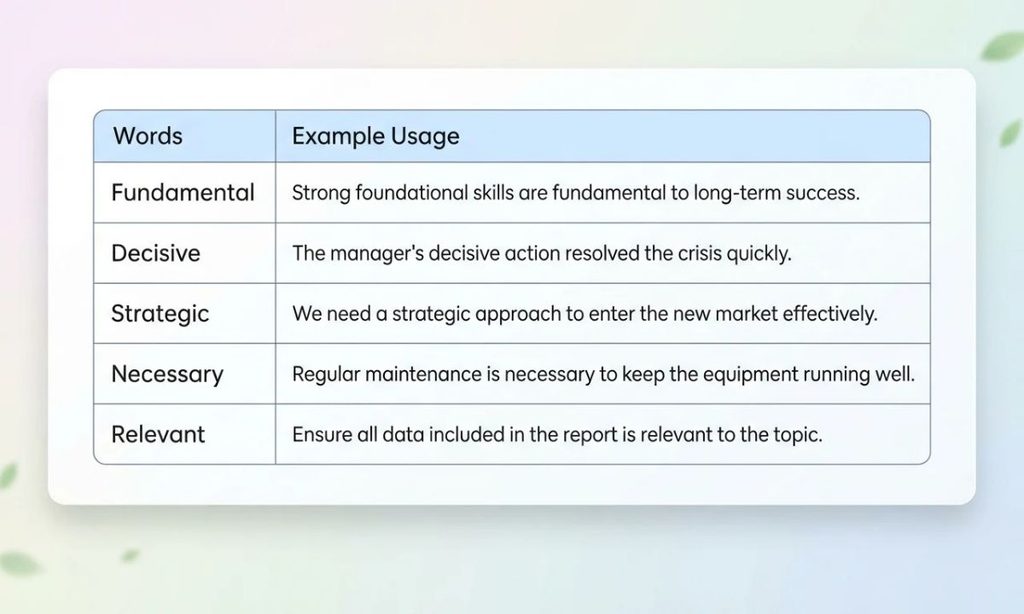
These describe people, institutions, or works recognized for power, rank, or reputation.
Influential
Meaning: Having the power to affect decisions, opinions, or outcomes.
Influential fits people, organizations, and ideas that shape what happens next. It carries respect without necessarily implying formal rank. This word is especially useful when describing thought leaders or trendsetters.
Examples:
- She’s one of the most influential voices in climate policy.
- The report had an influential effect on the new regulations.
When It Fits: Describing people or ideas that shape opinions or decisions.
Pronunciation: in-floo-EN-shul
Prominent
Meaning: Widely known, visible, or noticeable in a field.
Prominent focuses on visibility and recognition rather than raw power. It’s a natural fit for public figures, landmarks, or well-known experts. This word suggests standing out from a crowd rather than controlling outcomes.
Examples:
- He’s a prominent surgeon at the city’s largest hospital.
- The building holds a prominent place in the skyline.
When It Fits: Describing well-known people, places, or achievements.
Pronunciation: PROM-i-nent
Eminent
Meaning: Highly respected and distinguished, usually in a specific field.
Eminent carries a formal, almost old-fashioned dignity. It’s typically reserved for scholars, professionals, or experts with a long-standing reputation. Use it when you want to convey deep respect, not just visibility.
Examples:
- The lecture was given by an eminent historian.
- She sought advice from an eminent legal scholar.
When It Fits: Formal introductions or academic and professional writing.
Pronunciation: EM-i-nent
Preeminent
Meaning: Surpassing all others in a particular field.
Preeminent goes further than eminent by claiming the top spot, not just a respected position. It works best for the single leading authority in a subject area. This word carries strong confidence, so use it only when the claim is well supported.
Examples:
- He is the preeminent authority on ancient Roman architecture.
- Their lab remains the preeminent center for this type of research.
When It Fits: Naming the single top expert or institution in a field.
Pronunciation: pree-EM-i-nent
Distinguished
Meaning: Recognized for excellence, achievement, or service.
Distinguished conveys a career or record built over time, not a single moment of success. It works well in bios, introductions, and awards contexts. This word signals lasting respect rather than sudden fame.
Examples:
- She had a distinguished career in public service.
- The award recognizes distinguished contributions to medicine.
When It Fits: Professional bios, awards, or formal recognition.
Pronunciation: dis-TING-gwisht
Esteemed
Meaning: Highly regarded and respected.
“Esteemed” is often used in polite, formal address, especially when introducing guests or colleagues. It emphasizes respect from others rather than objective rank or power. This word softens formal writing while still sounding professional.
Examples:
- We welcomed our esteemed guest speaker to the stage.
- He’s an esteemed member of the scientific community.
When It Fits: Formal introductions, speeches, or professional correspondence.
Pronunciation: ess-TEEMD
Explore More Synonyms Guide
Better Synonym Guide: 35 Precise Alternatives by Meaning
30 Perspective Synonyms to Add Depth to Your Writing
25 Other Ways to Say “Nuance”: Examples and Usage
Words for Personal and Emotional Value
These describe importance that comes from meaning, not measurable impact.
Meaningful
Meaning: Having real purpose, value, or significance to someone.
Meaningful shifts the focus from public impact to personal or emotional relevance. It works for relationships, conversations, and experiences that matter to an individual rather than the wider world. This word adds warmth that words like “significant” don’t carry.
Examples:
- Their conversation felt meaningful in a way small talk never does.
- Volunteering gave her a meaningful sense of purpose.
When It Fits: Describing relationships, personal goals, or emotional experiences.
Pronunciation: MEE-ning-ful
Cherished
Meaning: Held dear and protected with care.
Cherished carries strong emotional warmth and points to something a person actively protects or treasures. It’s rarely used for facts or data; it’s reserved for people, memories, and objects with sentimental value. This word signals affection more than objective importance.
Examples:
- The necklace was a cherished gift from her grandmother.
- He has many cherished memories from that summer.
When It Fits: Describing sentimental objects, memories, or relationships.
Pronunciation: CHEHR-isht
Priceless
Meaning: So valuable that no price could capture its worth.
Priceless works for things whose value goes beyond money or measurement. It’s often used for experiences, relationships, or moments rather than physical objects with a market price. This word emphasizes emotional or irreplaceable worth.
Examples:
- Watching her graduate was a priceless moment for the whole family.
- Good health is priceless once you understand what it means to lose it.
When It Fits: Use it to describe irreplaceable moments, relationships, or experiences.
Pronunciation: PRYCE-less
Important vs. Similar Words: What Sets Them Apart
Some words get treated as interchangeable with important when they’re not. A quick comparison helps avoid awkward substitutions.
| Word | How It Differs From “Important” |
| Historic | Refers to lasting historical significance, not general importance |
| Famous | Means widely known, not necessarily important |
| Central | Can describe physical location, not just significance |
| Critical | Can also mean judgmental or fault-finding |
| Material | In legal or business use, means relevant enough to affect a decision |
| Foremost | Usually replaces “most important,” not just “important” |
Antonyms for Important
Sometimes you need the opposite word instead. Common antonyms include:
- Unimportant
- Insignificant
- Trivial
- Minor
- Negligible
- Inconsequential
- Nonessential
- Unnecessary
A Simple Way to Choose the Right Word
Ask yourself what kind of importance you mean before picking a word:
- Is it required? Use essential, vital, crucial, or critical.
- Is it central to the topic? Use “key,” “main,” “chief,” or “principal.”
- Does it have a large-scale effect? Use significant, major, or consequential.
- Does it describe a person or institution’s influence? Use prominent, influential, or eminent.
- Does it carry personal meaning? Use meaningful, cherished, or priceless.
- Is it the single top priority? Use “paramount,” “foremost,” or “preeminent.”
Frequently Asked Questions
What is the best synonym for important?
Significant works in almost any context and rarely sound out of place.
What is a stronger word for important?
Crucial, vital, and indispensable all carry more urgency than importance.
What is a formal synonym for important?
Consequential, eminent, and preeminent all suit formal or academic writing.
What is a synonym for most important?
Paramount and foremost both work well when something ranks above everything else.
What is the opposite of important?
Common antonyms include unimportant, insignificant, trivial, and negligible.
Conclusion
“Important” isn’t a bad word, but it’s lazy when better options are right there; once you sort your synonyms by meaning, necessity, rank, influence, or personal value, picking the right replacement becomes a quick decision instead of a guessing game.