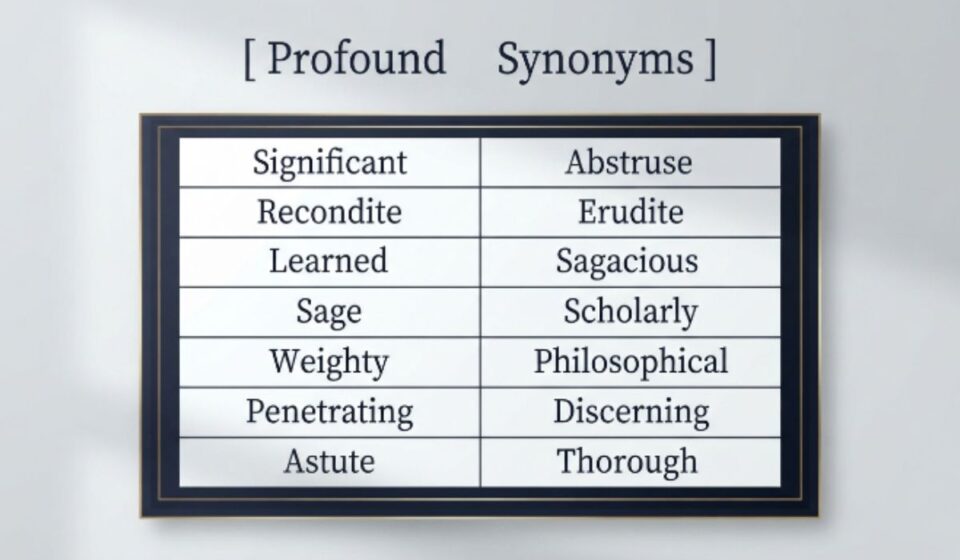

The same word, repeated too many times, starts to become meaningless. That’s a big word, “profound,” but if you say “profound” in every sentence, it doesn’t sound like a big word. Using different words helps keep your writing fresh and keeps your reader involved. It also allows you to match the exact shade of meaning you want, whether that be deep emotion, deep knowledge, or deep impact.
What Does “Profound” Really Mean?
“Profound” means something that goes way beyond the surface. It can mean intensely felt, intensely understood, or intensely important.
Real-life example: A doctor might say that a diagnosis changed a patient’s view of their own life in a profound way. The word suggests the impact was not minor or short-lived. It changed something in the core.
Why Look for Alternatives?
“Profound” is a heavy word, and heavy words lose force when they’re overused. If every paragraph in your essay calls something “profound,” the reader stops noticing.
The word can also feel a bit stiff in casual writing. A text to a friend rarely needs “profound.” It needs something warmer or simpler. Choosing the right alternative helps you match your tone, whether that’s a formal report, a heartfelt letter, or a quick chat.
25 Synonyms for “Profound” and How to Use Them
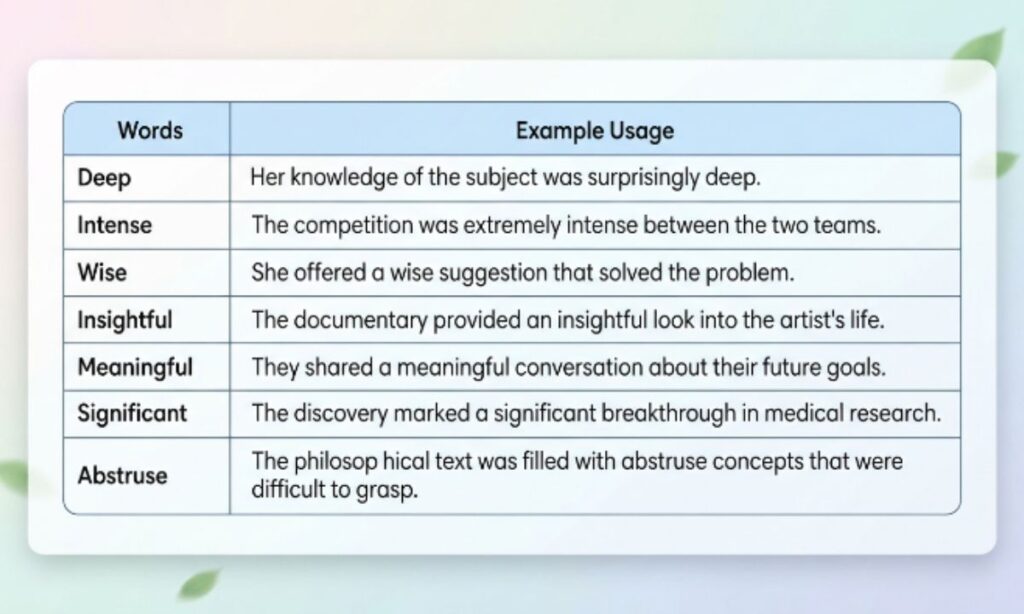
Deep
Meaning: “Deep” is the simplest stand-in for profound. It works for feelings, ideas, or impact without sounding formal. It carries warmth and directness, which makes it easy to use in almost any setting.
Example: Her apology came from a deep sense of guilt she’d carried for years.
When It Fits: Everyday conversation or casual writing where simplicity matters.
Intense
Meaning: “Intense” points to strength and force rather than depth alone. It suits emotions, experiences, or reactions that hit hard and fast. Use it when the feeling is sharp rather than slow-building.
Example: The grief he felt after the loss was intense and impossible to ignore.
When It Fits: Describing strong emotional reactions in personal writing or storytelling.
Far-reaching
Meaning: This phrase highlights scope rather than emotion. It suits decisions, policies, or events that affect many people or systems. It’s a practical choice when you want to stress consequences over feeling.
Example: The new law will have far-reaching effects on small businesses across the country.
When It Fits: News writing, business reports, or policy discussions.
Significant
Meaning: “Significant” is a safe, professional word that avoids sounding dramatic. It tells the reader something matters without overstating the emotion behind it. It’s a reliable choice in formal settings.
Example: The meeting produced a significant shift in how the team approaches deadlines.
When It Fits: Workplace emails, reports, and academic writing.
Meaningful
Meaning: “Meaningful” emphasizes personal value over intensity. It works well when something matters because of what it represents, not because it’s dramatic. It adds warmth without sounding heavy.
Example: Their conversation on the porch turned into one of the most meaningful talks they’d ever had.
When It Fits: Personal essays, relationship stories, or reflective writing.
Heartfelt
Meaning: “Heartfelt” leans entirely into emotion. It suits sincere, genuine feelings rather than intellectual depth. Use it when warmth and honesty matter more than formality.
Example: She wrote a heartfelt letter to thank her old teacher.
When It Fits: Thank-you notes, condolences, or personal messages.
Insightful
Meaning: “Insightful” points to intellectual depth and sharp understanding. It works for people, comments, or ideas that reveal something others missed. It gives credit to clear thinking rather than raw emotion.
Example: His insightful comment during the debate changed how the audience saw the issue.
When It Fits: Reviews, academic feedback, or praising someone’s thinking.
Thoughtful
Meaning: “Thoughtful” is softer than insightful but still suggests care and consideration. It suits gestures, comments, or writing that show genuine reflection. It also carries a sense of kindness.
Example: Her thoughtful response showed she’d really listened to what he said.
When It Fits: Casual and semi-formal conversations about people’s words or actions.
Penetrating
Meaning: “Penetrating” suggests something cuts straight to the core of an issue. It works well for questions, analysis, or gazes that feel sharp and direct. It has a slightly intense, almost uncomfortable edge.
Example: The interviewer asked a penetrating question that left the politician speechless.
When It Fits: Journalism, analysis, or describing sharp intellectual moments.
Sweeping
Meaning: “Sweeping” describes something broad and wide-reaching rather than emotionally deep. It suits large-scale change, reform, or statements that cover a lot of ground. It’s a strong word for scale.
Example: The company announced sweeping changes to its remote work policy.
When It Fits: Business news, policy writing, or describing large reforms.
Extensive
Meaning: “Extensive” focuses on range and thoroughness rather than emotion. It works for research, damage, knowledge, or experience that covers a lot of ground. It sounds neutral and factual.
Example: The report was based on extensive research into consumer habits.
When It Fits: Academic writing, reports, and professional summaries.
Thorough
Meaning: “Thorough” suggests completeness and care rather than emotional weight. It fits work, checks, or reviews done with full attention to detail. It signals reliability more than depth.
Example: The mechanic gave the car a thorough inspection before approving it for the trip.
When It Fits: Workplace tasks, reviews, or describing careful processes.
Complete
Meaning: “Complete” works when profound describes totality rather than emotion. It suits transformations, changes, or shifts that leave nothing the same. It’s simple and strong at once.
Example: Moving abroad brought a complete change in how she saw her own country.
When It Fits: Everyday storytelling about big life changes.
Weighty
Meaning: “Weighty” gives a sense of seriousness and importance. It suits topics, decisions, or words that carry real consequence. It has a slightly literary tone compared to plainer options.
Example: The judge’s weighty words settled the courtroom into silence.
When It Fits: Formal writing, speeches, or dramatic storytelling.
Serious
Meaning: “Serious” is the plainest option for weight and importance. It works when you want clarity without any poetic flourish. It’s ideal for direct, no-nonsense writing.
Example: They had a serious talk about where the relationship was heading.
When It Fits: Everyday conversation, especially about relationships or decisions.
Wise
Meaning: “Wise” shifts the focus to knowledge and judgment rather than depth of feeling. It suits people, advice, or decisions shaped by experience. It carries respect and admiration.
Example: Her grandmother gave wise advice that she still thinks about years later.
When It Fits: Describing advice, mentors, or life lessons.
Scholarly
Meaning: “Scholarly” points specifically to academic or intellectual depth. It suits writing, research, or discussion rooted in careful study. It’s not the right fit for emotional contexts.
Example: The professor’s scholarly analysis of the poem uncovered details most readers miss.
When It Fits: Academic essays, book reviews, or formal critiques.
Philosophical
Meaning: “Philosophical” suggests deep thinking about life, meaning, or existence. It fits reflective conversations or writing that goes beyond the practical. It adds a contemplative, big-picture tone.
Example: After the surgery, he became more philosophical about how he spent his time.
When It Fits: Reflective essays or deep personal conversations.
Moving
Meaning: “Moving” centers on emotional impact rather than intellectual depth. It suits stories, speeches, or moments that stir real feeling in the audience. It’s warm and accessible.
Example: The speech at the memorial was moving enough to bring the whole room to tears.
When It Fits: Describing emotional speeches, films, or personal stories.
Life-changing
Meaning: “Life-changing” is direct and modern, showing lasting personal impact. It fits experiences that shift how someone lives or thinks going forward. It’s a favorite in casual and online writing.
Example: The trip to Japan turned out to be a life-changing experience for the whole family.
When It Fits: Blog posts, social media, and casual storytelling.
Transformative
Meaning: “Transformative” is a more formal cousin of life-changing. It suits professional or academic writing about growth, change, or development. It signals a shift with lasting results.
Example: The mentorship program had a transformative effect on the students’ confidence.
When It Fits: Business writing, education, and formal reports.
Fundamental
Meaning: “Fundamental” points to something core and essential rather than emotional. It suits ideas, changes, or truths that shape everything built on top of them. It’s a precise, technical-sounding word.
Example: The team made a fundamental shift in how they approached customer service.
When It Fits: Business strategy, technical writing, or structural explanations.
Radical
Meaning: “Radical” suggests dramatic, often unexpected change. It fits ideas or shifts that break sharply from what came before. It carries a bold, sometimes rebellious tone.
Example: Her radical approach to teaching completely changed how the students engaged in class.
When It Fits: Describing bold change in work, politics, or personal choices.
Piercing
Meaning: “Piercing” works for looks, insights, or comments that feel sharp and unforgettable. It’s close to penetrating but leans more toward emotional or visual intensity. It suggests something you can’t easily shake off.
Example: His piercing gaze made her feel like he could read every thought in her head.
When It Fits: Descriptive or creative writing, especially fiction.
Enlightening
Meaning: “Enlightening” points to a moment of new understanding. It suits conversations, books, or experiences that leave someone knowing more than before. It has a positive, hopeful tone.
Example: The documentary was enlightening in ways none of us expected.
When It Fits: Reviews, recommendations, and reflective writing.
Which Alternative Fits Your Situation?
For work emails, words like significant, extensive, or transformative sound professional without feeling overdone. They help you make an important point while keeping your writing clear and polished.
For friends, text messages, or casual conversations, deep, life-changing, or serious ones feel much more natural. These words match everyday speech and don’t sound too formal.
For school essays or academic writing, “insightful,” “scholarly,” or “philosophical” are better choices. They fit a formal tone and help your writing sound thoughtful without forcing it.
For conversations about emotions or personal experiences, heartfelt, moving, or meaningful expressions genuinely convey feelings in a warm and relatable way. They connect with readers without sounding exaggerated.
Common Mistakes
- Using profound or similar words to describe small, everyday events, making your writing sound overly dramatic.
- Choosing a formal word like “scholarly” in a casual conversation or text message, where it can feel awkward and unnatural.
- Repeating the same synonym several times in one article instead of mixing in different words that fit the context.
- Using emotional words such as “heartfelt” when discussing facts, technical topics, or objective information.
- Replacing “profound” with a synonym without checking its exact meaning, which can change the message or confuse your readers.
Quick Comparison Table
| Phrase | Formal | Casual | Conversation | |
| Deep | No | Yes | Yes | Yes |
| Intense | No | Yes | Yes | Yes |
| Far-reaching | Yes | No | Yes | No |
| Significant | Yes | No | Yes | Yes |
| Meaningful | No | Yes | Yes | Yes |
| Heartfelt | No | Yes | Yes | Yes |
| Insightful | Yes | Yes | Yes | Yes |
| Thoughtful | No | Yes | Yes | Yes |
| Penetrating | Yes | No | Yes | No |
| Sweeping | Yes | No | Yes | No |
| Extensive | Yes | No | Yes | No |
| Thorough | Yes | Yes | Yes | Yes |
| Complete | No | Yes | Yes | Yes |
| Weighty | Yes | No | Yes | No |
| Serious | No | Yes | Yes | Yes |
| Wise | No | Yes | Yes | Yes |
| Scholarly | Yes | No | Yes | No |
| Philosophical | Yes | No | Yes | Yes |
| Moving | No | Yes | Yes | Yes |
| Life-changing | No | Yes | No | Yes |
| Transformative | Yes | No | Yes | Yes |
| Fundamental | Yes | No | Yes | No |
| Radical | Yes | Yes | Yes | Yes |
| Piercing | No | Yes | No | Yes |
| Enlightening | Yes | Yes | Yes | Yes |
Frequently Asked Questions
What is the simplest synonym for profound?
“Deep” is the simplest and most flexible replacement for profound in everyday writing.
Is profound a formal or casual word?
Profound leans formal, so it fits essays and speeches better than texts or casual chats.
Which synonym works best for emotional writing?
“Heartfelt” or “moving” both capture emotional depth without sounding academic.
Can I use these synonyms interchangeably?
No, each word carries a slightly different shade of meaning, so context should guide your choice.
What’s a good synonym for profound in a business email?
“Significant” or “transformative” both sound professional and fit business communication well.
Conclusion
Swapping out “profound” for the right synonym makes your writing feel fresh and precise. Each alternative carries its own tone, from warm and personal to formal and analytical. Pick the word that matches your message, and your writing will always sound intentional.