
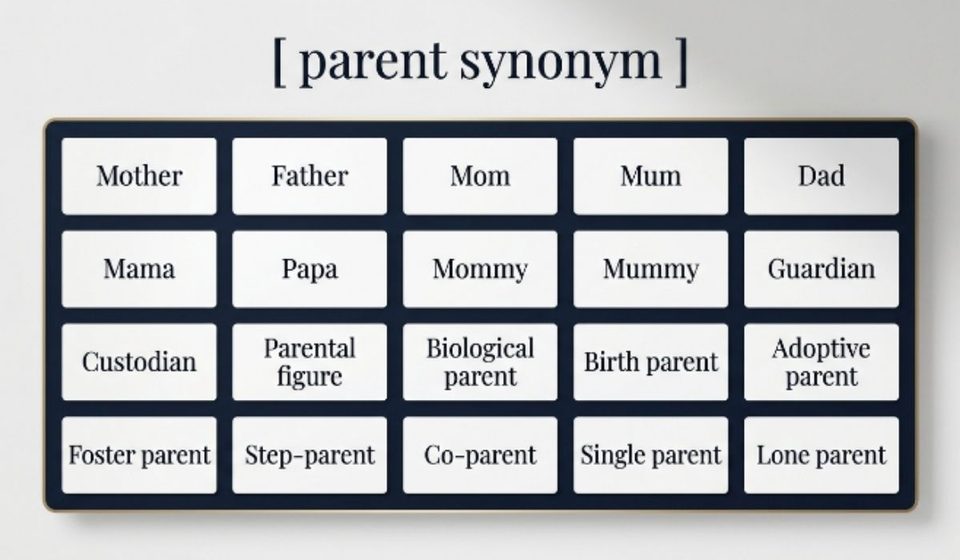

Not every “parent” means the same thing. A school form, a legal document, and a family story each call for a different word. Pick the wrong one, and you either sound stiff or leave out someone who belongs in the sentence. This guide sorts the best parent synonyms by meaning, tone, and real-world use, so you always land on the right word.
What Is Another Word for “Parent”?
The short answer: mother, father, guardian, caregiver, progenitor, and parental figure can all stand in for “parent,” depending on context. None of them works everywhere. A guardian may have no biological tie to a child. A progenitor may be centuries removed from any actual parenting. The rest of this guide breaks down exactly when each term fits — and when it doesn’t.
Everyday and Family Words
Mother
Meaning: The female parent of a child, biological or otherwise. It’s the most direct, universally understood term for this role.
Mother carries warmth and immediacy. It works in casual speech, formal writing, and legal documents alike, which makes it one of the safest word choices you have. People reach for it because it names a relationship, not just a biological fact.
Examples:
- Her mother picked her up from school every afternoon.
- The mother of three moved to a smaller house last year.
When It Fits: Everyday conversation, storytelling, and most formal writing.
Father
Meaning: The male parent of a child, biological or otherwise.
Like “mother,” this word is direct and rarely misunderstood. It also has a strong figurative use — “the father of modern physics” — which shows how flexible the word can be outside the family context.
Examples:
- His father taught him how to fix a car engine.
- The father of the bride gave a short speech.
When It Fits: Family writing, biographies, and casual speech.
Mom
Meaning: An informal, affectionate version of “mother,” common in American English.
This word signals closeness rather than formality. It’s the word children actually say, so it fits conversational and personal writing far better than official documents.
Examples:
- My mom always packs an extra sandwich, just in case.
- Ask your mom if she can pick you up early.
When It Fits: Casual conversation, texting, and personal essays.
Dad
Meaning: An informal, affectionate version of “father.”
Dad works the same way “Mom” does — it’s warm, familiar, and immediate. Using it instead of “father” instantly relaxes the tone of a sentence.
Examples:
- Dad said we could go camping this weekend.
- Her dad coaches the local soccer team.
When It Fits: Everyday speech, dialogue, and informal writing.
Folks
Meaning: An informal, plural term for one’s parents.
This word leans casual and regional. It’s a quick, friendly way to refer to both parents at once without naming them individually.
Examples:
- I’m heading home to visit my folks this weekend.
- His folks still live in the house he grew up in.
When It Fits: Casual conversation and informal writing about family.
Inclusive and Role-Based Terms
Caregiver
Meaning: A person who provides physical, emotional, or daily care to a child, regardless of legal or biological status.
This word matters because it doesn’t assume a family tie. It’s useful when the person raising a child isn’t the legal parent, which makes it a safer, more accurate choice in mixed or nontraditional households.
Examples:
- Please list the child’s caregiver on the intake form.
- The caregiver drove her to every doctor’s appointment.
When It Fits: Healthcare forms, school paperwork, and inclusive family writing.
Guardian
Meaning: A person granted legal responsibility for a child, who may or may not be a biological or adoptive parent.
“Guardian” is a legal term first. Using it interchangeably with “parent” can be inaccurate, since a guardian’s authority comes from a court, not necessarily from birth or adoption.
Examples:
- The court appointed her aunt as legal guardian.
- Parent or guardian signature is required below.
When It Fits: Legal documents, school forms, and custody discussions.
Parental Figure
Meaning: Someone who fills a parenting role in a child’s life without being the biological or legal parent.
This phrase captures relationships that don’t fit neatly into official categories, such as a grandparent or family friend who raises a child day to day. It respects the role without overstating the legal or biological facts.
Examples:
- Her grandmother became the main parental figure after the accident.
- A coach can become a parental figure for some students.
When It Fits: Personal essays, counseling contexts, and informal family discussions.
Legal and Caregiving Terms
Legal Guardian
Meaning: A person with court-recognized authority to make decisions for a child.
This term is precise and unambiguous in ways “parent” sometimes isn’t. Use it whenever the legal relationship, not the emotional one, is what matters in the sentence.
Examples:
- The legal guardian must approve any medical procedure.
- She became the child’s legal guardian after her sister passed away.
When It Fits: Legal writing, custody cases, and school enrollment forms.
Custodian
Meaning: A person with legal or supervisory responsibility for a child, often used in custody and property contexts.
Custodian is narrower than “guardian.” It often appears in legal or financial settings, such as custodial accounts, so it’s less common in everyday family conversation.
Examples:
- The court named the mother as primary custodian.
- Funds in a custodial account are managed by the custodian until adulthood.
When It Fits: Legal, financial, and custody-related documents.
Foster Parent
Meaning: An adult who cares for a child through a formal foster care arrangement without permanent legal parenthood.
This term is specific and shouldn’t be softened to just “parent,” since foster arrangements are usually temporary and state-supervised.
Examples:
- The foster parent attended every school event with pride.
- They’ve been foster parents to more than a dozen children.
When It Fits: Social services writing, family profiles, and adoption discussions.
Adoptive Parent
Meaning: A parent who has legally and permanently taken on parental rights and responsibilities through adoption.
This phrase draws a clear line between biology and legal parenthood, which matters in medical history, inheritance, and identity conversations.
Examples:
- Her adoptive parents told her the story every birthday.
- Adoptive parents go through months of legal review.
When It Fits: Adoption stories, legal writing, and medical intake forms.
Biological Parent
Meaning: A parent connected to a child through genetics, regardless of who raised the child.
This term is essential in medical, legal, and identity contexts where genetic history matters, separate from who actually did the parenting.
Examples:
- The form asks for the biological parent’s medical history.
- She reunited with her biological parent after twenty years.
When It Fits: Medical records, adoption search stories, and legal genealogy.
Birth Parent
Meaning: The parent who gave birth to or biologically fathered a child, often used in adoption contexts.
“Birth parent” is generally preferred over “biological parent” in adoption writing because it centers the act of birth without sounding clinical.
Examples:
- The birth parent chose an open adoption arrangement.
- She wrote a letter to her birth parent every year.
When It Fits: Adoption agencies, memoirs, and sensitive family conversations.
Family-Structure Terms
Step-Parent
Meaning: A parent’s spouse or partner who is not the child’s biological or adoptive parent.
This word avoids confusion in blended families. It signals a real, ongoing relationship without implying a biological or legal tie.
Examples:
- Her step-parent helped her study for finals every night.
- He calls his step-parent by her first name.
When It Fits: Blended-family writing and everyday conversation.
Co-Parent
Meaning: A person who shares parenting responsibilities with another adult, often after separation or divorce.
Co-parent emphasizes shared duty over romantic or legal status. It’s grown common in modern family writing because it fits many kinds of arrangements.
Examples:
- The two co-parents alternate weekends with their son.
- They co-parent successfully despite living in different cities.
When It Fits: Divorce-related writing, parenting blogs, and custody agreements.
Single Parent
Meaning: A parent raising a child without a co-parent actively involved in daily care.
This term describes a household structure, not a judgment. It’s widely used and understood across formal and casual writing.
Examples:
- As a single parent, she juggled two jobs and school pickup.
- Single parents make up a growing share of households today.
When It Fits: Family articles, surveys, and everyday conversation.
Formal and Genealogical Terms
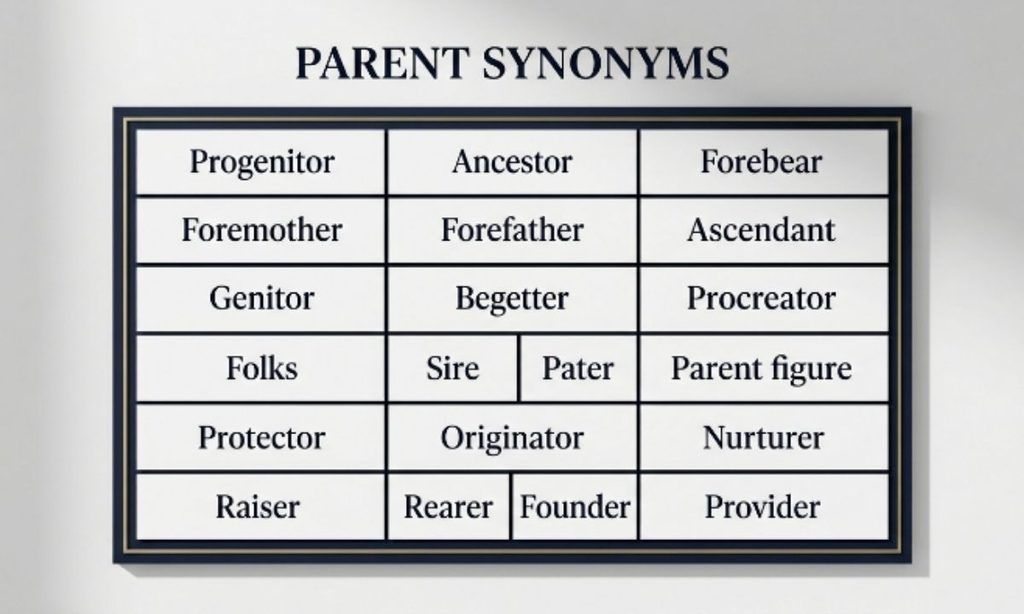
Progenitor
Meaning: A direct ancestor, or the originator of a family line.
This word sounds formal and historical. It rarely refers to a living, actively parenting adult, so it fits genealogy and origin stories better than everyday family talk.
Examples:
- Historians traced the family’s progenitor to a 17th-century village.
- The company’s founder is often called the progenitor of the modern smartphone.
When It Fits: Genealogy research and formal or historical writing.
Ancestor
Meaning: A person from whom one is descended, typically more distant than a parent or grandparent.
Ancestor describes lineage, not active parenting. Swapping it for “parent” in a current-family sentence would confuse the reader.
Examples:
- Her ancestor emigrated from Ireland in the 1800s.
- The museum traces the tribe’s ancestors back three centuries.
When It Fits: History, genealogy, and heritage writing.
Forebear
Meaning: An ancestor, especially one further back than a grandparent.
This word has a slightly literary tone. It works well in narrative or reflective writing about family history and heritage.
Examples:
- Their forebears settled this valley over a century ago.
- She felt connected to her forebears while reading the old letters.
When It Fits: Memoirs, historical essays, and heritage storytelling.
Ascendant
Meaning: A person from whom one is descended, used mainly in genealogical or legal lineage discussions.
“Ascendant” is a technical, somewhat rare term. It’s most useful in legal or genealogical documents where precision about generational direction matters.
Examples:
- The will names all direct ascendants as potential heirs.
- Genealogists mapped every known ascendant in the family tree.
When It Fits: Legal inheritance documents and formal genealogy research.
Genitor
Meaning: A biological parent, used mostly in scientific, legal, or anthropological contexts.
This word sounds clinical on purpose. It’s rarely used in casual writing, but it’s precise in contexts that separate biology from social parenting roles.
Examples:
- Anthropologists distinguish the genitor from the social father in some cultures.
- The report listed the genitor separately from the legal guardian.
When It Fits: Academic, legal, or scientific writing.
Begetter
Meaning: A person who fathers or originates something, often used in older or literary English.
Begetter carries an old-fashioned, sometimes poetic tone. It fits historical or creative writing far better than modern conversation.
Examples:
- Shakespeare’s sonnets refer to their “onlie begetter.”
- The novel calls the inventor the begetter of a new era.
When It Fits: Literary, poetic, or historical writing.
Sire
Meaning: A father, especially used historically for royalty or, more commonly today, for animal breeding.
“Sire” can sound formal, archaic, or even humorous outside its breeding context. Using it for a modern human parent often reads as odd or overly dramatic.
Examples:
- The stallion’s sire won three championship races.
- In the old text, the king is addressed only as “sire.”
When It Fits: Historical fiction, formal titles, or animal breeding contexts.
“Parent” as a Verb
Raise
Meaning: To care for and guide a child from birth to adulthood.
Raise is the most natural, widely used verb for parenting. It works in nearly any tone, from casual conversation to formal writing.
Examples:
- They raised three children in the same small town.
- She was raised by her grandparents after the divorce.
When It Fits: Everyday speech and general writing about upbringing.
Nurture
Meaning: To care for and encourage the growth, development, or well-being of a child.
Nurture emphasizes emotional and developmental support over basic caregiving. It fits gently, reflecting writing about growth and connection.
Examples:
- She nurtured his love of music from an early age.
- Good teachers nurture curiosity as much as knowledge.
When It Fits: Parenting advice, education writing, and reflective essays.
Rear
Meaning: To bring up and care for a child until adulthood, a slightly more formal alternative to “raise.”
Rear sounds a bit more traditional or literary than “raise.” It appears often in formal biographies and older writing styles.
Examples:
- They reared five children on the family farm.
- She was reared in a household that valued education.
When It Fits: Formal writing, biographies, and historical narratives.
Parent as a Source or Creator
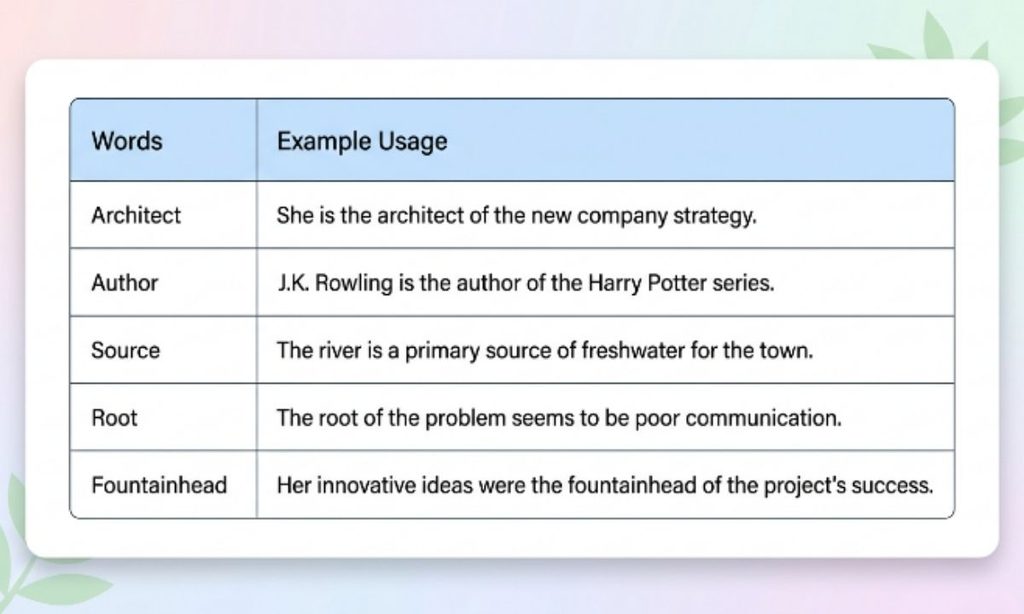
Source
Meaning: The origin or starting point of something, used figuratively for the “parent” of an idea, problem, or product.
This word strips away any family meaning entirely. It’s the go-to term when “parent” describes where something came from, not who raised a child.
Examples:
- Researchers finally identified the source of the outbreak.
- The article traced the rumor back to its source.
When It Fits: Business, science, and analytical writing.
Creator
Meaning: A person or entity that makes or originates something, used for the “parent” of a product, brand, or work.
The creator emphasizes authorship and initiative. It fits modern business and creative writing where “parent” would sound out of place.
Examples:
- The creator of the app sold it for millions.
- She’s the creator behind the popular cooking channel.
When It Fits: Business, technology, and creative-industry writing.
Founder
Meaning: A person who establishes an organization, company, or institution; used for the “parent” of a business.
“Founder” is specific to organizations, not products or ideas. It’s the standard term whenever “parent” would apply to a company’s origin.
Examples:
- The founder stepped down after twenty years at the helm.
- Their founder started the company in a garage.
When It Fits: Business writing, company profiles, and startup stories.
Parent Synonyms in a Table
| Word | Best Use Case | Tone |
| Mother / Father | Everyday and formal family writing | Neutral |
| Mom / Dad | Casual conversation | Informal |
| Caregiver | Inclusive forms, healthcare | Neutral |
| Guardian | Legal responsibility | Formal |
| Foster Parent | Temporary care arrangements | Neutral |
| Progenitor | Genealogy, formal writing | Formal |
| Sire | Historical or breeding contexts | Formal/dated |
| Raise / Rear | Describing the act of parenting | Neutral |
| Source / Founder | Origin of a company or idea | Neutral |
Parent vs. Guardian vs. Caregiver
These three words often get used as if they mean the same thing. They don’t.
Parent implies a biological or legal family bond.
Guardian implies court-recognized legal authority, with or without a family bond.
“Caregiver” implies daily hands-on care, with or without legal or biological ties.
A grandmother raising her grandchild might be the caregiver and legal guardian, but not the biological parent. On school and healthcare forms, “parent or guardian” is the safest, most inclusive phrasing.
Antonyms and Related Words
The right opposite of “parent” depends on which sense you mean.
Family sense:
- child
- offspring
- descendant
Cause-and-effect sense:
- result
- effect
- consequence
Frequently Asked Questions
What is a gender-neutral synonym for parent?
“Parent,” “caregiver,” and “parental figure” all work without specifying gender.
Is “guardian” a synonym for “parent”?
Not exactly — a guardian has legal authority over a child but may not be a biological or adoptive parent.
What is another formal word for parent?
“Progenitor” and “genitor” are formal, though they’re better suited to genealogy or academic writing than everyday use.
What is a synonym for “parent” as a verb?
“Raise,” “rear,” and “nurture” all describe the act of parenting a child.
What does “parent” mean in “parent company”?
Here, “parent” refers to the originating or controlling organization, not a family relationship — “founder” or “source” often works as a substitute.
Conclusion
Choosing the right parent synonym comes down to context: family conversations call for warmth, legal documents call for precision, and business writing calls for words like “founder” or “source” instead of family terms altogether. Once you separate the biological, legal, caregiving, genealogical, and figurative senses of “parent,” picking the right word for any sentence becomes almost automatic.


[…] Parent Synonym Guide: 30 Alternatives by Meaning and Context […]