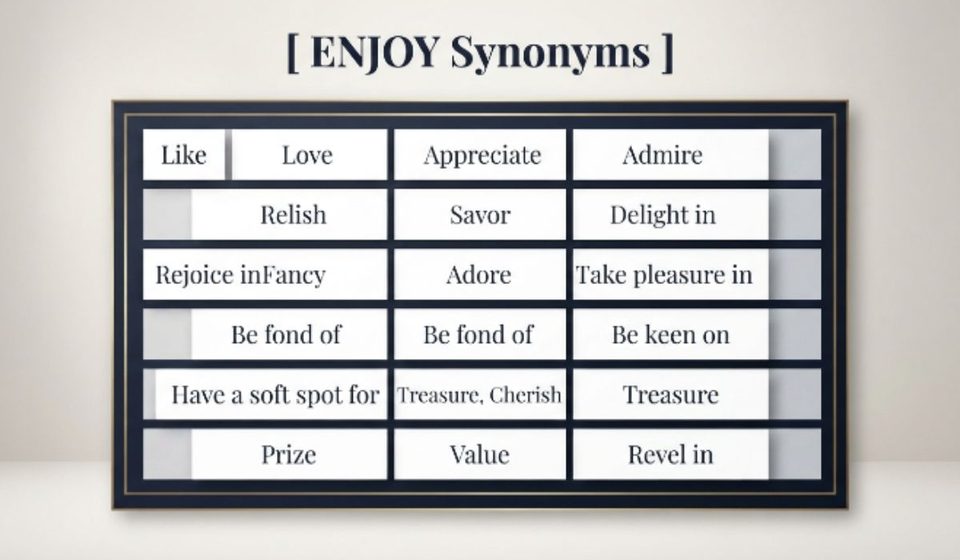

Ever caught yourself writing “enjoy” for the third time in one paragraph? It happens to almost everyone. The word is useful, but it flattens out a range of feelings that deserve better words. Here’s how to pick the right one every time.
What Does “Enjoy” Actually Mean?
“Enjoy” carries two distinct meanings, and mixing them up is where a lot of writing goes stale.
Sense One: Taking Pleasure in Something
This is the meaning most people think of first: getting satisfaction, fun, or happiness from an experience, activity, or thing. You enjoy a meal, a concert, or an afternoon off.
Sense Two: Having the Benefit or Use of Something
This meaning is more formal. It shows up in sentences like “the company enjoys a strong market position” or “citizens enjoy certain legal protections. “Nobody’s smiling here; it’s about possessing an advantage.
Enjoy in Everyday Language
Most casual conversation sticks to sense one. Formal writing, legal language, and business reports lean more on sense two. Knowing which sense you mean is the first step to picking a good synonym.
Enjoy vs. Like: What’s the Real Difference?
These two words get used interchangeably, but they’re not identical.
Intensity: “Enjoy” usually signals a deeper, more active pleasure than like.
Focus: Enjoy tends to describe experiences and activities. It, like, can describe anything, from a person to a pair of shoes.
Grammar: You enjoy swimming, but you can also say you like to swim. “Enjoy” doesn’t pair naturally with an infinitive the way “like” does.
Timing: Like often describes a lasting preference. Enjoy often describes pleasure happening right now, in the moment.
A quick way to remember it: “I like coffee” is a general fact about you. “I’m enjoying this coffee” is happening right now, cup in hand.
Enjoy vs. Love vs. Prefer
These three sit on a rough intensity scale.
| Word | Intensity | Typical Use |
| Like | Mild | General preference |
| Enjoy | Moderate to strong | Active pleasure in an experience |
| Love | Strong | Deep emotional attachment |
| Prefer | Comparative | Choosing one option over another |
Preference words don’t always map cleanly onto emotion; “prefer” is really about comparison, not depth of feeling.
How to Pick the Right Synonym
Before swapping in a new word, ask two questions: which sense of “enjoy” do you mean, and how formal is the writing? A slang term like “dig” works in a text to a friend. It has no place in a legal brief. Matching tone to context matters more than finding the fanciest word on the list.
30 Alternative Phrases for “Enjoy”
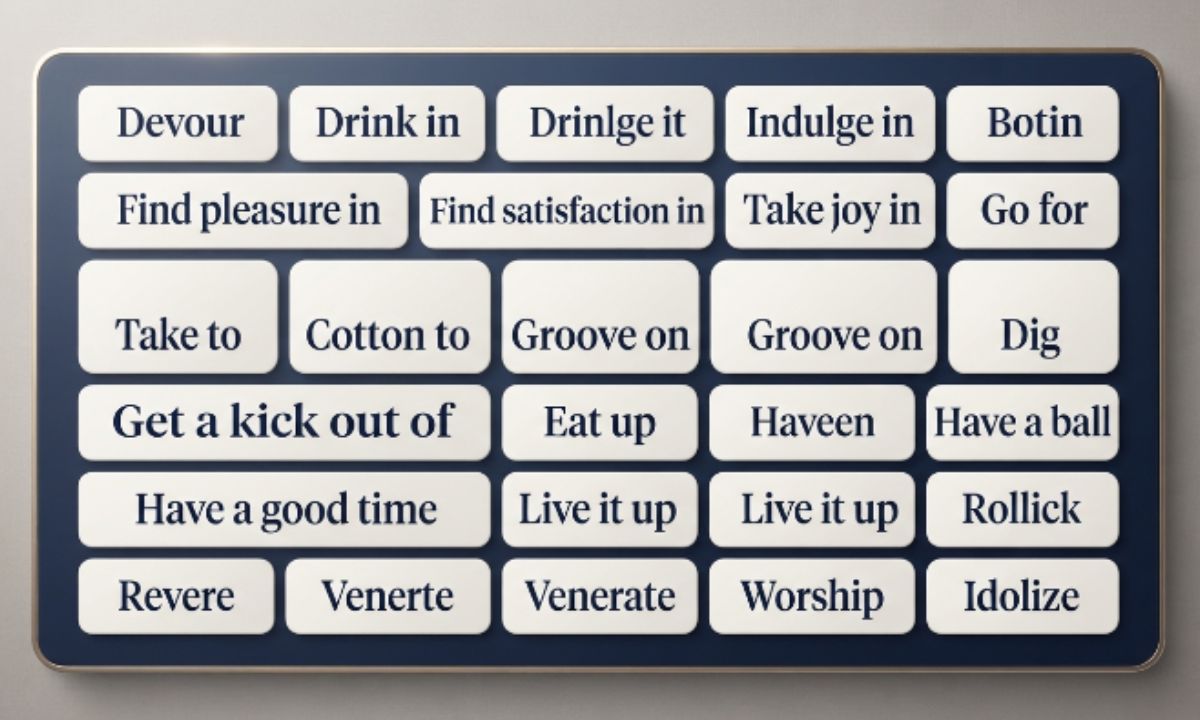
Like
Meaning: To find something agreeable or pleasant without strong intensity. “Like” is the quiet, dependable word in this whole list. It doesn’t try to impress anyone, which is exactly why it works so well in casual, everyday writing where you just need to state a simple preference.
- I like the new coffee shop on Main Street.
- She likes long walks after dinner.
When It Fits: Use it for low-key, everyday statements of preference.
Love
Meaning: To feel a strong, warm attachment or deep pleasure toward something. Love turns up the emotional volume. It signals genuine enthusiasm rather than polite approval, so readers immediately sense that this isn’t a passing preference but something closer to a real attachment.
- He loves spending weekends in the mountains.
- We love how quiet this neighborhood is at night.
When It Fits: Great for describing genuine passion, not just casual approval.
Appreciate
Meaning: To recognize the value or worth of something, often with gratitude. “Appreciate” carries a thoughtful, grateful tone. It suggests reflection rather than instant delight, which makes it a natural fit when you want to sound sincere and a little more measured.
- I really appreciate the effort you put into this project.
- She appreciates good design in everything she buys.
When It Fits: Use it when gratitude matters as much as pleasure.
Relish
Meaning: To take great pleasure in something, often with anticipation. Relish has an eager, almost hungry energy. It suggests you’re not just okay with something; you’re actively looking forward to it, which gives your writing a bit more punch.
- She relishes a good debate.
- He relished the chance to prove himself.
When It Fits: Best for describing enthusiastic anticipation of a challenge or activity.
Savor
Meaning: To enjoy something slowly and fully, drawing out the pleasure.
“Savor” slows the pace of a sentence. It suggests patience and mindfulness, which makes it perfect for moments you don’t want to rush through.
- Take a moment to savor the view before we head back.
- He savored every bite of the meal.
When It Fits: Use it for slow, deliberate pleasure, especially with food or fleeting moments.
Delight in
Meaning: To take great joy or pleasure from something. This phrase feels light and joyful. It carries a slightly playful tone, which makes it a good fit for describing small, happy moments rather than big, dramatic ones.
- The kids delight in splashing through puddles.
- She delights in surprising her friends with small gifts.
When It Fits: Great for lighthearted, joyful moments in everyday life.
Revel in
Meaning: To enjoy something with unrestrained enthusiasm. “Revel in” suggests full immersion, no holding back. It’s a great choice when someone isn’t just enjoying something politely but throwing themselves into it completely.
- The team reveled in their unexpected win.
- She revels in the chaos of a busy kitchen.
When It Fits: Best for describing enthusiastic, all-in enjoyment.
Bask in
Meaning: To enjoy warmth, attention, or a pleasant feeling, often passively. Basking has a relaxed, sunlit quality. It works well for describing enjoyment that doesn’t require effort, like soaking in praise or a good mood.
- He basked in the praise after the presentation.
- They basked in the afternoon sun by the lake.
When It Fits: Use it for passive, comfortable enjoyment rather than active pursuit.
Luxuriate in
Meaning: To enjoy something indulgently and without restraint. This phrase feels rich and unhurried. It suggests a level of comfort bordering on indulgence, so it works best for describing rare, special treats rather than routine pleasures.
- She luxuriated in a long, hot bath after the flight.
- We luxuriated in a lazy Sunday morning with no plans.
When It Fits: Great for describing indulgent, unhurried comfort.
Cherish
Meaning: To hold something dear and value it deeply, often with tenderness. Cherish carries emotional weight and sentimentality. It’s less about momentary fun and more about lasting value, which makes it ideal for memories, relationships, and meaningful objects.
- She cherishes the letters her grandmother wrote her.
- We cherish the time we get to spend together.
When It Fits: Best for sentimental, long-lasting attachments rather than fleeting pleasure.
Treasure
Meaning: To value something highly and protect or hold onto it. Treasure has a similar warmth to cherish but leans slightly more toward protecting something precious. It suggests the thing matters enough that you’d hate to lose it.
- He treasures the advice his mentor gave him.
- They treasure their quiet evenings at home.
When It Fits: Use it for things or moments you consider precious and worth protecting.
Revere
Meaning: To regard something or someone with deep respect and admiration. “Revere” is a formal, almost reverent word. It’s less about personal pleasure and more about respect, which makes it a strong fit for describing admiration toward people, traditions, or institutions.
- The students revere their longtime professor.
- The community reveres the founder’s original vision.
When It Fits: Best for formal writing about respected people, traditions, or institutions.
Adore
Meaning: To love or enjoy something intensely, often with visible enthusiasm. Adore sits near the top of the intensity scale. It’s warm, expressive, and a little dramatic, which makes it a natural choice for describing genuine, obvious enthusiasm.
- She adores her morning walks with the dog.
- The kids adore their new babysitter.
When It Fits: Great for expressing clear, visible enthusiasm without sounding formal.
Fancy
Meaning: To have a liking or preference for something, often casually. Fancy has a light, conversational tone, especially common in British English. It’s an easy, breezy way to express interest without sounding too serious.
- Do you fancy a walk before dinner?
- She’s always fancied vintage furniture.
When It Fits: Use it in casual, conversational writing, especially with a British tone.
Be fond of
Meaning: To have a gentle, affectionate liking for something or someone. This phrase carries a soft, warm quality. It suggests a steady, quiet affection rather than intense excitement, which makes it a good match for long-term preferences.
- I’ve always been fond of rainy afternoons.
- He’s fond of the old bookstore downtown.
When It Fits: Best for describing gentle, steady affection built over time.
Take pleasure in
Meaning: To find enjoyment or satisfaction in doing something. This phrase sounds slightly formal and intentional. It works well when you want to emphasize that the pleasure is deliberate, not accidental, which gives your sentence a bit more weight.
- She takes pleasure in helping others solve problems.
- He takes pleasure in a well-organized workspace.
When It Fits: Use it in slightly formal writing where intention matters.
Indulge in
Meaning: To allow yourself to enjoy something, often as a treat. Indulgence has a self-aware, permission-giving tone. It suggests the pleasure is a little extra, something you’re choosing to allow yourself rather than a routine habit.
- We indulged in dessert after the long week.
- She indulges in a bit of reality TV on Fridays.
When It Fits: Great for describing occasional treats or small guilty pleasures.
Have a good time with
Meaning: To enjoy an experience or the company of others. This phrase feels friendly and unpretentious. It’s the kind of language you’d use in conversation, not a report, which makes it a natural fit for casual storytelling.
- We had a good time with the whole group at the reunion.
- The kids had a good time with the new board game.
When It Fits: Best for casual, spoken-style writing about shared experiences.
Get a kick out of
Meaning: To find something amusing or enjoyable, often unexpectedly. This phrase has a playful, informal energy. It works well when the enjoyment comes with a bit of surprise or humor rather than deep, quiet satisfaction.
- He gets a kick out of telling that story at parties.
- I get a kick out of watching them argue over recipes.
When It Fits: Use it for lighthearted, humorous enjoyment in casual conversation.
Dig
Meaning: To like or enjoy something in casual slang. Dig is unmistakably informal. It signals a relaxed, conversational voice, so it belongs in casual writing, dialogue, or social posts, not anywhere formal.
- I really dig this playlist you made.
- She digs the vintage aesthetic of the café.
When It Fits: Best for casual, informal writing or dialogue.
Admire
Meaning: To regard something with respect or approval, often for its quality. “Admire” leans toward appreciation of quality or skill rather than personal pleasure. It’s a good choice when you’re praising something’s craftsmanship or character.
- I admire how she handled that difficult conversation.
- He admires the simplicity of the design.
When It Fits: Use it when praising quality, skill, or character rather than personal fun.
Prize
Meaning: To value something highly, treating it as especially important. “Prize” suggests something rare or hard-won. It gives writing a slightly formal, appreciative tone, useful when describing something that stands out from the ordinary.
- The team prizes honesty above all else.
- She prizes the quiet mornings before everyone wakes up.
When It Fits: Great for describing something considered especially valuable or rare.
Value
Meaning: To consider something important or worthwhile. Value is a plain, practical word. It doesn’t carry much emotional flair, which makes it useful in professional writing where clarity matters more than warmth.
- We value your feedback on every project.
- She values honesty over flattery.
When It Fits: Best for professional or practical contexts where clarity beats emotion.
Welcome
Meaning: To accept or receive something with pleasure or openness. Welcome has a warm, inviting tone. It suggests openness to something new, which makes it a good fit for describing change, feedback, or new experiences.
- We welcome the challenge of a new market.
- She welcomes any opportunity to learn something new.
When It Fits: Use it when describing openness to change or new experiences.
Favor
Meaning: To prefer or support something over alternatives. Favor has a decision-making tone. It suggests a choice has been made among options, which makes it useful in business or comparative writing.
- The committee favors the second proposal.
- She favors quiet cafés over crowded ones.
When It Fits: Best for describing preference among competing options.
Own
Meaning: To have something as your legal or rightful possession. Own is direct and factual. It carries no emotional undertone, which makes it the clearest choice for the “benefit or possession” sense of enjoy in plain, practical writing.
- The company owns the patent for this technology.
- They own a small cabin near the lake.
When It Fits: Use it for straightforward statements of possession.
Possess
Meaning: To have or hold something as a quality, right, or property. “Possess” sounds slightly more formal than “own.” It works well in legal, academic, or descriptive writing where precision matters more than warmth.
- The region possesses a unique cultural heritage.
- She possesses a rare talent for negotiation.
When It Fits: Great for formal writing describing qualities, rights, or traits.
Have
Meaning: To hold, experience, or possess something. “Have” is the simplest, most neutral option on this list. It’s rarely wrong, which makes it a safe default whenever a fancier synonym feels forced.
- The city has a strong tech industry.
- We have full access to the archives.
When It Fits: Use it whenever you just need a plain, clear statement of possession.
Retain
Meaning: To continue to have or hold onto something. “Retain” implies something could have been lost but wasn’t. It’s a good fit for describing rights, memory, or advantages that persist over time.
- The brand retains its loyal customer base.
- She retains full editorial control over the project.
When It Fits: Best for describing something maintained despite pressure or change.
Boast
Meaning: To have something impressive worth mentioning. Boast has a confident, promotional tone. It’s common in marketing and travel writing, where you want to highlight a standout feature without sounding modest about it.
- The hotel boasts a rooftop pool with ocean views.
- The city boasts one of the oldest universities in the country.
When It Fits: Great for marketing or descriptive writing highlighting an impressive feature.
Synonyms for “Enjoyment”
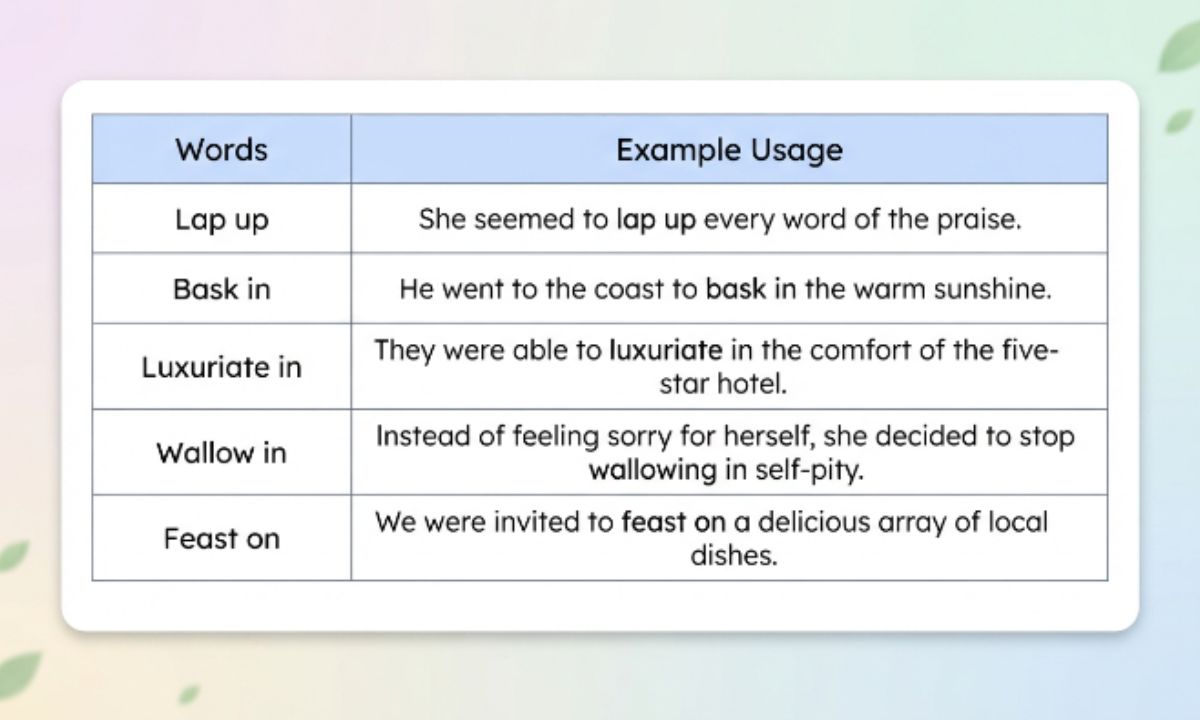
Sometimes you need the noun form instead of the verb. Here are solid options, grouped by tone:
| Category | Synonyms |
| Everyday | pleasure, fun, satisfaction |
| Warmer | delight, joy, happiness |
| Formal | gratification, appreciation |
| Benefit sense | possession, use, advantage |
Common Mistakes to Avoid
Mixing up the two senses. “She enjoys tax benefits” and “she enjoys the beach” use entirely different meanings. Choose a synonym that matches the right one.
Using “enjoy” with an infinitive. “I enjoy swimming” is incorrect. Stick with the gerund: “I enjoy swimming.”
Overusing slang in formal writing. Words like “dig” or “get a kick out of” feel out of place in a business report or academic paper.
Frequently Asked Questions
What’s a good synonym for “enjoy” in formal writing?
Appreciate, possess, and take pleasure in all work well in formal or professional contexts.
Is “enjoy” stronger than “like”?
Generally yes; “enjoy” suggests more active, engaged pleasure than the milder word “like.”
Can “enjoy” be used in continuous tense?
Yes, “I’m enjoying this” is natural and common, unlike “like,” which rarely appears in continuous form.
What are some synonyms for “enjoy the benefits”?
“Reap the benefits,” “have the advantage of,” and “possess” are all natural alternatives.
What is the opposite of “enjoy”?
Common antonyms include dislike, hate, detest, and loathe.
Final Thoughts
“Enjoy” is a perfectly good word, but it’s carrying two very different jobs: expressing pleasure and expressing possession. Once you separate those two senses and match your synonym to the right one, whether that’s the warmth of cherish, the formality of possess, or the casual ease of dig, your writing stops repeating itself and starts saying exactly what you mean.

[…] Enjoy Synonyms: 30+ Alternatives to “Enjoy” and How to Use Them […]