
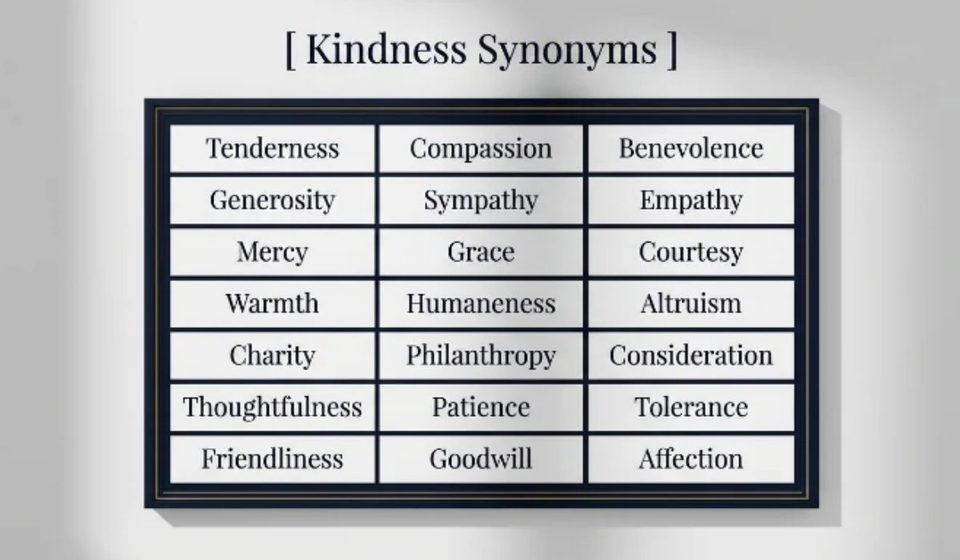

Ever notice how “kind” gets used for everything from a warm hug to a polite email sign-off? That’s the problem. One word is carrying too much weight. The moment you need to describe a specific kind of kindness, “kind” runs out of gas. This guide gives you 30 precise alternatives, grouped by what they actually mean, so your writing can say exactly what you’re trying to say.
What Kindness Actually Means
“Kindness” isn’t one idea wearing a trench coat. It’s really three overlapping things.
There’s the emotional kind: a soft, caring concern for how someone else is doing. There’s the responsive kind: feeling something when you see another person struggling. And there’s the practical kind: an actual favor, a helping hand, something done rather than just felt.
Most writers reach for “kind” or “kindness” regardless of which of these three they mean. That’s why the word feels flat so often. It’s doing three jobs at once.
Why You Need More Than One Word
Repeating “kind” and “kindness” in a piece of writing gets tired fast, and it also flattens meaning. “She was kind to her coworker” tells you almost nothing. ” She showed patience with her coworker” or “she extended grace to her coworker” tells you a lot more, and it tells two different stories.
Precise language does three things for you:
- It keeps your writing from sounding repetitive.
- It signals exactly what kind of care or generosity you mean.
- It matches the tone of your piece, whether that’s a eulogy, a performance review, or a birthday card.
Below, you’ll find 30 alternatives split into four practical groups: words about inner warmth, words about moral generosity, words about noticing and understanding others, and words about the actual helpful act. Each one comes with a plain meaning, why it lands emotionally, two example sentences, and a situation where it fits naturally.
Words for Inner Warmth and Tenderness
These describe a soft, caring disposition, the feeling before it turns into action.
Tenderness
Meaning: A gentle, protective care for someone’s wellbeing. Tenderness carries a physical, almost bodily softness. It’s the word you reach for when kindness shows up as gentleness rather than generosity. It works well in writing about family, caregiving, or quiet private moments.
Examples:
- He spoke to his daughter with such tenderness that she stopped crying almost instantly.
- There was tenderness in how the nurse adjusted the pillow behind him.
When It Fits: Describing a parent, caregiver, or anyone handling a fragile situation with care.
Warmth
Meaning: A friendly, welcoming quality that puts people at ease. Warmth is kindness you can feel in a room before anyone says a word. It’s less about specific actions and more about presence, the sense that someone is glad you’re there. It reads as approachable rather than dramatic.
Examples:
- Her warmth made even strangers feel like old friends.
- The team’s warmth toward new hires made onboarding painless.
When It Fits: Describing hosts, teachers, or leaders who make people comfortable.
Affection
Meaning: A fond, caring attachment to someone. Affection leans personal and relational. It implies a bond, not just a passing act of niceness. It’s a good fit for close relationships rather than strangers or coworkers.
Examples:
- She wrote the letter with obvious affection for her grandmother.
- His affection for the old neighborhood never faded, even after he moved.
When It Fits: Writing about family, close friends, or long-term relationships.
Softheartedness
Meaning: An easily moved, gentle nature that avoids causing hurt. This word suggests someone who feels things quickly and deeply, sometimes to a fault. It’s useful when you want to show vulnerability alongside kindness, not just strength.
Examples:
- His softheartedness meant he could never say no to a stray animal.
- Her softheartedness showed every time a sad story came on the news.
When It Fits: Describing someone who’s kind almost by instinct, sometimes to their own disadvantage.
Kindheartedness
Meaning: A consistent, natural disposition toward being good to others. This is a steadier, more general version of kindness itself, useful when you want a synonym that doesn’t shift the meaning much but still avoids repeating “kind” twice in one sentence.
Examples:
- Everyone in town knew him for his kindheartedness.
- Her kindheartedness extended to people she’d only just met.
When It Fits: Character descriptions, obituaries, recommendation letters.
Kindness Words for Moral Generosity
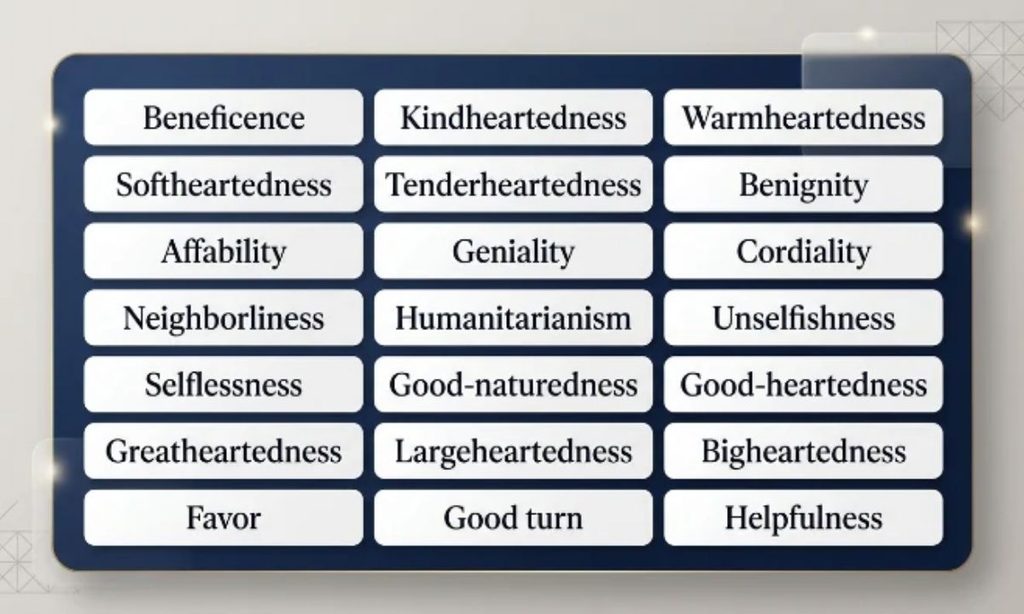
These describe kindness rooted in giving, fairness, and ethical character.
Benevolence
Meaning: A deep, deliberate goodwill toward others. Benevolence sounds formal and a little grand. It works best when describing an established, almost institutional kind of goodness, like a benefactor or a long-standing habit of generosity, rather than a one-off nice gesture.
Examples:
- The foundation’s benevolence funded scholarships for a decade.
- His benevolence toward his employees earned him quiet loyalty.
When It Fits: Formal writing, tributes, descriptions of philanthropists or leaders.
Generosity
Meaning: A readiness to give more than expected, in time, money, or attention. Generosity is the most action-oriented of the warmth words. It implies giving something up, not just feeling something. It’s versatile enough for both casual and formal writing.
Examples:
- Her generosity with her time made the project possible.
- The generosity of strangers got the family through the storm.
When It Fits: Fundraising language, thank-you notes, community stories.
Charity
Meaning: Goodwill expressed through giving, often material or financial. Charity has a slightly old-fashioned, almost biblical ring to it. It works well for describing acts of giving at scale, not small personal favors.
Examples:
- The company’s charity work funded three new schools.
- He gave out of charity, not obligation.
When It Fits: Nonprofit writing, donation appeals, historical or literary context.
Altruism
Meaning: Selfless concern for others’ wellbeing, without expecting anything back. Altruism is the word for kindness stripped of self-interest. It’s clinical and precise, often used in psychology or ethics writing, so it fits an analytical or academic tone better than casual writing.
Examples:
- Researchers studied altruism in young children by watching them share toys.
- Her altruism showed in how she never took credit for the work.
When It Fits: Academic essays, psychology or behavior-focused writing.
Philanthropy
Meaning: Large-scale generosity aimed at improving human welfare. Philanthropy is the institutional cousin of charity. It’s the right word for organized, sustained giving, foundations, donors, large gifts, rather than everyday kindness.
Examples:
- Her philanthropy transformed the local hospital’s children’s wing.
- Philanthropy alone won’t fix systemic problems, but it helps.
When It Fits: Business writing, biographies of donors, news coverage of major gifts.
Magnanimity
Meaning: Generosity of spirit, especially when someone has the upper hand. Magnanimity carries a specific flavor: kindness shown from a position of power or victory. It’s the word for the winner who doesn’t gloat, or the person who forgives freely.
Examples:
- His magnanimity after winning the case surprised the opposing lawyer.
- She accepted the apology with magnanimity, no lecture attached.
When It Fits: Describing gracious winners, leaders, or people who forgive easily.
Beneficence
Meaning: The active doing of good, especially through helpful deeds. Beneficence is a formal cousin of benevolence, but with more emphasis on action than feeling. It shows up often in ethics and medical writing.
Examples:
- The doctor’s beneficence went beyond her job description.
- Beneficence guided every decision the clinic made.
When It Fits: Medical ethics, formal essays, professional evaluations.
Clemency
Meaning: Mercy shown to someone who could have been punished or judged harshly. Clemency is narrow and specific. It only really works in contexts involving judgment, forgiveness, or punishment, legal, disciplinary, or interpersonal conflict.
Examples:
- The judge granted clemency given the defendant’s age.
- Her clemency toward the intern who made the mistake kept morale high.
When It Fits: Legal writing, workplace conflict, stories about second chances.
Unselfishness
Meaning: A willingness to put others’ needs ahead of your own. This is a plainer, more everyday alternative to altruism. It sounds natural in casual writing where “altruism” would feel too clinical.
Examples:
- His unselfishness meant the last slice of pizza always went to someone else.
- Her unselfishness with credit made the whole team trust her.
When It Fits: Everyday stories, workplace praise, casual writing.
Words for Empathy and Understanding
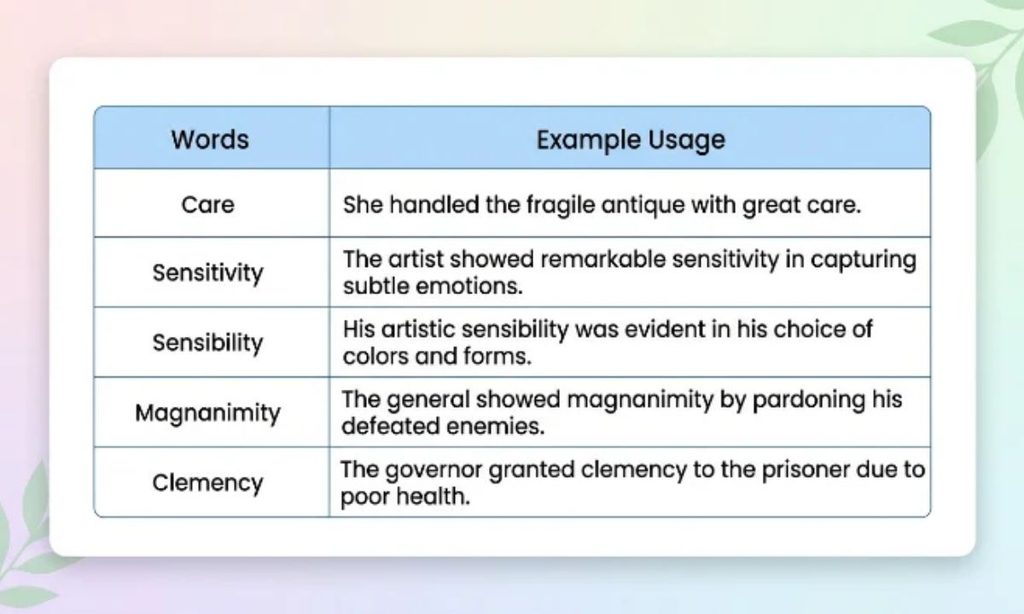
These describe kindness that shows up as noticing, listening, and responding to someone’s feelings.
Compassion
Meaning: A concern for someone’s suffering paired with a desire to help. Compassion is probably the closest emotional cousin to kindness, but it’s more specific. It always involves someone in pain. Use it when the situation includes hardship, not just general niceness.
Examples:
- The volunteers treated every patient with compassion.
- She listened with compassion, not judgment.
When It Fits: Healthcare, grief, hardship, or any situation involving suffering.
Sympathy
Meaning: Sharing in another person’s sadness or difficulty. Sympathy is slightly more passive than compassion. It’s about feeling with someone, not necessarily acting. It’s the natural word for condolences and shared sadness.
Examples:
- Cards flooded in expressing sympathy for the family’s loss.
- He offered sympathy, then quietly helped with the bills.
When It Fits: Condolences, comforting someone after a loss or setback.
Empathy
Meaning: The ability to understand and feel what someone else is experiencing. Empathy is about perspective-taking, actually imagining yourself in someone’s position. It’s become common in leadership and workplace writing because it implies skill, not just feeling.
Examples:
- Good managers lead with empathy, not just authority.
- Her empathy helped her defuse the argument before it escalated.
When It Fits: Leadership writing, therapy or counseling contexts, conflict resolution.
Understanding
Meaning: A patient willingness to see things from someone else’s point of view. This word is plain, warm, and works almost anywhere. It suggests kindness through patience rather than through action or feeling.
Examples:
- She was understanding when he showed up late, exhausted from work.
- His understanding of her situation kept the friendship intact.
When It Fits: Everyday conflicts, forgiving small mistakes, casual writing.
Consideration
Meaning: Thoughtful attention to how your actions affect someone else. Consideration is quieter than compassion. It’s about small courtesies, thinking ahead so someone else doesn’t have to deal with an inconvenience.
Examples:
- His consideration showed in how he always saved her a seat.
- A little consideration would have prevented the whole misunderstanding.
When It Fits: Workplace etiquette, roommate or family dynamics, everyday manners.
Thoughtfulness
Meaning: Care shown through small, deliberate gestures. Thoughtfulness is the word for kindness in the details, the remembered birthday, the note left on the desk. It’s specific and personal, and it reads as sincere rather than grand.
Examples:
- The thoughtfulness of the handwritten note meant more than the gift itself.
- Her thoughtfulness never went unnoticed, even in small moments.
When It Fits: Gift-giving, personal notes, and describing someone’s attention to detail.
Patience
Meaning: The ability to stay calm and kind even when things are frustrating. Patience is kindness under pressure. It works best when describing kindness that had to overcome some difficulty, like a slow learner, a stressful situation, or a repeated request.
Examples:
- Her patience with the new employee never wavered.
- It took real patience to explain the process for the fifth time.
When It Fits: Teaching, parenting, customer service, and training new employees.
Tolerance
Meaning: A willingness to accept people or views different from your own. Tolerance is more about acceptance than warmth. It’s the right word when kindness means not judging, rather than actively caring.
Examples:
- The community’s tolerance for different traditions made it a welcoming place.
- His tolerance for opposing opinions made him a fair debate partner.
When It Fits: Discussions of diversity, differing beliefs, or workplace culture.
Words for Helpful Acts and Gestures
These describe kindness that shows up as something done, not just felt.
Favor
Meaning: A helpful act done for someone, often as a personal request. “Favor” is casual and concrete. It’s the everyday word for a small, helpful act; no grand gesture is needed.
Examples:
- Could you do me a favor and grab my mail while I’m away?
- She returned the favor by covering his shift the next week.
When It Fits: Everyday requests, casual conversation, small exchanges of help.
Good Turn
Meaning: A helpful deed done for someone, often without being asked. This phrase has an old-fashioned, folksy warmth to it. It works well in storytelling or when describing an unexpected act of help.
Examples:
- Fixing her flat tire was just a good turn, nothing more.
- He never forgot the good turn a stranger did him years ago.
When It Fits: Storytelling, describing spontaneous help from a stranger.
Courtesy
Meaning: Polite, respectful behavior that considers someone else’s comfort. Courtesy is kindness at the level of manners. It’s smaller in scale than compassion but still meaningful, especially in professional or public settings.
Examples:
- He extended her the courtesy of a heads-up before the meeting changed.
- Basic courtesy would have saved everyone a lot of confusion.
When It Fits: Professional communication, customer interactions, and public behavior.
Grace
Meaning: Kindness or forgiveness given without demanding it be earned. Grace implies kindness that goes beyond what’s owed. It often shows up in the context of mistakes, forgiveness, or unearned second chances.
Examples:
- She handled the criticism with grace instead of defensiveness.
- He was given grace for the missed deadline, no questions asked.
When It Fits: Forgiveness, handling mistakes, and describing someone’s composure under criticism.
Mercy
Meaning: Kindness shown instead of deserved punishment or harsh judgment. Mercy is a strong, weighty word. It implies real stakes: someone could have been punished, judged, or refused and wasn’t.
Examples:
- The landlord showed mercy and waived the late fee.
- She asked for mercy, not an excuse.
When It Fits: Legal or disciplinary contexts, forgiveness after a real mistake.
Helpfulness
Meaning: A readiness to assist, often in practical, small ways. This is the plainest, most literal alternative on the list. It’s useful when you want to describe kindness without any emotional flourish at all.
Examples:
- Her helpfulness made the move go twice as fast.
- The staff’s helpfulness turned a stressful trip into an easy one.
When It Fits: Reviews, workplace feedback, straightforward descriptions of service.
Choosing the Right Synonym
A quick way to pick the right word: ask whether you’re describing a feeling, a character trait, or an action.
| If you mean… | Reach for |
| A soft, caring feeling | Tenderness, warmth, affection |
| A generous, giving nature | Benevolence, generosity, charity |
| Understanding someone’s pain | Compassion, sympathy, empathy |
| An actual helpful deed | Favor, good turn, courtesy |
| Kindness after a mistake or conflict | Grace, mercy, clemency |
Avoid mismatching register. “Beneficence” in a birthday card sounds stiff. “Kindheartedness” in a legal brief sounds out of place. Match the formality of the word to the formality of the piece.
Common Mistakes to Avoid
- Treating compassion and pity as the same thing. Pity implies looking down on someone. Compassion doesn’t.
- Using formal words in casual writing. “Magnanimity” and “beneficence” belong in essays and tributes, not text messages.
- Repeating “kind” and “nice” as filler. Both words are vague enough to say almost nothing. Swap in something specific.
- Ignoring the difference between feeling and action. “Sympathy” is a feeling. “Favor” is an act. Don’t use them interchangeably.
Frequently Asked Questions
What is another word for kindness?
Compassion, generosity, and warmth are all common, natural alternatives, depending on whether you mean feeling, giving, or friendliness.
What is a stronger word for kindness?
Benevolence, magnanimity, and beneficence carry more formal weight than “kindness” and suit serious or literary writing.
What is the opposite of kindness?
Cruelty, callousness, and indifference are the most common opposites, each describing a different way of failing to care.
What’s the difference between kindness and compassion?
Kindness is a general disposition to be good to others; compassion specifically involves recognizing someone’s suffering and wanting to ease it.
What are some everyday phrases that use kindness?
Common ones include “act of kindness,” “random act of kindness,” “show kindness,” and “kindness matters.”
Final Thoughts
Kindness deserves better than one overworked word. Whether you’re writing a card, a speech, a review, or a company bio, the right synonym does more than avoid repetition, it tells the reader exactly what kind of care you’re describing. Keep this list handy, match the word to the moment, and your writing will feel more precise and a lot more human.


[…] Kindness Synonyms: 30 Words to Say It Better […]