
Think about the last time you told someone about a trip you took. Chances are you used the word “journey” more than once, maybe even three or four times in the same story. It happens to almost everyone. We reach for the same word because it feels safe and familiar, but that repetition can make even an exciting story sound flat.
Using different words for the same idea does more than avoid repetition. It sharpens your writing, adds emotion, and helps the listener or reader picture exactly what kind of movement or experience you mean.
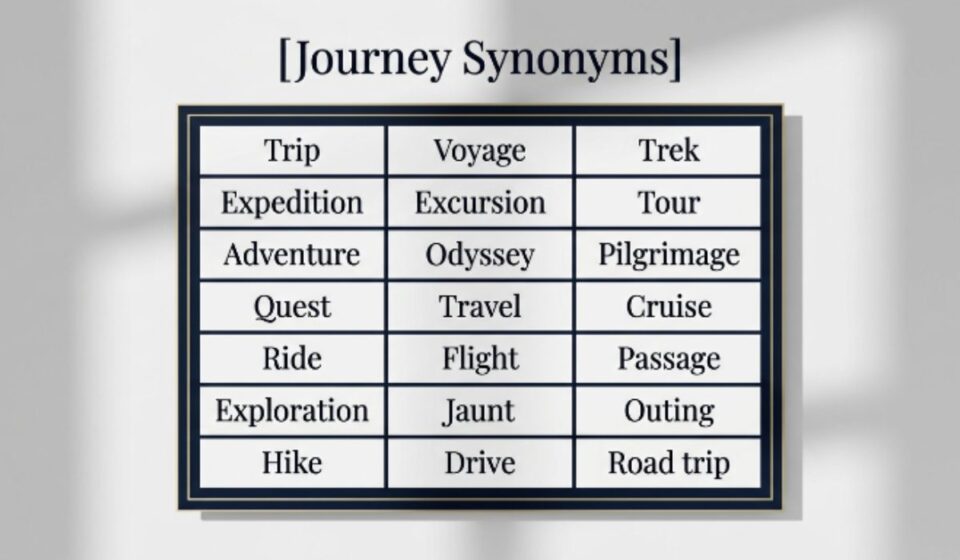
A “trek” through the mountains feels different from a “cruise” along the coast, even though both are technically journeys. This guide gives you 25 real alternatives, along with clear meanings, natural examples, and the situations where each one fits best.
What Does “Journey” Really Mean?
At its core, “journey” means traveling from one place to another, usually over some distance and often over time. It can describe something as simple as a drive to a new city or as big as a life-changing trip across the world.
Here’s a simple example: “Her journey from a small town to a career in medicine took ten years of hard work.” Notice how the word covers both the physical travel and the personal growth behind it. That flexibility is exactly why people overuse it.
Why Look for Alternatives to “Journey”?
“Journey” works fine in casual conversation, but it starts to feel repetitive when you use it again and again in the same email, essay, or story. It also lacks precision. It doesn’t tell your reader if the trip was short or long, difficult or relaxing, by land or by sea.
If you’re writing a travel blog, a personal essay, a work update, or even a text to a friend, choosing a more specific word instantly makes your writing clearer and more interesting. Instead of saying “our journey to the campsite,” you could say “our trek to the campsite,” and the reader immediately understands it wasn’t a quick drive.
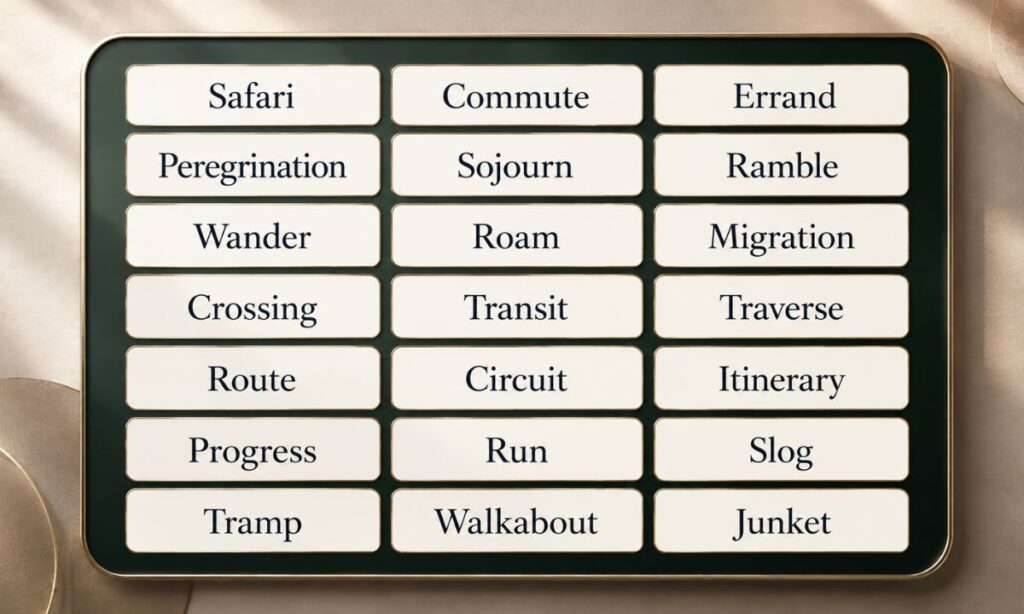
25 Synonyms for “Journey” and How to Use Them
Trip
Meaning: A trip is a simple journey from one place to another, usually with a clear purpose and a planned return. It often refers to short travel, whether for work, fun, shopping, or a weekend break. Unlike words that suggest adventure or difficulty, “trip” feels casual and easy to understand.
People use it every day because it fits almost any type of travel without sounding too formal. Whether you are visiting family, heading to another city, or taking a quick vacation, this word works naturally in almost every conversation.
Example: “We took a quick trip to the coast for the weekend.”
When It Fits: Casual conversations about vacations, weekend escapes, family visits, business travel, or any short journey.
Voyage
Meaning: A voyage is a long journey, most often made across the sea, although it can also describe travel through space. The word has a classic and dramatic feel, making it popular in books, history, and storytelling.
A voyage usually suggests covering a great distance and facing new experiences along the way. Even when people use it in a figurative sense, it often represents growth, discovery, or a life-changing experience.
Example: “The sailors began their voyage across the Atlantic at dawn.”
When It Fits: Stories, historical writing, sea travel, space missions, or any journey that feels long, memorable, or adventurous.
Trek
Meaning: A trek is a long and physically demanding journey, usually completed on foot. It often involves hiking through mountains, forests, deserts, or other challenging landscapes. The word suggests determination, patience, and effort rather than comfort.
When someone describes a journey as a trek, it tells readers that reaching the destination required endurance and commitment. It’s a popular word among hikers, backpackers, and outdoor enthusiasts.
Example: “They completed a two-week trek through the Himalayas.”
When It Fits: Hiking adventures, mountain expeditions, backpacking trips, or any journey that requires significant physical effort.
Expedition
Meaning: An expedition is a carefully planned journey with a clear purpose. Instead of traveling just for fun, people usually organize expeditions to explore unknown places, conduct scientific research, or complete a specific mission. These trips often involve teams, preparation, equipment, and detailed planning. The word carries a professional tone and suggests that every part of the journey has a goal.
Example: “The scientists launched an expedition to study glacier melt.”
When It Fits: Scientific research, exploration projects, archaeological work, wildlife studies, or organized group missions.
Tour
Meaning: A tour is a journey that includes visiting several places rather than staying in one location. Tours are often planned and may follow a schedule, especially when organized by a travel company or guide. People choose tours to experience famous attractions, historical landmarks, museums, or natural sights without worrying about planning every detail themselves. The word also works for concerts or performances where artists travel to different cities.
Example: “We booked a tour of the old city’s historic sites.”
When It Fits: Sightseeing vacations, guided visits, travel packages, educational trips, or visiting multiple destinations on one journey.
Excursion
Meaning: An excursion is a short trip taken for enjoyment, learning, or a particular activity. It usually lasts only a few hours or a single day, making it different from a vacation that includes overnight stays. The word has a relaxed and pleasant feel, often describing outings with schools, families, or tour groups. An excursion focuses more on the experience than the distance traveled.
Example: “The class went on an excursion to the science museum.”
When It Fits: School field trips, family outings, guided day tours, company events, or recreational activities.
Odyssey
Meaning: An odyssey is a long journey filled with challenges, unexpected events, and personal growth. The word comes from ancient literature and now describes any experience that involves overcoming obstacles before reaching a goal. It doesn’t always refer to physical travel. People also use it to describe emotional, educational, or career journeys that take years and change someone’s life along the way. Choosing this word adds depth and emotion to your writing.
Example: “Her career felt like an odyssey through failure and reinvention.”
When It Fits: Personal stories, memoirs, inspirational writing, novels, or any journey involving struggle, discovery, and transformation.
Pilgrimage
Meaning: A pilgrimage is a journey made for religious, spiritual, or deeply personal reasons. Unlike an ordinary vacation, the destination carries special meaning for the traveler.
People often travel to sacred places, historical landmarks, or locations connected to their beliefs and values. Even outside religion, the word can describe visiting a place that holds strong emotional importance or lifelong significance.
Example: “Thousands make the pilgrimage to the temple each year.”
When It Fits: Religious travel, spiritual retreats, meaningful personal visits, or journeys connected to tradition and faith.
Adventure
Meaning: An adventure is an exciting journey filled with surprises, new experiences, and a little uncertainty. It doesn’t have to involve dangerous situations or travel to distant places. Even a simple weekend escape can feel like an adventure when it includes exploring somewhere new or trying something different. The word creates a sense of excitement and curiosity, making travel stories more lively and memorable.
Example: “Their road trip turned into an unexpected adventure through three states.”
When It Fits: Road trips, outdoor activities, vacations, spontaneous travel, family holidays, or any experience where excitement and discovery are part of the journey.
Quest
Meaning: A quest is a journey taken with a clear goal or mission in mind. Instead of traveling simply for enjoyment, the traveler is searching for something important or working toward a specific objective.
While the word is common in stories and fantasy books, people also use it in everyday language to describe personal goals, career ambitions, or meaningful challenges. Calling something a quest makes it sound purposeful and determined.
Example: “He began his quest to find the best coffee in the city.”
When It Fits: Goal-driven journeys, personal challenges, research projects, or figurative searches for success, knowledge, or achievement.
Passage
Meaning: A passage refers to travel from one place to another, especially by sea or air. It can also describe the route taken or the time spent during the journey. Compared to more common travel words, “passage” has a formal and polished feel, making it a good choice for books, travel writing, and historical accounts. It focuses on the act of moving across a distance rather than the destination itself.
Example: “Their passage across the channel took nearly six hours.”
When It Fits: Formal writing, travel stories, sea voyages, air travel, or historical descriptions of movement.
Cruise
Meaning: A cruise is a relaxing journey taken on a large passenger ship, mainly for leisure and entertainment. Instead of rushing from one destination to another, travelers enjoy the experience onboard while stopping at different ports along the way.
Cruises often include dining, shows, activities, and sightseeing, making the journey just as enjoyable as the destinations themselves.
Example: “They booked a cruise along the Mediterranean coast.”
When It Fits: Luxury vacations, family holidays, honeymoon trips, or relaxing travel by sea.
Ride
Meaning: A ride is a short journey made in a vehicle such as a car, bus, bike, motorcycle, or train. It’s one of the most common travel words in everyday English because it’s simple, flexible, and easy to understand. A ride can last just a few minutes or several hours, depending on the situation. The focus is usually on the transportation rather than the destination.
Example: “Can you give me a ride to the airport tomorrow?”
When It Fits: Daily conversations about transportation, commuting, errands, or offering someone a lift.
Flight
Meaning: A flight is travel by airplane from one location to another. The word is direct and widely used when discussing air travel, vacations, business trips, or international journeys.
It can refer to the aircraft’s scheduled trip as well as the experience of flying. Because it clearly identifies the mode of transportation, there’s rarely any confusion about what it means.
Example: “Our flight to Chicago got delayed by two hours.”
When It Fits: Air travel plans, airport discussions, business trips, vacations, or conversations about airline schedules.
Safari
Meaning: A safari is a journey made to observe wild animals in their natural habitat, most commonly in Africa. The word immediately brings to mind open landscapes, national parks, and unforgettable wildlife encounters. While modern safaris focus on photography and conservation, the term still carries a strong sense of excitement, discovery, and outdoor adventure.
Example: “We went on a safari and saw elephants up close.”
When It Fits: Wildlife vacations, nature tours, photography trips, or outdoor adventures focused on animals.
Jaunt
Meaning: A jaunt is a short and enjoyable trip taken mainly for pleasure. It has a cheerful, relaxed tone and often describes spontaneous outings that don’t require much planning. Unlike longer vacations, a jaunt feels lighthearted and informal. People often use the word when talking about quick escapes that add a little fun to an ordinary day.
Example: “We took a quick jaunt to the beach after lunch.”
When It Fits: Weekend outings, casual drives, short vacations, or spontaneous trips with friends or family.
Outing
Meaning: An outing is a short trip taken by a group for a shared activity or event. It usually focuses on spending time together rather than traveling a long distance. Families, coworkers, schools, and clubs often organize outings to enjoy recreation, celebrate special occasions, or strengthen relationships. The word creates a friendly and social feeling.
Example: “The office planned an outing to the local park.”
When It Fits: Family gatherings, company events, school activities, club meetings, or group recreational trips.
Exploration
Meaning: An exploration is a journey made to discover, investigate, or learn about something new. The purpose is curiosity rather than simply reaching a destination. Explorations can involve nature, cities, cultures, history, or even scientific research.
The word suggests an open mind and a willingness to uncover things that haven’t been experienced before.
Example: “Their exploration of the abandoned mine took hours.”
When It Fits: Research, travel focused on discovery, historical investigations, outdoor adventures, or educational experiences.
Migration
Meaning: Migration is the movement of people or animals from one place to another, often because of changing seasons, work, safety, or better opportunities. Unlike a vacation, migration usually involves long-term or permanent relocation. The word is commonly used in history, geography, biology, and discussions about global movement.
Example: “The family’s migration to a new country changed their lives.”
When It Fits: Relocating to a new region, studying animal behavior, historical events, or discussions about population movement.
Commute
Meaning: A commute is the regular journey people make between their home and work, school, or another place they visit frequently. Unlike a vacation or special trip, a commute is part of everyday life. The distance may be short or long, but the journey happens repeatedly as part of a daily routine.
Example: “Her commute takes almost an hour each way.”
When It Fits: Talking about daily travel, transportation routines, work schedules, or school journeys.
Road Trip
Meaning: A road trip is a long journey taken by car, giving travelers the freedom to stop whenever they like and explore along the way. Unlike guided tours, road trips are often flexible and full of unexpected discoveries. Many people enjoy them because the journey itself becomes just as memorable as the destination.
Example: “We’re planning a road trip across the coast this summer.”
When It Fits: Family vacations, holidays with friends, scenic drives, or long-distance travel by car.
Getaway
Meaning: A getaway is a short vacation taken to relax, recharge, and take a break from everyday responsibilities. It usually lasts a few days and focuses on rest rather than sightseeing. Whether it’s a beach resort, a mountain cabin, or a quiet countryside hotel, a getaway offers a chance to disconnect from daily stress.
Example: “They needed a weekend getaway after a stressful month.”
When It Fits: Weekend vacations, romantic escapes, wellness retreats, or short relaxing holidays.
Crossing
Meaning: A crossing refers to traveling over a physical boundary such as a river, sea, bridge, or national border. The word highlights the act of moving from one side to another rather than the entire journey. It’s commonly used in travel writing, history, transportation, and geography.
Example: “The crossing from the mainland to the island took two hours.”
When It Fits: Ferry rides, border travel, sea journeys, river crossings, or historical descriptions of travel.
Sojourn
Meaning: A sojourn is a temporary stay in a place during a longer journey. Instead of focusing on travel itself, the word highlights the period spent living or staying somewhere before moving on. It has a literary and thoughtful tone, making it popular in travel writing and personal essays.
Example: “Their sojourn in Paris lasted just three weeks.”
When It Fits: Travel journals, memoirs, extended vacations, cultural exchanges, or temporary stays abroad.
Wandering
Meaning: Wandering describes moving from place to place without a fixed destination or strict schedule. The experience is guided by curiosity rather than planning. Instead of rushing to reach a particular location, people who wander enjoy discovering hidden streets, scenic views, or unexpected experiences along the way. The word creates a relaxed and adventurous feeling.
Example: “We spent the afternoon wandering through the old streets.”
When It Fits: Leisurely walks, unplanned travel, city exploration, nature outings, or relaxed vacations where enjoying the journey matters more than following an itinerary.
Which Alternative Should You Use?
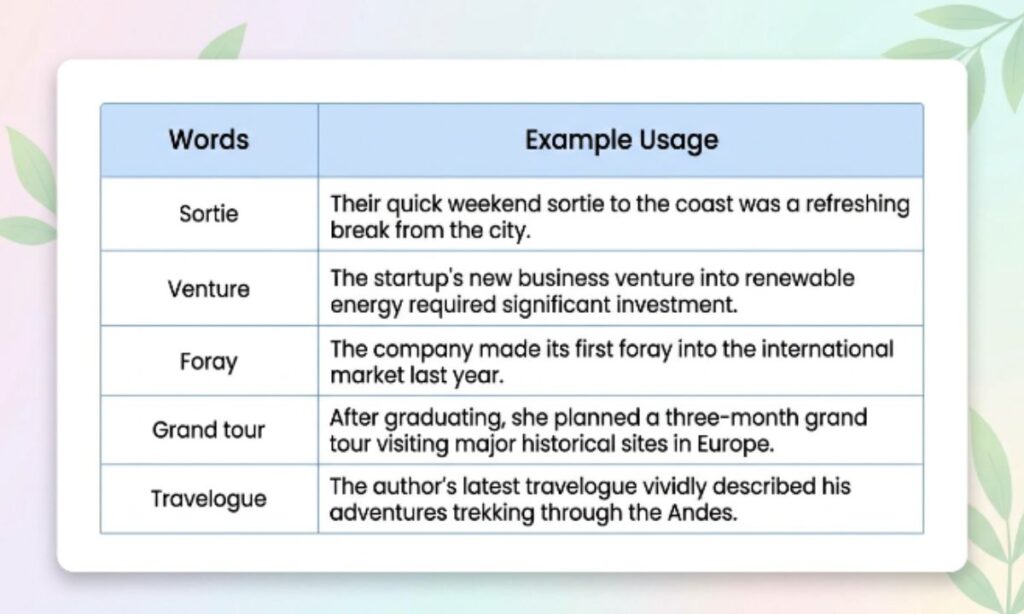
The right word depends on the setting and the tone you want.
For work emails, choose formal, neutral options like “trip,” “expedition,” or “commute.” They sound professional and avoid unnecessary drama.
For friends and casual chats, go with light, fun words like “jaunt,” “road trip,” “getaway,” or “outing.” These match the relaxed tone of everyday conversation.
For school writing or essays, “expedition,” “exploration,” or “odyssey” add depth without sounding too casual.
For everyday conversation, simple words like “trip,” “ride,” or “flight” keep things clear and easy to follow.
Common Mistakes
Many people swap “journey” for a synonym without checking if the meaning actually fits, which can confuse the reader. For example, calling a five-minute drive a “voyage” sounds exaggerated and out of place.
Some writers use overly formal words like “passage” or “peregrination” in casual texts, which feels stiff and unnatural.
Others repeat the same replacement word throughout an entire piece, creating the exact repetition they were trying to avoid.
A common error is ignoring tone. Using “odyssey” for a boring work commute can come across as sarcastic when that wasn’t the intent.
Finally, people often forget that some synonyms only work as nouns or only as verbs, which can lead to awkward sentence structure if used the wrong way.
Quick Guide Table
| Phrase | Formal | Casual | Conversation | |
| Peregrination | Yes | No | Rarely | No |
| Junket | Somewhat | Yes | Rarely | Yes |
| Walkabout | No | Yes | No | Yes |
| Ramble | No | Yes | No | Yes |
| Roam | Somewhat | Yes | Rarely | Yes |
| Traipse | No | Yes | No | Yes |
| Gallivant | No | Yes | No | Yes |
| Circuit | Yes | Somewhat | Yes | Somewhat |
| Hike | Somewhat | Yes | Yes | Yes |
| Drive | Somewhat | Yes | Yes | Yes |
Conclusion
Choosing the right word instead of always saying “journey” makes your writing sharper and more expressive. Each alternative carries its own tone, from the calm feel of a “sojourn” to the excitement of an “adventure.” Next time you sit down to write, pick the word that matches the real feeling of the trip, and your message will land with much more impact.