
Repeating the same word over and over makes writing feel flat. It also makes speech sound stiff, like you’re reading from a script instead of actually talking to someone. “Develop” is one of those words we lean on constantly, in emails, essays, resumes, and everyday chats, until it starts to lose its punch.
Swapping it out for the right alternative does two things. It keeps your reader interested, and it lets you say exactly what you mean instead of settling for a catch-all word. A plant “flourishes.” A skill gets “refined.” A business “expands.” Each of these carries a slightly different shade of meaning, and picking the right one makes your writing sharper and more precise.
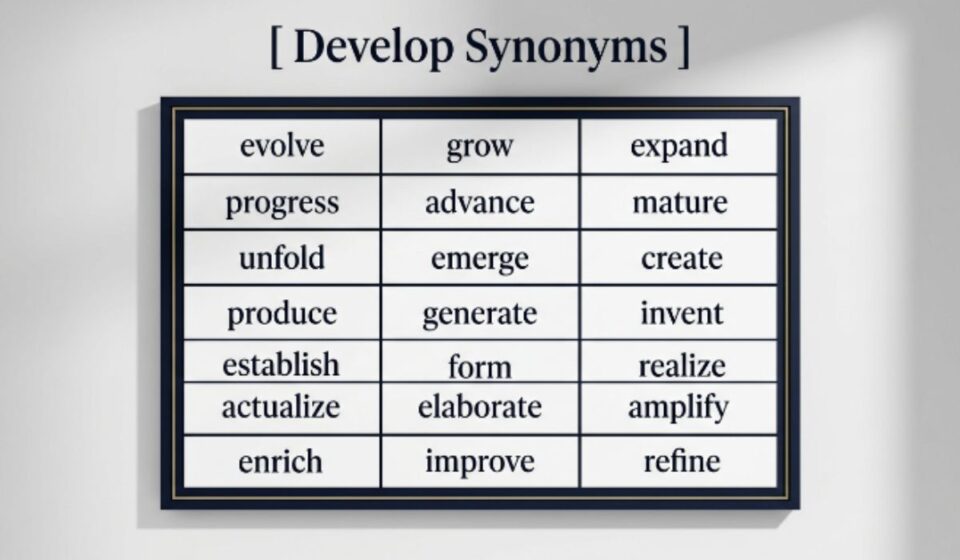
This guide walks through 35 solid alternatives to “develop,” what each one actually means, how to use it naturally, and where it fits best.
What Does “Develop” Really Mean?
At its core, “develop” describes a process of change over time, usually a change toward something more complete, more advanced, or more mature. It can apply to people, ideas, businesses, skills, or even physical things like photographs or land.
Real-life example: A junior employee who started unsure of herself might “develop” into a confident team lead after two years of mentorship and hands-on projects. Nothing happened overnight. It was gradual, and that gradual quality is exactly what “develop” captures.
Why Look for Alternatives to “Develop”?
“Develop” is useful, but it’s also vague. It gets used for everything: developing a habit, developing a country, developing film, developing a headache. When one word has to cover that much ground, it stops telling your reader anything specific.
There’s also the repetition problem. If you use “develop” three times in one paragraph, your writing starts to sound like a rough draft rather than something polished. And in certain contexts, like a resume or a formal report, “develop” can sound generic when a sharper word would show more skill and more thought.
35 Synonyms for “Develop” and How to Use Them
Grow
Meaning: To increase in size, strength, or amount over time. It’s the simplest and most natural stand-in for “develop” when you’re talking about something becoming bigger or stronger. People use it because it feels warm and familiar, almost like watching something come alive.
Example: Her confidence grew with every presentation she gave.
When It Fits: Casual conversations about personal progress or business expansion.
Evolve
Meaning: To change gradually into a different, usually more advanced, form. This word carries a sense of transformation, not just improvement, which makes it feel more thoughtful and deliberate than plain growth.
Example: The company’s strategy evolved as customer needs changed.
When It Fits: Discussing long-term shifts in thinking, technology, or organizational direction.
Expand
Meaning: To become larger in scope, size, or reach. It works especially well for businesses, markets, and ideas that are growing outward rather than just improving in quality.
Example: The bakery expanded into three new neighborhoods last year.
When It Fits: Business updates, growth reports, or talking about reach and scale.
Advance
Meaning: To move forward or make progress, often in skill, rank, or stage of a process. It has a confident, forward-moving energy that suits achievement-focused writing.
Example: His research advanced faster than the team expected.
When It Fits: Career updates, academic progress, or project milestones.
Progress
Meaning: To move steadily toward a goal or a more developed state. It emphasizes the journey itself, not just the outcome, which makes it feel encouraging and steady.
Example: Treatment progressed well over the following months.
When It Fits: Medical updates, project check-ins, or tracking gradual improvement.
Mature
Meaning: To reach a fuller, more developed state, often used for people, relationships, or even wine and cheese. It suggests a natural, unforced kind of growth.
Example: Their partnership matured after years of working together.
When It Fits: Talking about emotional growth, aged products, or long-standing relationships.
Flourish
Meaning: To grow vigorously and thrive, usually in a positive, almost lively way. This word adds warmth and optimism that “develop” simply doesn’t have.
Example: The startup flourished once it found the right investors.
When It Fits: Celebrating success stories or describing thriving communities and gardens.
Blossom
Meaning: To develop in an attractive or fulfilling way, often used for people coming into their own. It carries a gentle, almost poetic feeling of things opening up.
Example: She blossomed into a confident public speaker after joining the debate club.
When It Fits: Personal growth stories, especially about confidence or talent emerging.
Cultivate
Meaning: To deliberately nurture and encourage growth, rather than let it happen on its own. It implies effort and care, which makes it feel intentional and responsible.
Example: The manager cultivated trust by listening to every team member.
When It Fits: Leadership writing, relationship-building, or skill training.
Create
Meaning: To bring something new into existence. Unlike gradual growth, this word signals a starting point, the moment something didn’t exist and then it did.
Example: The team created a new onboarding process from scratch.
When It Fits: Product launches, original projects, or anything built from nothing.
Generate
Meaning: To produce or bring about something, often results, ideas, or income. It has a practical, almost mechanical tone that suits business and technical writing.
Example: The campaign generated more leads than expected.
When It Fits: Marketing reports, technical documentation, or performance summaries.
Invent
Meaning: To create something original that didn’t exist before, usually involving creativity or problem-solving. It carries a spark of ingenuity that plain “develop” lacks.
Example: The engineers invented a cheaper way to filter water.
When It Fits: Innovation stories, patents, or creative breakthroughs.
Produce
Meaning: To make or generate something, typically through effort or a process. It’s neutral and factual, which makes it a safe, clear choice.
Example: The workshop produced dozens of usable prototypes.
When It Fits: Manufacturing updates, academic outputs, or creative output summaries.
Construct
Meaning: To build something piece by piece, often with a clear structure or plan in mind. It suggests care and precision rather than organic growth.
Example: She constructed a compelling argument using three key sources.
When It Fits: Essays, legal writing, or anything built from distinct parts.
Build
Meaning: To create or strengthen something gradually, piece by piece. It’s one of the friendliest, most everyday words on this list, easy to say and easy to picture.
Example: They built a loyal customer base through word of mouth alone.
When It Fits: Everyday conversation, casual writing, and team or relationship contexts.
Establish
Meaning: To set something up so it becomes permanent or accepted. It carries a sense of stability, like something is now official and here to stay.
Example: The founders established a reputation for honest pricing.
When It Fits: Formal writing, business history, or describing trust and credibility.
Form
Meaning: To take shape or come into being, often used for habits, opinions, or relationships. It’s simple and slightly softer than “create.”
Example: A strong friendship formed between the two colleagues.
When It Fits: Everyday storytelling, especially about relationships or habits.
Originate
Meaning: To begin or arise from a particular source. It’s useful when you want to point to where something started rather than describe its growth.
Example: The idea originated during a late-night brainstorming session.
When It Fits: Explaining the background or history of an idea, product, or trend.
Acquire
Meaning: To gain something over time, often a skill, habit, or possession. It has a slightly formal tone that works well in professional or academic writing.
Example: He acquired a working knowledge of Spanish within a year.
When It Fits: Resumes, skill descriptions, or formal progress reports.
Gain
Meaning: To obtain or increase something gradually, like experience, confidence, or ground. It’s short, plain, and easy to drop into almost any sentence.
Example: She gained valuable experience during her internship.
When It Fits: Casual and formal writing alike, especially around skills and experience.
Unfold
Meaning: To reveal itself gradually, often used for events, stories, or plans. It has a slower, more narrative feel, like watching something happen in real time.
Example: The plan unfolded exactly the way they had hoped.
When It Fits: Storytelling, event recaps, or describing situations that reveal themselves over time.
Emerge
Meaning: To come into view or become apparent, often after being hidden or unclear. It suggests something was there all along and finally became visible.
Example: A clear pattern emerged after reviewing the data.
When It Fits: Research findings, trend analysis, or describing new leaders or ideas.
Materialize
Meaning: To become real or actually happen, often after being just a plan or hope. It’s useful when something moves from idea to reality.
Example: Their vacation plans finally materialized after months of saving.
When It Fits: Talking about plans, opportunities, or long-awaited results.
Elaborate
Meaning: To add more detail and depth to something already started. It’s less about starting fresh and more about expanding on what already exists.
Example: The professor asked her to elaborate on the second point.
When It Fits: Academic writing, presentations, or clarifying an idea further.
Amplify
Meaning: To make something stronger, louder, or more noticeable. It works well when the goal is to increase impact rather than just size.
Example: The new ad strategy amplified the brand’s reach significantly.
When It Fits: Marketing, communication strategy, or describing increased influence.
Enrich
Meaning: To improve the quality or value of something, often by adding depth or resources. It carries a warm, generous tone.
Example: The exchange program enriched students’ understanding of other cultures.
When It Fits: Education, personal growth, or describing meaningful improvements.
Refine
Meaning: To improve something by making small, careful adjustments. It suggests precision and attention to detail rather than big leaps.
Example: The chef refined the recipe over several attempts.
When It Fits: Creative work, product design, or polishing a skill.
Strengthen
Meaning: To make something more solid, capable, or resilient. It fits well when talking about relationships, arguments, or systems that need to hold up under pressure.
Example: Regular practice strengthened her negotiation skills.
When It Fits: Team building, personal growth, or reinforcing an argument.
Broaden
Meaning: To make something wider in scope or range. It’s ideal for describing an increase in perspective, options, or reach.
Example: Traveling broadened his understanding of different cultures.
When It Fits: Personal growth stories, education, or expanding opportunities.
Deepen
Meaning: To make something more intense or thorough, often used for understanding, relationships, or knowledge. It suggests going further inward rather than outward.
Example: Their friendship deepened after years of staying in touch.
When It Fits: Emotional or intellectual growth, especially in relationships or study.
Foster
Meaning: To encourage the growth or development of something, usually in a supportive, caring way. It’s a favorite in leadership and education writing.
Example: The teacher fostered curiosity by encouraging open-ended questions.
When It Fits: Leadership, parenting, teaching, or team culture discussions.
Nurture
Meaning: To care for something gently and patiently so it can grow. It has a tender, almost personal quality that suits sensitive topics.
Example: She nurtured the small business through its toughest first year.
When It Fits: Parenting, mentorship, or describing patient, long-term support.
Forge
Meaning: To create something strong through effort, often under pressure or difficulty. It implies determination and resilience.
Example: The two teams forged a solid working relationship after a rocky start.
When It Fits: Describing hard-won achievements or resilient partnerships.
Craft
Meaning: To make something with skill and careful attention. It works well when quality and thoughtfulness matter more than speed.
Example: She crafted a proposal that addressed every concern the client had.
When It Fits: Writing, design, or any work where precision and skill stand out.
Improve
Meaning: To make something better than it was before. It’s the most direct and widely understood word on this list, useful when you just want to keep things simple.
Example: His writing improved noticeably after a semester of feedback.
When It Fits: Everyday conversation, feedback, and progress updates of all kinds.
Which Alternative Should You Use?
The right word depends on your audience and setting.
For work and business writing: “expand,” “establish,” “strengthen,” and “generate” sound confident and results-focused.
For emails: “improve,” “build,” and “refine” keep things clear and professional without sounding stiff.
For school and academic writing: “elaborate,” “acquire,” “evolve,” and “construct” show precision and depth.
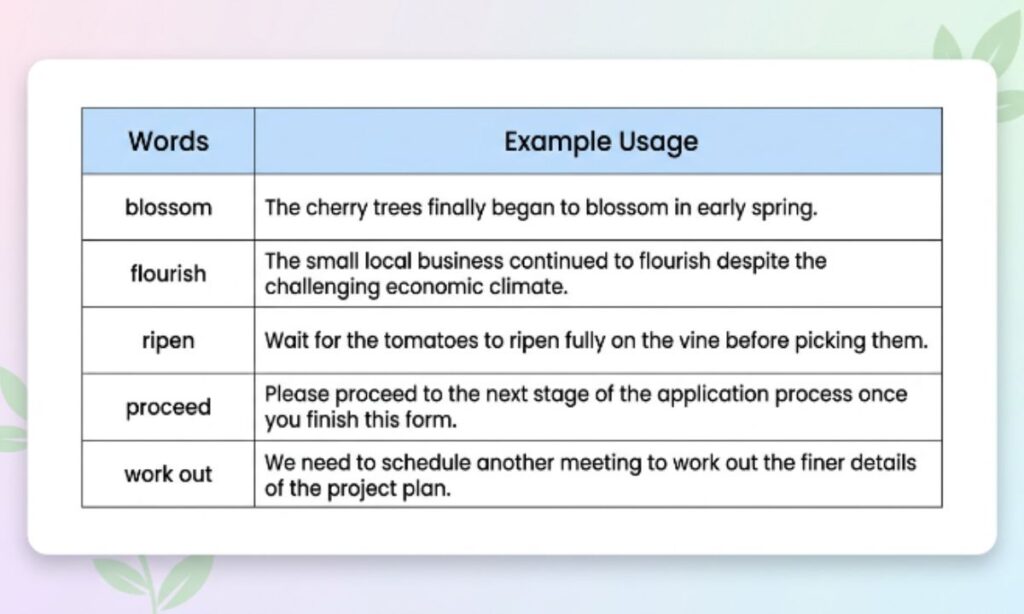
For friends and casual conversation: “grow,” “flourish,” “blossom,” and “figure out” (informally paired with build) feel natural and warm.
For everyday storytelling: “unfold,” “emerge,” and “form” help describe situations as they happen, without sounding like a report.
Common Mistakes
Using a formal word in a casual sentence. Telling a friend you “cultivated a habit of jogging” sounds odd. Save words like “cultivate” and “forge” for more formal contexts.
Choosing a word that doesn’t match the type of change. “Blossom” works for personal growth, not for a company’s quarterly earnings. Match the word to what’s actually happening.
Overcorrecting and avoiding “develop” completely. Sometimes “develop” is still the clearest word. Don’t force a fancier synonym just to avoid repetition if it makes the sentence harder to read.
Ignoring connotation. Words like “forge” suggest struggle or effort, while “flourish” suggests ease. Picking the wrong one can send a mixed signal about how something actually happened.
Repeating the same synonym too often. Swapping “develop” for “grow” and then using “grow” five more times creates the same problem you were trying to fix. Mix it up.
Quick Comparison Table
| Phrase | Formal | Casual | Conversation | |
| Grow | Yes | Yes | Yes | Yes |
| Evolve | Yes | No | Yes | No |
| Expand | Yes | No | Yes | Yes |
| Advance | Yes | No | Yes | No |
| Progress | Yes | No | Yes | Yes |
| Mature | Yes | No | Yes | No |
| Flourish | Yes | Yes | No | Yes |
| Blossom | No | Yes | No | Yes |
| Cultivate | Yes | No | Yes | No |
| Create | Yes | Yes | Yes | Yes |
| Generate | Yes | No | Yes | No |
| Invent | Yes | Yes | Yes | Yes |
| Produce | Yes | No | Yes | No |
| Construct | Yes | No | Yes | No |
| Build | Yes | Yes | Yes | Yes |
| Establish | Yes | No | Yes | No |
| Form | Yes | Yes | Yes | Yes |
| Originate | Yes | No | Yes | No |
| Acquire | Yes | No | Yes | No |
| Gain | Yes | Yes | Yes | Yes |
| Unfold | No | Yes | No | Yes |
| Emerge | Yes | No | Yes | Yes |
| Materialize | Yes | No | Yes | No |
| Elaborate | Yes | No | Yes | No |
| Amplify | Yes | No | Yes | No |
| Enrich | Yes | No | Yes | No |
| Refine | Yes | No | Yes | No |
| Strengthen | Yes | Yes | Yes | Yes |
| Broaden | Yes | No | Yes | No |
| Deepen | Yes | Yes | Yes | Yes |
| Foster | Yes | No | Yes | No |
| Nurture | Yes | Yes | No | Yes |
| Forge | Yes | No | Yes | No |
| Craft | Yes | Yes | Yes | Yes |
| Improve | Yes | Yes | Yes | Yes |
Conclusion
“Develop” works fine on its own, but it can’t carry every sentence. The right synonym adds precision, tone, and a little bit of personality to your writing. Keep this list nearby, pick the word that matches what’s actually happening, and your writing will sound sharper without any extra effort.