
Using the same word over and over makes your writing feel flat. “History” is one of those words we lean on constantly, in emails, essays, and everyday conversation. But swapping it out for the right alternative can make your sentence sharper, more specific, and more interesting to read. This guide walks through 35 solid alternatives, when to use them, and why they work.
What Does “History” Really Mean?
At its core, “history” refers to events that happened in the past, or a record of those events. If someone says, “This company has a long history in the auto industry,” they mean the company has existed and operated for a long time, with a track record you can look back on. It’s simple: history is the story of what came before now.
Why Look for Alternatives to “History”?
“History” is a useful word, but it’s also a generic one. If you use it in every paragraph of a report or every other sentence in an essay, your writing starts to sound repetitive and a little lazy. The word also doesn’t always capture the tone you want. “Chronicle” sounds formal and detailed.
“Saga” sounds dramatic. “Background” sounds neutral and professional. Choosing the right synonym helps your writing match the mood and context you’re going for.
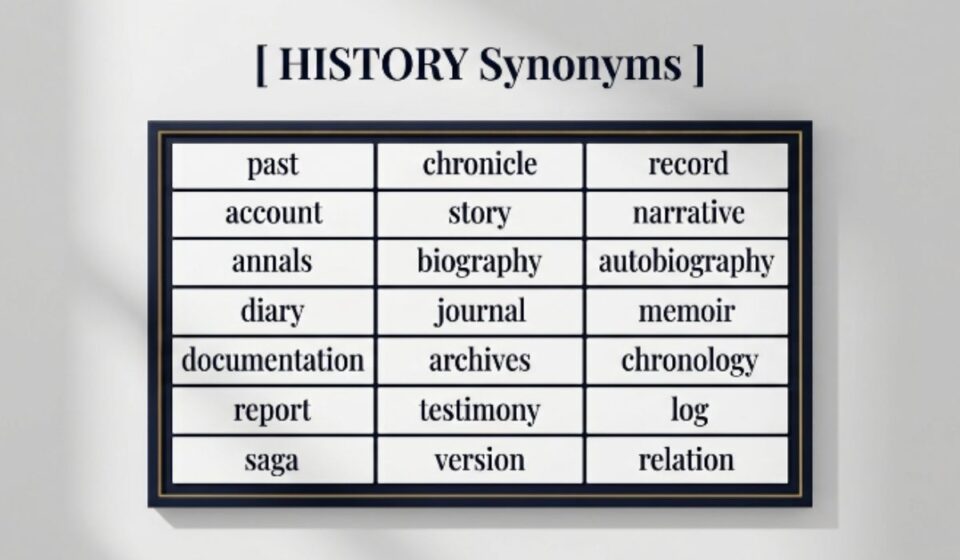
35 Synonyms for “History” and How to Use Them
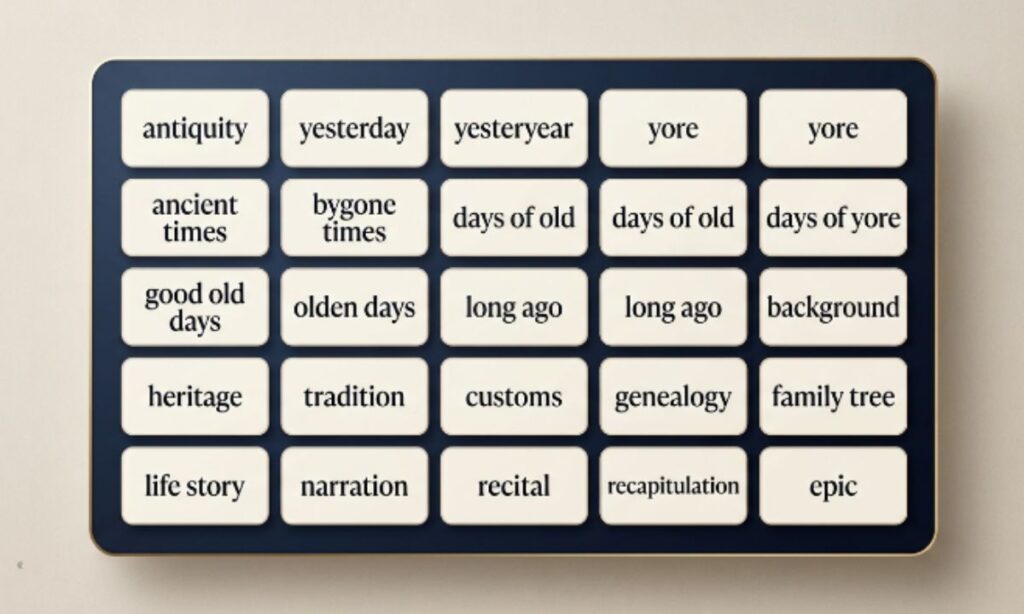
Past
Meaning: The time and events that happened before now. It’s the broadest and most common substitute for “history.” It carries a quiet, reflective tone and works in almost any context without sounding forced.
Example: Her past includes years of volunteer work in disaster relief.
When It Fits: Everyday conversation and casual writing.
Record
Meaning: A documented account of events, achievements, or facts. It leans toward accuracy and evidence, which gives it a more official feel than “history.”
Example: The team has an impressive record of winning three championships in a row.
When It Fits: Sports, business performance, and formal reports.
Chronicle
Meaning: A detailed, often chronological account of events as they happened. It signals thoroughness and gives writing a slightly literary, old-fashioned feel.
Example: The book is a chronicle of the city’s rise from a small port to a major trade hub.
When It Fits: Books, documentaries, and long-form storytelling.
Annals
Meaning: Historical records, often organized year by year. It’s a formal and somewhat academic word that suggests careful documentation.
Example: Her achievements will be remembered in the annals of the university.
When It Fits: Academic writing and formal tributes.
Story
Meaning: An account of events, real or imagined, told narratively. It feels warm and personal, making the past sound approachable rather than distant.
Example: Every scar on that old house tells a story about the family that lived there.
When It Fits: Casual conversation and creative writing.
Narrative
Meaning: A spoken or written account that connects events into a coherent sequence. It works well when you want to emphasize how events are framed or interpreted, not just listed.
Example: The documentary offers a new narrative around the region’s independence movement.
When It Fits: Media, journalism, and academic analysis.
Biography
Meaning: A detailed account of someone’s life, usually written by another person. It’s specific to individuals and works best when you’re focused on a person rather than an event or organization.
Example: The biography reveals details about the author’s early struggles before fame.
When It Fits: Books, articles, and profiles about a specific person.
Autobiography
Meaning: A person’s life story written by themselves. It carries a personal, first-hand quality that “history” can’t match.
Example: In her autobiography, she describes the exact moment she decided to become a pilot.
When It Fits: Personal writing and published memoirs.
Memoir
Meaning: A personal account focused on specific memories or a particular period of someone’s life, rather than the whole life story. It feels intimate and reflective.
Example: His memoir focuses only on the five years he spent living abroad.
When It Fits: Personal essays and reflective writing.
Diary
Meaning: A daily personal record of events and thoughts. It’s informal and private in tone, making it perfect for describing someone’s day-to-day past.
Example: The soldier’s diary gives a raw, honest picture of life during the war.
When It Fits: Personal writing and historical research based on daily records.
Journal
Meaning: A regular written record, similar to a diary but often used in more professional or reflective contexts. It sounds slightly more structured than “diary.”
Example: She kept a journal of every decision made during the project’s first year.
When It Fits: Work logs, travel writing, and personal reflection.
Archives
Meaning: Collected records or documents kept for future reference. It emphasizes storage and preservation rather than storytelling.
Example: The museum’s archives hold letters written by the town’s original settlers.
When It Fits: Research, libraries, and institutional writing.
Chronology
Meaning: The arrangement of events in the order they occurred. It’s a precise word that works when timing and sequence matter more than the story itself.
Example: The report includes a full chronology of the negotiations, from the first meeting to the final deal.
When It Fits: Legal, business, and technical writing.
Report
Meaning: A structured account of events, often prepared for a specific audience. It sounds neutral and factual, ideal for professional communication.
Example: The annual report outlines the company’s growth history over the past decade.
When It Fits: Business, workplace emails, and formal updates.
Testimony
Meaning: A firsthand account, often given as evidence or proof. It carries weight and credibility, since it implies the speaker witnessed events directly.
Example: Her testimony gave the committee a clearer picture of what really happened that night.
When It Fits: Legal settings, interviews, and personal accounts of events.
Log
Meaning: A regularly updated record of activities or events. It’s practical and no-frills, often used for tracking progress over time.
Example: The pilot checked the flight log before reviewing the aircraft’s maintenance history.
When It Fits: Technical writing, work logs, and tracking systems.
Saga
Meaning: A long, often dramatic story involving many events or a long span of time. It adds a sense of scale and intensity that “history” doesn’t carry on its own.
Example: The lawsuit turned into a five-year saga that drained both companies’ resources.
When It Fits: Storytelling and describing long, eventful situations.
Background
Meaning: The circumstances or events that led up to the present situation. It’s commonly used to explain context rather than tell a full story.
Example: Before we start the meeting, let me give you some background on the client relationship.
When It Fits: Work meetings, emails, and introductions.
Heritage
Meaning: Traditions, values, or history passed down through generations. It has an emotional weight tied to identity and belonging.
Example: The festival celebrates the town’s heritage as a fishing community.
When It Fits: Culture, family, and community discussions.
Legacy
Meaning: The lasting impact or influence left behind by a person, event, or organization. It focuses on what remains rather than the events themselves.
Example: The scientist’s legacy includes decades of research that shaped modern medicine.
When It Fits: Tributes, obituaries, and discussions of long-term impact.
Tradition
Meaning: Customs or practices passed down over time, often tied to culture or belief. It highlights continuity rather than a single sequence of events.
Example: Passing the family business down to the next generation has become a tradition.
When It Fits: Family, culture, and organizational customs.
Timeline
Meaning: A visual or written sequence of events shown in the order they occurred. It’s direct and easy to follow, especially useful for complex events.
Example: The presentation included a timeline of the product’s development from idea to launch.
When It Fits: Presentations, project updates, and explanations of complex events.
Account
Meaning: A description or report of events, usually from a specific point of view. It sounds objective and is often used when accuracy matters.
Example: Give me your account of what happened during the shift change.
When It Fits: Workplace discussions and factual explanations.
Tale
Meaning: A story, often with an entertaining or slightly exaggerated quality. It has a light, storytelling feel that suits informal contexts.
Example: My grandfather loves telling the tale of how he crossed the border with nothing but a suitcase.
When It Fits: Casual storytelling and family conversations.
Epic
Meaning: A grand, often heroic story spanning a long period or major events. It’s used when the scale of events feels larger than life.
Example: Their journey from bankruptcy to industry leader reads like an epic.
When It Fits: Dramatic storytelling and describing major achievements.
Legend
Meaning: A story passed down over time, often blending fact with exaggeration or myth. It suggests the events have taken on a larger cultural meaning.
Example: The legend of the old mill still gets told at every town gathering.
When It Fits: Folklore, local stories, and culturally significant tales.
Genealogy
Meaning: The study or record of a family’s ancestry and lineage. It’s specific to family history and works only in that context.
Example: She spent months researching her family’s genealogy before the reunion.
When It Fits: Family research and ancestry discussions.
Life story
Meaning: The complete account of someone’s experiences from birth to the present. It’s simple, warm, and easy to understand.
Example: He shared his life story with the students during career week.
When It Fits: Personal introductions and motivational talks.
Case history
Meaning: A detailed record of a specific situation, often used in medical or professional settings. It’s precise and factual by design.
Example: The doctor reviewed the patient’s case history before recommending treatment.
When It Fits: Medical, legal, and clinical writing.
Track record
Meaning: A person’s or organization’s past performance and achievements. It’s commonly used to judge reliability or skill.
Example: The contractor has a solid track record of finishing projects on time.
When It Fits: Business decisions, hiring, and reviews.
Bygone days
Meaning: A poetic way to refer to the past, especially with a sense of nostalgia. It works best when you want to add warmth or sentiment.
Example: She often talks about the bygone days when the whole street knew each other by name.
When It Fits: Nostalgic writing and personal storytelling.
Antiquity
Meaning: The distant past, often referring to ancient civilizations or very old periods. It’s formal and specific to long stretches of time.
Example: The artifacts date back to antiquity, long before the region had a written language.
When It Fits: Academic, historical, and archaeological writing.
Yesteryear
Meaning: A literary term for the recent past, often used with a nostalgic or romantic tone. It adds character to writing that feels too plain otherwise.
Example: The old diner still has the charm of yesteryear, right down to the vinyl booths.
When It Fits: Creative and descriptive writing.
Documentation
Meaning: Written or recorded evidence of events, decisions, or processes. It’s practical and used mainly in professional or technical settings.
Example: The audit required documentation of every transaction from the past five years.
When It Fits: Business, legal, and technical contexts.
Recap
Meaning: A summary of past events, usually meant to refresh someone’s memory quickly. It’s informal and efficient.
Example: Before we continue, let’s do a quick recap of what we covered last week.
When It Fits: Meetings, presentations, and casual updates.
Which Alternative Should You Use, and When?
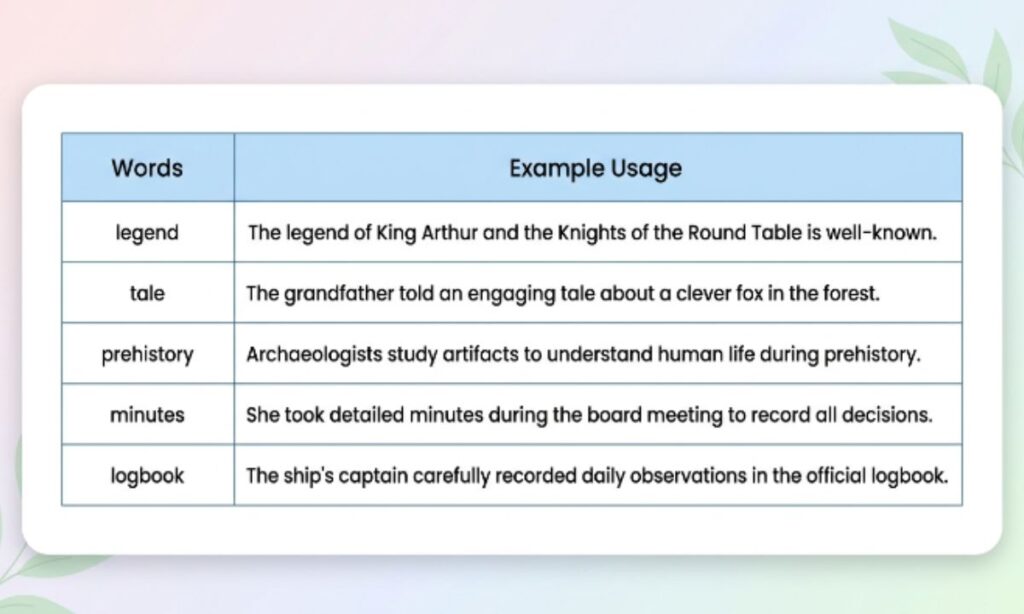
The right word depends on your setting.
For work and emails, “background,” “record,” “report,” and “track record” sound professional without feeling stiff. They keep things factual and easy to skim.
For school and academic writing, “chronology,” “narrative,” “annals,” and “antiquity” add precision and depth, especially in essays or research papers.
For friends and casual conversation, “story,” “tale,” “past,” and “recap” feel natural and easy to say out loud.
For emotional or personal writing, “memoir,” “legacy,” “heritage,” and “bygone days” carry more warmth and meaning than “history” ever could.
Common Mistakes
Using formal words in casual conversation. Saying “let me share my annals with you” instead of “let me tell you about my past” sounds unnatural and forced.
Ignoring the emotional tone of a word. “Saga” implies drama and struggle, so using it for something simple, like a quick errand, feels exaggerated.
Confusing personal and general history. “Genealogy” only applies to family lineage, not to a company’s history or a country’s past.
Overusing one synonym instead of “history.” Replacing every instance of “history” with the same word, like “past,” creates the same repetition problem you were trying to fix.
Mixing tone within one piece of writing. Switching between casual words like “tale” and formal ones like “documentation” in the same paragraph can confuse the reader.
Quick Comparison Table
| Phrase | Formal | Casual | Conversation | |
| Past | Yes | Yes | Yes | Yes |
| Record | Yes | No | Yes | Yes |
| Chronicle | Yes | No | No | No |
| Annals | Yes | No | No | No |
| Story | No | Yes | No | Yes |
| Narrative | Yes | No | Yes | No |
| Biography | Yes | Yes | No | Yes |
| Autobiography | Yes | Yes | No | Yes |
| Memoir | Yes | Yes | No | No |
| Diary | No | Yes | No | Yes |
| Journal | Yes | Yes | Yes | No |
| Archives | Yes | No | Yes | No |
| Chronology | Yes | No | Yes | No |
| Report | Yes | No | Yes | Yes |
| Testimony | Yes | No | No | No |
| Log | Yes | No | Yes | No |
| Saga | No | Yes | No | Yes |
| Background | Yes | Yes | Yes | Yes |
| Heritage | Yes | Yes | No | Yes |
| Legacy | Yes | Yes | No | Yes |
| Tradition | Yes | Yes | No | Yes |
| Timeline | Yes | No | Yes | Yes |
| Account | Yes | No | Yes | Yes |
| Tale | No | Yes | No | Yes |
| Epic | No | Yes | No | Yes |
| Legend | No | Yes | No | Yes |
| Genealogy | Yes | No | No | No |
| Life story | No | Yes | No | Yes |
| Case history | Yes | No | Yes | No |
| Track record | Yes | Yes | Yes | Yes |
| Bygone days | No | Yes | No | Yes |
| Antiquity | Yes | No | No | No |
| Yesteryear | No | Yes | No | No |
| Documentation | Yes | No | Yes | No |
| Recap | No | Yes | Yes | Yes |
Conclusion
Swapping out “history” for the right synonym makes your writing clearer and more engaging. Each alternative carries its own tone, from formal words like “annals” to warm ones like “heritage.” Once you get a feel for the differences, choosing the right word becomes second nature.