
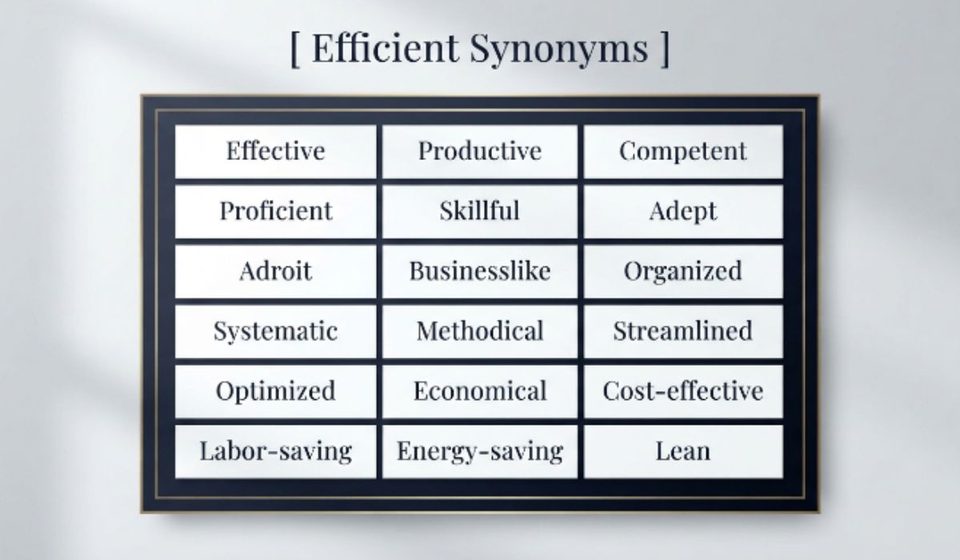

Ever notice how “efficient” shows up in almost every resume, business email, and performance review? It’s a solid word, but it gets tired fast. The right synonym can sharpen your writing, match your tone, and say exactly what you mean instead of settling for a catch-all term. Here’s the full breakdown.
What Does “Efficient” Actually Mean?
At its core, “efficient” describes something that gets results while wasting as little as possible: time, money, effort, or materials.
Think of a process, a person, or a system that does more with less. That’s the idea behind every synonym on this list.
The Real Definition
Most dictionaries agree on this: efficient means achieving maximum output with minimum waste of resources. It’s not about speed alone. It’s about the ratio between what you put in and what you get out.
Efficient in Everyday Use
You’ll hear it describing a manager who runs tight meetings, a car that sips fuel instead of guzzling it, or software that loads instantly. The common thread is always the same: less waste, more results.
Efficient vs. Effective: A Quick Look
These two get mixed up constantly. Efficient is about how something gets done. “Effective” is about whether it gets done at all. You can run an efficient meeting that never solves the actual problem, and you can solve the problem in a messy, inefficient way. They’re related, but they’re not the same thing.
How to Choose the Right Synonym
Not every synonym for “efficient” carries the same weight. Some lean toward speed, some toward skill, some toward saving money. Before you swap a word in, ask what you’re actually trying to say: fast, frugal, skilled, or organized. That’s the fastest way to pick a word that fits instead of one that just sounds similar.
30 Alternative Phrases for “Efficient”
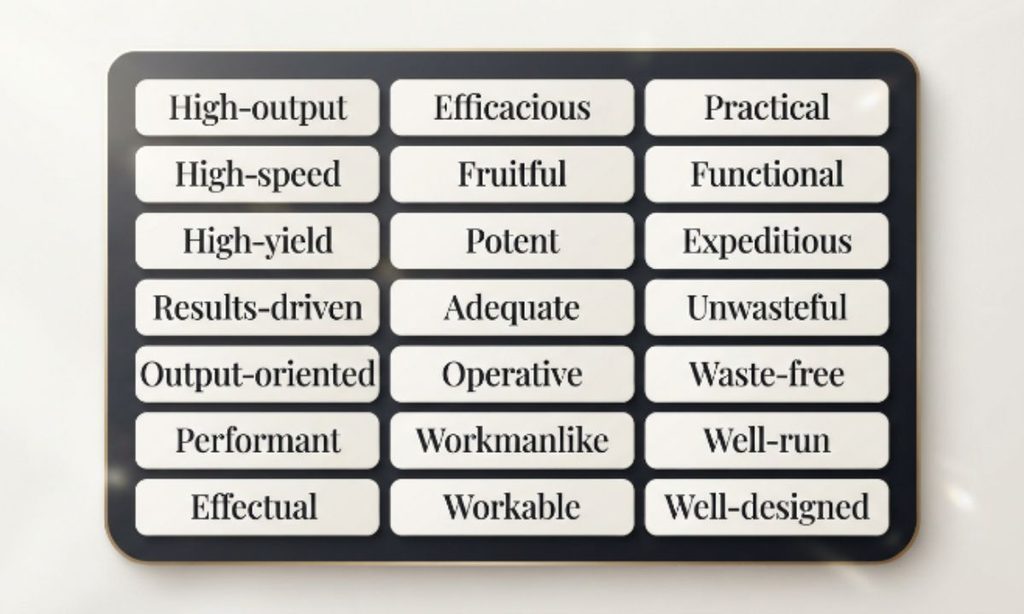
Effective
Meaning: Producing the intended result, regardless of how many resources it took to get there. “Effective” carries a confident, outcome-first tone. It tells your reader that something worked, full stop, without getting into the details of process. That makes it a strong word for results-driven writing.
- The new onboarding process is more effective than the old one.
- Her effective leadership style kept the team focused during the merger.
When It Fits: Use it when you care more about the outcome than the method behind it.
Productive
Meaning: Generating a high volume of useful output relative to the time or effort invested. This word feels energetic and action-oriented. It suggests momentum and forward motion, which makes it a natural fit for workplace writing and personal goal-setting.
- We had a productive quarter despite the smaller team.
- A productive morning routine sets the tone for the rest of the day.
When It Fits: Great for describing work sessions, teams, or habits that generate visible results.
Capable
Meaning: Having the skill or ability to handle a task well. Capable has a grounded, reassuring tone. It’s less flashy than “expert,” but it signals reliability, which matters when you’re recommending someone or describing a tool that simply gets the job done.
- She’s a capable project manager who never misses a deadline.
- The software is capable of handling large datasets without lag.
When It Fits: Ideal for references, reviews, and product descriptions where trust matters more than flash.
Competent
Meaning: Possessing the necessary skill or knowledge to do something properly. “Competent” is a steady, professional word. It doesn’t oversell, which makes it useful when you want to sound measured rather than enthusiastic. It communicates baseline trust without exaggeration.
- The new hire is competent enough to work unsupervised after week one.
- A competent accountant will catch errors before they become problems.
When It Fits: Use it in formal evaluations or when precision matters more than praise.
Proficient
Meaning: Skilled and practiced enough to perform something with ease. “Proficient” suggests real experience behind the skill, not just natural talent. It gives your writing a sense of earned competence, which reads well in resumes and technical descriptions.
- He’s proficient in three programming languages.
- The team became proficient with the new system within a week.
When It Fits: Best for describing learned skills, especially technical or language-based ones.
Organized
Meaning: Arranged in a clear, logical, and orderly way. This word feels tidy and calm. It reassures the reader that nothing is falling through the cracks, which makes it useful anywhere structure and clarity matter.
- Her organized filing system saves the whole office time.
- An organized approach to the launch kept everyone on the same page.
When It Fits: Perfect for describing workflows, spaces, or people who manage complexity well.
Well-Organized
Meaning: Arranged with clear structure so everything runs smoothly. A slightly stronger version of “organized,” this phrase adds emphasis without sounding forced. It works well when you want to highlight structure as a deliberate strength, not an accident.
- The conference was well-organized from check-in to closing remarks.
- A well-organized inbox makes Monday mornings a lot less stressful.
When It Fits: Use it when structure itself is the achievement worth pointing out.
Systematic
Meaning: Done according to a fixed plan or method, in a consistent order. “Systematic” has a precise, almost scientific tone. It suggests repeatability, which is exactly what you want when describing a process meant to be followed the same way every time.
- They took a systematic approach to testing every feature before launch.
- A systematic review of the budget uncovered several unnecessary expenses.
When It Fits: Best for processes, audits, or research where consistency is the point.
Methodical
Meaning: Careful, orderly, and following a clear step-by-step approach. “Methodical” carries a patient, deliberate feel. It suggests someone who doesn’t skip steps, which builds a sense of trust and thoroughness in the reader’s mind.
- Her methodical planning meant nothing was left to chance.
- The detective took a methodical approach to reviewing the evidence.
When It Fits: Use it when patience and precision matter more than speed.
Streamlined
Meaning: Simplified and made faster by removing unnecessary steps. This word feels modern and sleek. It’s popular in business writing because it implies improvement, not just efficiency: something used to be clunky, and now it isn’t.
- We streamlined the approval process to cut waiting time in half.
- A streamlined checkout page increased conversions significantly.
When It Fits: Great for describing improvements to existing systems or workflows.
Economical
Meaning: Using resources, especially money, carefully and without waste. “Economical” has a practical, no-nonsense tone. It signals thoughtful spending rather than cheapness, which makes it a safer word choice when discussing budgets or value.
- The economical design cut material costs without sacrificing quality.
- Choosing the smaller engine was the more economical option long-term.
When It Fits: Best for cost-related decisions where value matters more than luxury.
Cost-Effective
Meaning: Delivering good results relative to the money spent. This phrase is direct and business-friendly. It answers a question decision-makers actually ask: Was this worth the cost? That makes it persuasive in proposals and pitches.
- Outsourcing this task turned out to be more cost-effective than hiring in-house.
- The clinic found a cost-effective way to expand without new equipment.
When It Fits: Use it in budgets, proposals, or anywhere ROI needs to be front and center.
Time-Saving
Meaning: Reducing the amount of time needed to complete a task. Time-saving speaks directly to a universal pain point: not having enough hours in the day. It’s an easy word to connect with because everyone values their time.
- The new template is a time-saving tool for the whole marketing team.
- Batch cooking is a time-saving habit for busy weeknights.
When It Fits: Ideal for tools, habits, or shortcuts that free up someone’s schedule.
Labor-Saving
Meaning: Reducing the physical or manual effort required for a task. This phrase has a slightly older, industrial feel, which makes it useful when describing machines, tools, or processes that replace manual work.
- The new equipment is a labor-saving upgrade for the warehouse floor.
- Dishwashers were once marketed purely as labor-saving devices.
When It Fits: Best for physical work, manufacturing, or household tasks.
Energy-Efficient
Meaning: Using less energy to achieve the same or better result. This word carries a modern, sustainability-conscious tone. It’s specific enough to be useful in technical writing while still being accessible to a general audience.
- We switched to energy-efficient lighting throughout the building.
- The energy-efficient model pays for itself within two years.
When It Fits: Use it for appliances, buildings, or systems where power consumption matters.
Lean
Meaning: Operating with minimal waste, especially in business or manufacturing. Lean feels sharp and disciplined. It’s become shorthand for a whole philosophy of cutting excess, so it carries more weight than a simple description; it signals a mindset.
- The startup runs a lean operation with a team of just five.
- Lean manufacturing helped the factory cut waste by a third.
When It Fits: Great for startups, manufacturing, or any team proud of doing more with less.
Optimized
Meaning: Adjusted and refined to work as effectively as possible. “Optimized” has a technical, results-focused tone. It implies ongoing improvement rather than a one-time fix, which fits well in contexts involving data or performance tuning.
- The website was optimized for faster load times on mobile.
- Her training plan was optimized around her recovery schedule.
When It Fits: Best for technical, digital, or performance-based improvements.
Results-Driven
Meaning: Focused primarily on achieving measurable outcomes. This phrase has a confident, business tone. It tells the reader that the process matters less than the scoreboard, which can be persuasive in performance-focused writing.
- The agency takes a results-driven approach to every campaign.
- He’s a results-driven leader who measures success in numbers, not effort.
When It Fits: Use it in performance reviews, sales, or leadership descriptions.
High-Performing
Meaning: Consistently delivering strong results above the norm. High-performing has an energetic, competitive edge. It’s a word that implies comparison, so it works best when you’re highlighting something that stands out from the pack.
- The high-performing team hit every target this year.
- We invested in a high-performing engine to cut delivery times.
When It Fits: Best for teams, employees, or equipment that outshine expectations.
Skilled
Meaning: Having the ability and training to do something well. “Skilled” is a warm, respectful word. It acknowledges effort and learning behind the ability, which makes it a good choice when you want to credit someone’s development.
- A skilled electrician can spot problems most people would miss.
- Years of practice made her a skilled negotiator.
When It Fits: Use it when you want to recognize hard-earned ability.
Adept
Meaning: Very skilled or proficient at something, often quickly or naturally. Adept has a slightly more polished, literary feel than “skilled.” It suggests ease and confidence, which makes it a good fit for writing that wants to sound a bit more refined.
- He’s adept at reading a room before a negotiation even starts.
- The team is adept at handling last-minute changes.
When It Fits: Great for formal writing where you want a touch more sophistication.
Expert
Meaning: Having authoritative knowledge or skill in a particular area. Expert carries weight and credibility. It’s a strong claim, so it works best when the skill level genuinely justifies it, since overusing it can feel exaggerated.
- She’s an expert in supply chain logistics.
- The expert repair crew had the system running within an hour.
When It Fits: Use it when true mastery, not just competence, is the point.
Businesslike
Meaning: Practical, efficient, and focused, in the manner of a well-run business. Businesslike has a no-frills, professional tone. It suggests seriousness and focus, which can be a compliment or a slight critique depending on context, so use it carefully.
- The negotiation was brisk and businesslike, with no wasted time.
- Her businesslike manner earned respect from clients immediately.
When It Fits: Best for describing tone or demeanor in professional settings.
Practical
Meaning: Sensible and useful, focused on what actually works. Practical feels grounded and honest. It strips away theory and focuses on real-world function, which makes it relatable and easy for readers to trust.
- We need a practical solution, not a perfect one.
- Her practical advice saved us weeks of trial and error.
When It Fits: Use it when usefulness matters more than elegance or ambition.
Functional
Meaning: Working properly and serving its intended purpose. “Functional” is a modest, honest word. It doesn’t promise excellence, just reliability, which makes it a fair and accurate choice when something simply does its job.
- The old machine is still functional, even if it’s outdated.
- A functional design beats a beautiful one that breaks constantly.
When It Fits: Great for describing tools or systems where reliability matters more than style.
Expeditious
Meaning: Done quickly and efficiently, without unnecessary delay. Expeditious has a formal, slightly old-fashioned tone. It sounds precise and official, which makes it a good fit for legal, government, or highly formal business writing.
- The claim was processed in an expeditious manner.
- We appreciate your expeditious response to our request.
When It Fits: Best for formal correspondence or official documentation.
Adaptable
Meaning: Able to adjust quickly and effectively to new conditions. “Adaptable” has a flexible, forward-looking tone. It suggests resilience, which is a valuable trait to highlight in fast-changing environments or unpredictable roles.
- An adaptable team can handle sudden shifts in strategy.
- The software is adaptable enough to fit almost any workflow.
When It Fits: Use it when flexibility matters as much as raw skill.
Resourceful
Meaning: Able to find quick, clever solutions with limited resources. “Resourceful” has a scrappy, problem-solving energy. It highlights creativity under pressure, which makes it a flattering and memorable word choice for people and small teams.
- She found a resourceful way to cut shipping costs by 20 percent.
- The resourceful crew fixed the leak with what they had on hand.
When It Fits: Great for describing people who solve problems creatively with limited means.
High-Output
Meaning: Producing a large amount of work or product relative to input. “High-output” has a numbers-focused, industrial tone. It works well in contexts where volume of production genuinely matters, like manufacturing or content creation.
- The high-output printer handles the entire office’s needs.
- Their high-output writing schedule produces three articles a week.
When It Fits: Best for describing volume-based performance in production settings.
Effectual
Meaning: Producing the intended or decisive result. Effectual is a formal, precise cousin of “effective.” It’s less common in everyday speech, which gives it a slightly literary or legal tone worth using sparingly.
- The new policy proved effectual in reducing complaints.
- His effectual handling of the crisis earned him a promotion.
When It Fits: Use it in formal writing where “effective” feels too casual.
Synonyms for “Efficiency” (Noun Form)
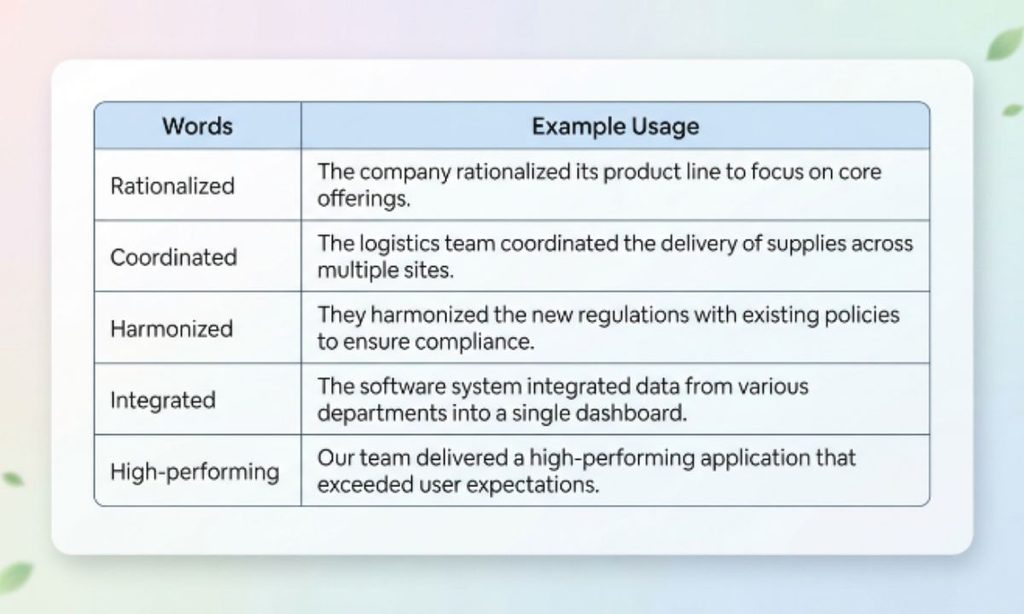
Sometimes you need the noun, not the adjective. Here are the top alternatives:
| Synonym | Best Used For |
| Effectiveness | Measuring how well goals are met |
| Productivity | Output relative to time or effort |
| Capability | General ability to perform well |
| Competence | Skill level in a specific area |
| Efficacy | Especially common in medical or scientific writing |
Common Mistakes to Avoid
A few traps trip up even careful writers:
Losing the “minimal waste” nuance. Words like “fast” or “quick” describe speed, not efficiency. Efficient work can be slow and still waste nothing.
Overusing formal terms. “Expeditious” and “effectual” sound stiff in casual writing. Save them for formal contexts.
Confusing efficient with cheap. Cost-effective doesn’t always mean cheap. It means the value matches or exceeds the cost.
Frequently Asked Questions
What’s a good synonym for “efficient” on a resume?
Words like effective, productive, and results-driven read well because they emphasize outcomes hiring managers care about.
Is “productive” the same as “efficient”?
Not exactly. “Productive” focuses on output volume, while “efficient” focuses on minimizing waste to get there.
What is the opposite of “efficient”?
Common antonyms include inefficient, wasteful, disorganized, and unproductive.
What’s the difference between efficient and effective?
Efficient is about doing things with minimal waste; effective is about achieving the intended result, waste aside.
What are common synonyms for “efficiency”?
Effectiveness, productivity, capability, competence, and efficacy are the most widely used.
Final Thoughts
“Efficient” is a useful word, but it’s rarely the most precise one available. Whether you’re writing a resume, a business report, or just trying to sound less repetitive in an email, picking the right synonym from this list will help you say exactly what you mean, whether that’s about speed, cost, skill, or structure, instead of leaning on one word to do all the work.

[…] Efficient Synonyms: 30+ Alternatives to “Efficient” and How to Use Them […]