
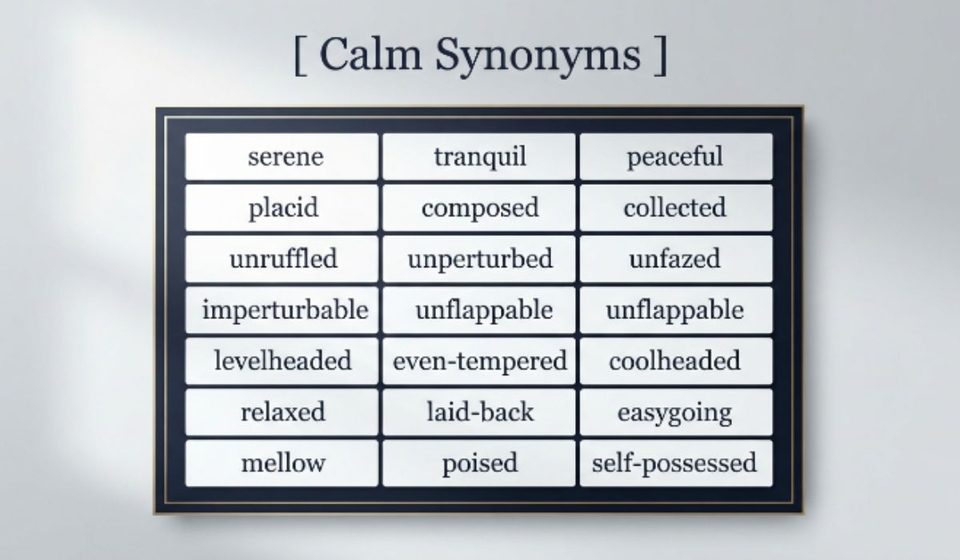

Calm isn’t one thing. A quiet room, a steady person, a windless sea, and a soothing voice all get called “calm” — but they’re nothing alike. Use the same word for all four and your writing goes flat. Use the right one and the reader feels exactly what you mean.
What Does “Calm” Actually Mean?
“Calm” works as three different parts of speech, and each one points to something different.
- Adjective — describing a person, a place, or the weather (“she stayed calm,” “a calm lake”).
- Noun — naming a state of restfulness or peace (“the calm before the storm”).
- Verb — describing the act of soothing someone or something (“calm the crowd”).
Before picking a synonym, decide which of these three you’re actually using. That one choice narrows the list from dozens of options down to a handful.
Calm vs. Serene vs. Tranquil vs. Peaceful vs. Quiet
These five words overlap, but they’re not interchangeable.
| Word | Core Idea | Natural Example |
| Calm | General absence of disturbance | Stay calm during the interview |
| Serene | Deep, almost radiant peacefulness | A serene expression on her face |
| Tranquil | Stable, undisturbed, lasting calm | A tranquil countryside retreat |
| Peaceful | Free from conflict or violence | A peaceful protest |
| Quiet | Free from noise specifically | A quiet library |
“Serene” and “tranquil” lean poetic and internal. “Peaceful” often implies the absence of conflict, not just noise. “Quiet” is the most literal — it’s about sound, not mood.
30 Alternative Words for “Calm”
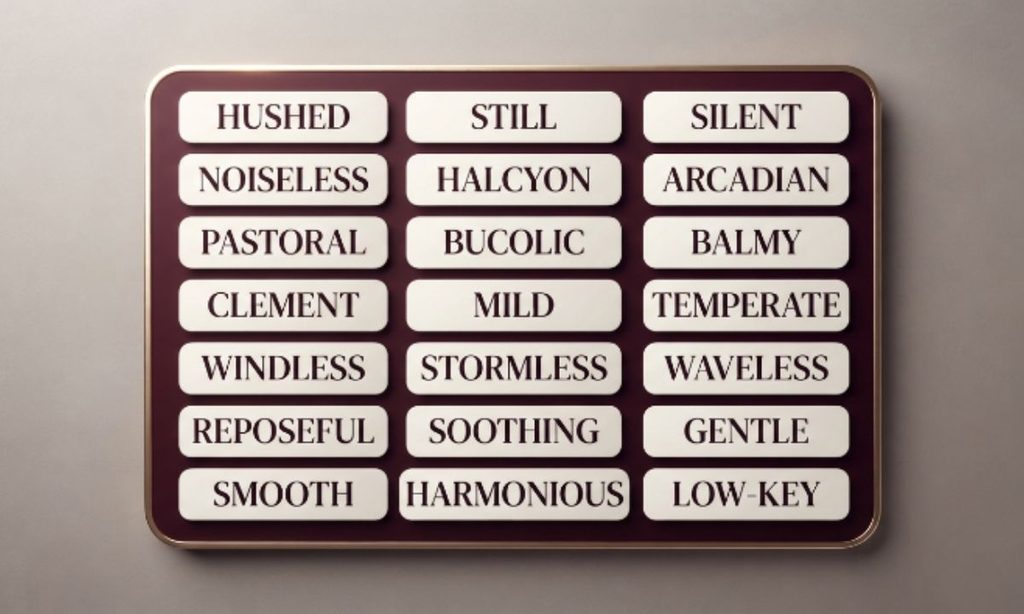
Below are 30 precise alternatives to “calm,” organized loosely from person-focused to place-focused to action-focused. Use this as a reference whenever “calm” feels too generic for what you’re describing.
Serene
Meaning: Deeply peaceful and untroubled, often with a radiant or elevated quality. This word carries more weight than plain “calm” — it suggests a peace that comes from within, not just the absence of stress. It works well when you want the reader to sense stillness, not just note it. Use it when you want warmth as much as accuracy.
- She had a serene look on her face throughout the ceremony.
- The lake was serene at sunrise, with barely a ripple.
When It Fits: Describing someone’s expression, a landscape, or a deeply peaceful mood.
Tranquil
Meaning: Free from disturbance; steady and settled over time. “Tranquil” implies duration — this isn’t a fleeting calm; it’s a lasting condition. It suits settings more than sudden moments, which makes it useful in travel writing, real estate, and descriptions of retreats. It reads as trustworthy and undramatic.
- They spent the weekend at a tranquil cabin by the lake.
- Her tranquil demeanor helped the whole team relax.
When It Fits: Describing homes, retreats, or long-term emotional stability.
Peaceful
Meaning: Free from conflict, disturbance, or violence. This word is less about silence and more about harmony. It’s the natural choice when the opposite of “calm” would be conflict rather than noise, which makes it common in social and political contexts as well as personal ones.
- The rally remained peaceful despite the tense atmosphere.
- She finally felt peaceful after resolving the argument.
When It Fits: Describing protests, relationships, or the absence of conflict.
Quiet
Meaning: Free from noise or disturbance. “Quiet” is the most concrete and literal of the calm-related words. It doesn’t imply anything about mood — just sound. Use it whenever the actual thing that changed is the noise level, not the emotional tone.
- The office got quiet once everyone left for lunch.
- She prefers a quiet space to focus on writing.
When It Fits: Rooms, libraries, or any setting defined by low noise.
Placid
Meaning: Not easily upset or excited; gently calm. This word has a soft, almost affectionate tone. It’s often used for children, animals, or water, and it implies a naturally even temperament rather than effort. It reads as gentle, not guarded.
- The baby was remarkably placid, even in a noisy room.
- The lake stayed placid all afternoon.
When It Fits: Describing temperaments, children, pets, or still water.
Composed
Meaning: Having one’s feelings under control; self-possessed. “Composed” implies active control, not a naturally calm nature. It’s the right word for someone managing stress well in the moment, which is why it fits performance and crises so naturally.
- She stayed composed while answering difficult questions on stage.
- He remained composed despite the sudden bad news.
When It Fits: High-pressure moments like interviews, performances, or emergencies.
Collected
Meaning: Calm and fully in control of one’s thoughts. This word pairs naturally with “composed” but leans slightly more mental — it’s about clear thinking under pressure, not just outward behavior. It’s a strong choice for decision-makers.
- She was calm and collected during the entire negotiation.
- He gave a collected, well-reasoned response despite the shouting.
When It Fits: Meetings, negotiations, or moments requiring clear thinking under stress.
Unruffled
Meaning: Not agitated or disturbed, even when provoked. This word implies resistance — something tried to disturb the person, and it didn’t work. It’s a satisfying choice when you want to highlight resilience, not just a baseline calm mood.
- He seemed completely unruffled by the harsh criticism.
- She stayed unruffled while everyone else panicked.
When It Fits: Describing someone facing criticism, chaos, or provocation.
Unperturbed
Meaning: Not worried or upset by something that would normally cause concern. “Unperturbed” is slightly more formal than “unruffled” and works well in written narrative. It suggests the person noticed the disturbance but simply wasn’t affected by it.
- He was unperturbed by the delay and kept working steadily.
- She remained unperturbed by the rumors circulating at work.
When It Fits: Formal writing, news reporting, or character description.
Imperturbable
Meaning: Unable to be upset or excited; extremely and consistently calm. This is one of the strongest, most formal words on the list. It suggests a personality trait, not just a moment — someone who is fundamentally hard to rattle. Save it for genuinely striking composure.
- His imperturbable manner made him a trusted crisis leader.
- Nothing seemed to shake her imperturbable confidence.
When It Fits: Leadership descriptions, biographies, or formal profiles.
Unflappable
Meaning: Remaining calm even in surprising or high-stress situations. This word has a slightly more casual, admiring tone than “imperturbable.” It’s often used for people whose job depends on staying calm — think emergency responders or seasoned professionals.
- As a paramedic, she’s completely unflappable under pressure.
- His unflappable attitude kept the whole team steady.
When It Fits: Describing professionals in high-stakes, fast-moving roles.
Levelheaded
Meaning: Sensible and calm, especially when making decisions. This word ties calmness directly to good judgment. It’s less about emotion and more about clear, practical thinking — a natural fit for anyone praised for handling problems well.
- She’s levelheaded enough to make the right call under pressure.
- His levelheaded advice kept the project on track.
When It Fits: Praising someone’s decision-making during a crisis or conflict.
Coolheaded
Meaning: Calm and controlled, especially in tense or competitive situations. This word has a slight edge of confidence to it. It suggests the person doesn’t just stay calm — they perform well because of it. It works nicely in sports, business, and negotiation contexts.
- The coolheaded goalkeeper saved the match in the final minute.
- Her coolheaded response defused the tense meeting.
When It Fits: Sports, negotiations, or any competitive, high-pressure moment.
Relaxed
Meaning: Free from tension or anxiety; at ease. This is the most casual, everyday word on the list. It doesn’t imply resilience under pressure — just a comfortable, unhurried state. It’s the right word for ordinary, low-stakes calm.
- He seemed relaxed and cheerful throughout the interview.
- The atmosphere was relaxed once the formal part ended.
When It Fits: Everyday conversation, casual settings, or informal writing.
Laid-back
Meaning: Casual, easygoing, and unbothered by stress. This word carries a distinct personality flavor — it’s not just calm, it’s unhurried and low-maintenance by nature. It works best in informal, conversational writing.
- She has a laid-back approach to deadlines that somehow always works.
- Their laid-back vibe made the office feel less corporate.
When It Fits: Describing personalities, workplace culture, or casual lifestyles.
Phlegmatic
Meaning: Showing little emotion; calm to the point of seeming unbothered. This word can read as neutral or slightly critical, depending on context — it suggests a temperament that doesn’t react much to anything. It’s a good fit for character studies and formal writing.
- His phlegmatic response to the crisis surprised his colleagues.
- She has a phlegmatic personality that rarely shows excitement or worry.
When It Fits: Character descriptions in formal or literary writing.
Halcyon
Meaning: Idyllically calm and peaceful, often used for a past period or setting. This word is poetic by nature. It usually describes a golden, nostalgic kind of calm — not a present-tense mood, but a remembered or idealized one.
- They looked back on those halcyon summer days by the coast.
- The novel is set in a halcyon countryside before the war began.
When It Fits: Nostalgic, literary, or descriptive writing about the past.
Balmy
Meaning: Pleasantly mild and calm, usually describing weather. This word is specific to climate and atmosphere. It carries a warm, comfortable connotation, making it ideal for travel writing or descriptions of pleasant outdoor conditions.
- The evening was balmy, perfect for dining outside.
- They enjoyed the balmy weather during their spring trip.
When It Fits: Weather descriptions, especially warm and gentle conditions.
Hushed
Meaning: Very quiet, often suddenly or deliberately so. This word implies intention or anticipation — a room doesn’t just happen to be hushed; something caused it. It’s useful for tense or dramatic moments where silence matters.
- The courtroom fell hushed as the verdict was read.
- A hushed silence spread through the crowd before the announcement.
When It Fits: Dramatic pauses, anticipation, or moments of collective silence.
Still
Meaning: Without movement or sound; motionless and quiet. “Still” works for both physical stillness and emotional calm, which makes it flexible. It’s a simple, evocative word that suits both nature writing and quiet emotional moments.
- The air was still, without even a breeze.
- Everything felt still in the house after the guests left.
When It Fits: Describing nature, silence, or a motionless atmosphere.
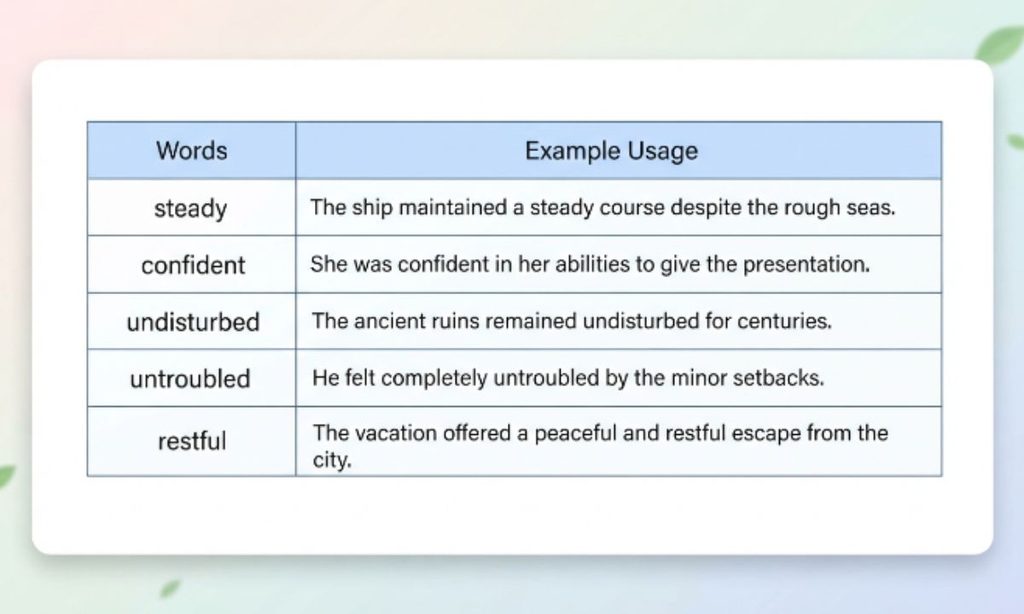
Restful
Meaning: Conducive to rest; peaceful and undemanding. This word focuses on the effect calm has on the observer — it’s not just quiet; it helps someone relax or recover. It’s a strong choice for describing vacations, environments, or breaks.
- The cabin offered a restful escape from city noise.
- She finally had a restful weekend after weeks of overtime.
When It Fits: Vacations, breaks, or environments meant for recovery.
Equanimity
Meaning: Mental calmness and composure, especially under stress or difficulty. This is a formal, almost philosophical word. It suggests calm as a discipline or achievement, not just a mood — often used in writing about resilience, mindfulness, or personal growth.
- She handled the layoff with remarkable equanimity.
- Meditation helped him approach setbacks with more equanimity.
When It Fits: Writing about resilience, mindfulness, or emotional maturity.
Sang-froid
Meaning: Composure and coolness shown in difficult or dangerous circumstances. This borrowed French term adds a slightly sophisticated, literary tone. It’s best reserved for genuinely tense or high-stakes situations where calm under pressure is remarkable.
- The pilot’s sang-froid during the emergency landing saved lives.
- Her sang-froid in the negotiation impressed everyone in the room.
When It Fits: Dramatic, high-stakes, or formal narrative writing.
Poise
Meaning: Graceful, composed self-assurance, especially in difficult situations. This word connects calm with presentation — it’s not just about feeling steady, but appearing that way too. It’s a strong fit for public speaking, performance, and professional settings.
- She answered every question with impressive poise.
- His poise under the spotlight reassured the whole audience.
When It Fits: Public speaking, interviews, or performance-based situations.
Soothe
Meaning: To gently ease distress, tension, or pain. This verb is warm and comforting by nature. It implies a caring, deliberate action rather than a passive state, which makes it ideal for emotional or physical comfort.
- She soothed the crying baby with a soft lullaby.
- The warm bath soothed his sore muscles after the run.
When It Fits: Comforting someone in distress, physically or emotionally.
Pacify
Meaning: To reduce someone’s anger or agitation, often temporarily. “Pacify” carries a slightly more strategic tone than “soothe” — it’s often used when calming someone down resolves an immediate conflict, even if the underlying issue remains.
- The manager tried to pacify the frustrated customer with a refund.
- A short break helped pacify the tense negotiation.
When It Fits: Conflict resolution, customer service, or diplomacy.
Placate
Meaning: To make someone less angry or hostile, usually through concession. This word implies effort aimed specifically at another person’s anger. It’s common in workplace and interpersonal writing where someone actively works to smooth things over.
- He tried to placate his boss with a quick apology.
- The company started to placate upset customers.
When It Fits: Situations involving apology, compromise, or damage control.
Allay
Meaning: To reduce or put to rest fears, doubts, or worries. This word is precise and slightly formal — it’s almost always paired with fears, concerns, or doubts rather than anger. It reads as reassuring and careful.
- The doctor’s explanation helped allay her fears about the surgery.
- The report was released to allay investor concerns.
When It Fits: Reassuring someone about a specific fear or uncertainty.
Tranquilize
Meaning: To make calm, often through medication or a strong calming influence. This word carries a clinical or forceful connotation. Use it carefully — it implies a stronger, sometimes external intervention rather than natural calm.
- The vet had to tranquilize the injured animal before treatment.
- The medication helped tranquilize his anxiety before the procedure.
When It Fits: Medical contexts or situations involving strong intervention.
Mellow
Meaning: Relaxed, easygoing, and free from harshness or tension. This word has a soft, informal warmth to it. It works well for describing moods that have softened over time, like someone becoming calmer with age or after a good conversation.
- He’s much mellower now than he was in his twenties.
- The evening had a mellow, unhurried feel to it.
When It Fits: Describing gradual emotional softening or relaxed social settings.
When to Just Use “Calm”
Some phrases don’t need a substitute. These stay natural as-is:
- Stay calm
- Calm before the storm
- Calm down
- A calm voice
- Keep calm and carry on
Forcing a synonym into these fixed expressions usually sounds awkward. If “calm” already says exactly what you mean, there’s no need to swap it out.
Antonyms of Calm
Sometimes you need the opposite end of the spectrum. Common choices include:
- Agitated, anxious, restless, uneasy
- Turbulent, stormy, unsettled, rough
- Noisy, chaotic, tumultuous, frantic
- Perturbed, jittery, on edge, unnerved
Match the antonym to the same category as the synonym — use “stormy” for weather, “agitated” for a person, and “chaotic” for a place or atmosphere.
Frequently Asked Questions
What is another word for calm?
“Serene,” “tranquil,” and “peaceful” are the most common alternatives, depending on whether you’re describing a person, place, or mood.
What is a stronger word for calm?
“Imperturbable” and “unflappable” describe a deeper, more consistent calm than the basic word “calm.”
What are synonyms for calm and composed?
“Collected,” “self-possessed,” and “levelheaded” all describe someone calm and in control under pressure.
What is the difference between calm, serene, and tranquil?
“Calm” is general, “serene” suggests inner peace and radiance, and “tranquil” implies a lasting, undisturbed stillness over time.
What is the opposite of calm?
Common opposites include agitated, anxious, turbulent, and chaotic, depending on whether you’re describing a person, weather, or a place.
Conclusion
“Calm” is a fine word, but it’s rarely the most precise one. Once you decide whether you’re describing a person’s composure, a quiet place, gentle weather, or the act of soothing someone, the right synonym becomes obvious. Keep this list close; match the word to the specific kind of calm you mean, and your writing will sound clearer — and a lot more human.

[…] Calm Synonyms: 30 Better Words for Every Shade of Calm […]