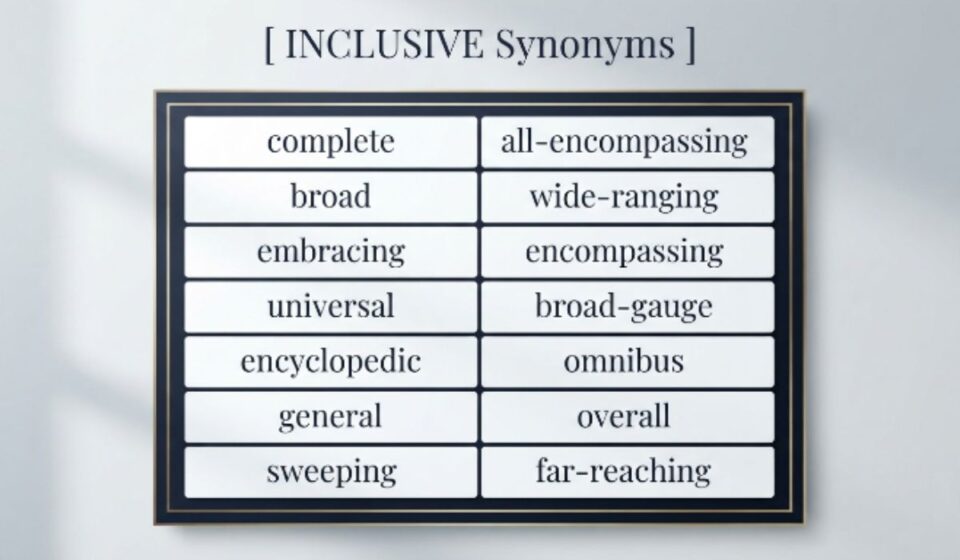

If you write a lot, you’ve probably seen how simple it is to fall back on the same term again and again. One of those words is “inclusive.” You see it in job descriptions, corporate purpose statements, school policies, and everyday speech. That’s a nice word. But employing it every third phrase makes your writing feel bland and repetitious.
Variety is not simply the opposite of repetition. A single synonym can change the tone of a statement, making it warmer, more formal, or more exact. It can also help you say what you mean, rather than resorting to a word that’s become a catch-all. I’ll provide you 25 great choices in this book, with actual examples and direction on when each genuinely fits.
What Does “Inclusive” Really Mean?
At its heart, “inclusive” is about creating space for everyone. It can signify two very slightly different things, depending on context.
The first sense concerns people: not excluding anyone, no matter their history, skill, or identity. An inclusive workplace is a workplace where employees of all backgrounds feel welcome.
The second sense is about scope. It covers everything in a range. An all-inclusive membership includes lessons, pool access, and equipment access.
For instance, a teacher who modifies lesson plans to provide for pupils with various learning styles is teaching in an inclusive classroom. The word signifies caring, justice, and openness all at once.
Why Look for Alternatives?
“Inclusive” is a powerful term, but it begins to lose its impact when it is overused. If you utilize it in every paragraph of your report, email or essay, your readers cease seeing it. It becomes just a sort of background noise, not a meaningful depiction.
There is also a problem of precision. “Inclusive” is a broad umbrella. Sometimes you mean inclusive. Sometimes you mean thorough. Sometimes you mean equitable. Choosing a more particular word lets your reader know exactly what you are talking about instead of guessing.
Finally, tone is important. “Inclusive” sounds a little corporate, a little policy-driven. In an informal email to a friend, a simpler phrase like “welcoming” usually sounds better. Knowing your possibilities, you can match the term to the moment.
25 Synonyms for “Inclusive” and How to Use Them
Welcoming
Meaning: This word focuses on how people feel when they walk into a space or join a group. It carries warmth rather than policy. It’s less about rules and more about atmosphere, which makes it feel personal and genuine.
Example: The new café has a welcoming vibe that makes solo diners feel comfortable staying awhile.
When It Fits: Use it when describing the feeling of a place, event, or community rather than formal structures.
All-Embracing
Meaning: This word suggests something so broad it leaves nothing and no one out. It has a slightly poetic quality, often used when describing ideas, philosophies, or large-scale movements rather than small groups.
Example: The festival’s all-embracing spirit brought together musicians from a dozen different countries.
When It Fits: Choose this for writing that leans a bit more descriptive or reflective, like essays or speeches.
Accepting
Meaning: This word centers on attitude. It describes people or groups who don’t judge others for being different. It’s simple, direct, and easy to understand, which makes it useful in everyday speech.
Example: Her family has always been accepting of her career choices, even the unconventional ones.
When It Fits: Great for personal, informal contexts like conversations about family, friendships, or relationships.
Open-Minded
Meaning: This phrase describes a willingness to consider new ideas, people, and perspectives without immediate judgment. It highlights a mental attitude more than a physical space or group.
Example: Good managers stay open-minded when employees suggest changes to long-standing procedures.
When It Fits: Use it when talking about individual mindset, decision-making, or leadership style.
Accommodating
Meaning: This word points to action. It describes making adjustments so different people’s needs are met. It’s practical and shows effort, not just good intentions.
Example: The hotel staff were accommodating when we asked for a room closer to the elevator.
When It Fits: Fits well in service, hospitality, or workplace contexts where specific adjustments are made.
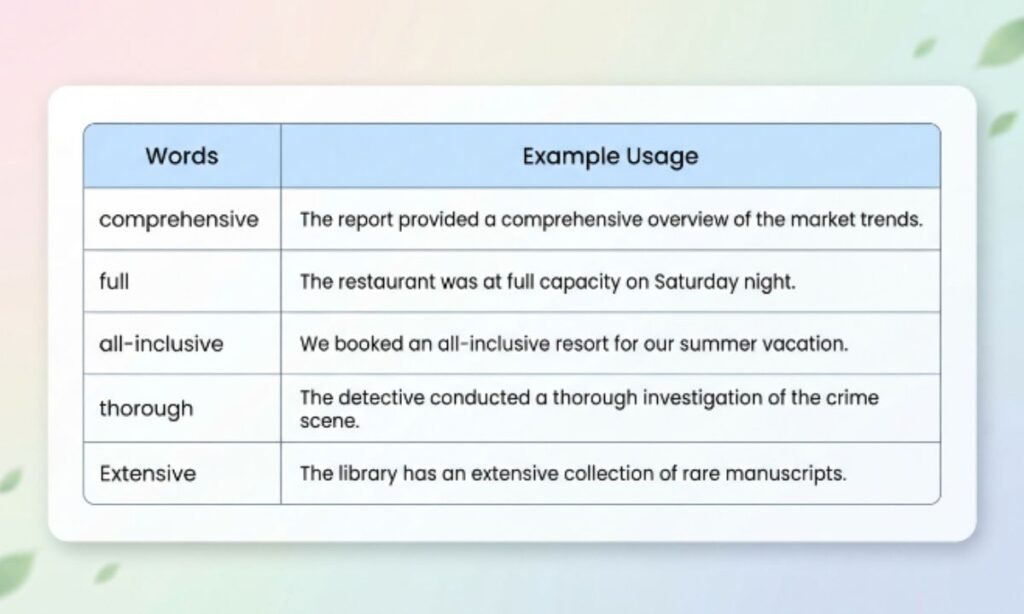
Comprehensive
Meaning: This word means thorough and complete, covering every relevant part of something. It’s less about people and more about scope, detail, or coverage.
Example: The new health plan is comprehensive, covering dental, vision, and mental health support.
When It Fits: Use it for describing plans, reports, policies, or anything meant to leave nothing out.
All-Encompassing
Meaning: Similar to comprehensive, but with a bit more weight. It suggests something so wide-reaching that no exception exists. It works well when you want to emphasize scale.
Example: Their approach to customer service is all-encompassing, handling everything from billing to technical support.
When It Fits: Best for formal writing, business descriptions, or anything with a broad scope you want to highlight.
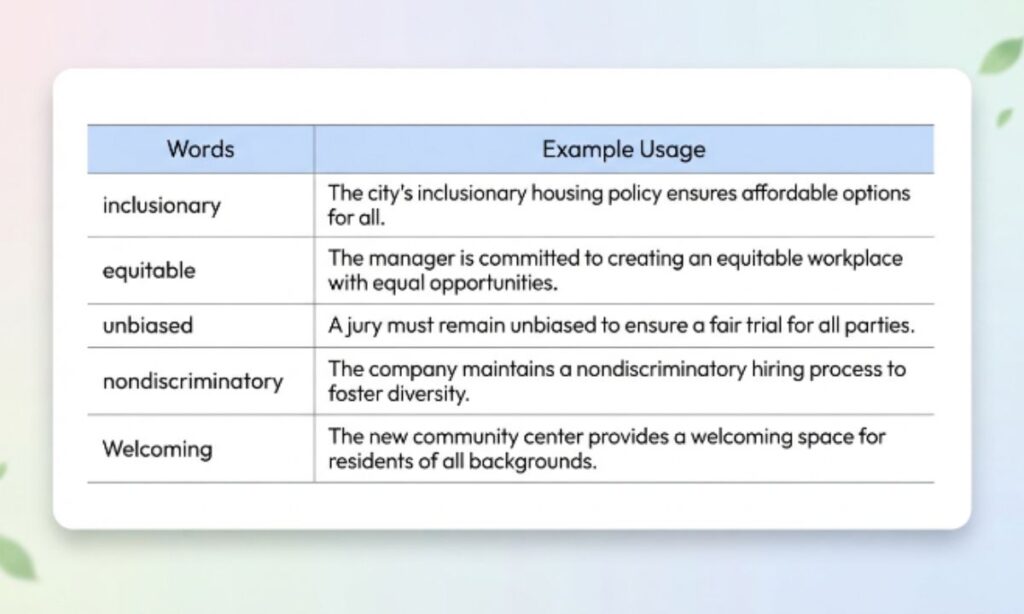
Unbiased
Meaning: This word focuses on fairness in judgment. It describes treating people or situations without favoritism or prejudice. It’s a word people trust because it implies honesty.
Example: The judging panel gave an unbiased score, ignoring which school each team came from.
When It Fits: Use it when writing about decisions, evaluations, journalism, or hiring processes.
Egalitarian
Meaning: This word describes a belief in equal rights and opportunities for everyone. It carries a slightly political or philosophical tone, often used in discussions about society or systems.
Example: The company adopted an egalitarian pay structure so titles no longer determined salary bands.
When It Fits: Fits academic writing, policy discussions, or conversations about fairness in systems.
Equitable
Meaning: This word means fair, but with attention to individual circumstances rather than identical treatment. It recognizes that fairness sometimes means giving people different things based on their needs.
Example: The scholarship program uses an equitable model, offering more support to students with greater financial need.
When It Fits: Use it in education, nonprofit work, or any context where fairness depends on individual situations.
Broad-Minded
Meaning: This phrase describes someone tolerant of ideas, lifestyles, or opinions different from their own. It’s close to “open-minded” but leans slightly more toward tolerance of controversial or unconventional views.
Example: Her broad-minded approach to art criticism means she rarely dismisses unconventional work outright.
When It Fits: Good for describing personal character, especially in reviews, profiles, or personality descriptions.
Universal
Meaning: This word means applying to everyone or everything without exception. It’s a strong, sweeping term that works well when something truly applies across the board.
Example: The library’s new policy offers universal access to digital resources, regardless of membership tier.
When It Fits: Use it for policies, rights, or designs meant to serve everyone equally.
Wide-Ranging
Meaning: This word describes something that covers a large variety of topics, people, or areas. It’s less about fairness and more about breadth and variety.
Example: The conference featured wide-ranging discussions, from climate policy to small business funding.
When It Fits: Best for describing content, topics, or programs with a lot of variety.
Embracing
Meaning: This word suggests actively welcoming something, often change or diversity, rather than just tolerating it. It has a warmer, more active feel than “accepting.”
Example: The school’s embracing attitude toward neurodivergent students has improved attendance rates.
When It Fits: Use it when you want to highlight active effort, not just passive tolerance.
All-Inclusive
Meaning: This phrase usually points to a package or offer that covers everything, often used in travel or pricing contexts. It’s practical and specific rather than emotional.
Example: We booked an all-inclusive resort so we wouldn’t have to budget for meals separately.
When It Fits: Best for describing packages, deals, memberships, or pricing structures.
Tolerant
Meaning: This word describes accepting behavior, beliefs, or people you may not personally agree with. It’s a bit more neutral than “accepting,” focusing on restraint rather than enthusiasm.
Example: He’s tolerant of different working styles, even when they clash with his own habits.
When It Fits: Use it when describing patience toward differences, especially in workplace or team settings.
Unifying
Meaning: This word describes something that brings people together, often across differences. It focuses on connection rather than simple acceptance.
Example: The mural project became a unifying activity for neighbors who rarely spoke before.
When It Fits: Fits community projects, team-building efforts, or anything meant to bridge divides.
Accessible
Meaning: This word means easy to reach, use, or understand, whether physically, financially, or intellectually. It’s practical and specific, often used in design and public services.
Example: The city redesigned the park to make it accessible for wheelchair users.
When It Fits: Use it for physical spaces, technology, pricing, or communication meant to reach more people.
Holistic
Meaning: This word describes considering the whole picture rather than isolated parts. It’s often used in health, education, and personal development contexts.
Example: The clinic takes a holistic approach, treating physical symptoms alongside mental health.
When It Fits: Fits wellness, education, or any field focused on treating the whole situation, not just one part.
Encompassing
Meaning: This word means covering or including something completely. It’s close to “comprehensive” but slightly more literary in tone.
Example: The exhibit is encompassing, tracing the artist’s work from her earliest sketches to final pieces.
When It Fits: Use it for descriptions of collections, exhibits, or bodies of work.
Considerate
Meaning: This word focuses on thoughtfulness toward other people’s feelings and needs. It’s personal and relational rather than institutional.
Example: She’s considerate of coworkers who need quiet time, so she keeps meetings short.
When It Fits: Best for describing individual behavior in social or workplace settings.
Impartial
Meaning: This word means not favoring one side over another. It’s close to “unbiased” but often used specifically in decisions, judgments, or disputes.
Example: The mediator remained impartial throughout the negotiation, never taking either side.
When It Fits: Use it for legal, journalistic, or decision-making contexts where neutrality matters.
Nondiscriminatory
Meaning: This word specifically means not treating people unfairly based on race, gender, age, or other protected traits. It’s formal and often used in legal or HR contexts.
Example: The company updated its hiring practices to ensure a nondiscriminatory process at every stage.
When It Fits: Fits policy documents, HR communications, and legal writing.
Community-Minded
Meaning: This phrase describes people or organizations that prioritize the wellbeing of the group over individual interests. It has a grounded, local feel.
Example: The community-minded shop owner sponsors the youth soccer team every season.
When It Fits: Use it for local businesses, volunteers, or anyone acting with the group’s interest in mind.
Far-Reaching
Meaning: This word describes something with a wide impact or scope, often used for policies, decisions, or changes that affect many people or areas.
Example: The new recycling law will have far-reaching effects on how the city manages waste.
When It Fits: Best for describing the impact of decisions, policies, or events, not people directly.
Which Alternative Works Best in Different Situations?
For work and professional writing, comprehensive, equitable, nondiscriminatory, and impartial tend to sound the most credible. They show precision without sounding casual.
For emails, accommodating, welcoming, and considerate strike a good balance between professional and warm, especially when writing to clients or new team members.
For friends and casual conversation, accepting, welcoming, and open-minded feel natural and easy, without sounding stiff.
For school and academic writing, egalitarian, universal, and holistic tend to fit essays, research, and classroom discussions well.
For everyday conversation, tolerant, accepting, and welcoming come up most naturally when describing people or places you know.
Common Mistakes
One common mistake is using “all-inclusive” when you mean people-focused inclusion. All-inclusive usually refers to packages or pricing, not fairness toward individuals, so it can confuse readers if misapplied.
Another mistake is treating “tolerant” and “accepting” as identical. Tolerant implies putting up with something, while accepting implies genuine warmth. Swapping them changes the emotional tone of a sentence.
People also overuse “comprehensive” when describing attitudes toward people, when it actually fits scope or coverage better, like a plan or report.
A fourth mistake is using formal words like “nondiscriminatory” or “egalitarian” in casual writing, where they sound stiff and out of place next to everyday language.
Finally, many writers forget that not every synonym is interchangeable. “Universal” and “welcoming” both relate to inclusiveness, but they answer different questions: one is about reach, the other about feeling.
Quick Comparison Table
| Phrase | Formal | Casual | Conversation | |
| Welcoming | Yes | Yes | Yes | Yes |
| All-Embracing | Yes | No | Rarely | No |
| Accepting | Some | Yes | Yes | Yes |
| Open-Minded | Yes | Yes | Yes | Yes |
| Accommodating | Yes | Some | Yes | Some |
| Comprehensive | Yes | No | Yes | Rarely |
| All-Encompassing | Yes | No | Some | No |
| Unbiased | Yes | Some | Yes | Some |
| Egalitarian | Yes | No | Rarely | No |
| Equitable | Yes | No | Yes | Rarely |
| Broad-Minded | Some | Yes | Some | Yes |
| Universal | Yes | Some | Yes | Some |
| Wide-Ranging | Yes | Some | Yes | Some |
| Embracing | Some | Yes | Some | Yes |
| All-Inclusive | Some | Yes | Yes | Yes |
| Tolerant | Some | Yes | Some | Yes |
| Unifying | Yes | Some | Some | Some |
| Accessible | Yes | Yes | Yes | Yes |
| Holistic | Yes | Some | Yes | Some |
| Encompassing | Yes | No | Rarely | No |
| Considerate | Some | Yes | Yes | Yes |
| Impartial | Yes | No | Yes | Rarely |
| Nondiscriminatory | Yes | No | Yes | No |
| Community-Minded | Some | Yes | Some | Yes |
| Far-Reaching | Yes | Some | Yes | Some |
Frequently Asked Questions
What is the closest synonym to “inclusive”?
“Welcoming” is one of the closest everyday synonyms, since it captures the warmth and openness behind the original word.
Is “comprehensive” always a good substitute for “inclusive”?
No, “comprehensive” works when you mean thorough coverage of a topic or plan, not when you’re describing how welcoming a person or place is toward people.
What’s a formal word for “inclusive” in workplace policies?
“Nondiscriminatory” or “equitable” are strong choices for formal HR and policy writing.
Can “all-inclusive” and “inclusive” be used interchangeably?
Not really, since “all-inclusive” typically describes pricing or packages, while “inclusive” more often describes people or fairness.
What’s a simple, casual synonym for “inclusive”?
“Welcoming” or “accepting” both sound natural in everyday conversation without feeling forced.
Conclusion
“Inclusive” is a good term, but it’s not the only word for the job. 25 possibilities at your fingertips, so you may tailor your tone to the occasion, be it a formal report, a pleasant email, or a casual chat. These small word choices make your writing sound more considered and accurate.

[…] It Fits: Pricing, packages, and inclusive policy […]