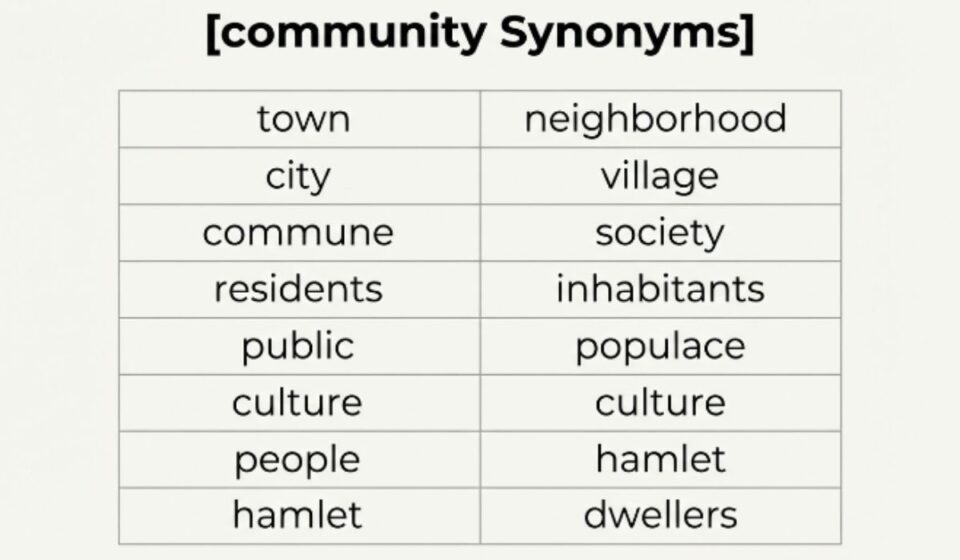

The right word changes how a sentence feels. Say “community” too many times in one piece, and it starts to sound flat, even lazy. Swapping in the right alternative keeps your writing sharp and your reader engaged. This guide walks through 25 solid options, when to use them, and how to avoid the mistakes most people make when swapping words in and out.
What Does “Community” Really Mean?
A community, at its heart, is a group of people who share something in common—a place, an interest, or an identity. It can mean the people who live on your block. It also means thousands of strangers bonding over the same hobby on the web.
Real-life example: A community is a group of neighbors that get together every Saturday to clean up the local park. So are a bunch of writers who support each other on a Discord server, even if they’ve never met in person.
The word covers both of these. That flexibility comes in handy, but it’s also why the word is so overused. One word does duty for several different ideas.
Why Look for Alternatives?
“Community” is a safe word. It’s also a vague one. When you use it in every paragraph, your writing loses precision and starts to sound like a template.
Here’s when it tends to fall flat:
- When you’re describing a small, tight-knit group, and “community” feels too broad
- When you’ve already used the word twice in one paragraph
- When you want to signal warmth, structure, or scale, and “community” doesn’t do that job
- When you’re writing for a specific audience, like a business email or a casual text, where a more precise word fits the tone better
A stronger word choice doesn’t just avoid repetition. It sharpens meaning. “Tribe” suggests loyalty. “Network” suggests connections built for a purpose. “Fellowship” suggests shared values. Each one tells the reader something “community” alone doesn’t.
25 Synonyms for “Community” and How to Use Them
Neighborhood
Meaning: A specific residential area where people live close to each other. It carries a sense of physical closeness, not just shared interest. People picture streets, houses, and daily face-to-face contact when they hear this word. It works well when location is the main connector.
Example: Our neighborhood organizes a block party every summer.
When It Fits: Talking about people who live near you.
Society
Meaning: A large, organized group of people who share laws, customs, or a way of life. It sounds broader and more formal than “community.” Use it when you’re talking about people on a national or cultural scale, not a small group.
Example: Modern society relies heavily on digital communication.
When It Fits: Academic writing or big-picture discussions.
Group
Meaning: A simple, neutral term for people gathered around a shared purpose. It doesn’t carry emotional weight on its own, which makes it flexible. Use it when you want plain, direct language without extra flavor.
Example: A small group of volunteers cleaned the beach this weekend.
When It Fits: Everyday writing where simplicity works best.
Network
Meaning: A group of people connected through relationships, often for professional or practical reasons. It suggests structure and mutual benefit rather than emotional closeness. This word works especially well in career or business contexts.
Example: She built a strong network of mentors early in her career.
When It Fits: Professional or business conversations.
Circle
Meaning: A close, often smaller group of people who know each other well. It has a personal, intimate feel, suggesting trust and familiarity. This word fits well when describing friend groups or inner social ties.
Example: He shared the news with his close circle of friends first.
When It Fits: Talking about personal relationships.
Tribe
Meaning: A group bonded by strong shared identity or loyalty. It carries an emotional, almost primal sense of belonging. Marketers and brands often use this word to describe passionate, loyal followers.
Example: The brand built a loyal tribe of customers who defend it online.
When It Fits: Describing passionate fan bases or close-knit groups.
Fellowship
Meaning: A group united by shared beliefs, goals, or friendly companionship. It has a warm, almost old-fashioned tone, often tied to religious or values-based groups. Use it when emotional connection matters more than structure.
Example: The fellowship met every Sunday to share a meal and talk.
When It Fits: Faith groups or close support circles.
Association
Meaning: An organized group formed for a specific purpose, often with formal membership. It sounds structured and official. This word works well for professional bodies, clubs, or formal organizations.
Example: The homeowners association approved the new fence policy.
When It Fits: Formal or official group settings.
Collective
Meaning: A group of people working together toward a shared goal, often with equal say. It suggests cooperation over hierarchy. Artists, activists, and small businesses often use this word to describe their group structure.
Example: The artist collective shares studio space downtown.
When It Fits: Creative or cooperative projects.
Populace
Meaning: The general population of a specific area, often used in a formal or slightly detached tone. It sounds bigger and more impersonal than “community.” Use it in writing that discusses large groups of people at once.
Example: The new policy affects the entire populace of the city.
When It Fits: Formal writing about large groups.
Public
Meaning: People in general, especially as a collective audience or group receiving something. It’s broad and impersonal by design. This word fits when you’re addressing an unspecified, wide audience.
Example: The company released the statement to the public this morning.
When It Fits: Announcements or general audience writing.
People
Meaning: The most basic, plain term for a group of humans. It carries no extra tone, which makes it useful when you don’t want the word itself to add meaning. Simplicity is the whole point here.
Example: The people of this town have always looked out for each other.
When It Fits: Simple, direct storytelling.
Locality
Meaning: A specific area or place, often used when the physical location matters more than the people in it. It’s a more technical, geographic term. Use it in writing where precision about place is the goal.
Example: Weather conditions vary across this locality.
When It Fits: Geographic or technical descriptions.
District
Meaning: A defined area, often with administrative or political boundaries. It sounds structured and official. This word fits well in writing about city planning, schools, or local government.
Example: The school district announced new funding for after-school programs.
When It Fits: Government, education, or civic writing.
Village
Meaning: A small settlement, often used to suggest closeness and simplicity. It’s also used figuratively, as in “it takes a village,” to describe a tight support system. This word adds warmth and a small-scale feel.
Example: It takes a village to raise a confident child.
When It Fits: Describing small, supportive groups.
Town
Meaning: A populated area, smaller than a city but larger than a village. It’s often used loosely to describe local people as a whole. Use it when talking casually about local happenings or gossip.
Example: The whole town showed up for the parade.
When It Fits: Local news or casual storytelling.
Family
Meaning: People who feel connected through deep, often chosen bonds, not just blood relation. It signals emotional closeness and loyalty. Businesses and groups often use this word to build a sense of belonging.
Example: New employees are welcomed like family here.
When It Fits: Warm, personal, or brand-building language.
Kinship
Meaning: A deep sense of connection, often based on shared experience rather than formal ties. It’s more poetic and emotional than most alternatives. Use it when you want to express a bond that feels natural, not organized.
Example: She felt an instant kinship with other new parents at the class.
When It Fits: Reflective or emotional writing.
Alliance
Meaning: A group formed for mutual support or a shared cause, often temporary or strategic. It suggests cooperation with a clear purpose. This word fits political, business, or advocacy contexts well.
Example: Several small businesses allied to negotiate lower rates.
When It Fits: Strategic or purpose-driven partnerships.
Coalition
Meaning: A formal alliance, usually built around a specific goal or cause. It sounds organized and intentional, often used in politics or activism. Use it when the group has a clear, shared mission.
Example: A coalition of parents pushed for safer school crossings.
When It Fits: Advocacy, activism, or political writing.
Fanbase
Meaning: A group of people who support and follow a particular person, brand, or interest. It’s specific to admiration or enthusiasm. This word works only in contexts involving fans, not general social groups.
Example: The singer’s fanbase grew fast after her first single.
When It Fits: Entertainment, sports, or brand contexts.
Following
Meaning: People who consistently pay attention to or support someone, often online. It suggests loyalty built over time, usually through content or public presence. This word is common in marketing and social media writing.
Example: She built a loyal following by posting weekly cooking videos.
When It Fits: Social media or influencer contexts.
Squad
Meaning: A small, informal group of people who spend time together or work toward something together. It has a casual, youthful tone. Use it in relaxed writing, not formal documents.
Example: The squad met up every Friday for game night.
When It Fits: Casual conversations with friends.
Crew
Meaning: A group working or spending time together, often with a shared task or vibe. It’s informal and energetic. This word suits casual writing or descriptions of close friend groups.
Example: Our whole crew road-tripped to the coast last weekend.
When It Fits: Casual, friendly storytelling.
Base
Meaning: The core group of people who consistently support a person, brand, or cause. It suggests loyalty and a starting point for growth. This word fits business, politics, and marketing writing well.
Example: The company’s loyal customer base kept sales steady during the slow season.
When It Fits: Business or political writing.
Which Alternative Fits Best?
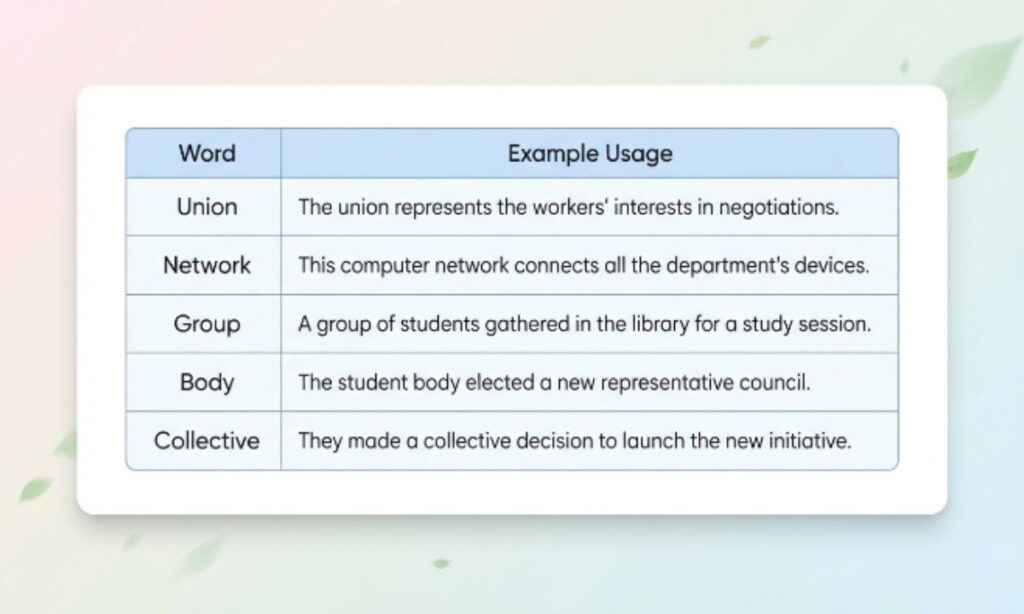
Different settings call for different words. Here’s a quick guide:
- Work: Network, Association, Coalition, Base
- Emails: Group, Association, Public, Populace
- Friends: Squad, Crew, Circle, Tribe
- School: District, Group, Society, People
- Everyday Conversations: Neighborhood, Village, Town, Family
Match the word to the tone you want. Formal settings call for structured words. Casual settings call for warmer, looser ones.
Common Mistakes
- Using “tribe” in formal writing, where it seems out of place
- The word “populace” is stiff and clumsy for ordinary conversation.
- Considering all synonyms as synonyms while each has a different feeling
- Use of buzz words like “squad” or “crew” in professional documents
- Selecting a word, not based on what it means in context, but on how it sounds
Quick Comparison Table
| Phrase | Formal | Casual | Conversation | |
| Neighborhood | No | Yes | Yes | Yes |
| Society | Yes | No | Yes | No |
| Group | Yes | Yes | Yes | Yes |
| Network | Yes | No | Yes | Yes |
| Circle | No | Yes | No | Yes |
| Tribe | No | Yes | No | Yes |
| Fellowship | Yes | No | Yes | No |
| Association | Yes | No | Yes | No |
| Collective | Yes | Yes | Yes | Yes |
| Populace | Yes | No | Yes | No |
| Public | Yes | No | Yes | No |
| People | Yes | Yes | Yes | Yes |
| Locality | Yes | No | Yes | No |
| District | Yes | No | Yes | No |
| Village | No | Yes | No | Yes |
| Town | No | Yes | No | Yes |
| Family | Yes | Yes | Yes | Yes |
| Kinship | Yes | No | No | No |
| Alliance | Yes | No | Yes | No |
| Coalition | Yes | No | Yes | No |
| Fanbase | No | Yes | No | Yes |
| Following | No | Yes | No | Yes |
| Squad | No | Yes | No | Yes |
| Crew | No | Yes | No | Yes |
| Base | Yes | No | Yes | No |
Frequently Asked Questions
What’s the most formal synonym for “community”?
“Society” or “populace” works best in formal writing.
What’s a good synonym for an online community?
“Following” or “fanbase” fits online, interest-based groups well.
Can “family” replace “community” in a business context?
Yes, when the goal is to sound warm and inclusive, like describing a company culture.
Is “tribe” appropriate for professional writing?
Not usually. It fits marketing and casual branding better than formal documents.
How do I choose the right synonym quickly?
Think about tone first, then scale. A casual, small group needs a different word than a large, formal one.
Conclusion
Swapping out “community” keeps your writing fresh and precise. Each alternative carries its own tone, from the warmth of “family” to the structure of “association.” Pick the word that matches your audience, and your writing will feel more natural every time.