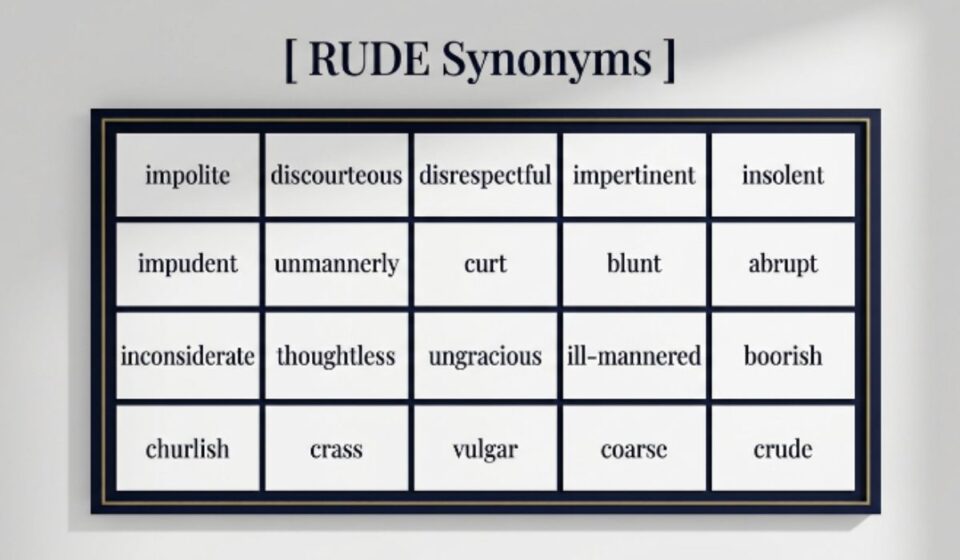

The word “rude” gets used so often that it starts to lose its punch. Swapping it out for a more precise word helps you describe exactly what happened, whether someone was blunt, dismissive, or outright disrespectful.
The right word also changes how your message lands, since “curt” feels very different from “obnoxious” even though both point to bad behavior. This guide walks through 25 solid alternatives so you always have the right word ready.
What Does “Rude” Really Mean?
“Rude” describes behavior that shows a lack of manners or respect for other people. It can be a tone of voice, a dismissive comment, or an action that ignores social norms. For example, cutting someone off mid-sentence in a meeting and walking away without a word counts as rude, since it ignores the other person’s time and effort.
Why Look for Alternatives to “Rude”?
“Rude” is a catch-all word, and that’s exactly the problem. It doesn’t tell you if someone was cold, mocking, careless, or aggressive. Using it over and over also makes your writing sound flat, especially in emails, stories, or feedback where the details actually matter. A more specific word paints a clearer picture and makes your point land harder.
25 Synonyms for “Rude” and How to Use Them
Impolite
Meaning: A softer, more neutral way to describe poor manners without sounding harsh. It works well when you want to point out bad behavior without escalating the situation. This word carries less emotional weight than “rude,” so it’s useful in feedback or observations where you want to stay diplomatic. It signals a manners issue rather than a character flaw.
Example: “It was impolite of him to answer his phone during dinner.”
When It Fits: Giving gentle feedback to a coworker or family member.
Discourteous
Meaning: A formal word that fits professional or written contexts. It communicates a clear breach of expected courtesy without sounding emotional. Because it leans formal, it works well in reports, reviews, or complaints where you want to sound objective. It also avoids sounding like a personal attack.
Example: “The staff member was discourteous when handling the customer’s complaint.”
When It Fits: Writing a formal complaint or performance review.
Disrespectful
Meaning: This word points directly at a lack of respect rather than just bad manners. It carries more emotional weight and often implies the behavior was intentional or repeated. Use it when you want to highlight that someone crossed a line, not just made an awkward comment. It’s common in personal conflicts and workplace disputes.
Example: “Talking over your manager in front of clients is disrespectful.”
When It Fits: Addressing repeated bad behavior directly.
Curt
Meaning: Describes a short, clipped way of speaking that feels dismissive even if the words themselves are polite. It’s less about content and more about tone. This word is perfect when someone’s response was technically fine but felt cold or rushed. It captures a specific communication style rather than general rudeness.
Example: “Her curt reply made it clear she didn’t want to talk.”
When It Fits: Describing short, dismissive replies in texts or emails.
Blunt
Meaning: Blunt people say exactly what they think without softening it. It’s not always meant to hurt, but it often does. This word works when someone’s honesty comes across as harsh rather than thoughtful. It’s a common word for describing feedback that felt more like a punch than a suggestion.
Example: “He was blunt about the report being poorly written.”
When It Fits: Describing overly honest feedback or criticism.
Abrupt
Meaning: Focuses on sudden, jarring behavior, like ending a conversation without warning. It highlights timing and pace rather than word choice. This word fits when the rudeness came from how quickly something happened, not necessarily what was said. It’s useful for describing awkward exits or interruptions.
Example: “The call ended abruptly before I could finish my question.”
When It Fits: Describing sudden interruptions or hasty exits.
Brusque
Meaning: Similar to curt, but with a slightly rougher edge, often paired with a gruff tone. It suggests someone was efficient to the point of sounding cold. This word works well when describing someone who isn’t necessarily mean but comes across as impatient. It’s common in workplace settings with busy people.
Example: “The doctor’s brusque manner left the patient feeling unheard.”
When It Fits: Describing impatience mixed with efficiency.
Uncivil
Meaning: A stronger, more formal word that implies a breakdown in basic social conduct. It’s often used when describing public behavior, like arguments or heated exchanges. This word suggests the situation went beyond normal disagreement into something inappropriate for the setting. It fits serious or public contexts well.
Example: “The debate turned uncivil once both sides began shouting.”
When It Fits: Describing public arguments or heated disputes.
Ill-Mannered
Meaning: A classic phrase for someone who simply hasn’t learned proper social behavior. It focuses on habits rather than a single incident. This phrase works well for describing consistent patterns rather than one-off comments. It has a slightly old-fashioned tone that fits storytelling or character descriptions.
Example: “The ill-mannered guest ate before everyone else was served.”
When It Fits: Describing repeated bad habits in social settings.
Boorish
Meaning: Describes loud, clumsy, or tactless behavior, often paired with a lack of self-awareness. It suggests someone doesn’t realize how their behavior affects others. This word fits situations involving obnoxious or overbearing conduct, especially in group settings. It carries a slightly judgmental tone.
Example: “His boorish jokes made the whole table uncomfortable.”
When It Fits: Describing loud or tactless behavior in groups.
Churlish
Meaning: A less common but useful word for someone grumpy, sullen, and unwilling to be pleasant. It suggests bad temper more than intentional cruelty. This word fits situations where someone’s mood, not their words, created the rude impression. It’s often used in writing rather than casual speech.
Example: “He gave a churlish response when asked to help.”
When It Fits: Describing sulky or unhelpful attitudes.
Crass
Meaning: Points to a lack of tact or sensitivity, often in humor or comments. It suggests someone said something inappropriate without thinking it through. This word fits situations involving jokes, comments, or behavior that crossed a line in taste. It’s common when describing offensive humor.
Example: “That crass comment about her salary was unnecessary.”
When It Fits: Describing tactless jokes or comments.
Coarse
Meaning: Describes rough, unrefined behavior or language, often related to how someone speaks. It leans toward vulgarity rather than simple bad manners. This word fits when the issue is language choice, like swearing or crude remarks, rather than the overall interaction. It’s useful for describing tone in speech or writing.
Example: “His coarse language surprised the more formal crowd.”
When It Fits: Describing crude or vulgar speech.
Tactless
Meaning: Someone who’s tactless says the wrong thing at the wrong time, often without realizing it. It’s less about intent and more about poor judgment. This word fits when honesty or timing caused hurt feelings, even if the person meant no harm. It’s a common word in workplace and family conflicts.
Example: “Bringing up her divorce at the party was tactless.”
When It Fits: Describing poorly timed comments.
Insolent
Meaning: Suggests disrespect mixed with defiance, often toward someone in authority. It implies the person knew they were being disrespectful and didn’t care. This word fits situations involving pushback against rules, parents, teachers, or bosses. It carries a sharper, more confrontational tone than most alternatives.
Example: “The insolent reply to the teacher earned him detention.”
When It Fits: Describing defiance toward authority figures.
Impudent
Meaning: Similar to insolent, but with a bolder, almost shameless quality. It suggests the person crossed a line without any hesitation. This word works well for describing cheeky, over-the-line comments made without concern for consequences. It fits both playful and serious contexts depending on tone.
Example: “His impudent question caught the interviewer off guard.”
When It Fits: Describing bold or shameless comments.
Cheeky
Meaning: A lighter, more playful word for mild disrespect that isn’t meant to offend. It often carries a fun or teasing tone rather than genuine rudeness. This word fits casual, friendly situations where the “rudeness” is more charming than hurtful. It’s common in everyday conversation.
Example: “She gave a cheeky reply when asked about the missing cookies.”
When It Fits: Describing playful teasing between friends.
Sassy
Meaning: Describes confident, spirited backtalk that feels bold rather than mean. It’s often used affectionately, especially for kids or close friends. This word fits situations where the comment was sharp but not genuinely hurtful. It leans casual and lighthearted compared to harsher alternatives.
Example: “Her sassy comeback made the whole room laugh.”
When It Fits: Describing witty, confident backtalk.
Arrogant
Meaning: Focuses on superiority rather than manners, describing someone who thinks they’re better than others. The rudeness comes from condescension rather than harsh words. This word fits situations where someone dismissed others’ opinions or talked down to the room. It’s common in the workplace and leadership conflicts.
Example: “His arrogant tone made the team hesitant to speak up.”
When It Fits: Describing condescending or superior attitudes.
Condescending
Meaning: Describes talking down to someone as if they’re less intelligent or capable. It’s a specific type of rudeness rooted in tone rather than words. This word fits situations where someone explained something in a way that felt insulting rather than helpful. It’s often used in workplace feedback.
Example: “The manager’s condescending explanation embarrassed the new hire.”
When It Fits: Describing patronizing tone in feedback or instructions.
Dismissive
Meaning: Describes ignoring or brushing off someone’s ideas or feelings without real consideration. The rudeness comes from what wasn’t said or acknowledged. This word fits situations where silence, a shrug, or a quick “sure” replaced genuine engagement. It’s especially useful for describing subtle rudeness.
Example: “His dismissive shrug ended the conversation before it started.”
When It Fits: Describing someone brushing off ideas or concerns.
Snippy
Meaning: A casual word for short, irritated responses, often when someone’s stressed or annoyed. It suggests a temporary bad mood rather than a personality trait. This word fits everyday situations like tired coworkers or stressed family members snapping at small things. It has a light, relatable tone.
Example: “She got snippy after the third interruption during her presentation.”
When It Fits: Describing short-tempered replies from stress.
Short-Tempered
Meaning: Describes a tendency to react with irritation quickly, often over small things. Unlike one-time rudeness, this word suggests a pattern of behavior. It fits situations describing someone’s general personality rather than a single interaction. It’s commonly used when talking about ongoing conflicts.
Example: “Working with someone short-tempered makes small mistakes feel bigger.”
When It Fits: Describing a person’s general temperament.
Brash
Meaning: Combines confidence with a lack of consideration, often showing up as loud or pushy behavior. It suggests someone acted without thinking about how others would react. This word fits situations involving overconfidence that steamrolls other people’s input. It’s common in leadership and negotiation contexts.
Example: “His brash pitch left no room for questions or pushback.”
When It Fits: Describing overconfident or pushy behavior.
Obnoxious
Meaning: A strong word for behavior that’s genuinely unpleasant and hard to ignore. It suggests the rudeness was loud, repeated, or impossible to overlook. This word fits situations where someone’s behavior actively annoyed or bothered everyone around them. It’s one of the harsher options on this list.
Example: “His obnoxious comments during the movie annoyed the whole theater.”
When It Fits: Describing loud, repeated, unpleasant behavior.
Which Alternative Fits Best?
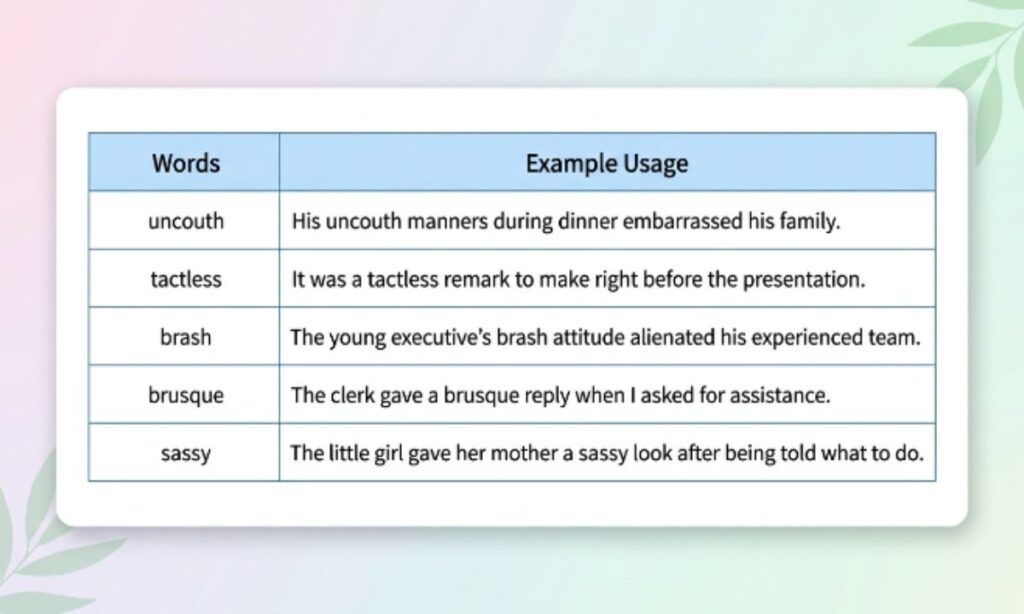
For work emails, stick with formal options like discourteous, dismissive, or condescending, since they stay professional.
With friends, casual words like “sassy,” “cheeky,” or “snippy” fit the tone better.
At school, “insolent” or “impudent” works well for describing pushback against rules. For everyday conversation, blunt, curt, and tactless cover most situations naturally.
Common Mistakes
- Using harsh words like “obnoxious” for minor, one-time incidents
- Choosing formal words like “discourteous” in casual texts or chats
- Mixing up curt and rude, when “curt” refers to tone, not intent
- Overusing one synonym instead of matching the word to the situation
- Forgetting that words like “cheeky” and “sassy” sound playful, not harsh
Quick Guide Table
Beyond the 25 words above, plenty of other synonyms capture different shades of rude behavior. Some lean formal, some fit casual chats, and others work best in writing rather than speech. Use the table below to quickly match a word to the right setting. This makes it easier to build a mental list you can pull from without overthinking it.
| Phrase | Formal | Casual | Conversation | |
| Unmannerly | Yes | No | Yes | No |
| Presumptuous | Yes | No | Yes | Yes |
| Haughty | Yes | No | Yes | Yes |
| Pompous | Yes | No | Yes | Yes |
| Supercilious | Yes | No | Yes | No |
| Peremptory | Yes | No | Yes | No |
| High-Handed | Yes | No | Yes | Yes |
| Loutish | No | Yes | No | Yes |
| Uncouth | No | Yes | No | Yes |
| Cocky | No | Yes | No | Yes |
| Snarky | No | Yes | No | Yes |
| Standoffish | Yes | Yes | Yes | Yes |
| Testy | No | Yes | No | Yes |
| Gruff | Yes | Yes | Yes | Yes |
| Off-Putting | Yes | Yes | Yes | Yes |
Conclusion
Picking the right synonym for “rude” makes your communication sharper and more specific. Each word carries its own tone, from playful to harsh, so matching it to the situation matters. Once you know these options, you’ll never have to reach for the same tired word twice.