
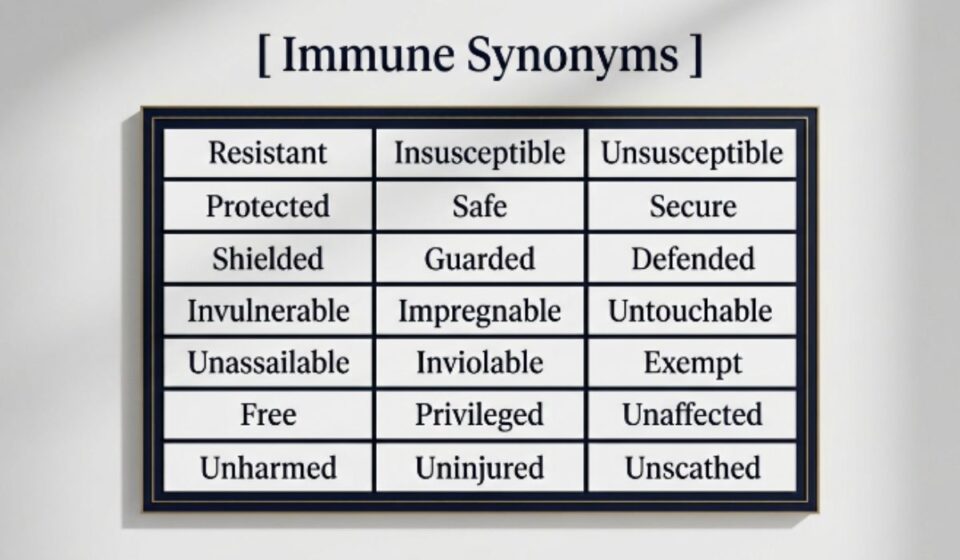

“Immune” gets used everywhere, from health articles to legal news to casual conversation. But the word covers a lot of ground, and repeating it can make your writing feel one-note. Picking a more precise alternative helps readers understand exactly what kind of protection or resistance you mean. This guide breaks down 25 natural replacements, how they differ, and when each one actually works.
What Does “Immune” Really Mean?
At its simplest, “immune” describes being protected from something, whether that’s a disease, a rule, or an emotional reaction. It can apply to your body, your legal status, or your mindset.
For example, someone who had chickenpox as a child usually stays immune to it as an adult. The word stretches from biology to law to everyday feelings, which is exactly why it shows up so often.
Why Look for Alternatives to “Immune”?
“Immune” is useful, but it’s also vague on its own. Say it too many times in one piece, and readers can’t tell if you mean medical resistance, legal exemption, or emotional detachment.
A sharper synonym clears that up instantly. “Exempt” signals a rule doesn’t apply to you. “Unaffected” signals something didn’t change your mood or opinion. “Resistant” signals your body is fighting something off. Each word narrows the meaning in a useful way.
25 Synonyms for “Immune” and How to Use Them
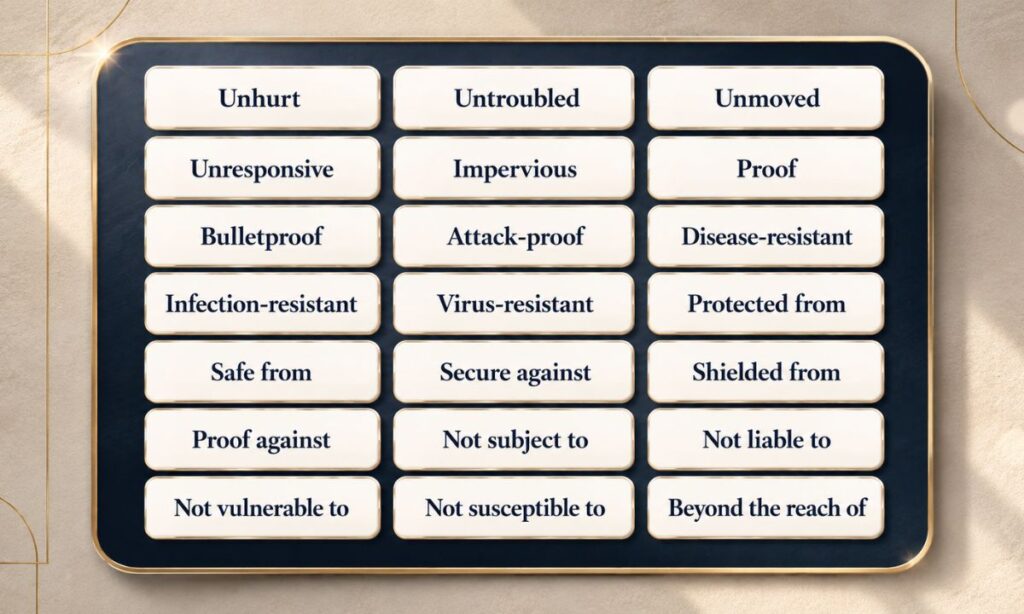
1. Resistant
Meaning: Resistant describes the ability to withstand or fight off something, especially in a medical or physical sense. It suggests active defense rather than complete untouchability. The word works well when talking about the body’s natural defenses.
Example: Regular exercise can make the body more resistant to common illnesses.
When It Fits: Use it for health, fitness, or biological contexts.
2. Protected
Meaning: Protected means shielded from harm, often through outside help like a vaccine, policy, or precaution. It carries a sense of safety provided by something external. The word suits both physical and legal protection.
Example: Employees are protected from retaliation under the new company policy.
When It Fits: Use it for workplace, legal, or safety-related writing.
3. Exempt
Meaning: Exempt means officially excused from a rule, tax, or requirement that applies to others. It’s precise and formal, common in legal and financial writing. The word signals a specific exception rather than general protection.
Example: Nonprofit organizations are exempt from certain federal taxes.
When It Fits: Use it for legal, tax, or policy-related exceptions.
4. Shielded
Meaning: “Shielded” describes being actively guarded from harm, often implying a barrier or protective layer. It has a slightly stronger, more visual tone than “protected.” The word fits situations involving deliberate defense.
Example: The witness was shielded from public identification during the trial.
When It Fits: Use it when emphasizing deliberate protection or defense.
5. Invulnerable
Meaning: Invulnerable means completely unable to be harmed or affected by something. It’s a strong, almost dramatic word. The word fits situations where nothing seems capable of causing damage.
Example: The old fortress seemed invulnerable to every siege attempt.
When It Fits: Use it for dramatic descriptions of strength or defense.
6. Unaffected
Meaning: Unaffected means something didn’t change or influence a person’s mood, opinion, or behavior. It’s emotionally neutral and often used in personal or psychological contexts. The word fits situations involving criticism, pressure, or persuasion.
Example: She remained unaffected by the harsh online comments.
When It Fits: Use it for emotional resilience in everyday conversation.
7. Insusceptible
Meaning: Insusceptible describes not being likely to be influenced, harmed, or affected by something specific. It’s a more technical, less common word than “immune.” The word fits scientific or formal writing precisely.
Example: Certain plant varieties are insusceptible to common garden pests.
When It Fits: Use it in technical, scientific, or academic writing.
8. Secure
Meaning: Secure means safe from risk, danger, or uncertainty. It’s broad and reassuring in tone. The word fits financial, physical, and emotional safety alike.
Example: The new firewall keeps company data secure from outside attacks.
When It Fits: Use it for safety and protection in technical or business contexts.
9. Untouchable
Meaning: Untouchable describes someone or something so protected or powerful that consequences simply don’t apply. It carries a bold, sometimes critical tone. The word fits situations involving privilege or perceived immunity from rules.
Example: The star player seemed untouchable, no matter how many rules he broke.
When It Fits: Use it for bold or critical commentary on privilege.
10. Safe
Meaning: Safe simply means free from danger or harm. It’s the most casual, everyday word on this list. The word fits nearly any context where risk has been reduced or removed.
Example: The vaccine kept the whole family safe during flu season.
When It Fits: Use it in casual, everyday conversation about health or risk.
11. Impervious
Meaning: Impervious describes something that can’t be penetrated, affected, or damaged, even under pressure. It’s formal and vivid, often used figuratively. The word suits descriptions of stubborn confidence or physical durability.
Example: He remained impervious to criticism throughout the entire debate.
When It Fits: Use it for strong, formal descriptions of resilience.
12. Inoculated
Meaning: Inoculated means specifically protected through a vaccine or deliberate exposure that builds resistance. It’s a precise medical term. The word fits health writing where the protection came from a specific procedure.
Example: Travelers must be inoculated against certain diseases before visiting the region.
When It Fits: Use it for vaccine-specific medical writing.
13. Guarded
Meaning: Guarded describes being carefully protected or watched over, often implying caution. It can apply to physical security or emotional caution. The word fits both literal protection and reserved personal behavior.
Example: The building remained guarded around the clock after the incident.
When It Fits: Use it for security contexts or cautious behavior.
14. Unresponsive
Meaning: Unresponsive describes not reacting to a stimulus, treatment, or influence at all. It’s often used in medical or technical contexts. The word suggests a lack of expected reaction rather than active resistance.
Example: The infection proved unresponsive to the first round of antibiotics.
When It Fits: Use it for medical or technical descriptions of non-reaction.
15. Hardened
Meaning: Hardened describes becoming tougher or less affected by something over time, often through repeated exposure. It carries a sense of earned toughness. The word fits personal growth or emotional endurance stories.
Example: Years on the job left him hardened to the daily stress.
When It Fits: Use it for stories about toughness built over time.
16. Desensitized
Meaning: Desensitized means no longer reacting strongly to something because of repeated exposure. It often carries a slightly negative or clinical tone. The word fits discussions of emotional numbness or reduced sensitivity.
Example: Constant exposure to violent news left many viewers desensitized.
When It Fits: Use it for discussions of reduced emotional reaction.
17. Excused
Meaning: Excused means officially released from an obligation, duty, or requirement. It’s simple and direct, often used in school or workplace settings. The word fits situations involving formal permission to skip something.
Example: Students with medical notes were excused from the fitness test.
When It Fits: Use it for school, work, or attendance-related exceptions.
18. Privileged
Meaning: Privileged describes having special rights or protections that others don’t have. It can carry a neutral or critical tone depending on context. The word fits legal, social, or workplace discussions of unequal treatment.
Example: Attorneys and clients share privileged communication protected by law.
When It Fits: Use it for legal or social discussions of special status.
19. Unbothered
Meaning: Unbothered describes staying calm and unaffected by stress, criticism, or drama. It’s casual and confident in tone. The word fits everyday conversation about emotional composure.
Example: She stayed completely unbothered during the chaotic team meeting.
When It Fits: Use it in casual conversation about staying calm.
20. Fortified
Meaning: Fortified means strengthened against attack, damage, or weakness, often through deliberate reinforcement. It suggests preparation and added strength. The word fits both literal defenses and figurative resilience.
Example: The city’s ancient walls were fortified against repeated invasions.
When It Fits: Use it for descriptions of deliberate, reinforced strength.
21. Unshakeable
Meaning: Unshakeable describes a mindset, belief, or confidence that nothing can disturb. It carries emotional strength and determination. The word fits motivational or personal-growth writing especially well.
Example: Her unshakeable confidence carried the team through the final round.
When It Fits: Use it for motivational writing about mental strength.
22. Immunized
Meaning: Immunized means made immune through a specific medical process, almost always a vaccine. It’s precise and clinical. The word fits public health writing where the process itself matters.
Example: The clinic immunized over 200 children during the outreach event.
When It Fits: Use it for public health campaigns or clinical writing.
23. Indifferent
Meaning: Indifferent describes a lack of emotional reaction or concern toward something. It’s neutral, sometimes cool in tone. The word fits situations where someone simply doesn’t care enough to be affected.
Example: He seemed indifferent to the criticism his design received.
When It Fits: Use it for describing emotional detachment or disinterest.
24. Insulated
Meaning: “Insulated” describes being separated or protected from outside influence, pressure, or harm, often through circumstance. It suggests a buffer rather than active resistance. The word fits financial, social, or emotional distance from risk.
Example: Their business stayed insulated from the market downturn.
When It Fits: Use it for financial or situational protection from outside effects.
25. Unscathed
Meaning: Unscathed means coming through a difficult situation without harm or damage. It carries relief, a sense of luck and protection. The word fits stories about surviving something risky or chaotic.
Example: The car flipped twice, but the driver walked away unscathed.
When It Fits: Use it to tell stories about surviving danger unharmed.
Which Alternative Fits Your Situation?
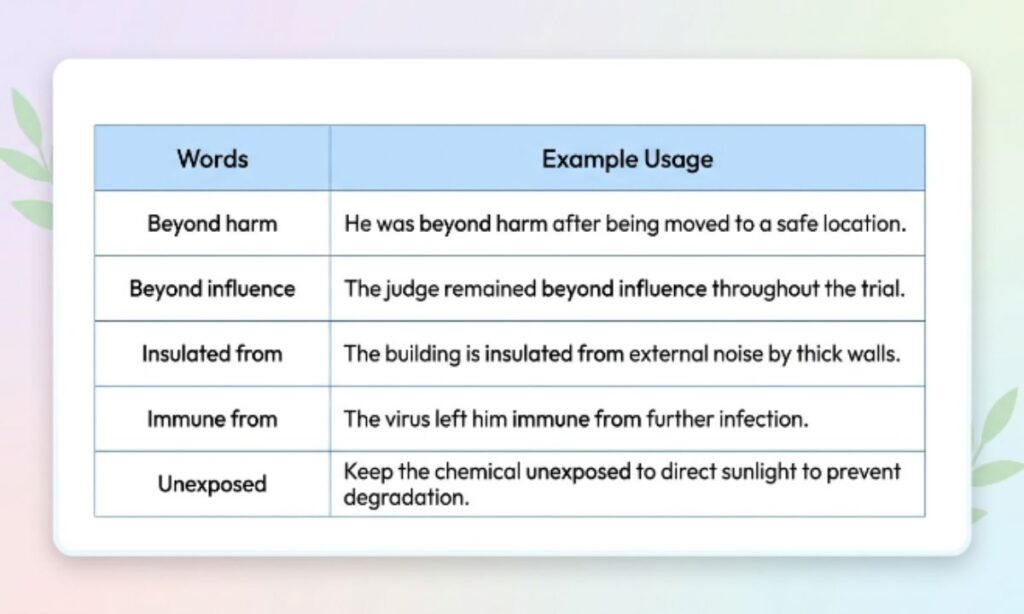
Different settings call for different levels of precision and tone.
- Work emails: exempt, secure, unaffected, insulated
- School writing: resistant, insusceptible, inoculated, desensitized
- Friends and casual chats: safe, unbothered, unshakeable, unscathed
- Formal writing or reports: protected, privileged, fortified, impervious
- Everyday conversation: safe, unaffected, indifferent, resistant
Common Mistakes
Swapping in the wrong synonym can quietly change what a sentence actually means.
- Using “exempt” for medical resistance, when the word really applies to rules or requirements
- Confusing “resistant” with “invulnerable,” even though resistant suggests partial defense, not total protection
- Applying “indifferent” to describe physical immunity, when the word only fits emotional detachment
- Using formal terms like “insusceptible” in casual writing, which can sound stiff or overly technical
- Repeating one favorite synonym throughout a piece, which just recreates the original overuse problem
Quick Guide Table
Here are ten more alternatives worth knowing, along with where each one fits best.
| Phrase | Formal | Casual | Conversation | |
| Untainted | Yes | No | Somewhat | No |
| Unscarred | Somewhat | Yes | No | Yes |
| Bulletproof | No | Yes | Somewhat | Yes |
| Inviolable | Yes | No | Yes | No |
| Sacrosanct | Yes | No | Somewhat | No |
| Unassailable | Yes | Somewhat | Yes | Somewhat |
| Buffered | Somewhat | No | Yes | No |
| Tolerant | Somewhat | Yes | Yes | Yes |
| Adapted | Somewhat | Yes | Yes | Yes |
| Untroubled | No | Yes | Somewhat | Yes |
Conclusion
“Immune” works as a general term, but the right synonym helps your reader instantly understand what kind of protection you mean: medical, legal, or emotional. Match the word to the setting, whether that’s a formal report or a casual chat with a friend. A precise word choice like this often makes writing feel clearer and more trustworthy.