
The word “party” gets used a lot. Birthday party. Work party. Political party. Search party. It’s a workhorse word, and that’s exactly the problem. When one word has to cover so much ground, it starts to feel flat.
Swapping in the right synonym does more than avoid repetition. It sets a mood before anyone reads a single detail. “We’re throwing a bash” sounds different from “we’re hosting a reception,” even though both might describe the same Saturday night. The word you pick tells people what kind of night to expect.
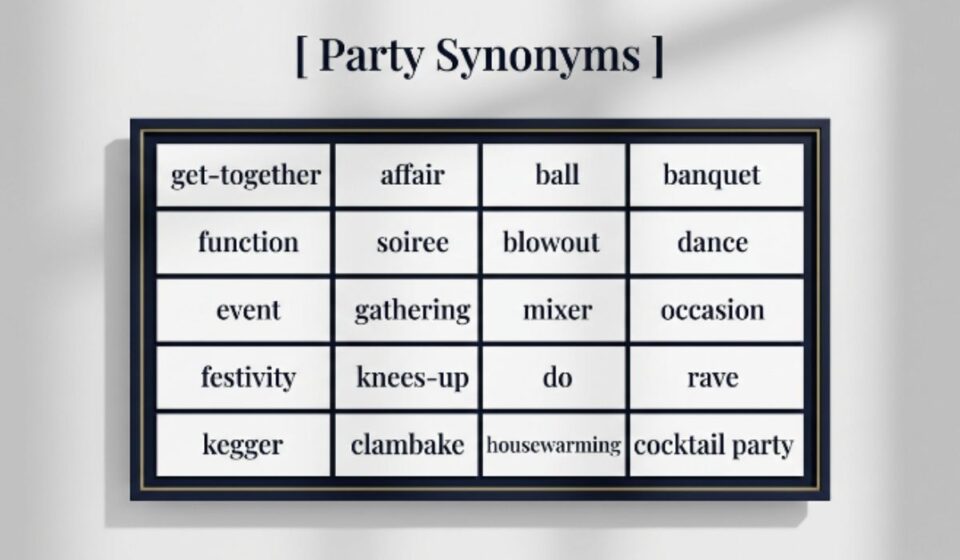
This guide walks through what “party” actually means, when it stops working, and 25 alternatives you can use instead, with real examples for each one.
What Does “Party” Really Mean?
At its core, a party is a gathering of people who come together to enjoy each other’s company, usually with food, drinks, music, or some shared activity involved. It can be planned weeks in advance or thrown together in an afternoon.
Here’s a simple example: your neighbor turns 40, so she invites twenty people over, sets out snacks, plays music, and everyone stays until midnight. That’s a party. Nothing fancy about the definition. It’s just people gathered, having a good time together.
The word stretches beyond social events too. A “search party” is a group looking for someone. A “political party” is an organized group with shared goals. But in everyday conversation, “party” almost always means the social, celebratory kind.
Why Look for Alternatives to “Party”?
If you’re writing an invitation, a blog post, or even a text to a friend, using “party” five times in five sentences gets boring fast. Readers notice repetition even when they can’t name it. Their eyes glaze over.
There’s also a tone problem. “Party” is a neutral, all-purpose word. It doesn’t tell your reader whether to expect a formal dinner or a backyard cookout with a keg. If you’re writing a wedding invitation, “reception” carries more weight than “party.” If you’re texting your college roommate, “party” might sound stiff compared to “kegger” or “bash.”
Finally, some contexts just don’t fit the word. A quiet dinner with six people isn’t really a “party” in most people’s minds. Calling it a “get-together” or “dinner party” fits better and sets the right expectations.
25 Synonyms for “Party” and How to Use Them
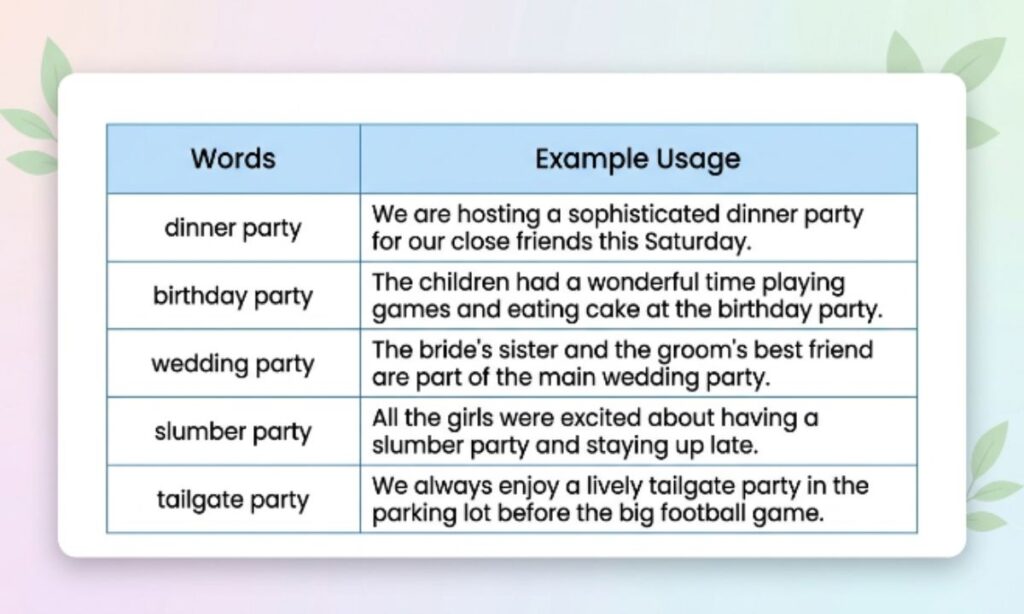
Celebration
Meaning: A celebration marks a specific achievement or milestone, like a graduation, promotion, or anniversary. It carries a sense of pride and purpose behind the event, not just people gathering for fun. Using this word tells your guests there’s a reason to raise a glass. It adds weight to an ordinary evening and makes people feel like they’re part of something meaningful.
Example: “We’re hosting a small celebration for my sister’s new job on Friday.”
When It Fits: Use it for milestone events like graduations, promotions, or retirements.
Gathering
Meaning: “Gathering” is a looser, more relaxed word than “party.” It suggests people coming together without a lot of fuss or formal planning. This word takes the pressure off. It signals to guests that they don’t need to dress up or bring a gift; just show up and enjoy the company. It works well when the focus is on connection rather than spectacle.
Example: “Let’s have a small gathering at my place after the game on Sunday.”
When It Fits: Great for casual, low-key plans with close friends or family.
Get-together
Meaning: This phrase describes an informal meetup, often among people who already know each other well. It has a friendly, easygoing feel to it. Saying “get-together” instead of “party” softens the invitation. It makes people feel like they’re being welcomed into a relaxed space, not asked to perform at an event.
Example: “We’re planning a get-together this weekend, nothing big, just pizza and old movies.”
When It Fits: Perfect for reunions, casual hangouts, or last-minute plans.
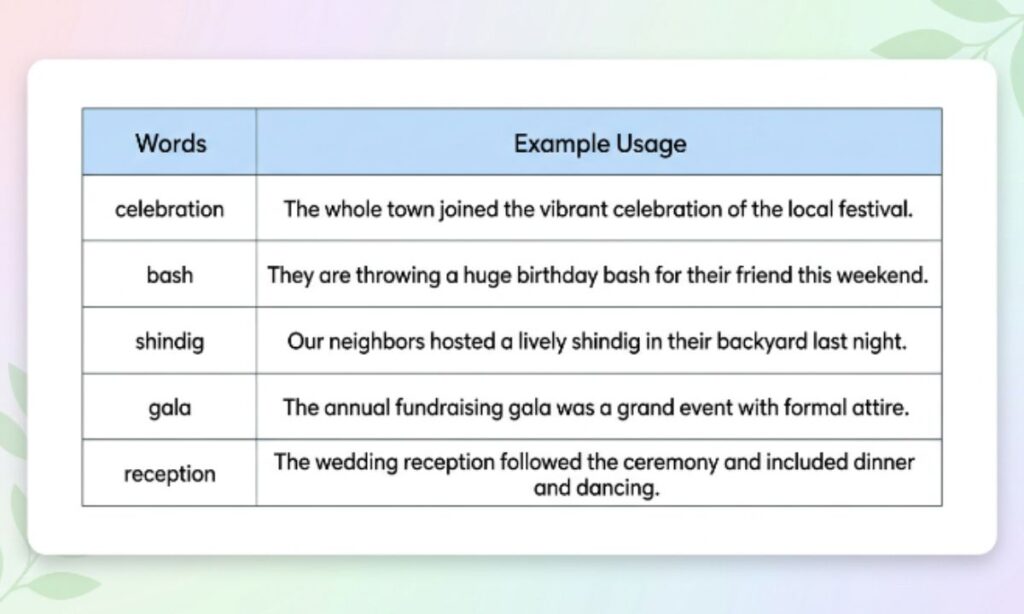
Bash
Meaning: A bash is a lively, high-energy party, usually loud and full of guests. It suggests fun, movement, and a bit of chaos in the best way. This word instantly raises expectations. People hear “bash” and picture music, dancing, and a room full of energy. It works well for hype-building invitations.
Example: “His 30th birthday bash had a live band and lasted until 2 a.m. “
When It Fits: Use it for milestone birthdays or big celebrations you want people to talk about.
Shindig
Meaning: A shindig is a fun, informal party, often with music and dancing. It has a slightly old-fashioned, folksy charm to it. This word adds personality and warmth to an invitation. It feels friendly rather than fancy, which can make guests more comfortable and excited to attend.
Example: “Grandpa’s retirement shindig had a barbecue and a bluegrass band.”
When It Fits: Works well for backyard events, community gatherings, or family celebrations.
Soiree
Meaning: A soiree is an elegant evening gathering, often with a refined, social atmosphere. It leans formal without being stiff. This word signals sophistication. It tells guests to expect a polished evening, good conversation, and probably a dress code, without sounding overly rigid like “gala.”
Example: “The gallery opening turned into a lovely soiree with wine and live jazz.”
When It Fits: Ideal for evening events with an artistic or upscale feel.
Gala
Meaning: A gala is a large, formal event, often held to raise money or celebrate something significant. It carries prestige and structure. This word sets clear expectations for formality. People know to dress up, expect speeches or presentations, and treat the evening as a special occasion rather than casual fun.
Example: “The hospital’s annual gala raised over $200,000 for children’s care.”
When It Fits: Best for fundraisers, award ceremonies, or formal charity events.
Reception
Meaning: A reception is a formal gathering held to welcome someone or mark an occasion, often with structured seating and a program. It’s common at weddings and official events. This word communicates order and purpose. Guests understand there will be a clear flow to the evening, from greetings to toasts to a meal.
Example: “The wedding reception followed the ceremony at the same venue.”
When It Fits: Use it for weddings, official welcomes, or corporate events.
Fiesta
Meaning: Fiesta is a Spanish word that has become common in English, describing a festive, colorful celebration full of energy. It carries cultural warmth and vibrancy. This word brings excitement and a sense of tradition to an invitation. It works especially well when food, music, and color are central to the event.
Example: “The neighborhood block fiesta had tacos, piñatas, and mariachi music.”
When It Fits: Great for cultural celebrations or lively outdoor summer events.
Blowout
Meaning: A blowout is a huge, over-the-top party, often bigger and louder than usual. It suggests excess and excitement. This word builds anticipation fast. People expect a night that goes beyond the ordinary, with more guests, more music, and more energy than a typical get-together.
Example: “They threw a graduation blowout with a DJ and a rented dance floor.”
When It Fits: Use it for major life events you want to celebrate in a big way.
Mixer
Meaning: A mixer is a social event designed to help people meet and network, often used in professional or academic settings. It focuses on connection over celebration. This word tells guests the goal is conversation and introductions, not necessarily food or dancing. It sets a purposeful, friendly tone.
Example: “The business school hosted a mixer for new students to meet local employers.”
When It Fits: Perfect for networking events, orientation nights, or professional gatherings.
Social
Meaning: A social is a casual, informal event meant purely for enjoying each other’s company. It’s often used in community or club settings. This word feels approachable and unpretentious. It removes any sense of pressure and invites people to simply show up and chat without an agenda.
Example: “The book club’s monthly social happens at the coffee shop downtown.”
When It Fits: Works well for clubs, church groups, or recurring community events.
Function
Meaning: A function is a general term for an organized event, often used in professional or formal contexts. It’s broad and somewhat neutral. This word works when you need a catch-all term that sounds slightly more official than “party” without being overly specific about the mood.
Example: “Employees are required to attend the company’s year-end function.”
When It Fits: Best for workplace events or formal invitations where “party” feels too casual.
Fete
Meaning: A fete is a festive celebration, often outdoors, honoring a person or occasion. It has a charming, slightly old-world feel. This word adds a touch of elegance without sounding stuffy. It works especially well for garden parties or outdoor celebrations with a classic feel.
Example: “The village fete included games, a bake sale, and a raffle.”
When It Fits: Great for outdoor community celebrations or charity fundraisers.
Housewarming
Meaning: A housewarming is a party held to celebrate someone moving into a new home. It’s specific, warm, and tied to a clear occasion. This word instantly explains the purpose of the invitation. Guests know to bring a small gift and expect a tour of the new space.
Example: “We’re having a housewarming next Saturday; come see the new place.”
When It Fits: Use it only when celebrating a new home or apartment.
Bacchanal
Meaning: A bacchanal is a wild, indulgent celebration, often associated with excess food, drink, and revelry. The word has roots in ancient festivals honoring Bacchus, the god of wine. This word adds drama and a hint of humor to an invitation. It works best among friends who’ll appreciate the playful, over-the-top reference.
Example: “New Year’s Eve at their place turned into a full bacchanal by midnight.”
When It Fits: Use it playfully among close friends for wild, unrestrained celebrations.
Kegger
Meaning: A kegger is an informal party centered around beer, typically served from a keg. It’s casual, loud, and often associated with college life. This word sets very specific, low-key expectations. People know exactly what kind of night it’ll be: no dress code, no formalities, just beer and good company.
Example: “There’s a kegger at the lake house this weekend if you’re around.”
When It Fits: Best for casual college-style hangouts among friends.
Rave
Meaning: A rave is a large dance party, typically featuring electronic music, lights, and an all-night atmosphere. It’s high-energy and immersive. This word signals a specific type of night built around music and movement. It appeals to people looking for an intense, dance-focused experience.
Example: “The warehouse rave didn’t wind down until sunrise.”
When It Fits: Use it for electronic music events or all-night dance gatherings.
Jamboree
Meaning: A jamboree is a large, joyful gathering, often involving music, games, and a festive atmosphere. It’s frequently used for community or scout events. This word brings a sense of playful energy and inclusiveness. It works well when the event is meant to feel fun for a wide range of ages.
Example: “The town’s summer jamboree included a parade, live bands, and food trucks.”
When It Fits: Ideal for community festivals or family-friendly outdoor events.
Hootenanny
Meaning: A hootenanny is an informal gathering centered around folk music, often with people playing instruments and singing together. It has a rustic, communal feel. This word adds charm and personality to an event description. It signals a laid-back night built around music rather than dancing or drinking.
Example: “Bring your guitar; we’re having a hootenanny on the porch tonight.”
When It Fits: Perfect for music-focused, casual outdoor gatherings.
Hoedown
Meaning: A hoedown is a lively, informal party centered around country or folk dancing, often with a rural or Western theme. This word paints a clear picture instantly. Guests know to expect boots, dancing, and a fun, unpretentious atmosphere rather than a quiet evening.
Example: “The farm hosted a hoedown after the harvest, complete with a live fiddle player.”
When It Fits: Great for themed events with a country or rustic vibe.
Icebreaker
Meaning: An icebreaker is a small social event designed to help strangers feel comfortable and start talking to one another. It’s more about easing tension than celebrating. This word tells guests the goal is connection, not spectacle. It works especially well in new environments like classrooms or workplaces.
Example: “The new hires had an icebreaker session before the training started.”
When It Fits: Use it for first-time meetups among people who don’t know each other yet.
Cookout
Meaning: A cookout is an outdoor gathering centered around grilling food, often in a backyard or park. It’s casual and food-focused. This word sets a very specific, relaxed tone. People know to expect burgers, sunshine, and lawn chairs rather than formal seating or a dress code.
Example: “We’re having a cookout Sunday afternoon if the weather holds up.”
When It Fits: Best for summer weekends and outdoor family gatherings.
Wingding
Meaning: A wingding is an old-fashioned, informal term for a lively, fun party. It has a nostalgic, slightly humorous ring to it. This word adds personality and a bit of playfulness to an invitation. It works well when you want to sound casual and a little quirky at the same time.
Example: “Her grandmother still calls every birthday party a wingding.”
When It Fits: Use it in casual, playful writing or conversation with a nostalgic tone.
Meet-up
Meaning: A meet-up is a planned gathering, often organized around a shared interest, hobby, or group. It’s practical and straightforward. This word focuses on the purpose behind the gathering rather than the celebration itself. It works well for recurring or interest-based events.
Example: “There’s a hiking meet-up happening this Saturday morning at the trailhead.”
When It Fits: Perfect for hobby groups, clubs, or organized community events.
Which Alternative Works Best for You?
For work emails: Stick with “function,” “reception,” or “mixer.” These words sound professional and set the right expectations for a corporate audience.
For formal invitations: “Gala,” “soiree,” and “reception” carry the right level of polish for weddings, fundraisers, and upscale evenings.
For friends: “Bash,” “shindig,” “kegger,” and “hootenanny” bring personality and fun without sounding forced.
For school or campus life: “Mixer,” “icebreaker,” and “meet-up” fit naturally into orientation events, study groups, and student activities.
For everyday conversation: “Get-together,” “gathering,” and “cookout” work in almost any casual context and never sound out of place.
Common Mistakes
Using formal words in casual texts. Telling a friend you’re hosting a “gala” for a Tuesday night hangout will confuse them or come off as sarcastic when you didn’t mean it that way.
Ignoring the size of the event. Calling a two-person dinner a “bash” oversells it. Match the word to the actual scale of the gathering.
Forgetting cultural context. Words like “fiesta” carry cultural weight. Use them with respect and accuracy, not just as a trendy substitute.
Overusing niche slang. Words like “wingding” or “hootenanny” are fun occasionally, but using them constantly can feel like you’re trying too hard.
Mixing formality levels in one message. Don’t pair a formal word like “reception” with casual details like “bring your own beer.” Keep the tone consistent from start to finish.
Quick Comparison Table
| Phrase | Formal | Casual | Conversation | |
| Celebration | Yes | Yes | Yes | Yes |
| Gathering | Yes | Yes | Yes | Yes |
| Get-together | No | Yes | Yes | Yes |
| Bash | No | Yes | No | Yes |
| Shindig | No | Yes | No | Yes |
| Soiree | Yes | No | Yes | No |
| Gala | Yes | No | Yes | No |
| Reception | Yes | No | Yes | No |
| Fiesta | No | Yes | Yes | Yes |
| Blowout | No | Yes | No | Yes |
| Mixer | Yes | No | Yes | Yes |
| Social | Yes | Yes | Yes | Yes |
| Function | Yes | No | Yes | No |
| Fete | Yes | Yes | Yes | No |
| Housewarming | No | Yes | Yes | Yes |
| Bacchanal | No | Yes | No | Yes |
| Kegger | No | Yes | No | Yes |
| Rave | No | Yes | No | Yes |
| Jamboree | No | Yes | Yes | Yes |
| Hootenanny | No | Yes | No | Yes |
| Hoedown | No | Yes | No | Yes |
| Icebreaker | Yes | No | Yes | Yes |
| Cookout | No | Yes | Yes | Yes |
| Wingding | No | Yes | No | Yes |
| Meet-up | Yes | Yes | Yes | Yes |
Conclusion
The word “party” works fine, but it doesn’t always say enough. The right synonym sets the mood before your guests even walk through the door.
Pick a word that matches the size, tone, and setting of your event, not just the first synonym that comes to mind. Small choices like this make your writing and your invitations feel a lot more thoughtful.