

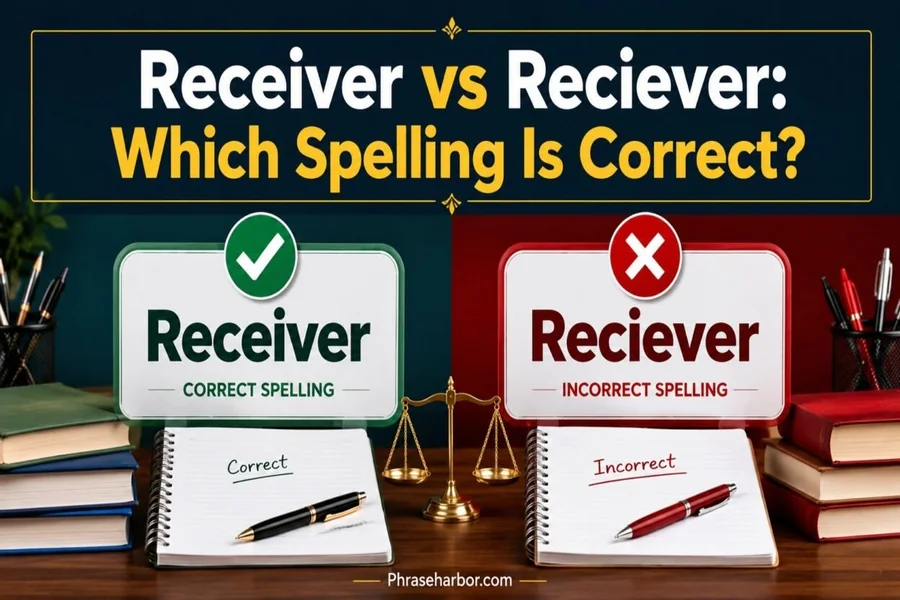
English spelling can sometimes be confusing. Many words contain letters that sound similar or appear in an unexpected order. One common example is the difference between receiver and reciever. Although both spellings may look familiar to readers only one is correct.
The correct spelling is receiver. The word reciever is a common spelling mistake that occurs when people place the letters E and I in the wrong order.
This mistake is easy to make because English does not always follow consistent spelling rules. Some words use IE while others use EI. When people write quickly they may remember the sound of a word but forget the correct letter sequence.
Understanding the difference between receiver and reciever can help improve writing and communication. It is especially useful for students and professionals who want to write clearly in emails and documents.
This article explains the correct spelling and meaning of receiver. It also covers common mistakes and provides practical examples to help readers remember the correct form.
Receiver vs Reciever: Which Spelling Is Correct?
The correct spelling is receiver.
Reciever is incorrect and should not be used in standard English writing.
The difference between the two spellings is the order of the letters I and E. In receiver the letters appear as EI after the C. In reciever the letters appear as IE after the C.
Although reciever may look reasonable it is not the accepted spelling in English dictionaries.
A receiver is a person or thing that receives something. The word can describe someone who accepts a message or a device that receives signals.
For example:
- The receiver accepted the package.
- The television receiver picked up the signal.
- The email receiver opened the message.
In each sentence receiver is the correct word.
The mistake often happens because writers try to apply a spelling pattern they have learned from other English words. However receiver follows a different letter pattern.
When writing this word it is best to remember the correct spelling rather than rely only on pronunciation.
What Does Receiver Mean?
The word receiver comes from the verb receive. It describes a person or object that receives something.
The meaning depends on the situation in which the word is used.
In everyday communication a receiver can be a person who gets a message or item from someone else. In technology it can refer to a device that receives information or signals.
For example a radio receiver captures radio signals and converts them into sound. A television receiver receives broadcast signals so that viewers can watch programs.
In communication systems the receiver is the destination for a message. The sender creates or transmits the message while the receiver gets it.
The word can also be used in legal and financial situations. A receiver may be appointed to manage property or business assets when a company or individual faces certain legal or financial difficulties.
Another common meaning appears in sports. In American football a receiver is a player whose role includes catching passes from the quarterback.
These different meanings share one basic idea. A receiver is someone or something that receives.
Understanding this central meaning makes it easier to use the word correctly in different contexts.
Why Is Reciever a Common Spelling Mistake?
The spelling reciever is common because English has many words that use the IE letter combination.
Words such as believe and achieve may influence how people spell receiver. When writers remember these words they may incorrectly place IE in receiver.
Another reason is the pronunciation. In many English accents the sound of receiver does not clearly reveal whether the word contains IE or EI.
People often spell words based on how they sound. This approach works for some English words but can lead to mistakes when the spelling is irregular.
Typing quickly can also contribute to the problem. Writers may know the correct spelling but accidentally switch the letters while typing.
Autocorrect and spell-check tools can help identify this mistake. However users should not depend completely on automatic correction because some tools may miss errors or fail to understand the intended meaning.
The best solution is to learn the correct spelling and use a simple memory technique.
Once the spelling becomes familiar it is much easier to write receiver correctly without stopping to think about it.
The Difference Between Receiver and Reciever
The difference between receiver and reciever is simple. One is correct and the other is a misspelling.
| Word | Correct or Incorrect | Meaning |
|---|---|---|
| Receiver | Correct | A person or device that receives something |
| Reciever | Incorrect | A common misspelling of receiver |
Both words may appear in online searches and informal writing. However only receiver should be used in professional and academic communication.
The incorrect spelling does not have a separate meaning. It is not an alternative form of receiver and should not be treated as a different English word.
When writing a document it is important to check the spelling carefully. A small spelling mistake can make a sentence look less professional even when the meaning is clear.
For example:
Incorrect: The reciever got the delivery yesterday.
Correct: The receiver got the delivery yesterday.
The corrected sentence uses the accepted spelling and communicates the same meaning.
Remember that the correct word always contains the letter sequence EI after the C.
How to Remember the Correct Spelling of Receiver
A simple way to remember receiver is to connect it with the verb receive.
The word receive contains the same letter sequence as receiver. If you can spell receive correctly then you can spell receiver correctly by adding R at the end.
Another useful technique is to divide the word into smaller parts:
Re + ceive + r
The middle part is receive. The final R turns the word into receiver.
You can also remember that receiver contains the word receive. This connection makes the spelling easier to recognize.
Try writing the word several times in a sentence. Repeated use can help build a stronger memory.
For example:
- The receiver received the letter.
- The receiver is waiting for the signal.
- The package receiver signed the delivery form.
These examples reinforce the correct spelling while showing how the word works in everyday English.
The most effective spelling method is one that feels natural and easy to remember.
Examples of Receiver in Everyday English
Receiver appears in many types of writing. Understanding its use in different situations can help readers become more confident.
In everyday communication the word may describe someone who receives a package or message.
Example: The receiver was happy to get the birthday gift.
In technology receiver often refers to equipment that receives signals.
Example: The wireless receiver connects the keyboard to the computer.
In sports receiver can describe a player who catches a pass.
Example: The receiver caught the ball near the end zone.
In business receiver may refer to a person who accepts goods or manages certain financial assets.
Example: The receiver checked the shipment before signing the delivery document.
In communication the word may describe the person at the destination of a message.
Example: The sender and receiver must use the same communication system.
These examples show that receiver is a flexible word with several meanings. However its spelling remains the same in every context.
Receiver in Technology and Communication
The word receiver is especially common in technology.
A receiver is a device that accepts signals or information from another source. It may receive radio waves or wireless data or audio signals.
For example a radio receiver receives broadcast signals and converts them into sound. A satellite receiver collects signals from a satellite and makes them available for a television or other connected device.
In wireless communication a receiver may be built into a smartphone or computer. It allows the device to receive information from a network or another electronic device.
A Bluetooth receiver can accept audio or data from a compatible device. A television receiver may process signals so that viewers can watch programs.
The word is also used in audio equipment. An audio receiver can combine different sound sources and send audio to speakers.
In these technical situations receiver describes the part of a system that accepts incoming information.
The opposite role is often performed by a transmitter or sender. A transmitter sends signals while a receiver accepts them.
Understanding these terms can help readers follow technical instructions and product descriptions.
Receiver vs Other Similar English Words
Receiver is sometimes confused with other words that have related meanings.
The word recipient describes a person who receives something. It is commonly used in formal writing and communication.
For example the recipient of an email is the person who receives the email.
Receiver can also describe a person who gets something but it is often used for devices and specific roles.
The word reception refers to the act or process of receiving something. It can also describe how people respond to an event or idea.
For example the reception of a new product may be positive or negative.
The word receive is the verb. It describes the action of getting something.
For example: I receive messages every day.
These words are related but they are not interchangeable in every sentence.
Understanding their differences helps writers choose the most appropriate word for their intended meaning.
Frequently Asked Questions About Receiver vs Reciever
1. Is receiver or reciever correct?
Receiver is correct. Reciever is a common spelling mistake and should not be used in standard English.
2. Why is reciever wrong?
Reciever places the letters I and E in the wrong order. The correct spelling is receiver with EI after the C.
3. What does receiver mean?
A receiver is a person or device that receives something. It may refer to a message recipient or a piece of electronic equipment.
4. How do you spell receiver correctly?
The correct spelling is R-E-C-E-I-V-E-R. You can remember it by connecting it with the verb receive.
5. Is receiver a noun?
Yes. Receiver is a noun because it names a person or thing that receives something.
6. What is the difference between receiver and recipient?
A recipient is usually a person who receives something. Receiver can refer to a person but is also commonly used for devices and specific roles.
7. What is the opposite of receiver?
In communication the opposite role is often sender or transmitter. A sender transmits information while a receiver accepts it.
8. Is receiver used in technology?
Yes. Receiver is widely used in technology for devices that accept signals or information. Examples include radio receivers and wireless receivers.
9. How can I avoid spelling receiver incorrectly?
Remember the spelling of receive. Receiver contains the same word with an additional R at the end.
Final Thought
The difference between receiver and reciever is simple but important. Receiver is the correct spelling while reciever is an incorrect form that often appears because of confusion over the letters IE and EI.
The word receiver has several meanings. It can describe a person who gets something or a device that accepts signals. It is also used in sports and business.
Learning the correct spelling can improve writing and help avoid unnecessary mistakes. A useful way to remember it is to connect receiver with receive.
English spelling may sometimes feel confusing but small learning habits can make a big difference. By practicing common words and checking unfamiliar spellings writers can become more confident in their everyday communication.
Whenever you need to use this word remember one simple rule: receiver is correct and reciever is not.
