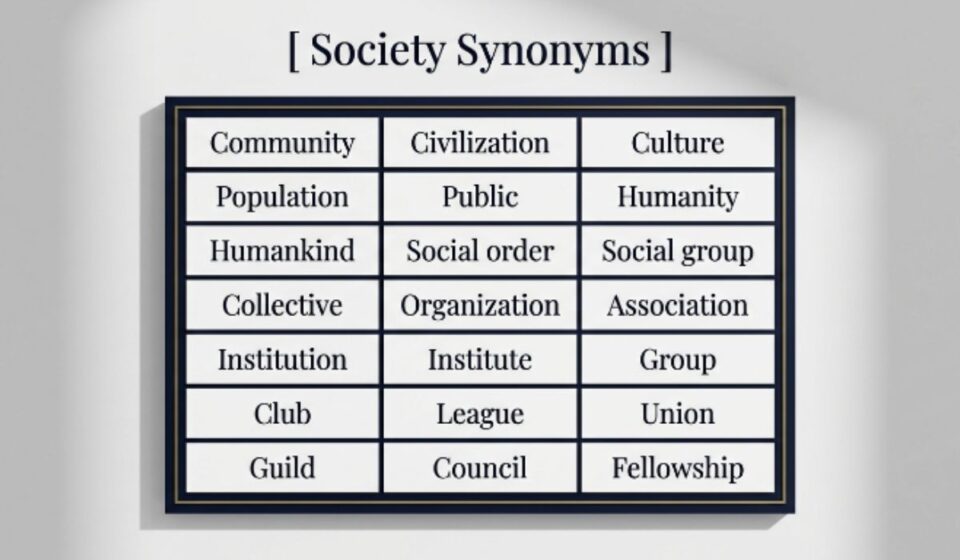

Using the same word over and over makes your writing feel flat. “Society” is one of those words people reach for automatically, even when a sharper or more specific term would say more.
Swapping it out at the right moment makes your sentences clearer, more precise, and easier to read. This guide walks through 30 real alternatives, when to use each one, and how to avoid picking the wrong one for your context.
What Does “Society” Really Mean?
In plain English, “society” describes a group of people living together, sharing rules, customs, or a common purpose. It can mean the whole population of a country, a smaller group like a club, or even the company of close friends.
For example: “Modern society relies heavily on technology” refers to people in general, living under shared systems and habits. That’s the broadest, most common use of the word.
Why Look for Alternatives to “Society”?
“Society” gets overused because it’s a safe, general word. The problem is that safe words rarely carry precision. If you’re writing about a professional group, a cultural era, a friendship, or an elite social class, “society” stretches to cover all of them, and stretches thin.
Repeating it across a paragraph also makes writing sound stiff or repetitive, especially in essays, articles, and formal emails. A more specific word often communicates your exact meaning faster, with less explanation needed afterward.
30 Synonyms for “Society” and How to Use Them
Community
Meaning: A community refers to people connected by shared location, interests, or values. It feels warmer and more personal than “society,” since it points to people who actually interact with one another. This word works well when you want to highlight belonging rather than scale. It signals closeness instead of distance.
Example: The new library became a gathering point for the whole community.
When It Fits: Use it when talking about neighborhoods, local groups, or shared identity.
Civilization
Meaning: Civilization describes an organized, advanced way of life, often tied to a specific era or region. It carries historical or cultural weight that “society” doesn’t always have. This word works best in academic or historical writing. It suggests structure, progress, and shared achievement over time.
Example: Ancient civilization along the Nile shaped early record-keeping and law.
When It Fits: Use it for historical, cultural, or large-scale discussions of human development.
Culture
Meaning: Culture refers to the beliefs, customs, and practices shared by a group. It’s narrower than “society” but often more useful, since it focuses on values and behavior rather than population. This word adds depth when you’re describing how people live, not just where. It highlights identity over structure.
Example: Workplace culture changed quickly once remote work became normal.
When It Fits: Use it when discussing values, traditions, or shared behavior patterns.
Public
Meaning: The public refers to people in general, especially in relation to government, media, or shared spaces. It’s more neutral and functional than “society,” with less emotional weight. This word works well in journalism, policy writing, and formal communication. It keeps focus on people as an audience or stakeholder group.
Example: The announcement was released to the public on Monday morning.
When It Fits: Use it in news writing, official statements, or policy contexts.
Population
Meaning: Population describes the total number of people living in a specific area. It’s a statistical, factual word rather than a social or emotional one. This term is useful when precision matters more than tone. It strips away nuance and focuses purely on numbers and demographics.
Example: The population grew steadily over the past decade.
When It Fits: Use it in reports, data-driven writing, or demographic discussions.
Organization
Meaning: An organization is a structured group formed around a shared goal or purpose. Unlike “society,” it implies formal roles, rules, and leadership. This word fits professional and institutional writing well. It adds clarity when you’re describing something with defined structure, not a general population.
Example: The organization expanded its outreach programs this year.
When It Fits: Use it for businesses, nonprofits, or formal groups with clear goals.
Association
Meaning: An association is a group formed around a shared profession, interest, or cause. It sounds official and purposeful, often used for clubs or professional bodies. This word signals membership and shared intent. It works especially well when describing formal, rule-based group participation. Example: She joined the local writers’ association last spring. When It Fits: Use it for professional groups, clubs, or membership-based organizations.
Institution
Meaning: An institution refers to an established organization with long-standing structure and authority, like a school or government body. It carries more formality and permanence than “society.” This word fits well when discussing systems built to last. It highlights stability and social role rather than everyday interaction.
Example: The university is one of the oldest institutions in the region.
When It Fits: Use it for schools, governments, banks, or long-established bodies.
Fellowship
Meaning: Fellowship refers to friendly association or shared companionship, often within a group with common interests. It’s warmer and more personal than “society,” emphasizing connection over structure. This word adds emotional closeness to your writing. It works well when describing bonds formed through shared time or purpose.
Example: The retreat offered a strong sense of fellowship among strangers.
When It Fits: Use it for close-knit groups, faith communities, or shared-purpose gatherings.
Guild
Meaning: A guild is a group of people in the same trade or craft, historically formed for mutual support. It has a slightly old-fashioned, specialized tone. This word fits creative or professional trades well. It signals shared skill and cooperation rather than general population.
Example: The writers formed a guild to protect fair contract terms.
When It Fits: Use it for trade groups, crafts, or specialized professional communities.
League
Meaning: A league is a group formed for a common purpose, often competitive or cooperative in nature. It suggests organized coordination between members. This word fits well in sports, politics, or alliance-based writing. It adds a sense of shared strategy or goal-driven partnership.
Example: Several nations formed a league to promote regional trade.
When It Fits: Use it for alliances, sports groups, or coordinated partnerships.
Club
Meaning: A club is a casual or formal group formed around a shared hobby or interest. It’s simple, familiar, and easy to understand. This word works in everyday and light professional writing alike. It suggests choice and enjoyment rather than obligation or scale.
Example: He started a book club with three coworkers.
When It Fits: Use it for hobby groups, informal gatherings, or interest-based circles.
Circle
Meaning: A circle refers to a small, connected group of people, often based on friendship or shared status. It feels intimate and selective compared to “society.” This word works well when describing close relationships or influence. It suggests familiarity and a defined boundary of belonging.
Example: She stayed close to her circle of college friends.
When It Fits: Use it for friend groups, social circles, or small connected networks.
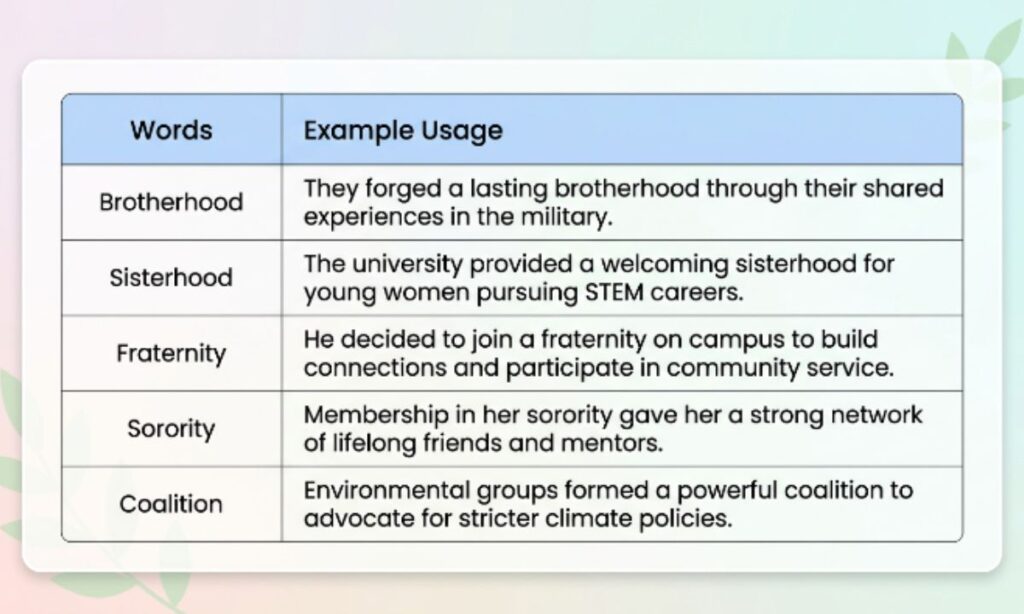
Coalition
Meaning: A coalition is a temporary alliance formed between groups to achieve a shared goal. It implies cooperation despite differences. This word fits political or activist writing especially well. It highlights unity built around a specific cause rather than everyday social life.
Example: A coalition of local businesses pushed for the new policy.
When It Fits: Use it for political alliances, activism, or cause-driven partnerships.
Collective
Meaning: A collective is a group that works together with shared ownership or decision-making. It carries a modern, cooperative tone. This word fits well in creative, activist, or community-focused writing. It emphasizes equality and joint effort over hierarchy.
Example: The artist collective shared studio space and resources.
When It Fits: Use it for cooperative groups, creative teams, or shared-effort projects.
Consortium
Meaning: A consortium is a formal partnership between organizations, often businesses or institutions, working toward a shared objective. It sounds professional and large-scale. This word fits corporate or academic writing well. It signals strategic cooperation rather than casual social connection.
Example: A consortium of universities funded the research project.
When It Fits: Use it for business partnerships, research groups, or institutional collaboration.
Brotherhood
Meaning: Brotherhood describes a close bond between people who see each other as equals, often built through shared experience. It carries emotional weight and loyalty. This word fits well in writing about deep, trust-based connection. It suggests solidarity rather than formal structure.
Example: Years of training built a real brotherhood among the soldiers.
When It Fits: Use it for close male-oriented groups, teams, or loyalty-based bonds.
Sisterhood
Meaning: Sisterhood describes a close, supportive bond between women, often built around shared experience or purpose. It carries warmth and solidarity. This word works well in writing about mutual support and connection. It emphasizes trust and shared identity over formal membership.
Example: The program created a lasting sisterhood among first-generation students.
When It Fits: Use it for close female-oriented groups or support networks.
Fraternity
Meaning: Fraternity refers to a group bound by shared purpose, brotherhood, or membership, often formal in structure. It has both a general and campus-specific meaning. This word fits well in writing about loyalty within organized groups. It adds a sense of tradition and mutual commitment.
Example: He credits his fraternity with teaching him leadership skills.
When It Fits: Use it for formal male membership groups or general brotherhood contexts.
Sorority
Meaning: Sorority describes a formal women’s membership organization, often centered on friendship, service, or shared values. It carries structure and tradition. This word fits campus or organizational writing specifically. It signals belonging within a defined, rule-based group.
Example: Her sorority organized the annual charity fundraiser.
When It Fits: Use it specifically for formal women’s membership organizations.
Companionship
Meaning: Companionship refers to the comfort and connection found in spending time with others. It’s personal and emotional rather than structural. This word fits well when describing closeness rather than group size. It highlights presence and support over shared institutions.
Example: After moving abroad, she missed the companionship of old friends.
When It Fits: Use it for personal relationships, friendship, or emotional closeness.
Camaraderie
Meaning: Camaraderie describes mutual trust and friendliness shared among people who spend time together, often through shared effort. It carries energy and warmth. This word fits well in team or workplace writing. It emphasizes shared spirit rather than formal group identity.
Example: The camaraderie on the team made long shifts easier.
When It Fits: Use it for teams, coworkers, or shared-experience groups.
Comradeship
Meaning: Comradeship describes loyalty and friendship built through shared struggle or purpose, often in demanding situations. It carries a slightly stronger, more serious tone than camaraderie. This word fits well in writing about hardship or shared effort. It signals mutual reliance and trust.
Example: Comradeship grew stronger as the team faced setback after setback.
When It Fits: Use it for groups bonded through hardship, effort, or shared struggle.
High Society
Meaning: High society refers to the wealthy, fashionable, or socially prominent class of people. It carries status and exclusivity. This phrase fits well in writing about wealth, class, or social prestige. It highlights privilege and visibility rather than everyday community life.
Example: The gala drew members of the city’s high society.
When It Fits: Use it for writing about wealth, status, or elite social circles.
Upper Crust
Meaning: Upper crust is an informal way to describe the wealthiest or most socially elite group in a community. It carries a slightly ironic or observational tone. This phrase fits casual or journalistic writing well. It suggests privilege, often with a hint of critique.
Example: The event was clearly designed for the city’s upper crust.
When It Fits: Use it in informal, journalistic, or lightly critical writing about wealth.
Elite
Meaning: Elite refers to a select, high-status group, often based on wealth, skill, or influence. It’s more flexible than “high society,” since it applies beyond social class. This word fits well across many topics, from sports to business. It signals distinction and standing above the general group.
Example: Only an elite few qualified for the final round.
When It Fits: Use it for standout individuals, top performers, or exclusive groups.
Social Order
Meaning: Social order refers to the structured system that organizes people’s roles, behavior, and relationships within a group. It’s formal and analytical. This phrase fits well in sociology, history, or political writing. It emphasizes structure and hierarchy rather than everyday connection.
Example: The revolution disrupted centuries of established social order.
When It Fits: Use it in academic, historical, or political discussions of structure.
Humanity
Meaning: Humanity refers to people as a whole, emphasizing shared identity beyond borders or groups. It carries emotional and moral weight. This word fits well in writing about universal experience or ethics. It highlights connection across all people rather than a specific group.
Example: The discovery changed how humanity understood its place in the universe.
When It Fits: Use it for broad, universal, or emotionally significant statements.
Humankind
Meaning: Humankind refers to people collectively, similar to humanity but often used in more formal or scientific writing. It avoids gendered language while still conveying scale. This word fits well in academic or global discussions. It emphasizes species-wide identity rather than local groups.
Example: Climate change affects humankind regardless of location.
When It Fits: Use it in formal, scientific, or global-scale writing.
Coterie
Meaning: A coterie is a small, often exclusive group of people who share close interests or social standing. It carries a slightly formal, literary tone. This word fits well when describing tight, selective circles. It suggests intimacy combined with a degree of exclusivity.
Example: He surrounded himself with a coterie of loyal advisors.
When It Fits: Use it for small, selective, or influential inner circles.
Which Alternative Should You Use?
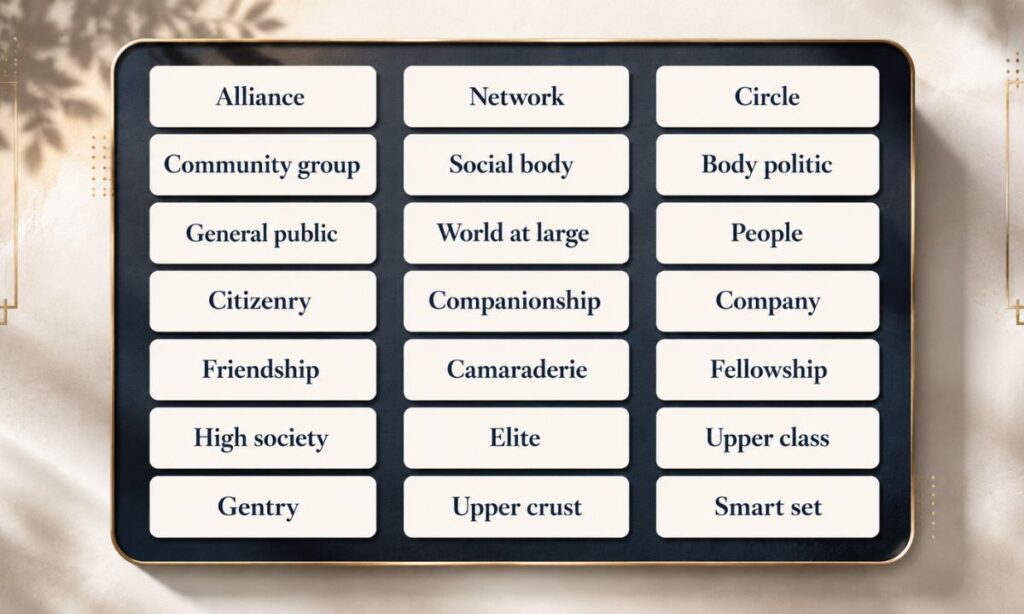
Different settings call for different words. Here’s a quick way to choose:
- For work and professional writing: organization, institution, association, consortium
- For emails: community, public, organization, collective
- For friends and casual conversation: club, circle, crew-like groups, companionship
- For school and academic writing: civilization, culture, social order, humankind
- For everyday conversation: community, public, friendship-based terms like companionship
Match the word to the tone of the message, not just the topic. A formal email calling coworkers a “fraternity” will sound odd, even though the word is accurate in other contexts.
Common Mistakes
Using “high society” for any group of people. It only fits wealthy or elite contexts, not general communities.
Swapping “population” into emotional writing. It’s a statistical word, so it can sound cold in personal or reflective pieces.
Treating “organization” and “association” as identical. Organizations imply structure and leadership; associations often imply shared membership without a strict hierarchy.
Overusing “civilization” in casual writing. It sounds grand and historical, so it feels out of place in everyday sentences.
Ignoring formality mismatches. Words like “coterie” or “consortium” sound stiff in casual conversation, while “crew” or “circle” sound too relaxed for formal reports.
Quick Guide Table
Beyond the 30 alternatives above, there are more specialized synonyms worth knowing, especially for academic, historical, or niche writing. This table adds 15 more options, along with quick guidance on where each one fits best. Some are rare enough that they’re only useful in very specific contexts, while others work well across formal and casual writing alike. Use this as a fast reference when you need a word that’s a little less common.
| Phrase | Formal | Casual | Conversation | |
| Cadre | Yes | No | Yes | No |
| Sodality | Yes | No | Rarely | No |
| Junta | Yes | No | No | No |
| Cabal | Yes | Somewhat | Rarely | Somewhat |
| Camarilla | Yes | No | No | No |
| Klatch | No | Yes | No | Yes |
| Clique | Somewhat | Yes | Somewhat | Yes |
| Clan | Somewhat | Yes | Yes | Yes |
| Faction | Yes | Somewhat | Yes | Somewhat |
| Subculture | Yes | Yes | Yes | Yes |
| Folk | No | Yes | No | Yes |
| Realm | Yes | Somewhat | Somewhat | Somewhat |
| Order | Yes | Somewhat | Yes | Somewhat |
| Body | Yes | No | Yes | No |
| Network | Yes | Yes | Yes | Yes |
Conclusion
“Society” is a useful word, but it’s rarely the most precise one available. Choosing the right alternative sharpens your writing and helps readers understand exactly what kind of group, culture, or connection you mean. Keep this list nearby, and your next paragraph will read a little more naturally and a lot less repetitively.