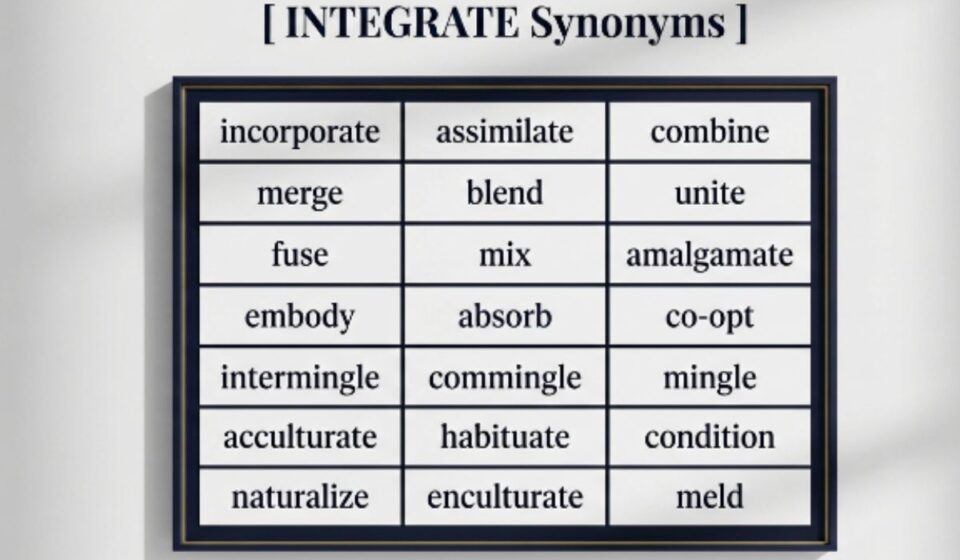

Using the same word too often can make your writing feel repetitive, even when the information is helpful. “Integrate” is one of those words that appears everywhere, from business emails and school assignments to technology articles and everyday conversations. While it’s accurate, seeing it again and again can make your sentences sound dull.
Mixing in different words keeps your writing fresh and easier to read. The right synonym can also help you match the tone of your message, whether you’re writing something formal, casual, or creative. In this guide, you’ll find 30 useful alternatives to “integrate,” along with practical examples that show when each one works best.
What Does “Integrate” Really Mean?
At its simplest, “integrate” means bringing separate parts together so they work as one. The focus isn’t just on combining things but on making sure they fit together smoothly.
For example, if a company integrates a new payment system into its website, customers can use the new feature without noticing any disruption because it works naturally with the existing system. The same idea applies to people, ideas, software, and processes.
When something is integrated successfully, everything functions as a connected whole instead of separate pieces.
Why Look for Alternatives to “Integrate”?
Although “integrate” is a useful word, it doesn’t always sound right in every situation. In casual writing, words like “blend,” “mix,” or “join” often sound more natural. In professional or academic writing, choices like “consolidate,” “merge,” or “synthesize” may communicate your point more clearly. Using different synonyms also helps avoid repetition and keeps your writing interesting from beginning to end.
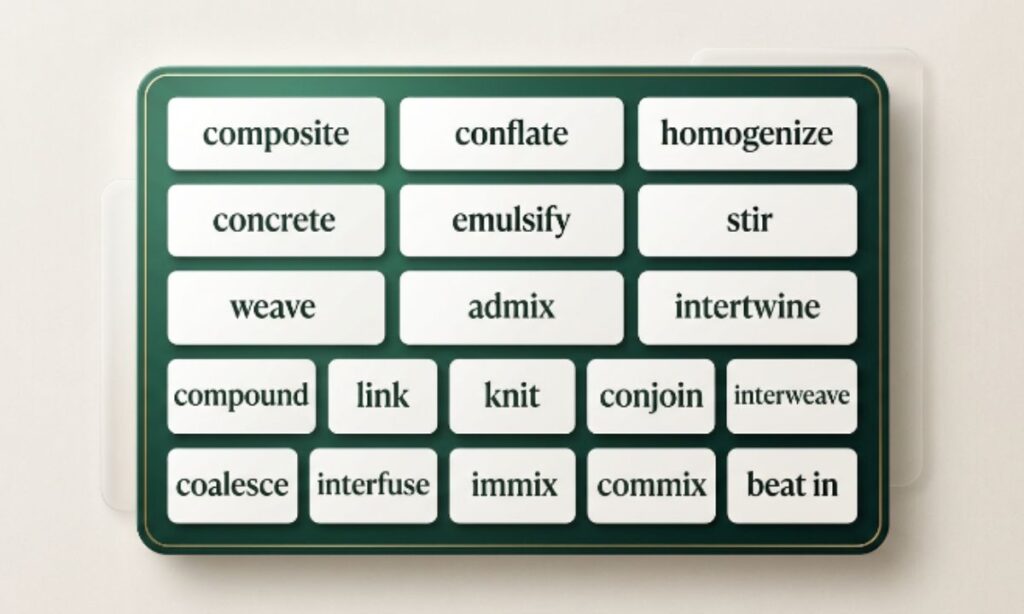
30 Synonyms for “Integrate” and How to Use Them
Incorporate
Meaning: To include something as part of a larger whole. It sounds professional and works well when describing how a new element becomes a permanent part of a system or process.
Example: The design team decided to incorporate customer feedback into the next product update.
When It Fits: Business plans, reports, and workplace updates.
Combine
Meaning: To bring two or more things together into one. It’s simple and direct, making it useful when you don’t need a technical or emotional undertone.
Example: The recipe asks you to combine the dry ingredients before adding the eggs.
When It Fits: Everyday instructions and casual explanations.
Merge
Meaning: To join two things so they become a single unit, often used when the original parts lose their separate identity. It works especially well for describing companies, teams, or files becoming one.
Example: The two departments will merge into a single unit starting next quarter.
When It Fits: Business announcements and organizational changes.
Unite
Meaning: To bring people or groups together around a shared purpose. It carries emotional weight and works best when describing connection, not just mechanical combination.
Example: The coach’s speech managed to unite the team after weeks of tension.
When It Fits: Motivational speeches and discussions about people or groups.
Blend
Meaning: To mix things smoothly so the individual parts are no longer easy to distinguish. It has a gentle, natural feel, often used for style, flavor, or design.
Example: The interior designer wanted the new furniture to blend with the home’s rustic style.
When It Fits: Design, cooking, and descriptions of style or atmosphere.
Mix
Meaning: To combine different elements, often informally. It’s one of the simplest and most casual alternatives on this list.
Example: She likes to mix old records with newer playlists during her shifts at the radio station.
When It Fits: Casual conversation and informal writing.
Fuse
Meaning: To join two things so tightly that they become one, often permanently. It suggests intensity and works well when describing a strong, lasting connection.
Example: The chef fused traditional Mexican flavors with French cooking techniques.
When It Fits: Creative fields like cooking, music, and art.
Assimilate
Meaning: To absorb and adjust to a new environment, culture, or system until you become a natural part of it. It’s often used in social or cultural contexts and carries a sense of gradual change.
Example: It took her almost a year to assimilate into the new office culture after switching careers.
When It Fits: Discussions about culture, workplaces, or adapting to new environments.
Amalgamate
Meaning: To combine multiple things into one larger, unified entity, often used in formal or legal contexts. It sounds more technical than “merge” and suits official writing.
Example: The two banks plan to amalgamate their operations by the end of the year.
When It Fits: Legal, financial, and corporate documents.
Absorb
Meaning: To take something in and make it part of yourself or your system. It works well when describing how one thing fully takes on the qualities of another.
Example: The larger firm absorbed the smaller startup along with its entire staff.
When It Fits: Business takeovers and descriptions of gradual change.
Unify
Meaning: To make separate things function as a single, connected whole. It’s often used when describing systems, teams, or ideas coming together with a shared direction.
Example: The new software update helped unify the company’s scattered databases.
When It Fits: Technical writing and organizational strategy.
Consolidate
Meaning: To combine several things into a more compact, efficient whole. It carries a practical, no-nonsense tone, often linked to saving time or resources.
Example: The manager asked the team to consolidate all the reports into a single document.
When It Fits: Office tasks, finance, and project management.
Coalesce
Meaning: To come together gradually and form a unified whole, often without force. It has a natural, almost organic feel, suggesting the process happens on its own.
Example: Over the semester, the students’ individual ideas began to coalesce into a shared project theme.
When It Fits: Academic writing and descriptions of gradual development.
Meld
Meaning: To blend smoothly, especially when the result feels balanced and complementary. It has a slightly poetic tone, often used to describe harmony between different elements.
Example: Their different painting styles meld together beautifully in the mural.
When It Fits: Art, music, and descriptions of creative collaboration.
Embed
Meaning: To fix something firmly within a larger structure or context. It works well when describing something built directly into a system, rather than added on top.
Example: The developers embedded the tracking tool directly into the app’s core code.
When It Fits: Technology, software, and structural descriptions.
Weave in
Meaning: To add something gradually and skillfully so it fits naturally with everything else. It suggests careful effort and works well for describing subtle, well-planned additions.
Example: The teacher wove in real-world examples throughout her lecture on economics.
When It Fits: Teaching, writing, and storytelling.
Harmonize
Meaning: To adjust different elements so they work well together without conflict. It’s often used when describing balance between differing styles, rules, or systems.
Example: The new policy aims to harmonize regulations across all the company’s branches.
When It Fits: Policy writing, music, and organizational planning.
Synthesize
Meaning: To combine different pieces of information or ideas into one coherent whole. It’s common in academic and analytical writing, where you’re pulling from multiple sources.
Example: Her thesis synthesizes research from psychology, biology, and sociology.
When It Fits: Research papers and analytical reports.
Mesh
Meaning: To fit together smoothly, especially when describing people, ideas, or systems that work well as a team. It has a casual, comfortable tone.
Example: The new hire’s work style meshes really well with the rest of the marketing team.
When It Fits: Workplace conversations and team dynamics.
Join
Meaning: To connect two or more things. It’s one of the most basic and widely understood alternatives, useful in almost any context.
Example: The two hiking trails join near the base of the mountain.
When It Fits: Everyday conversation and simple instructions.
Link
Meaning: To connect things in a way that shows a clear relationship between them. It’s often used for ideas, data, or systems that depend on each other.
Example: The report links declining sales to the recent supply chain delays.
When It Fits: Data analysis, reports, and cause-and-effect explanations.
Interweave
Meaning: To combine different elements so closely that they become difficult to separate. It carries a layered, intricate feel, often used in storytelling.
Example: The novel interweaves three different timelines into a single storyline.
When It Fits: Fiction, screenwriting, and complex storytelling.
Homogenize
Meaning: To make something uniform throughout by removing differences between its parts. It’s a more technical word, often used in science, food, or systems.
Example: The factory homogenizes the milk before it gets bottled and shipped.
When It Fits: Scientific, industrial, and technical writing.
Acculturate
Meaning: To adopt the cultural traits of a new group or environment, usually over time. It’s specific to cultural adjustment and works only in that context.
Example: The exchange students slowly acculturated to daily life in their host country.
When It Fits: Cultural studies and discussions about relocation or immigration.
Adapt
Meaning: To adjust something so it fits a new situation or purpose. It focuses on flexibility and change rather than combination itself.
Example: The teacher adapted the lesson plan to fit the needs of a smaller classroom.
When It Fits: Education, workplace changes, and everyday problem-solving.
Include
Meaning: To make something part of a group or a whole. It’s simple and neutral, often used when describing addition without much emphasis on the process.
Example: The new contract includes a clause about remote work flexibility.
When It Fits: Contracts, lists, and general writing.
Connect
Meaning: To establish a link or relationship between two or more things. It’s warm and accessible, often used for people as well as systems.
Example: The app connects local farmers directly with nearby restaurants.
When It Fits: Everyday conversation, tech descriptions, and networking.
Streamline
Meaning: To make a process more efficient by combining or simplifying its parts. It has a practical, results-focused tone, often used in business writing.
Example: The new software streamlines the entire onboarding process for new employees.
When It Fits: Business writing and process improvement discussions.
Align
Meaning: To bring different elements into agreement or a shared direction. It’s often used when describing goals, strategies, or values coming together.
Example: The two teams spent the meeting trying to align their goals for the upcoming launch.
When It Fits: Business strategy and team discussions.
Embody
Meaning: To represent or contain the essential qualities of something within a single form. It has a more abstract, expressive tone than most other alternatives.
Example: Her leadership style embodies the values the company has promoted for years.
When It Fits: Reflective writing and descriptions of character or values.
Which Alternative Should You Use, and When?
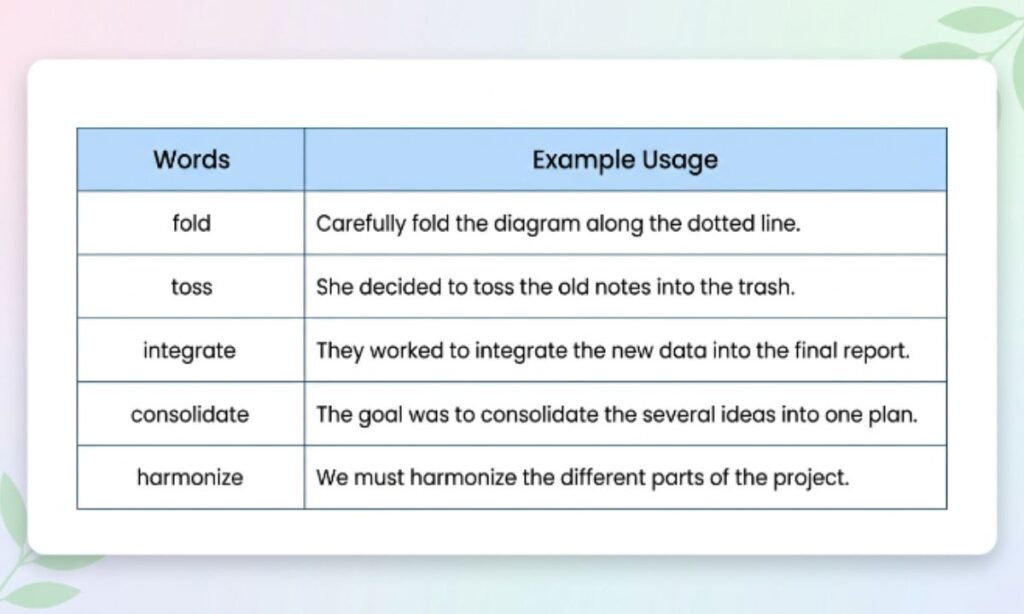
The best alternative depends on where you’re using it and the tone you want to create. A word that sounds perfect in a business report might feel awkward in a casual chat, while a simple everyday word may not sound polished enough in academic writing. Picking the right synonym helps your message feel natural and makes your writing easier to understand.
For work and professional emails, words like “incorporate,” “consolidate,” “align,” and “streamline” work well because they sound clear, direct, and professional. They’re common in business communication and explain ideas without making your writing overly complicated.
For school assignments, research papers, or formal discussions, “synthesize,” “coalesce,” and “assimilate” are stronger choices. These words fit academic writing because they describe bringing ideas together in a thoughtful and organized way.
When talking with friends or writing casually, keep things simple. Words such as “mix,” “join,” “connect,” and “mesh” sound natural in everyday conversations. They’re easy to understand and don’t make your writing feel too formal.
If you’re writing creatively or sharing personal thoughts, words like “fuse,” “meld,” “interweave,” and “embody” can make your sentences feel more expressive. They add personality without making the writing difficult to read.
Common Mistakes
Using technical words in everyday conversations. For example, saying “let’s homogenize our schedules” sounds much less natural than “let’s line up our schedules.”
Choosing a synonym that doesn’t match your meaning. For instance, “absorb” often suggests one thing becomes part of another, which isn’t the best choice when describing an equal partnership or merger.
Using specialized words outside their proper context. “Acculturate” refers to adapting to a different culture, so it shouldn’t be used for ordinary situations like combining documents or spreadsheets.
Repeating the same synonym throughout your writing. Even if you replace “integrate” with “combine,” using that replacement over and over still makes your writing repetitive.
Ignoring the level of formality. Words such as “amalgamate” or “synthesize” fit reports and academic work, but they usually sound out of place in quick text messages or casual conversations.
Quick Comparison Table
| Phrase | Formal | Casual | Conversation | |
| Incorporate | Yes | No | Yes | Yes |
| Combine | Yes | Yes | Yes | Yes |
| Merge | Yes | No | Yes | Yes |
| Unite | Yes | Yes | No | Yes |
| Blend | No | Yes | No | Yes |
| Mix | No | Yes | No | Yes |
| Fuse | No | Yes | No | Yes |
| Assimilate | Yes | No | No | No |
| Amalgamate | Yes | No | Yes | No |
| Absorb | Yes | No | Yes | Yes |
| Unify | Yes | No | Yes | No |
| Consolidate | Yes | No | Yes | Yes |
| Coalesce | Yes | No | No | No |
| Meld | No | Yes | No | Yes |
| Embed | Yes | No | Yes | No |
| Weave in | No | Yes | No | Yes |
| Harmonize | Yes | No | Yes | No |
| Synthesize | Yes | No | Yes | No |
| Mesh | No | Yes | No | Yes |
| Join | No | Yes | No | Yes |
| Link | Yes | No | Yes | Yes |
| Interweave | Yes | No | No | No |
| Homogenize | Yes | No | Yes | No |
| Acculturate | Yes | No | No | No |
| Adapt | Yes | Yes | Yes | Yes |
| Include | Yes | Yes | Yes | Yes |
| Connect | No | Yes | Yes | Yes |
| Streamline | Yes | No | Yes | Yes |
| Align | Yes | No | Yes | Yes |
| Embody | Yes | No | No | Yes |
Conclusion
Choosing the right synonym for “integrate” makes your writing sound more natural and precise. Each word carries its own tone, from technical terms like “consolidate” to warmer ones like “unite.” Once you get comfortable with the differences, picking the right word becomes second nature.