
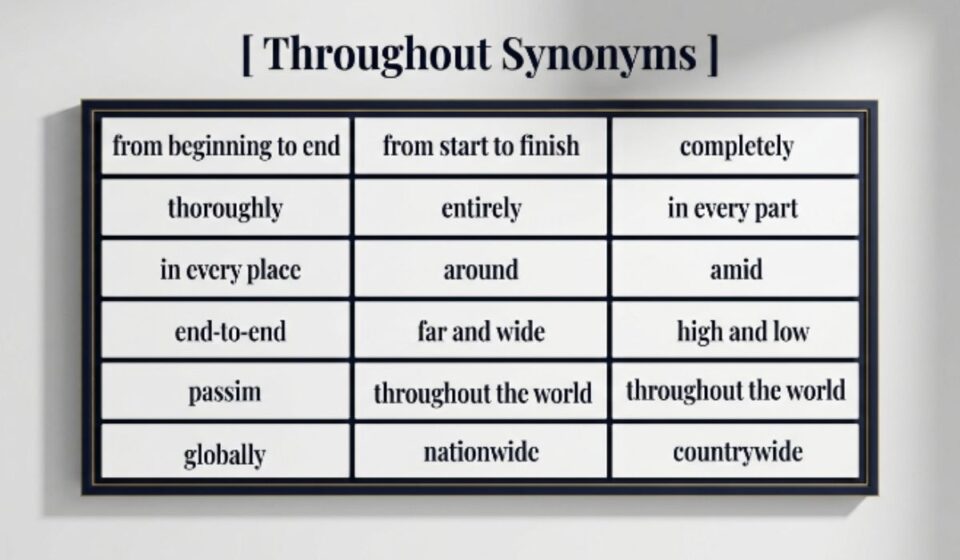

“Throughout” is one of those words that just softly appears everywhere in literature. It describes something that happens over an entire space or for an entire period of time. Sure, it’s useful, but when you use it in every other line, your writing starts to look stiff and monotonous.
More than avoiding redundancy, it’s about replacing it with the correct synonym. It defines your meaning. Since “throughout the meeting” and “during the meeting” are virtually the same thing, “all through the meeting” is a little different, because the sensation was there from beginning to end without a break.
This guide breaks down what “throughout” really means, when it starts to feel overused, and 25 solid alternatives you can reach for instead, each with a clear example and a real situation where it fits.
What Does “Throughout” Really Mean?
“Throughout” describes something that exists or happens in every part of a place or during the entire length of a period of time. It covers two ideas: complete coverage in space and complete coverage in time.
Here’s a simple example: imagine you paint every wall in your house the same color, not just one room. You’d say the color is used “throughout the house.” Or think about a headache that lasts your entire workday, from the moment you wake up until you go to bed. You’d say it lasted “throughout the day.” Same word, two different jobs: one about place, one about time.
Why Look for Alternatives to “Throughout”?
“Throughout” is a safe, general word. That’s exactly why it gets overused. Writers reach for it because it works in almost any sentence, but that same flexibility makes it forgettable when it shows up too often.
Read a paragraph that uses “throughout” four times and you’ll notice the rhythm start to feel mechanical. Your reader’s attention drifts, even if they can’t explain why.
There’s also a precision problem. “Throughout” doesn’t always tell your reader how something happened, just that it covered a full space or time. Words like “consistently,” “end to end,” or “far and wide” can add detail and personality that “throughout” leaves out.
Finally, tone matters. A legal document might call for “throughout the term of this agreement,” while a text to a friend works better with “the whole time” or “start to finish.” Matching the word to the moment makes your writing feel more natural.
25 Synonyms for “Throughout” and How to Use Them
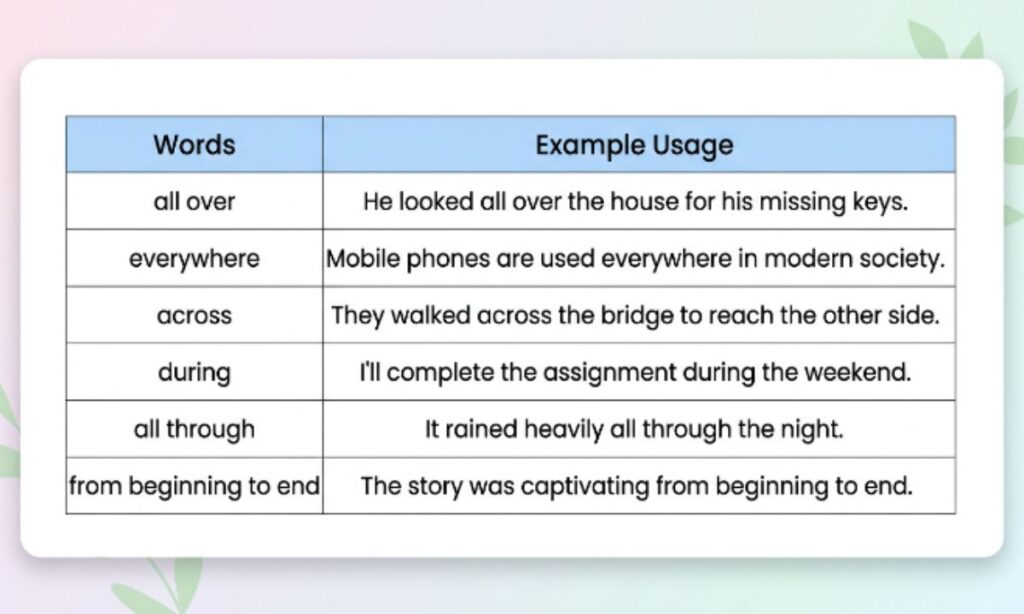
All Over
Meaning: “All over” describes something spread across every part of a space, without exception. It’s a casual, visual way to describe coverage. This phrase feels immediate and easy to picture. It works well in conversation because it doesn’t sound academic or overly precise, just direct and clear.
Example: “Confetti was scattered all over the ballroom after the countdown.”
When It Fits: Use it in casual writing or speech when describing physical spread across a space.
Everywhere In
Meaning: “Everywhere in” emphasizes that something appears in every corner of a defined area, leaving nothing untouched. This phrase adds emphasis and certainty. It reassures the reader that coverage is complete, which works well when you want to highlight thoroughness.
Example: “You’ll find handwritten notes everywhere in her old journals.”
When It Fits: Great for descriptive writing where completeness is the main point.
During
Meaning: “During” simply marks that something happened within a specific time period, without necessarily implying it lasted the whole time. This word is shorter and more neutral than “throughout.” It works well when you’re not trying to stress continuity, just timing.
Example: “She took notes during the lecture instead of recording it.”
When It Fits: Best for straightforward statements about when something occurred.
All Through
Meaning: “All through” suggests something continued steadily from the beginning of a period to its end, without interruption. This phrase feels warm and personal. It’s often used in storytelling or reflective writing, giving a sense of endurance or steady presence.
Example: “He hummed the same tune all through dinner.”
When It Fits: Works well in narrative or conversational writing about ongoing actions.
From Start to Finish
Meaning: This phrase highlights that something happened continuously across an entire event or process, with clear beginning and end points. It adds structure and a sense of completeness. Readers get a clear mental timeline, which makes descriptions feel more organized and confident.
Example: “The coach stayed calm from start to finish, even during the final minutes.”
When It Fits: Ideal for describing events, projects, or performances with a defined arc.
From Beginning to End
Meaning: Similar to “from start to finish,” this phrase stresses total duration without gaps. It’s slightly more formal in tone. This phrase works well in writing that needs to sound polished, like reports or reflective essays, without sounding overly casual.
Example: “The novel kept me hooked from beginning to end.”
When It Fits: Use it for reviews, summaries, or formal descriptions of experiences.
Across
Meaning: “Across” describes something that spans a wide area or applies to multiple parts of a group or region. This word is compact and versatile. It works especially well in professional or news writing, where brevity matters and space is limited.
Example: “The policy change affected employees across all departments.”
When It Fits: Great for business writing, news, or describing widespread impact.
Around
Meaning: “Around” suggests something is present or scattered in various places within a general area, without pinpointing exact locations. This word feels loose and informal. It works well in casual speech, where exact precision matters less than general impression.
Example: “There were candles around the whole room, flickering softly.”
When It Fits: Best for casual descriptions of physical space.
Amid
Meaning: “Amid” places something within the middle of a period, situation, or group of events, often suggesting surrounding activity or tension. This word carries a literary tone. It adds a sense of context, showing that something happened while other things were also going on.
Example: “The team stayed focused amid the chaos of the playoffs.”
When It Fits: Use it for writing that needs a slightly formal or dramatic tone.
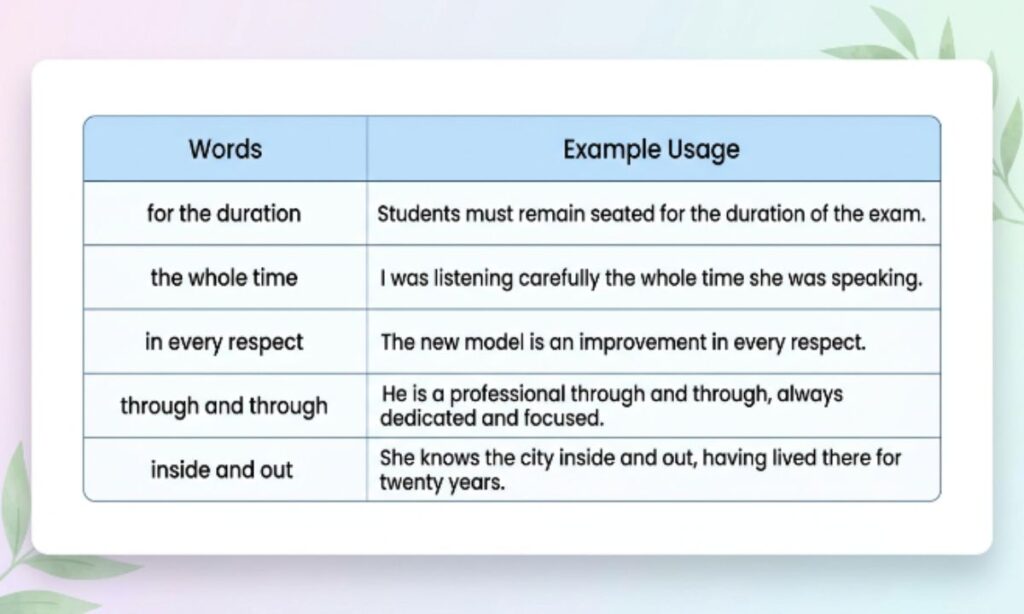
The Whole Time
Meaning: This phrase emphasizes constant presence or feeling across a duration, often used to highlight persistence. It sounds natural and conversational. This phrase works especially well when describing emotions or physical sensations that didn’t let up.
Example: “I was nervous the whole time we waited for the results.”
When It Fits: Perfect for casual conversation or personal storytelling.
For the Duration Of
Meaning: This phrase marks a fixed period during which something remains true or ongoing, often used in formal contexts. It sounds precise and official. This phrase works well in contracts, instructions, or formal writing where clarity about timing matters most.
Example: “Guests must wear badges for the duration of the conference.”
When It Fits: Best for formal instructions, agreements, or official announcements.
In Every Part Of
Meaning: This phrase stresses total physical coverage, leaving no section excluded. It’s direct and easy to understand. This phrase adds clarity when you want to make sure the reader knows nothing was skipped or left out.
Example: “Volunteers cleaned up trash in every part of the park.”
When It Fits: Use it for descriptions where thoroughness needs to be obvious.
Over the Course Of
Meaning: This phrase describes something that developed or changed gradually across a period of time, rather than staying constant. It adds a sense of progression. This phrase works well when describing growth, change, or a process that unfolded slowly.
Example: “Trust between the two companies grew over the course of the negotiations.”
When It Fits: Great for business writing, history, or personal growth stories.
Far and Wide
Meaning: This phrase emphasizes that something spread across a large geographic distance, often used for dramatic or storytelling effect. It has an adventurous, expansive feel. This phrase adds energy and scale, making descriptions feel bigger and more vivid.
Example: “News of the discovery spread far and wide within days.”
When It Fits: Perfect for storytelling, journalism, or dramatic writing.
High and Low
Meaning: This idiom describes an exhaustive search or presence across every possible place, often used with searching or looking. It carries urgency and effort. This phrase works well when you want to show persistence or desperation in trying to find something.
Example: “We searched high and low for the missing house keys.”
When It Fits: Use it in casual storytelling about searching or effort.
Inside and Out
Meaning: This phrase emphasizes complete coverage of both the interior and exterior of something, often used for physical spaces or objects. It signals total thoroughness. This phrase reassures the reader that nothing was left unchecked, inside or outside.
Example: “The inspector checked the house inside and out before approving the sale.”
When It Fits: Best for descriptions involving physical inspection or detailed review.
End to End
Meaning: This phrase describes something that stretches or applies across the entire length of a space or process, without gaps. It feels efficient and technical. This phrase works especially well in business or logistics writing, where full coverage is the main point.
Example: “The company redesigned its supply chain end to end.”
When It Fits: Great for professional writing about systems or processes.
Nationwide
Meaning: This word describes something happening across an entire country, often used for large-scale events, policies, or campaigns. It adds scale and authority. This word works well in journalism or business writing where geographic reach matters.
Example: “The retailer launched a nationwide sale for the holiday weekend.”
When It Fits: Use it for news, marketing, or descriptions of country-wide events.
Worldwide
Meaning: This word extends coverage beyond a single country, describing something that happens or exists across the globe. It carries a sense of significance. This word works well when you want to emphasize the scale or impact of something happening everywhere.
Example: “The song became a worldwide hit within weeks of release.”
When It Fits: Perfect for describing global trends, events, or influence.
Ubiquitously
Meaning: This word describes something so widespread that it seems to appear everywhere at once, often used in academic or formal writing. It sounds sophisticated and precise. This word adds intellectual weight, making it a good fit for essays or analytical writing.
Example: “Smartphones are now used ubiquitously across nearly every industry.”
When It Fits: Best for academic, technical, or formal analytical writing.
Passim
Meaning: This Latin term is used in academic citations to show that an idea or reference appears repeatedly across a text, not in one specific place. It’s a scholarly shorthand. This word signals expertise and precision, useful when referencing sources without listing every page.
Example: “The theme of loss appears passim throughout the author’s later poems.”
When It Fits: Use it only in academic writing, essays, or research citations.
Through and Through
Meaning: This phrase emphasizes that a quality or characteristic is present completely, without exception, often describing personality or character. It adds emotional certainty. This phrase works well when you want to express full confidence in a description of someone or something.
Example: “She’s a professional through and through, even under pressure.”
When It Fits: Great for personal descriptions or character-focused writing.
Spanning
Meaning: This word describes something that extends continuously across a period of time or a physical distance, connecting a clear beginning and end. It feels structured and deliberate. This word works well in formal or descriptive writing about long timelines or wide distances.
Example: “Her career, spanning four decades, shaped the entire industry.”
When It Fits: Best for biographies, reports, or long-term summaries.
Consistently
Meaning: This word emphasizes steady, repeated presence across time, rather than one-time occurrence. It focuses on reliability. This word adds a sense of dependability, useful when describing habits, performance, or ongoing behavior.
Example: “The team performed consistently well throughout the season.”
When It Fits: Use it in performance reviews, sports writing, or habit tracking.
In Every Corner Of
Meaning: This phrase paints a vivid picture of complete physical presence, often used for dramatic or descriptive effect. It’s visual and expressive. This phrase adds warmth and imagery, making writing feel more immersive and personal.
Example: “The smell of fresh bread drifted into every corner of the bakery.”
When It Fits: Perfect for descriptive or sensory writing about physical spaces.
Which Alternative Works Best for You?
For work emails: Use “for the duration of,” “over the course of,” or “across.” These sound professional and precise without feeling casual.
For formal writing: “Spanning,” “ubiquitously,” and “from beginning to end” carry the right tone for reports, essays, and academic work.
For friends: “All over,” “the whole time,” and “high and low” sound natural and easygoing in everyday conversation.
For school or academic writing: “Passim,” “consistently,” and “in every part of” fit research papers and essays well.
For everyday conversation: “All through,” “around,” and “far and wide” work comfortably in casual speech without sounding forced.
Common Mistakes
Mixing spatial and temporal meanings incorrectly. Saying “the pain was everywhere in the meeting” confuses a time-based idea with a space-based phrase. Match the word to the right context.
Overusing academic terms in casual writing. Words like “passim” or “ubiquitously” sound out of place in a text message or casual email.
Adding unnecessary words. Saying “throughout the whole time” is redundant. Pick one phrase and let it do the work.
Forcing idioms where they don’t fit. Phrases like “high and low” or “inside and out” work well in specific contexts, but forcing them into unrelated sentences sounds awkward.
Losing precision for variety. Swapping words just to avoid repetition can backfire if the new word doesn’t actually match your meaning. Always check that the synonym fits the sentence.
Quick Comparison Table
| Phrase | Formal | Casual | Conversation | |
| All over | No | Yes | No | Yes |
| Everywhere in | Yes | Yes | Yes | Yes |
| During | Yes | Yes | Yes | Yes |
| All through | No | Yes | No | Yes |
| From start to finish | Yes | Yes | Yes | Yes |
| From beginning to end | Yes | Yes | Yes | Yes |
| Across | Yes | Yes | Yes | Yes |
| Around | No | Yes | No | Yes |
| Amid | Yes | No | Yes | No |
| The whole time | No | Yes | No | Yes |
| For the duration of | Yes | No | Yes | No |
| In every part of | Yes | Yes | Yes | Yes |
| Over the course of | Yes | Yes | Yes | Yes |
| Far and wide | No | Yes | No | Yes |
| High and low | No | Yes | No | Yes |
| Inside and out | Yes | Yes | Yes | Yes |
| End to end | Yes | No | Yes | No |
| Nationwide | Yes | No | Yes | No |
| Worldwide | Yes | Yes | Yes | Yes |
| Ubiquitously | Yes | No | Yes | No |
| Passim | Yes | No | Yes | No |
| Through and through | No | Yes | No | Yes |
| Spanning | Yes | No | Yes | No |
| Consistently | Yes | Yes | Yes | Yes |
| In every corner of | No | Yes | No | Yes |
Conclusion
“Throughout” is reliable, but it doesn’t always carry the tone or precision your sentence needs. The right synonym adds clarity, personality, or formality depending on what you’re writing.
Pick words that match your context, whether that’s a casual text or a formal report, instead of defaulting to the same word every time. Small changes like this make your writing sound more natural and considered.

[…] a specific kind of kindness, “kind” runs out of gas. This guide gives you 30 precise alternatives, grouped by what they actually mean, so your writing can say exactly what you’re trying to […]