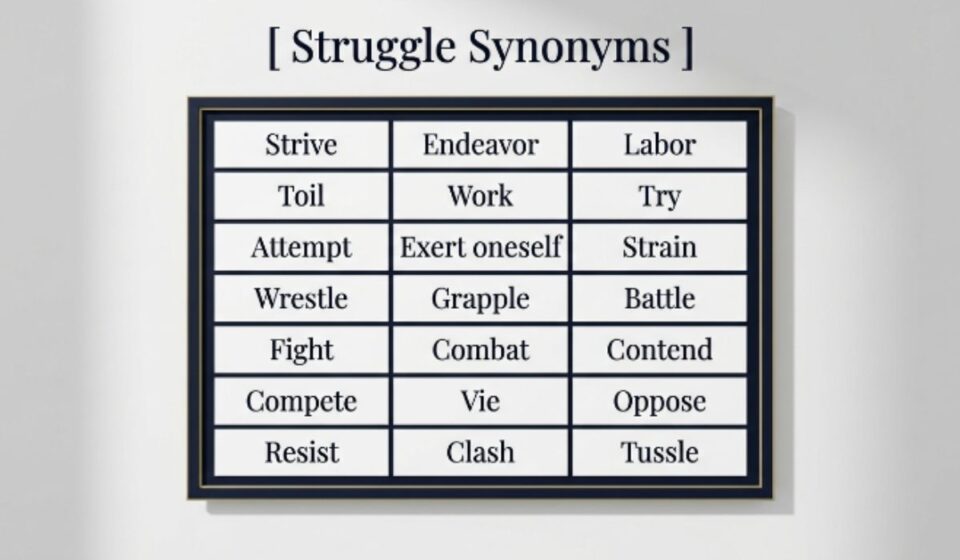

Say “struggle” three times in one paragraph, and your writing starts to feel stuck in place. The word works, but it repeats fast, and repetition dulls a reader’s attention. Swapping in the right alternative keeps your writing sharp, your tone accurate, and your reader actually engaged instead of skimming past the same word again.
What Does “Struggle” Really Mean?
Struggle describes a difficult effort, whether that’s physical, mental, or emotional. It can mean fighting against an obstacle, working hard toward a goal, or simply having a rough time getting through something.
Real-life example: “She struggled to finish the report before the deadline, rewriting the introduction three times.”
That sentence captures effort, difficulty, and a bit of frustration, all packed into one word. That’s exactly why writers reach for it so often and exactly why it starts to feel repetitive.
Why Look for Alternatives to “Struggle”?
The word “struggle” is useful, but it’s also vague. It doesn’t tell your reader whether the difficulty involved physical exertion, a mental block, an argument, or a long grind toward a goal. Using it over and over also flattens your tone, making varied situations sound identical.
A few common signs it’s time to swap the word out:
- You’ve used “struggle” more than once in the same paragraph.
- The sentence needs a more specific feeling, like frustration, competition, or physical strain.
- You’re writing for a formal audience, and “struggle” feels too casual or too vague.
- You want the sentence to sound more vivid or precise.
Picking a more exact word doesn’t just avoid repetition. It sharpens the meaning of the whole sentence.
30 Synonyms for “Struggle” and How to Use Them
Strive
Meaning: To make a determined, ongoing effort toward a goal. It carries a sense of ambition rather than just difficulty. “Strive” suggests forward motion, someone actively pushing toward something better, rather than simply enduring hardship. It works well when you want to highlight determination instead of pain.
Example: “He strives to improve his writing a little more with every draft.”
When It Fits: Career goals, personal growth, or any context where effort points toward self-improvement.
Labor
Meaning: To work hard, often physically or over a long stretch of time. Labor implies sustained effort rather than a single hard moment. It’s a slightly formal word, useful when you want to describe extended, grinding work without sounding overly dramatic about it.
Example: “The volunteers labored through the weekend to finish building the shelter.”
When It Fits: Physical work, long projects, or descriptions of sustained group effort.
Endeavor
Meaning: To try earnestly to accomplish something, usually something significant. Endeavor sounds more formal than “try” and adds a sense of seriousness or importance to the attempt. It works especially well in professional or written contexts where you want a polished tone.
Example: “The team endeavored to meet every requirement in the client’s proposal.”
When It Fits: Business writing, formal emails, or descriptions of ambitious projects.
Toil
Meaning: To work exhaustingly hard, often for a long time and without much relief. Toil leans heavier than “labor,” carrying a sense of fatigue and monotony. It’s a good fit when you want to emphasize how draining an effort actually was.
Example: “Farmers toiled in the fields from sunrise until well after dark.”
When It Fits: Physical labor, historical writing, or descriptions of exhausting, repetitive work.
Grind
Meaning: To push through slow, repetitive, tiring effort, often with little visible progress. Grind captures the feeling of daily persistence more than a single dramatic event. It’s especially common in modern, informal speech about work or personal goals.
Example: “She’s been grinding through night classes while working full-time.”
When It Fits: Everyday conversation, casual writing, or describing long-term personal effort.
Persevere
Meaning: To keep going despite difficulty, obstacles, or repeated setbacks. Persevere focuses less on the difficulty itself and more on the refusal to give up. It’s a motivating, encouraging word, often used when someone is facing real adversity but pushing through anyway.
Example: “Despite three rejections, she persevered and eventually landed the job.”
When It Fits: Encouragement, personal stories, or motivational writing.
Wrestle
Meaning: To struggle physically or mentally with something difficult to control or understand. “Wrestle” works well for internal conflict, like wrestling with a decision, as much as physical struggle. It adds a sense of active resistance rather than passive difficulty.
Example: “He wrestled with the decision for weeks before finally accepting the offer.”
When It Fits: Internal conflict, tough decisions, or physical confrontation.
Fumble
Meaning: To handle something clumsily or make repeated mistakes while trying to manage it. Fumble suggests a lack of coordination or confidence rather than pure effort. It’s often used lightly, describing an awkward attempt rather than a serious hardship.
Example: “The new intern fumbled through his first presentation but recovered well.”
When It Fits: Awkward moments, early attempts at something new, or minor mistakes.
Flounder
Meaning: To struggle helplessly, often without a clear sense of direction or how to fix the situation. Flounder implies confusion as much as difficulty. It’s useful when someone isn’t just working hard but is genuinely unsure how to move forward.
Example: “Without a mentor, she floundered during her first few months on the job.”
When It Fits: Confusing situations, lack of guidance, or early stages of a difficult task.
Trudge
Meaning: To move forward slowly and with heavy effort, usually while feeling tired or reluctant. “Trudge” is often physical, describing walking through difficult conditions, but it also works metaphorically for slow, tiring progress in general.
Example: “They trudged through the snow, exhausted but determined to reach the cabin.”
When It Fits: Physical exhaustion, long journeys, or slow, tiring progress toward a goal.
Fight
Meaning: To actively resist or oppose something, often with intensity and determination. Fight adds urgency and stakes to a sentence, suggesting real resistance rather than quiet effort. It’s direct, punchy, and works well when you want energy in your writing.
Example: “She fought to keep the small business running through a difficult year.”
When It Fits: High-stakes situations, personal battles, or moments requiring visible determination.
Battle
Meaning: To struggle intensely against a serious obstacle, often over an extended period. Battle carries more weight than “fight,” often used for prolonged, difficult conflicts, whether physical, emotional, or metaphorical. It signals real hardship rather than a quick effort.
Example: “He’s been battling health issues for the past two years.”
When It Fits: Long-term hardship, illness, or ongoing personal or professional conflict.
Grapple
Meaning: To struggle with something complex, often mentally, while trying to understand or resolve it. Grapple suggests close, hands-on engagement with a problem rather than avoidance. It’s a strong fit for describing difficult decisions or complicated ideas.
Example: “The committee is still grappling with how to fund the new program.”
When It Fits: Difficult decisions, complex problems, or intellectual challenges.
Contend
Meaning: To deal with a difficult situation while also competing or arguing against opposing forces. “Contend” fits well when multiple challenges are happening at once or when effort involves pushing back against competition or resistance.
Example: “Small shops have to contend with rising rent and online competition.”
When It Fits: Business challenges, competitive environments, or dealing with multiple obstacles at once.
Resist
Meaning: To actively oppose or push back against pressure, change, or difficulty. “Resist” emphasizes defiance rather than exhaustion. It works well when the emphasis is on standing firm rather than simply working hard.
Example: “The team resisted pressure to cut corners on safety standards.”
When It Fits: Standing firm on principles, pushback against pressure, or ethical stances.
Tussle
Meaning: A light, often brief struggle, either physical or verbal, usually without serious consequences. Tussle has a casual, almost playful tone, making it useful when the conflict isn’t meant to sound too serious.
Example: “The siblings had a small tussle over who got the last slice of pizza.”
When It Fits: Minor disagreements, casual conflicts, or lighthearted storytelling.
Spar
Meaning: To engage in a light, controlled contest or argument, often practice-based rather than truly hostile. Spar suggests skill and back-and-forth exchange rather than raw hardship. It’s commonly used for debates or friendly competitive banter.
Example: “The two lawyers sparred over interpretation of the contract’s fine print.”
When It Fits: Debates, friendly rivalries, or verbal back-and-forth exchanges.
Confront
Meaning: To face a difficult issue or person directly, rather than avoiding it. Confront carries a sense of courage and directness. It’s useful when you want to emphasize that someone chose to face a problem head-on instead of dodging it.
Example: “She finally confronted the issue instead of letting it build up for months.”
When It Fits: Difficult conversations, addressing problems directly, or personal accountability.
Compete
Meaning: To strive against others for the same goal, prize, or outcome. Compete adds a rivalry element that plain “struggle” doesn’t capture. It’s the right word whenever more than one party is chasing the same result.
Example: “Dozens of startups are competing for the same round of funding.”
When It Fits: Business, sports, academics, or any situation involving direct rivalry.
Effort
Meaning: The energy or work put into accomplishing something, without necessarily implying failure or hardship. Effort is neutral and versatile, useful when you simply want to describe the amount of work involved without added drama.
Example: “It took real effort to keep the project on schedule this quarter.”
When It Fits: Neutral descriptions of hard work, professional writing, or summarizing outcomes.
Exertion
Meaning: The physical or mental energy spent doing something demanding. “Exertion” leans slightly clinical and precise, often used in contexts involving physical activity, health, or measurable output.
Example: “The hike required more exertion than we expected, especially near the summit.”
When It Fits: Physical activity, fitness contexts, or health-related writing.
Hardship
Meaning: Serious difficulty or suffering, often involving financial, emotional, or physical circumstances. Hardship carries real emotional weight, suggesting more than temporary inconvenience. It’s a strong word for describing prolonged, meaningful difficulty.
Example: “The family faced real hardship after the factory closed down.”
When It Fits: Financial difficulty, personal stories, or serious life circumstances.
Ordeal
Meaning: A painful, prolonged, or traumatic experience. Ordeal is one of the more intense words on this list, implying real suffering rather than routine effort. Use it carefully, since it signals genuine hardship rather than everyday inconvenience.
Example: “The surgery and recovery turned into a six-month ordeal.”
When It Fits: Serious medical situations, traumatic events, or major life difficulties.
Challenge
Meaning: A difficult task that tests someone’s ability, often with a sense of opportunity attached. “Challenge” sounds more positive than most words on this list, often implying growth is possible through the difficulty.
Example: “Learning a new language later in life is a challenge worth taking on.”
When It Fits: Personal growth, professional development, or motivational contexts.
Conflict
Meaning: A serious disagreement or clash, often between people, groups, or ideas. Conflict works well when tension exists between two sides rather than a single person facing a task. It’s common in both personal and professional writing.
Example: “The conflict between the two departments slowed the entire launch.”
When It Fits: Workplace disputes, interpersonal tension, or opposing viewpoints.
Clash
Meaning: A sudden, often sharp disagreement or confrontation. Clash suggests two forces meeting head-on, whether that’s people, opinions, or schedules. It carries more energy and immediacy than “conflict.”
Example: “Their opinions clashed almost every time the topic came up.”
When It Fits: Sudden disagreements, scheduling conflicts, or opposing personalities.
Skirmish
Meaning: A brief, minor conflict, often part of a larger disagreement. Skirmish implies the fight isn’t fully resolved or serious, more of a small flare-up than a major battle. It works well for describing minor workplace or family tension.
Example: “There’s been a small skirmish over budget priorities between the two teams.”
When It Fits: Minor disputes, ongoing tension, or small-scale disagreements.
Confrontation
Meaning: A direct, often tense meeting between opposing sides. Confrontation implies the issue is being addressed openly rather than avoided, and it often carries emotional weight or discomfort.
Example: “The confrontation in the meeting made everyone visibly uncomfortable.”
When It Fits: Tense meetings, direct disputes, or situations requiring honest conversation.
Rivalry
Meaning: An ongoing competitive relationship between two people, teams, or groups. Rivalry implies history and repetition, not just a single event. It’s a good fit for long-standing competitive dynamics.
Example: “The rivalry between the two companies has pushed both to innovate faster.”
When It Fits: Business competition, sports, or long-running personal or professional dynamics.
Showdown
Meaning: A decisive, high-stakes confrontation meant to settle a disagreement once and for all. Showdown adds drama and finality, useful when describing a moment that will clearly determine an outcome.
Example: “The two candidates are headed for a showdown before the vote.”
When It Fits: Final decisions, high-stakes competitions, or dramatic storytelling moments.
Which Alternative Fits Your Situation?
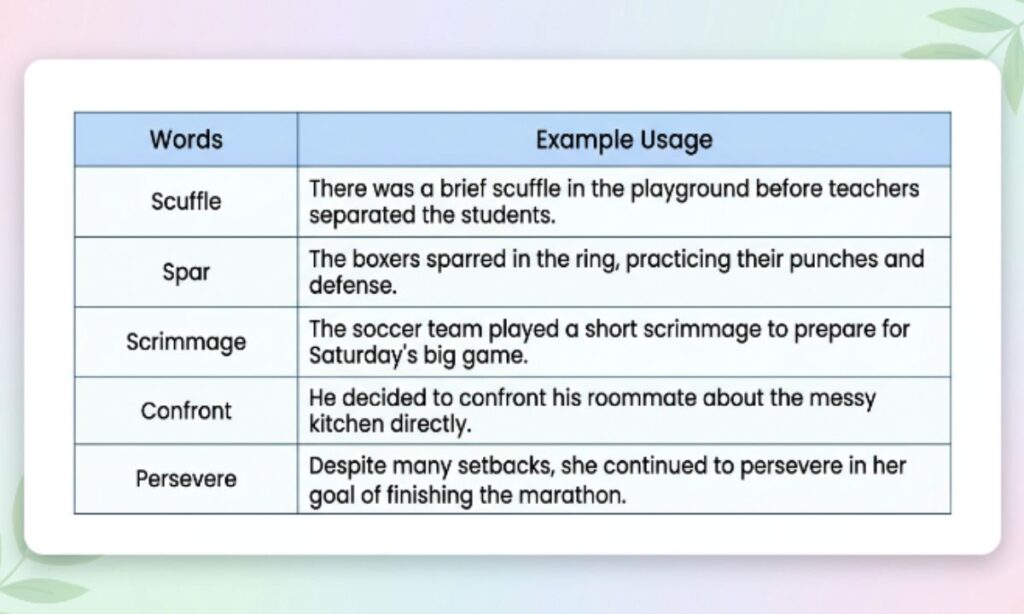
Different settings call for different tones. Here’s a quick way to match the word to the moment.
For work and professional writing: endeavor, contend, exertion, challenge, effort.
For emails to clients or colleagues: strive, endeavor, effort, challenge.
For talking with friends: grind, tussle, fumble, spar.
For school or academic writing: persevere, grapple, contend, hardship.
For everyday conversation: fight, struggle through, wrestle, trudge.
Common Mistakes
- Using “battle” for minor issues. Save it for genuinely serious, prolonged difficulty, not a slightly annoying Monday.
- Confusing “compete” with “struggle.” Competing implies rivals chasing the same goal. Struggling doesn’t require an opponent at all.
- Overusing “ordeal” for small inconveniences. It’s a heavy word. A delayed flight is an inconvenience, not an ordeal.
- Picking overly formal words in casual writing. “Endeavor” in a text message to a friend will sound stiff and out of place.
- Ignoring tone shifts. Some synonyms sound tense or dramatic (clash, confrontation), while others sound calm and steady (persevere, effort). Match the word to the mood of the sentence.
Quick Guide Table
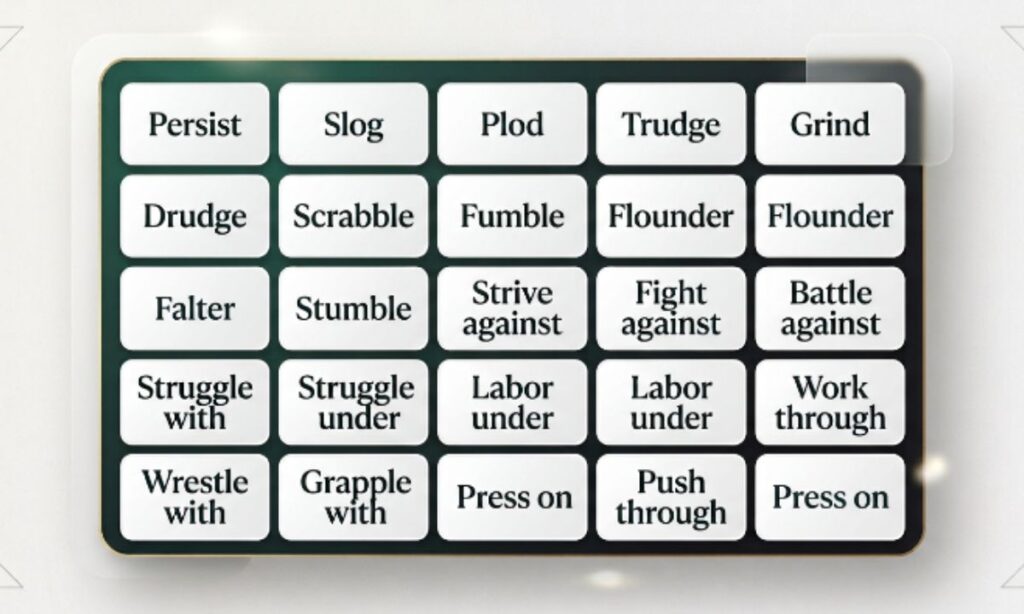
Here are 15 more alternatives worth keeping in your back pocket, useful for the same reason as the list above: They let you describe effort, hardship, or conflict without repeating yourself. Some are lean and casual, some formal, and a few work well in almost any setting. Use the table below to quickly match tone to context.
| Phrase | Formal | Casual | Conversation | |
| Hustle | No | Yes | Rarely | Yes |
| Slog | No | Yes | No | Yes |
| Plod | Somewhat | Yes | Rarely | Yes |
| Drudge | Somewhat | No | Rarely | Rarely |
| Scrabble | No | Yes | No | Yes |
| Strain | Yes | Yes | Yes | Yes |
| Falter | Yes | Somewhat | Yes | Somewhat |
| Stumble | Somewhat | Yes | Somewhat | Yes |
| Dispute | Yes | No | Yes | Somewhat |
| Altercation | Yes | No | Yes | Rarely |
| Brawl | No | Yes | No | Yes |
| Scuffle | No | Yes | No | Yes |
| Duel | Somewhat | Yes | Rarely | Yes |
| Race (for advantage) | Somewhat | Yes | Somewhat | Yes |
| Contest | Yes | Somewhat | Yes | Somewhat |
Conclusion
“Struggle” is a solid, useful word, but it can’t carry every kind of difficulty on its own. Choosing a more precise synonym, whether it’s the quiet persistence of “persevere” or the sharp energy of “Clash,” makes your writing clearer and more honest about what actually happened. Keep a few of these in mind, match them to your tone, and your sentences will stop sounding stuck in place.