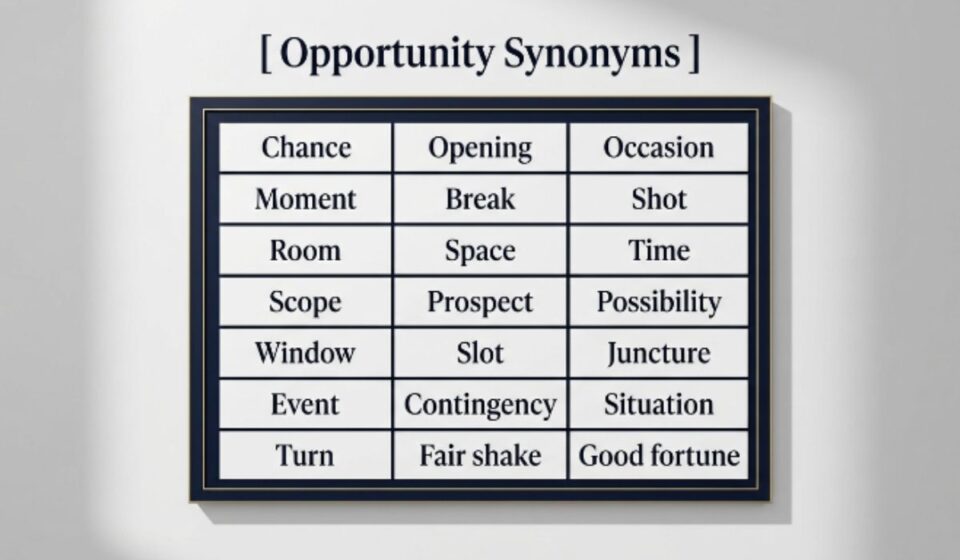

Using the same word over and over can make your writing feel flat, even when the message is strong. Swapping in the right synonym adds tone, precision, and personality to a sentence.
It also helps you match the moment, whether you’re writing a formal email or texting a friend about good news. This guide breaks down 25 real alternatives to “opportunity,” what each one actually means, and exactly when to use it.
What Does “Opportunity” Really Mean?
An opportunity is a moment or situation that makes it possible to do something good, useful, or beneficial. It usually involves some element of timing, since the right conditions have to line up.
For example, if a coworker leaves the company and a manager offers you their role, that’s an opportunity. Nothing was guaranteed. The timing, the vacancy, and your readiness all came together at once.
Why Look for Alternatives to “Opportunity”?
“Opportunity” is a useful word, but it gets overused fast. Resumes, emails, and essays often repeat it two or three times in a single paragraph, which makes the writing sound generic instead of specific.
The word is also fairly neutral. It doesn’t tell the reader whether something feels lucky, urgent, hard-earned, or emotional. A synonym can carry that extra meaning without adding more words.
Using different phrases also helps you sound more natural. Native speakers rarely repeat the same noun across several sentences. They shift between words like “chance,” “opening,” or “window” depending on what the situation actually feels like.
25 Synonyms for “Opportunity” and How to Use Them
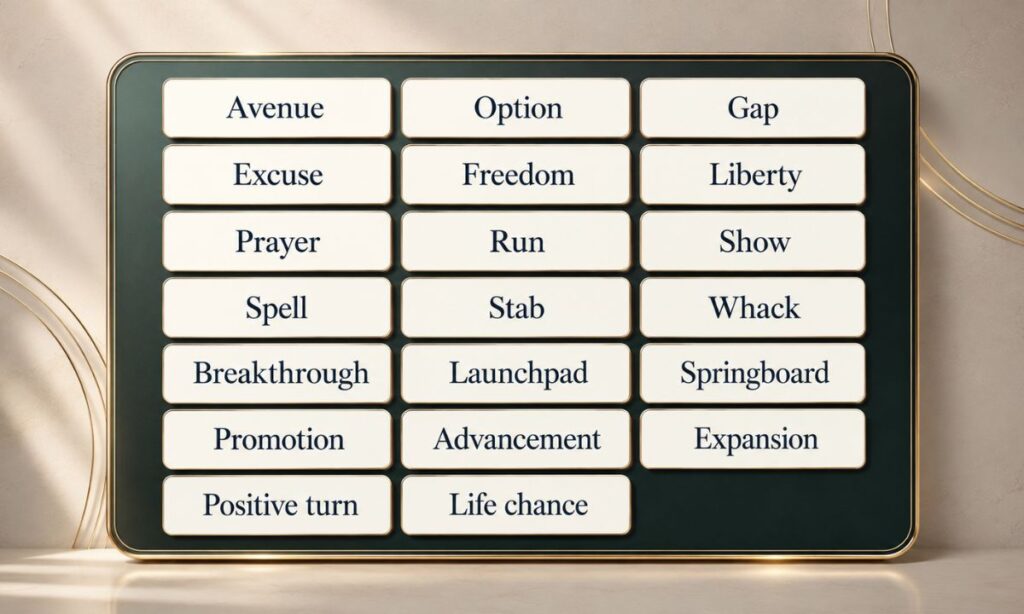
Each alternative below includes its meaning, a real example sentence, and the situation where it fits best.
Chance
Meaning: A chance is a possibility that shows up somewhat by luck rather than by planning. It feels informal and personal, which is why people reach for it in everyday speech. It works well when something good happens without much effort behind it.
Example: “I got a chance to meet the author at the book signing.”
When It Fits: Casual talk about luck or unplanned events.
Opening
Meaning: An opening points to a space or role that’s ready to be filled, often at work. It suggests something is prepared and just waiting for the right person to step in.
Example: “There’s an opening on the design team starting next month.”
When It Fits: Job postings, hiring announcements, or filling a role.
Window
Meaning: A window is a short period during which something is possible before it closes again. It adds a sense of urgency, since timing matters more than luck here.
Example: “We have a small window to submit the proposal before the deadline.”
When It Fits: Deadlines or anything with a limited timeframe.
Break
Meaning: A break is a sudden shift in someone’s fortune, usually for the better and often without warning. It sounds relaxed and shows up a lot in spoken English.
Example: “Landing that client was a real break for the company.”
When It Fits: Casually describing a stroke of good luck.
Prospect
Meaning: A prospect is something that looks likely or promising in the near future, often connected to business or career growth. It sounds analytical rather than emotional.
Example: “The merger opens up new prospects for international sales.”
When It Fits: Business updates, forecasts, or strategy talks.
Possibility
Meaning: A possibility is broader and more uncertain than opportunity. It doesn’t promise anything, only that something could happen under the right conditions.
Example: “There’s a possibility we could expand into the European market next year.”
When It Fits: Early discussions or brainstorming sessions.
Scope
Meaning: Scope describes the room or capacity for something to grow, usually within a defined role or project. It hints at potential without guaranteeing it.
Example: “This role has scope for growth once you settle into the team.”
When It Fits: Career conversations or describing project limits.
Avenue
Meaning: An avenue is a route or direction toward achieving something. It works especially well when there are multiple paths to consider at once.
Example: “Freelancing gave her a new avenue to showcase her writing.”
When It Fits: Talking about different routes toward a goal.
Pathway
Meaning: A pathway is similar to an avenue but leans toward a structured, step-by-step route. It shows up often in education and career planning.
Example: “The internship became a pathway into a full-time position.”
When It Fits: Career planning or describing a sequence of steps.
Option
Meaning: An option is simply a choice available among alternatives. Unlike opportunity, it doesn’t always suggest an advantage, just that something is available.
Example: “Working remotely is an option the company added this year.”
When It Fits: Presenting choices without pushing for one.
Occasion
Meaning: An occasion is tied closely to timing, referring to a specific moment when something becomes appropriate or possible. It feels more formal and event-focused.
Example: “Her retirement party was the occasion to finally thank her publicly.”
When It Fits: Formal settings or specific events.
Shot
Meaning: A shot is a casual, energetic way of saying someone has a chance to try something, usually with a real risk of falling short. It’s common in spoken English and carries motivation.
Example: “This audition is his shot at joining the orchestra.”
When It Fits: Encouraging someone before a challenge.
Turn
Meaning: A turn refers to a person’s designated moment to act, often within a sequence involving others. It leans on the idea of fairness and order.
Example: “It’s finally your turn to lead the project.”
When It Fits: Situations involving rotation or waiting your turn.
Slot
Meaning: A slot is a specific spot or space reserved for someone, often tied to scheduling. It sounds practical rather than emotional.
Example: “A slot opened up in the Friday afternoon workshop.”
When It Fits: Scheduling, bookings, or limited spaces.
Gap
Meaning: A gap points to something missing that someone could fill, whether in a market, a schedule, or a skill set. It usually implies unmet demand.
Example: “The startup found a gap in the pet-care industry no one had addressed.”
When It Fits: Business talk or identifying unmet needs.
Platform
Meaning: A platform is a foundation or stage that lets someone be seen or heard, often connected to careers or public visibility. It carries a sense of exposure and reach.
Example: “The podcast gave her a platform to talk about mental health.”
When It Fits: Media work, public speaking, or visibility-driven careers.
Stepping Stone
Meaning: A stepping stone describes something that leads toward a bigger goal, rather than being the final destination. It’s encouraging and future-focused.
Example: “This internship is a stepping stone toward her dream job in publishing.”
When It Fits: Career advice or long-term planning talks.
Lucky Break
Meaning: A lucky break emphasizes fortune more strongly than “break” alone, suggesting something good happened almost by accident. It carries warmth and a bit of surprise.
Example: “Getting discovered on social media was a lucky break for the band.”
When It Fits: Storytelling about unexpected success.
Golden Chance
Meaning: A golden chance highlights how rare and valuable a moment is, often used when the stakes feel high. It adds emotional weight that a plain “chance” doesn’t carry.
Example: “This scholarship is a golden chance she can’t afford to miss.”
When It Fits: High-stakes decisions or once-in-a-lifetime moments.
Foot in the Door
Meaning: Having a foot in the door means gaining early access to something small that could lead to bigger involvement later. It’s a familiar idiom in career contexts.
Example: “Volunteering there gave him a foot in the door at the company.”
When It Fits: Early career moves or first steps into a field.
Second Chance
Meaning: A second chance refers to another attempt after an earlier failure or setback. It carries hope and a sense of forgiveness, often in personal contexts.
Example: “The coach gave him a second chance after missing tryouts last year.”
When It Fits: Situations involving redemption or renewed effort.
Fresh Start
Meaning: A fresh start means beginning again without the weight of past mistakes, often connected to a new chapter in life. It feels hopeful and forward-looking.
Example: “Moving to a new city gave her the fresh start she needed.”
When It Fits: Life changes, resolutions, or new beginnings.
Room to Grow
Meaning: Room to grow describes the space available for someone to develop skills or advance over time. It’s reassuring and shows up often in mentoring or workplace feedback.
Example: “The manager said there’s plenty of room to grow within the department.”
When It Fits: Career feedback or discussions about potential.
Leeway
Meaning: Leeway refers to extra freedom or flexibility to act without strict limits. It’s less about advantage and more about breathing room.
Example: “The new schedule gives the team more leeway to finish the report.”
When It Fits: Talking about flexibility, deadlines, or freedom to decide.
New Beginning
Meaning: A new beginning marks the start of something entirely different, often after closing a previous chapter. It’s emotionally rich and common in personal storytelling.
Example: “Their wedding felt like a new beginning for both families.”
When It Fits: Personal milestones, relationships, or major transitions.
Which Alternative Fits Best?
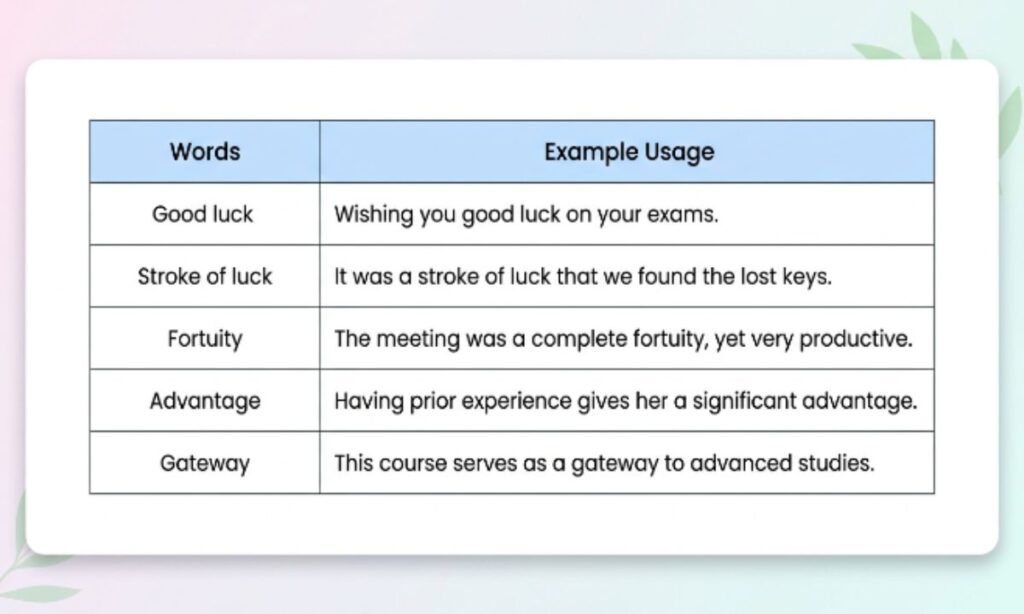
The right word depends on the setting, not just the meaning.
- Work and business: prospect, scope, avenue, platform, gap
- Emails: opening, occasion, option, window, pathway
- Friends and casual talk: chance, break, shot, lucky break, second chance
- School and career planning: stepping stone, pathway, room to grow, foot in the door
- Everyday conversation: turn, slot, fresh start, new beginning, leeway
If you’re unsure, ask what the moment actually feels like. A lucky, unplanned event calls for “chance” or “break.” A structured, career-related step calls for “prospect” or “pathway.”
Common Mistakes
Using “chance” in formal writing. It sounds too casual for reports, cover letters, or business proposals. Swap it for “prospect” or “opening” instead.
Repeating the same synonym too often. Replacing “opportunity” with “chance” five times in one page has the same problem as the original word. Rotate between two or three alternatives.
Ignoring emotional tone. Words like “golden chance” or “second chance” carry feeling. Using them in a neutral business memo can feel out of place.
Mixing up “option” and “opportunity.” An option is just a choice. It doesn’t imply advantage the way opportunity does, so don’t use them as if they mean the same thing.
Forcing idioms into formal text. Phrases like “foot in the door” work in conversation or storytelling, but they can feel too casual in a formal report or academic paper.
Quick Guide Table
Here are 15 more synonyms related to “opportunity,” along with where each one fits best.
| Phrase | Formal | Casual | Conversation | |
| Convenience | Yes | No | Yes | No |
| Event | Yes | Yes | Yes | Yes |
| Freedom | Yes | Yes | No | Yes |
| Hope | No | Yes | No | Yes |
| Space | No | Yes | No | Yes |
| Time | Yes | Yes | Yes | Yes |
| Contingency | Yes | No | Yes | No |
| Happening | No | Yes | No | Yes |
| Juncture | Yes | No | Yes | No |
| Liberty | Yes | No | Yes | No |
| Probability | Yes | No | Yes | No |
| Relief | No | Yes | No | Yes |
| Way | No | Yes | No | Yes |
| Connection | Yes | Yes | Yes | Yes |
| Vacancy | Yes | No | Yes | No |
Conclusion
“Opportunity” is a solid word, but it can’t carry every tone on its own. The right synonym adds precision, emotion, and rhythm to your writing. Once you know which alternative fits which moment, your sentences start sounding more natural and a lot less repetitive.