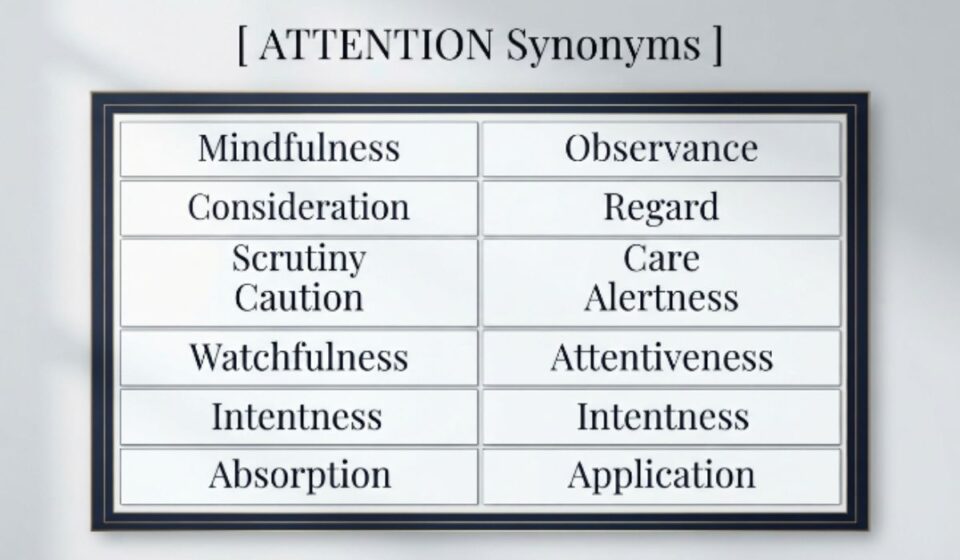

The word “attention” appears in almost every type of communication, from workplace emails and classroom discussions to text messages and everyday conversations. Since it has several meanings, it can quickly become repetitive if you use it too often.
Replacing it with a more accurate synonym makes your writing clearer and easier to read. Depending on the situation, “attention” might refer to concentration, awareness, care, or polite consideration, so selecting the right word helps your message sound more natural and precise.
What Does “Attention” Really Mean?
At its most basic level, “attention” means giving your mind or senses to something. Sometimes it refers to strong focus, such as concentrating on a lesson or an important task. In other situations, it means noticing something around you, like hearing an unusual sound or spotting a warning sign.
It can also describe showing care and concern for another person. For example, when a teacher says, “Pay attention to the board,” they’re asking students to stay focused and actively follow the lesson instead of letting their minds wander.
Why Look for Alternatives?
Using “attention” several times in the same article or conversation can make your writing feel repetitive. The word is also quite broad, which means readers may not immediately understand whether you mean focus, awareness, concern, or courtesy.
Choosing a more specific synonym makes your meaning clear from the start, improves the flow of your writing, and keeps your sentences fresh without changing the message you want to share.
25 Synonyms for “Attention” and How to Use Them
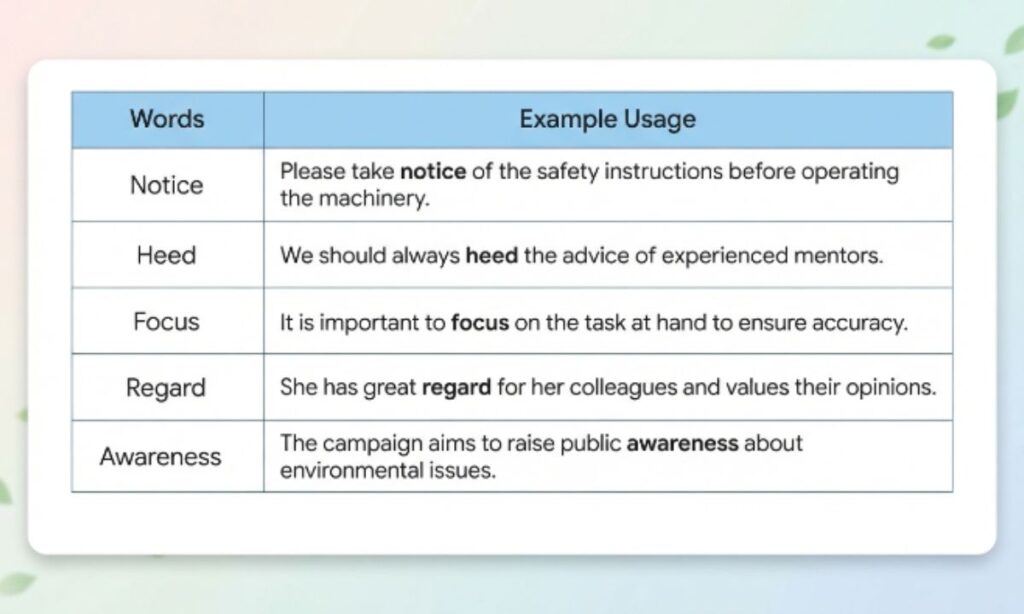
Focus
Meaning: Focus describes the act of directing your mind fully toward one specific task or subject. It works well when you want to emphasize concentration rather than general noticing. This word feels active and goal-oriented, which makes it useful in work and study settings.
Example: She needed complete focus to finish the report before the deadline.
When It Fits: Work tasks, studying, or any situation requiring deep concentration.
Concentration
Meaning: Concentration refers to the mental effort of staying locked on one thing without letting your mind wander. It carries a slightly more formal, almost academic tone than “focus.” Use it when discussing sustained mental effort over time.
Example: The chess match demanded intense concentration from both players.
When It Fits: Academic writing, sports commentary, or descriptions of mental effort.
Awareness
Meaning: “Awareness” means knowing or noticing something without necessarily giving it deep mental effort. It’s broader and softer than “focus,” since it can apply to background noticing as well as active attention. This word suits situations involving perception rather than intense concentration.
Example: His awareness of the changing market helped him avoid a bad investment.
When It Fits: Discussions about knowledge, perception, or general alertness.
Notice
Meaning: “Notice” describes the moment something registers in your mind, often briefly or suddenly. It’s more casual and immediate than “attention,” and it works well for quick observations. Use it when describing something that catches your eye without deep thought.
Example: I didn’t notice the typo until after I sent the email.
When It Fits: Everyday conversation, quick observations, or casual writing.
Heed
Meaning: Heed means paying careful attention to advice, warnings, or instructions, often with a sense of obedience or respect. It has an old-fashioned, slightly formal tone. This word fits well when discussing warnings or guidance someone should follow.
Example: The hikers should have heeded the storm warning before setting out.
When It Fits: Warnings, advice, or formal instructions.
Consideration
Meaning: Consideration refers to thoughtful attention given to someone’s feelings, needs, or a specific issue. It carries emotional weight and suggests care, not just mental focus. This word works well when kindness or thoughtfulness is part of the message.
Example: Please give some consideration to how this decision affects the whole team.
When It Fits: Workplace discussions, group decisions, or requests for thoughtfulness.
Interest
Meaning: Interest describes attention driven by curiosity or enjoyment, rather than obligation. It has a lighter, more positive tone than words like “focus” or “heed.” Use it when someone is genuinely engaged rather than just dutifully paying attention.
Example: Her interest in astronomy started with a single documentary.
When It Fits: Hobbies, casual conversation, or describing genuine curiosity.
Observation
Meaning: Observation refers to the careful watching or studying of something, often with a purpose behind it. It’s more deliberate and detailed than simple “notice.” This word suits situations involving analysis or scientific-style watching.
Example: Years of careful observation helped the researcher understand the bird’s migration pattern.
When It Fits: Science writing, research, or detailed descriptions of watching something.
Regard
Meaning: Regard means attention combined with respect or esteem, often used when discussing how someone views another person or situation. It has a formal, somewhat old-fashioned feel. This word works well in polite or professional contexts.
Example: The committee showed great regard for the community’s concerns.
When It Fits: Formal writing, professional emails, or respectful discussions.
Mindfulness
Meaning: Mindfulness describes a calm, deliberate awareness of the present moment, often linked to meditation or emotional well-being. It’s a gentler, more reflective word than “focus.” Use it when discussing mental health, calmness, or being present.
Example: Practicing mindfulness helped her stay calm during stressful meetings.
When It Fits: Wellness writing, meditation topics, or emotional self-care.
Care
Meaning: “Care” refers to attention given out of concern for someone’s well-being, rather than pure mental focus. It carries warmth and emotional connection. This word fits well when describing how someone looks after another person.
Example: The nurse gave each patient the same level of care and patience.
When It Fits: Healthcare, caregiving, or descriptions of thoughtful support.
Vigilance
Meaning: Vigilance means staying alert and watchful, often to avoid danger or catch problems early. It has a serious, cautious tone. This word works well in security, safety, or high-stakes situations.
Example: Constant vigilance kept the security team ahead of potential threats.
When It Fits: Safety discussions, security topics, or high-risk situations.
Watchfulness
Meaning: Watchfulness describes an alert, careful state of paying attention to surroundings or events. It’s similar to vigilance but slightly softer and more personal. Use it when describing someone keeping a close, protective eye on something.
Example: Her watchfulness over the toddler never wavered at the crowded park.
When It Fits: Parenting, caregiving, or protective situations.
Engagement
Meaning: Engagement refers to active involvement and attention, often in a conversation, activity, or presentation. It suggests participation, not just passive noticing. This word fits well when describing interactive attention.
Example: The speaker’s engagement with the audience kept everyone leaning forward.
When It Fits: Presentations, teaching, or interactive discussions.
Fixation
Meaning: Fixation describes an intense, sometimes obsessive focus on one thing. It carries a slightly negative or extreme tone compared to plain “focus.” Use it when attention has become excessive or hard to break away from.
Example: His fixation on the mistake kept him from enjoying the rest of the game.
When It Fits: Describing obsessive thinking or overly intense focus.
Preoccupation
Meaning: Preoccupation refers to being so absorbed in one thought or worry that other things fade into the background. It often carries a sense of distraction from everything else. This word suits situations involving worry or deep distraction.
Example: Her preoccupation with the exam results made it hard to enjoy the party.
When It Fits: Describing worry, distraction, or deep mental absorption.
Absorption
Meaning: “Absorption” describes being completely wrapped up in an activity, to the point of losing track of everything else. It has a positive, immersive quality, often linked to enjoyment. Use it when describing deep enjoyment or flow.
Example: His absorption in the puzzle meant he missed the phone ringing twice.
When It Fits: Hobbies, creative work, or deep enjoyment of a task.
Alertness
Meaning: Alertness refers to a state of being mentally sharp and ready to respond quickly. It’s more about readiness than deep thought. This word fits well in contexts involving quick reactions or attentiveness to changes.
Example: The driver’s alertness helped him avoid the sudden stop ahead.
When It Fits: Safety topics, driving, or fast-paced environments.
Diligence
Meaning: Diligence describes steady, careful effort applied to a task over time, often linked with responsibility. It’s less about noticing and more about consistent hard work. Use it when describing thoroughness and persistence.
Example: Her diligence in checking every detail caught an error the team had missed.
When It Fits: Work reviews, academic effort, or careful task completion.
Recognition
Meaning: Recognition means acknowledging or noticing someone’s effort, presence, or achievement. It often carries appreciation along with attention. This word fits well when praise or acknowledgment is part of the message.
Example: The volunteers finally received the recognition they deserved.
When It Fits: Praise, awards, or acknowledging someone’s contribution.
Scrutiny
Meaning: Scrutiny refers to close, critical examination, often looking for flaws or mistakes. It has a more intense, sometimes uncomfortable tone than plain “attention.” Use it when describing careful checking or judgment.
Example: The contract underwent heavy scrutiny before anyone signed it.
When It Fits: Legal writing, audits, or critical review situations.
Curiosity
Meaning: Curiosity describes attention driven by a desire to learn or understand something new. It has a light, eager tone, often linked to questions and exploration. This word fits well when describing genuine interest in learning.
Example: The child’s curiosity about the stars led to years of studying astronomy.
When It Fits: Learning, exploration, or describing eager questioning.
Attentiveness
Meaning: Attentiveness describes the quality of being consistently alert and responsive to someone’s needs or a task at hand. It’s a close cousin of “attention” but slightly more formal and steady in tone. Use it when describing reliable, ongoing focus.
Example: The waiter’s attentiveness made the whole dinner feel effortless.
When It Fits: Service industries, customer care, or descriptions of reliability.
Notice-taking
Meaning: This phrase describes the active process of paying attention and mentally recording details, often used in observational or reflective contexts. It’s less common but useful when emphasizing the act itself. It suits writing about careful observation habits.
Example: Her habit of note-taking during meetings helped her remember every detail later.
When It Fits: Descriptions of careful habits, journaling, or meeting notes.
Spotlight
Meaning: Spotlight refers to focused public attention directed at someone or something, often noticeably or dramatically. It has an energetic, sometimes intense tone. Use it when describing attention that comes from many people at once.
Example: The scandal put the company back in the media spotlight.
When It Fits: News stories, public events, or describing sudden public focus.
Which Alternative Should You Use?
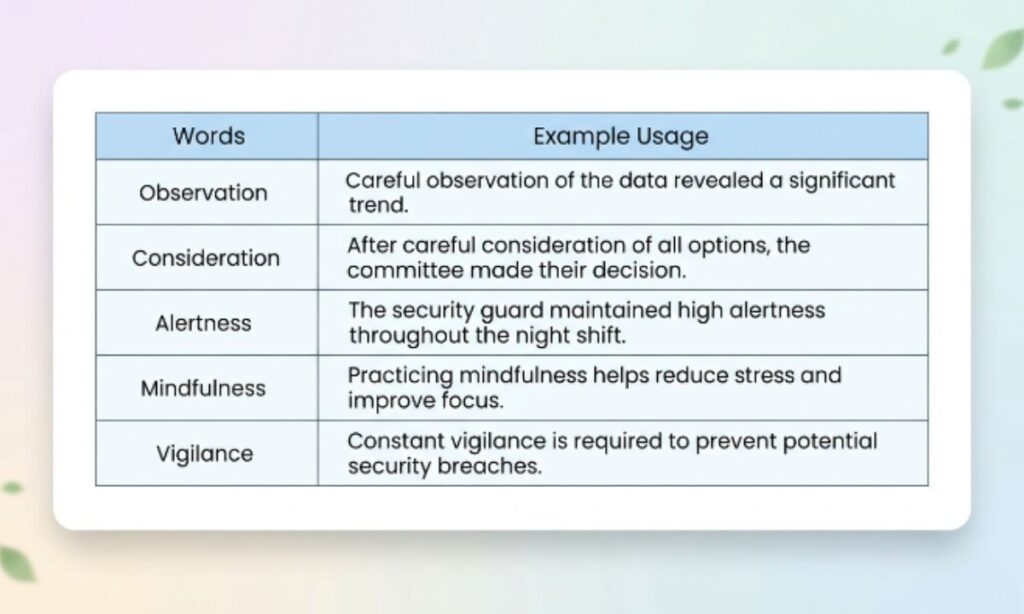
The best synonym for “attention” depends on your audience and the situation. A word that fits perfectly in a business email may sound too formal in a casual conversation, while an everyday expression may not work well in academic or professional writing. Choosing the right alternative helps your message sound clear, natural, and appropriate for the context.
Work emails: Use consideration, attentiveness, or diligence when discussing responsibilities, performance, or careful review. These words sound professional without feeling overly formal.
Casual conversations: Words like notice, interest, or curiosity fit naturally when talking with friends or family. They keep your language simple and easy to understand.
School essays: Try concentration, observation, or engagement when writing about learning, research, or academic topics. These choices add clarity while maintaining a formal tone.
Safety or serious situations: Vigilance and alertness are better options when discussing security, health, or anything that requires constant awareness.
Everyday speech: If you simply want to express focus or awareness, words like notice and focus are straightforward and work well in most situations.
Common Mistakes
Many people choose a synonym without thinking about its exact meaning, which can change the message.
- Using fixation instead of focus, even though fixation suggests an unhealthy obsession.
- Replacing attention with care when discussing concentration, even though care usually refers to concern or compassion.
- Using scrutiny in casual conversations, where it can sound overly critical or intense.
- Confusing regard with simple noticing, even though regard often implies respect or high opinion.
- Repeating the same synonym throughout an article instead of using different words that match the context naturally.
Quick Comparison Table
| Phrase | Formal | Casual | Conversation | |
| Focus | Yes | Yes | Yes | Yes |
| Concentration | Yes | No | Yes | No |
| Awareness | Yes | Yes | Yes | Yes |
| Notice | No | Yes | No | Yes |
| Heed | Yes | No | Yes | No |
| Consideration | Yes | No | Yes | No |
| Interest | Yes | Yes | Yes | Yes |
| Observation | Yes | No | Yes | No |
| Regard | Yes | No | Yes | No |
| Mindfulness | Yes | Yes | No | Yes |
| Care | Yes | Yes | Yes | Yes |
| Vigilance | Yes | No | Yes | No |
| Engagement | Yes | No | Yes | No |
| Alertness | Yes | Yes | Yes | Yes |
| Curiosity | Yes | Yes | Yes | Yes |
| Attentiveness | Yes | No | Yes | No |
| Scrutiny | Yes | No | Yes | No |
Frequently Asked Questions
What is the most casual synonym for “attention”?
“Notice” or “interest” both sound natural and easy in everyday, casual conversation.
What’s a good synonym for “attention” in a professional email?
“Consideration” or “attentiveness” both sound polished and fit well in workplace communication.
What’s the difference between “attention” and “focus”?
“Attention” can mean simply noticing something, while “focus” implies deeper, sustained mental effort on one thing.
Is “scrutiny” a positive or negative synonym for “attention”?
“Scrutiny” usually carries a critical, sometimes negative tone, since it implies close examination for flaws.
Can “care” replace “attention” in every sentence?
No, “care” works only when emotional concern is part of the meaning, not when the sentence is about pure mental focus.
Conclusion
Choosing the right synonym for “attention” makes your message clearer and more precise. Each alternative highlights a different shade, from focus to courtesy to concern. Pick the word that matches your exact meaning, and your writing will feel sharper every time.