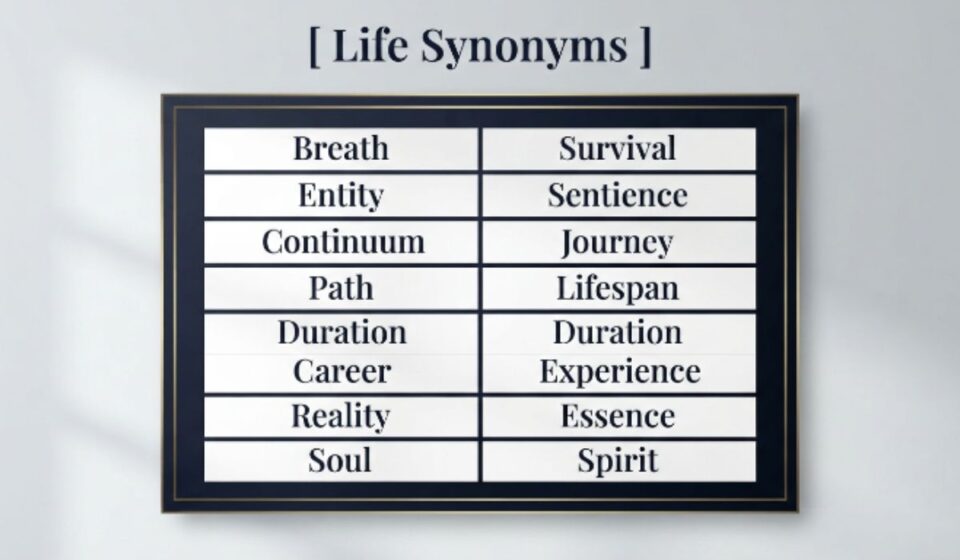

The word “life” is one of the most common words in English, which is exactly why it can start to feel repetitive. You’ll find it in conversations, books, essays, speeches, and even memorial messages.
Using a different word when the situation calls for it can make your writing sound smoother and more natural. Since “life” can refer to existence, personal experiences, energy, or a particular way of living, choosing a more accurate alternative helps your message become clearer and more engaging.
What Does “Life” Really Mean?
The meaning of “life” changes depending on the context. It may describe the period from birth to death, the condition of being alive, or the energy that makes a person or place feel active and vibrant.
For example, saying “She brought life to the party” means she filled the room with excitement and enthusiasm. In contrast, “He wrote about his life in Paris” refers to the experiences and memories he had while living there. The surrounding words decide which meaning fits best.
Why Look for Alternatives?
Using “life” several times in the same piece can make your writing feel repetitive. A more specific word often communicates your point better, whether you’re talking about someone’s experiences, daily existence, personal history, survival, or lively spirit.
Choosing the right synonym adds variety, improves readability, and helps readers understand your exact meaning without making the sentence longer or harder to follow.
25 Synonyms for “Life” and How to Use Them
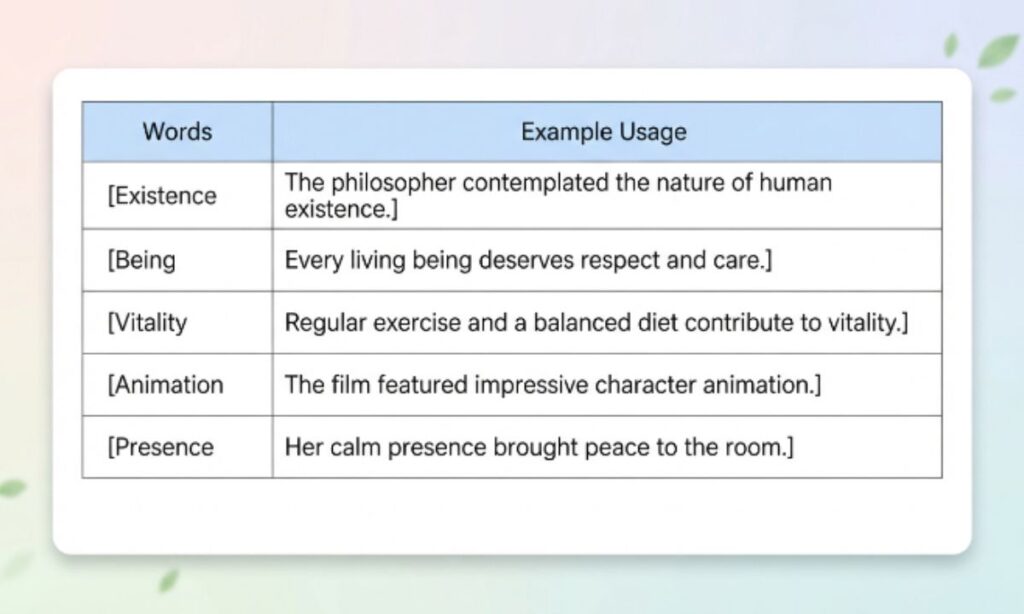
Existence
Meaning: This word points to the simple fact of being alive or being real, without any extra emotion attached. It works well when you’re talking about the state of being rather than the experience of living. It gives a slightly more formal, almost philosophical tone to a sentence.
Example: Scientists are still debating the exact conditions needed for existence on other planets.
When It Fits: Academic writing, philosophy discussions, or science topics.
Vitality
Meaning: Vitality describes the energy and liveliness a person or thing has, not just the fact that they’re alive. It carries a sense of health, strength, and enthusiasm. Use it when you want to highlight how alive someone feels, not just that they exist.
Example: Even at eighty, her vitality put people half her age to shame.
When It Fits: Describing energetic people, health topics, or motivational writing.
Lifespan
Meaning: This word focuses on the length of time someone or something lives, from start to finish. It’s a practical, measurable term rather than an emotional one. It works best when duration is the main point, not experience or feeling.
Example: The average lifespan of a house cat is around fifteen years.
When It Fits: Science topics, health articles, or product durability discussions.
Being
Meaning: Being refers to a living creature or the state of existing as a conscious entity. It has a slightly poetic or reflective tone and often appears in writing about identity or purpose. It suits sentences that explore what someone is, not just what they do.
Example: Every being on this planet deserves a chance to thrive.
When It Fits: Reflective essays, spiritual writing, or discussions about identity.
Livelihood
Meaning: Livelihood refers to the means by which someone supports themselves, usually through work or income. It shifts the focus from living itself to how a person sustains their daily life. This word carries a practical, economic weight.
Example: Fishing has been their family’s livelihood for three generations.
When It Fits: Discussing jobs, income, or economic hardship.
Lifetime
Meaning: Lifetime describes the entire span of a person’s existence, often used to emphasize something that lasts the whole duration. It adds weight to statements about long-term experiences or achievements. It’s commonly paired with words like “opportunity” or “memory.”
Example: Winning that award was a once-in-a-lifetime moment for her.
When It Fits: Talking about milestones, memories, or long-term achievements.
Biography
Meaning: Biography refers specifically to the written account of someone’s life story. It’s a narrower, more literary term than “life” and only applies when someone is documenting or describing a person’s journey. It signals structure and storytelling.
Example: His biography reveals struggles that most fans never knew about.
When It Fits: Book discussions, journalism, or historical writing.
Existence period
Meaning: This phrase describes the stretch of time something has been alive or active, often used in more technical or scientific contexts. It sounds precise rather than emotional. It’s useful when you need to sound neutral and factual.
Example: Researchers tracked the existence period of the bacteria colony over six weeks.
When It Fits: Scientific reports, lab notes, or technical writing.
Spirit
Meaning: Spirit refers to the energy, enthusiasm, or inner drive that makes someone feel alive and engaged. It’s less about physical existence and more about emotional or mental presence. This word adds warmth and personality to a sentence.
Example: The team’s spirit never dropped, even after three losses in a row.
When It Fits: Motivational speeches, sports writing, or team environments.
Journey
Meaning: Journey frames life as a process with a beginning, middle, and ongoing movement, rather than a fixed state. It suggests growth, change, and experience over time. This word works well when you want to emphasize progress or transformation.
Example: Her journey from a small town to a national stage inspired thousands.
When It Fits: Personal stories, career narratives, or inspirational content.
Survival
Meaning: Survival highlights the act of continuing to live, especially through difficulty or danger. It carries tension and urgency that “life” alone doesn’t always convey. Use it when the struggle to keep living is the focus.
Example: Their survival in the wilderness depended on finding clean water fast.
When It Fits: Adventure stories, crises, or nature writing.
Way of living
Meaning: This phrase describes the daily habits, choices, and style someone follows, rather than the fact of being alive. It’s about lifestyle and routine, not existence itself. It works well when comparing different cultures or personal choices.
Example: Their way of living changed completely after they moved to the countryside.
When It Fits: Lifestyle articles, cultural comparisons, or personal essays.
Animation
Meaning: Animation refers to liveliness and expressive energy, often seen in how someone speaks or moves. It’s less common in everyday speech but adds a vivid, almost theatrical quality. It suits descriptions of expressive or lively behavior.
Example: He described the trip with such animation that the whole room leaned in to listen.
When It Fits: Descriptive writing, storytelling, or character descriptions.
Course of life
Meaning: This phrase looks at life as a path with different stages and turns, similar to “journey” but slightly more formal. It suggests a natural progression from one phase to the next. It works well in reflective or biographical writing.
Example: Illness altered the course of his life in ways no one expected.
When It Fits: Memoirs, biographical summaries, or formal reflections.
Vigor
Meaning: Vigor describes physical or mental strength and active energy, similar to vitality but with a slightly more forceful tone. It often appears in descriptions of health, effort, or determination. Use it when strength is the main quality you want to highlight.
Example: She tackled the new project with the vigor of someone half her age.
When It Fits: Fitness writing, leadership descriptions, or motivational content.
Circumstances
Meaning: This word refers to the conditions and situations surrounding a person’s daily existence, rather than existence itself. It’s practical and grounded, often used when discussing hardship or context. It shifts focus from the person to their environment.
Example: Their circumstances forced them to rebuild everything from scratch.
When It Fits: News stories, social issues, or discussions of hardship.
Human experience
Meaning: This phrase captures the broader, shared nature of living as a person, including emotions, relationships, and growth. It’s often used in reflective or philosophical writing. It adds depth when discussing universal themes.
Example: The novel captures the human experience of loss with painful honesty.
When It Fits: Book reviews, philosophy, or emotional storytelling.
Livingness
Meaning: A less common word, “livingness” refers to the quality or state of being alive and active. It has a slightly poetic, unusual feel and stands out in creative writing. Use it sparingly for a distinctive tone.
Example: The garden seemed to hum with a quiet livingness after the rain.
When It Fits: Poetry, creative essays, or nature writing.
Time on earth
Meaning: This phrase emphasizes the limited, personal nature of someone’s lifespan, often used in emotional or reflective contexts. It reminds the reader of mortality and value. It carries more feeling than a plain statement of existence.
Example: She spent her time on earth helping others without ever asking for credit.
When It Fits: Eulogies, tributes, or emotional reflections.
Living
Meaning: Living, used as a noun, refers to the act or state of being alive in an active, ongoing sense. It’s simple and direct, often used in casual conversation. It works as a natural, low-effort swap for “life” in everyday speech.
Example: After the accident, she said she finally understood the value of living.
When It Fits: Everyday conversation, casual writing, or personal reflection.
Career
Meaning: Career focuses on the professional part of someone’s life, specifically their work history and progress. It’s not a full replacement for “life,” but it fits when the context is work. Use it when the professional side is the point.
Example: His career spanned four decades and three completely different industries.
When It Fits: Resumes, professional bios, or workplace discussions.
Existence span
Meaning: Similar to lifespan, this phrase focuses on duration but sounds slightly more formal and technical. It’s less common in casual speech and fits better in reports or academic writing. It removes emotional tone entirely.
Example: The device’s existence span in the market was shorter than expected.
When It Fits: Business reports, product analysis, or technical documents.
Zest
Meaning: Zest describes enthusiastic energy and enjoyment, often tied to how someone approaches daily activities. It’s a warm, positive word that highlights passion rather than mere existence. Use it when describing someone’s attitude toward living.
Example: Even routine chores couldn’t dampen his zest for the day.
When It Fits: Personality descriptions, motivational writing, or casual conversation.
Days
Meaning: Used loosely, “days” can refer to someone’s lifetime or the period they’ve lived, especially in reflective or nostalgic contexts. It’s simple, warm, and often used in storytelling. It works best paired with descriptive detail.
Example: In her later days, she finally found the peace she’d searched for.
When It Fits: Storytelling, memoirs, or nostalgic writing.
Path
Meaning: Path frames life as a route someone follows, shaped by choices and circumstances along the way. It’s similar to “journey” but shorter and slightly more direct. It works well when discussing direction or purpose.
Example: He found his path only after leaving the career everyone expected of him.
When It Fits: Career advice, personal growth writing, or motivational content.
Which Alternative Should You Use?
The best replacement for “life” depends on what you’re trying to say and who you’re speaking to. In professional writing, words like “career,” “existence period,” or “circumstances” sound polished and fit naturally in reports, emails, or workplace discussions.
If you’re chatting with friends or writing in a relaxed tone, “living,” “days,” or “zest” feel much more natural and keep the conversation flowing without sounding formal.
For school assignments or essays, consider using “human experience,” “journey,” or “course of life.” These choices add meaning and variety while staying clear and easy to understand.
If you’re writing something heartfelt, such as a tribute or eulogy, phrases like “time on earth” or “spirit” can express emotion with warmth and respect. In everyday conversations, simple alternatives like “living” or “days” are often the best fit because they sound familiar and effortless.
Common Mistakes
A common mistake is using “vitality” when you actually mean “lifespan.” Vitality refers to energy or strength, not how long someone lives. Another error is replacing “life” with “biography” when talking about daily experiences, even though a biography is a written account of someone’s life.
Some writers choose overly poetic words in casual situations, making the sentence feel unnatural. Others repeat the same substitute throughout an article, which creates the same repetition they were trying to avoid. Always check that the alternative matches the meaning and context instead of picking a synonym just because it appears on a list.
Quick Comparison Table
| Phrase | Formal | Casual | Conversation | |
| Existence | Yes | No | Yes | No |
| Vitality | Yes | Yes | Yes | Yes |
| Lifespan | Yes | No | Yes | No |
| Being | Yes | No | No | No |
| Livelihood | Yes | No | Yes | Yes |
| Lifetime | Yes | Yes | Yes | Yes |
| Biography | Yes | No | Yes | No |
| Spirit | Yes | Yes | Yes | Yes |
| Journey | Yes | Yes | Yes | Yes |
| Survival | Yes | Yes | Yes | Yes |
| Way of living | Yes | Yes | Yes | Yes |
| Vigor | Yes | No | Yes | Yes |
| Human experience | Yes | No | Yes | No |
| Living | No | Yes | No | Yes |
| Career | Yes | Yes | Yes | Yes |
| Zest | No | Yes | No | Yes |
| Days | No | Yes | No | Yes |
| Path | Yes | Yes | Yes | Yes |
Frequently Asked Questions
What is the most natural synonym for “life” in everyday conversation?
“Living” or “days” both sound natural and easy in casual, everyday speech.
What is the best synonym for “life” in a formal essay?
“Human experience” or “course of life” both add depth and fit formal writing well.
Can “existence” and “life” be used interchangeably?
They’re close in meaning, but “existence” sounds more neutral and factual, while “life” carries more warmth.
What’s a good synonym for “life” when writing about someone’s career?
“Career” itself works best when the focus is specifically on someone’s professional path.
Is it okay to use multiple synonyms for “life” in one piece of writing?
Yes, using a mix keeps your writing varied and prevents the word “life” from feeling repetitive.
Conclusion
Choosing the right synonym for “life” makes your writing clearer and more engaging. Each alternative carries its own shade of meaning, from energy to duration to daily routine. Pick the one that matches your exact message, and your writing will feel more precise every time.