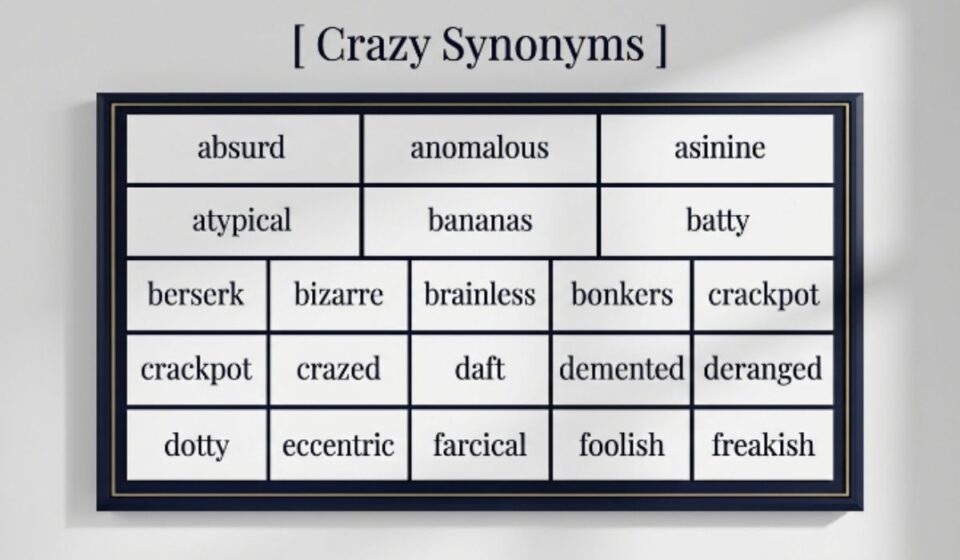

The word “crazy” shows up everywhere. We use it for a wild party, a bad decision, a strange idea, or a person we don’t quite understand. Because we lean on it so often, it starts to lose its punch.
Choosing a different word sharpens your writing and matches your tone to the moment, whether you’re texting a friend or emailing a manager. This guide covers what “crazy” really means, why an alternative helps, and thirty words you can use instead.
What Does “Crazy” Really Mean?
At its core, “crazy” describes something that breaks from what’s normal, sensible, or expected. It can point to a person’s mental state, a risky choice, or something simply wild and unexpected.
Think of a coworker who quits a stable job to sail around the world with no plan. You might call that “a crazy decision.” The word captures surprise, risk, and a touch of admiration at once—which is exactly why it feels so vague.
Why Look for Alternatives to “Crazy”?
“Crazy” is a catch-all word. It works fine in casual talk, but it sounds repetitive if you use it three times in one email or paragraph.
It’s also imprecise. “Crazy” might mean silly, dangerous, thrilling, or unstable, and the listener has to guess which one you mean. A specific word removes that guesswork.
There’s a sensitivity issue too. Applied to a person’s mental health, “crazy” can feel dismissive or hurtful. A clearer, kinder word protects both your tone and your relationships.
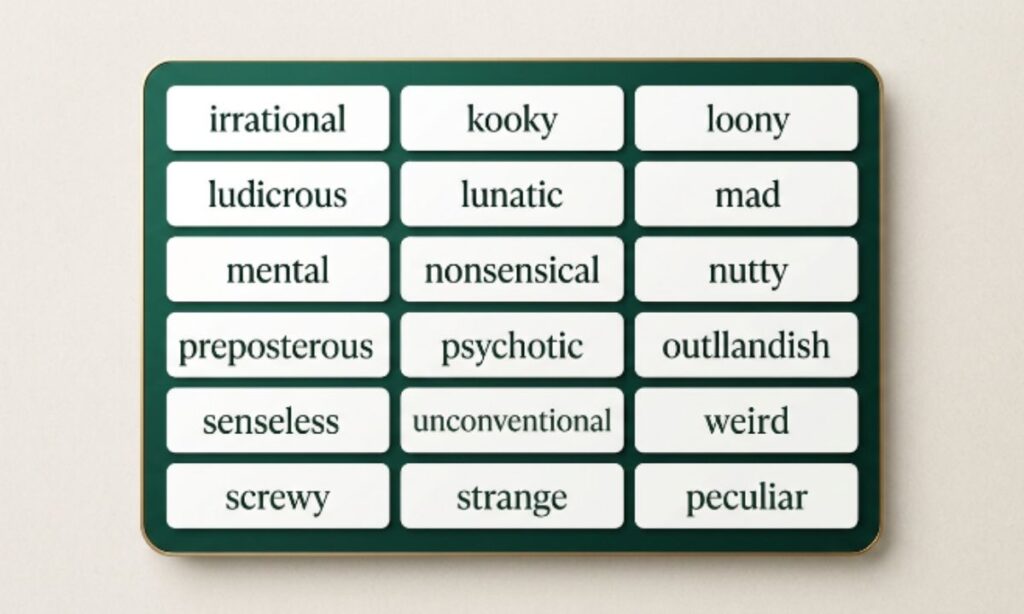
30 Synonyms for “Crazy” and How to Use Them
Insane
Meaning: “Insane” suggests something so extreme it feels beyond rational control. It carries more intensity than “crazy” and points to situations that seem impossible to justify. Reach for it when ordinary words feel too weak for the scale of what happened.
Example: The traffic on the highway this morning was insane.
When It Fits: Describing extreme situations, like heavy traffic or shocking news.
Bizarre
Meaning: Bizarre points to something strange or unusual in a way that catches you off guard. It’s less about judgment and more about oddity, so it works when a situation doesn’t fit any pattern you recognize. It suits storytelling and casual chat alike.
Example: She told a bizarre story about a key that opened every door in the building.
When It Fits: Talking about odd coincidences or strange, unexplained events.
Absurd
Meaning: Absurd highlights something that makes no logical sense, often to the point of being laughable. It’s a strong choice for pointing out how illogical a plan or claim truly is, adding gentle mockery without sounding harsh.
Example: It’s absurd to expect the team to finish the project in two days.
When It Fits: Pointing out unrealistic deadlines or flawed arguments.
Ridiculous
Meaning: “Ridiculous” describes something so unreasonable it almost invites laughter. It’s lighter and more conversational than “absurd,” making it a natural fit for everyday speech and a way to express frustration without sounding overly formal.
Example: The price of that hotel room is ridiculous for one night.
When It Fits: Reacting to overpriced items or exaggerated claims.
Wild
Meaning: Wild captures energy, unpredictability, and a lack of control, often in a positive or exciting way. Unlike some other synonyms, it doesn’t always carry a negative charge, which makes it great for thrilling nights out or unexpected story twists.
Example: That concert last night was wild — the crowd never stopped moving.
When It Fits: Describing exciting events or unpredictable weather.
Outrageous
Meaning: “Outrageous” points to something that goes far beyond acceptable limits, often sparking anger or disbelief. It carries more weight than “ridiculous,” so save it for situations that genuinely deserve a strong reaction, like unfair treatment.
Example: Charging extra for basic customer service is outrageous.
When It Fits: Expressing frustration over unfair policies or shocking behavior.
Nuts
Meaning: “Nuts” is a casual, punchy way to describe something surprising or hard to believe. It works in relaxed conversations and adds humor, feeling friendly rather than harsh when you react to a situation.
Example: This weather has been nuts — sun one hour, hail the next.
When It Fits: Chatting with friends about surprising or funny situations.
Bonkers
Meaning: Bonkers is a playful word for something chaotic or over the top. It softens the intensity of “crazy” while still capturing surprise, which suits situations where you want to sound amused rather than annoyed.
Example: The office party got bonkers once the music started.
When It Fits: Describing chaotic but fun moments among friends or coworkers.
Mad
Meaning: “Mad” can describe wild excitement or, in British English, mental instability, so context matters. It often shows up in casual phrases about intense enthusiasm, giving your sentence a punchy, informal feel.
Example: He’s mad about vintage cars and owns three of them.
When It Fits: Talking about strong hobbies, passions, or reckless excitement.
Unhinged
Meaning: Unhinged suggests someone or something has lost control or stability, often suddenly. It carries a more serious tone than casual words like “nuts,” so it fits dramatic shifts in behavior, like a public meltdown.
Example: His response to the criticism felt completely unhinged.
When It Fits: Describing a sudden emotional outburst or loss of composure.
Irrational
Meaning: Irrational describes thinking or behavior that ignores logic or evidence. It’s a precise, almost clinical word, useful in discussions about decisions or fears, since it critiques the logic rather than the person.
Example: Her fear of using elevators seemed irrational to her coworkers.
When It Fits: Discussing decisions or fears that lack logical support.
Foolish
Meaning: “Foolish” points to a lack of good judgment, often in a way that could have been avoided. It’s softer than “insane” but still carries real criticism, fitting reflective conversations about past mistakes.
Example: It was foolish to leave the car unlocked in that neighborhood.
When It Fits: Reflecting on mistakes or warning against risky choices.
Preposterous
Meaning: “Preposterous” describes something so unreasonable it seems almost impossible to take seriously. It has a formal, dramatic edge, useful for strong written arguments where you want to signal a claim is laughably far from believable.
Example: The claim that the project cost nothing is preposterous.
When It Fits: Debating claims or pointing out clearly false statements.
Deranged
Meaning: “Deranged” describes behavior that seems seriously disturbed or out of control. It’s dramatic, so it fits storytelling and film reviews better than everyday chat. Use it carefully around real people you know.
Example: The villain in the film had a deranged plan to flood the city.
When It Fits: Describing fictional characters or extreme scenarios.
Erratic
Meaning: “Erratic” describes behavior or patterns that shift unpredictably without a clear reason. It’s calm and descriptive rather than emotional, making it useful in professional writing about performance, weather, or driving.
Example: His driving became erratic once the storm started.
When It Fits: Describing inconsistent performance, weather, or behavior.
Zany
Meaning: Zany captures playful, offbeat humor rather than chaos or danger. It’s a warm word often used for quirky personalities or silly comedy, adding charm when describing entertaining people or lighthearted situations.
Example: The show is known for its zany characters and slapstick humor.
When It Fits: Describing playful, humorous people or entertainment.
Kooky
Meaning: Kooky describes someone charmingly odd or eccentric, usually in an endearing way. It carries warmth rather than criticism, making it comfortable for describing quirky friends or relatives fondly.
Example: My aunt has a kooky habit of naming all her houseplants.
When It Fits: Describing quirky habits or eccentric personalities fondly.
Loony
Meaning: Loony is an informal, often humorous way to describe something silly or nonsensical. It has a lighter tone than “insane” and rarely feels harsh, suiting jokes and playful complaints.
Example: That’s a loony way to fix a leaky faucet, but it worked.
When It Fits: Joking about odd solutions or silly plans.
Berserk
Meaning: Berserk describes a sudden, intense burst of uncontrolled behavior, often driven by anger or excitement. It’s vivid and high-energy, useful when capturing a moment of total loss of control, like a crowd reacting to a big win.
Example: The fans went berserk when the final goal was scored.
When It Fits: Describing intense crowd reactions or sudden bursts of emotion.
Delirious
Meaning: Delirious suggests extreme excitement or confusion, often linked to overwhelming emotion or exhaustion. It works well for describing joy so intense it feels disorienting, adding emotional depth to a scene.
Example: The team was delirious with joy after winning the championship.
When It Fits: Describing overwhelming joy, excitement, or exhaustion.
Frantic
Meaning: Frantic captures rushed, anxious energy, usually caused by limited time or high pressure. It’s a practical word for everyday stress, useful in both casual and professional writing to imply urgency.
Example: She made a frantic search for her passport before the flight.
When It Fits: Describing rushed, high-pressure moments like tight deadlines.
Unbalanced
Meaning: Unbalanced describes something lacking stability, whether emotionally, mentally, or structurally. It’s a measured word, often used in reflective contexts or when describing schedules and systems that feel uneven.
Example: His work schedule felt unbalanced after taking on two new projects.
When It Fits: Discussing uneven schedules, diets, or emotional stability.
Senseless
Meaning: “Senseless” describes actions that lack any clear purpose or reasoning. It often carries a critical or sorrowful tone, fitting serious writing like news reports where clarity and weight matter more than humor.
Example: The senseless waste of food at the event upset the organizers.
When It Fits: Discussing wasteful, harmful, or purposeless actions seriously.
Chaotic
Meaning: Chaotic describes total disorder, where nothing follows a clear pattern or plan. It’s versatile, fitting both lighthearted and serious contexts, from messy kitchens to disorganized events, helping readers picture confusion.
Example: The kitchen turned chaotic once all three chefs started cooking at once.
When It Fits: Describing messy, disorganized environments or hectic schedules.
Unpredictable
Meaning: “Unpredictable” describes something that changes without warning, making it hard to plan around. It’s neutral and practical, suited to weather, markets, or personalities, and it works well in professional writing.
Example: The stock market has been unpredictable since the announcement.
When It Fits: Describing shifting markets, weather, or unreliable plans.
Reckless
Meaning: Reckless points to actions taken without thinking about consequences or safety. It’s a direct, critical word, often used when describing dangerous behavior in warnings, news stories, or safety discussions.
Example: Driving that fast in the rain was reckless.
When It Fits: Warning against unsafe behavior or risky decisions.
Eccentric
Meaning: “Eccentric” describes someone whose habits or style differ from the norm, often in an interesting way. Unlike harsher words, it carries a respectful, even admiring tone, suiting artists or unique personalities.
Example: The eccentric professor kept a collection of antique typewriters in his office.
When It Fits: Describing unique personalities or unusual habits respectfully.
Peculiar
Meaning: “Peculiar” describes something slightly odd or hard to explain, without strong judgment attached. It’s a gentle, curious word that works well in mysteries or subtle descriptions, adding intrigue to your writing.
Example: There was a peculiar smell coming from the old library.
When It Fits: Describing mysterious or slightly odd details in a story.
Extreme
Meaning: Extreme describes something taken to the furthest possible degree, whether in intensity, risk, or scale. It’s broad and flexible, suited to sports, weather, and behavior, emphasizing magnitude without added humor.
Example: The hikers faced extreme conditions near the summit.
When It Fits: Describing intense weather, sports, or high-stakes situations.
Off-the-wall
Meaning: “Off-the-wall” describes ideas or behavior that feel unconventional and unexpected, often in a creative way. It’s a casual, friendly phrase that fits brainstorming and comedy, signaling originality more than instability.
Example: Her off-the-wall marketing idea ended up doubling engagement.
When It Fits: Praising creative, unconventional ideas in casual settings.
Which Alternative Should You Use?
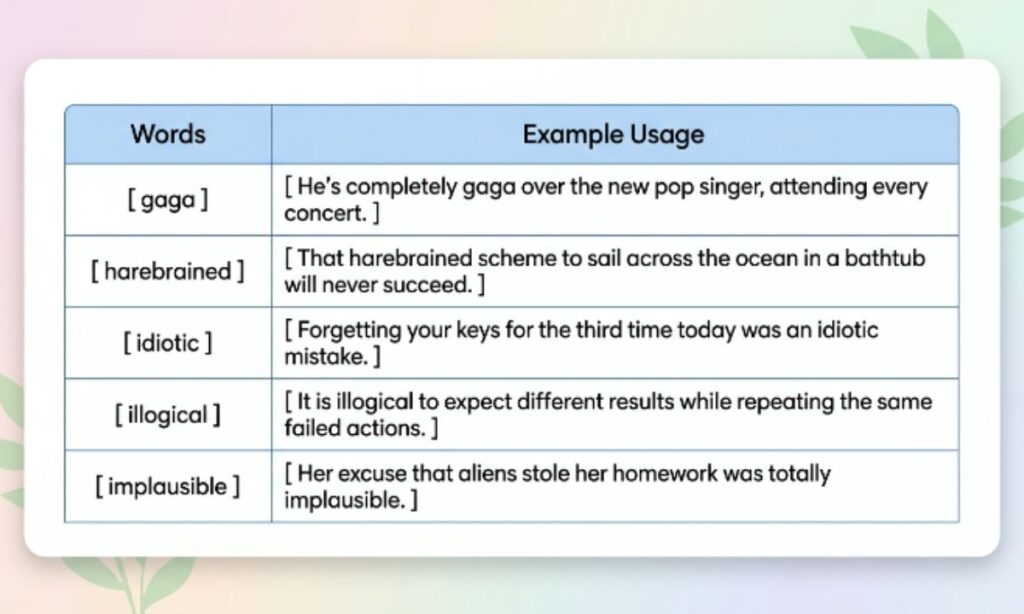
For work emails, choose measured words like “unpredictable,” “erratic,” or “unbalanced.” They stay professional while still being specific.
For friends and casual chats, “nuts,” “bonkers,” “wild,” or “kooky” feel natural and keep the tone light.
For school essays or formal writing, lean on “irrational,” “preposterous,” or “absurd,” since they sound precise without slang.
For everyday conversation, “ridiculous,” “chaotic,” and “mad” work almost anywhere and rarely feel out of place.
Common Mistakes
- Using intense words too casually. Calling a minor inconvenience “deranged” feels exaggerated instead of clear.
- Ignoring tone in professional settings. Words like “nuts” or “bonkers” can feel too casual in a formal email.
- Applying mental-health-related words to people carelessly. Words like “unhinged” can sound hurtful when aimed at real behavior.
- Repeating the same synonym too often. Swapping “crazy” for one word every time recreates the same problem.
- Choosing a word without checking its connotation. Some synonyms sound admiring, others critical—match the right one to your meaning.
Quick Guide Table
Beyond the thirty words above, here are fifteen more synonyms worth knowing. Some fit business writing; others suit quick texts or spoken conversation. Use this table to match a word to the setting you’re writing for. Checkmarks show where each word usually feels natural.
| Phrase | Formal | Casual | Conversation | |
| Frenzied | Yes | Yes | Yes | Yes |
| Manic | No | Yes | No | Yes |
| Volatile | Yes | No | Yes | Yes |
| Unstable | Yes | No | Yes | Yes |
| Impulsive | Yes | Yes | Yes | Yes |
| Rash | Yes | Yes | Yes | Yes |
| Turbulent | Yes | No | Yes | No |
| Hectic | Yes | Yes | Yes | Yes |
| Feverish | No | Yes | No | Yes |
| Maniacal | No | Yes | No | Yes |
| Untamed | No | Yes | No | Yes |
| Excessive | Yes | Yes | Yes | Yes |
| Overboard | No | Yes | No | Yes |
| Scatterbrained | No | Yes | No | Yes |
| Harebrained | No | Yes | No | Yes |
Conclusion
Swapping out “crazy” for the right word sharpens your writing and shows you’re paying attention to tone. Each synonym carries its own shade of meaning, from playful to serious. Pick the one that matches your message, and your words will land exactly the way you intend.